Definition
This article explains the role of hydration masks in post-procedure recovery within professional skincare protocols focused on hydration, barrier repair, and post-treatment recovery.
For estheticians, hydration masks matter because post-procedure skin often loses moisture more easily, feels more reactive, and requires barrier-conscious support to improve comfort during the recovery window.
Quick Answer
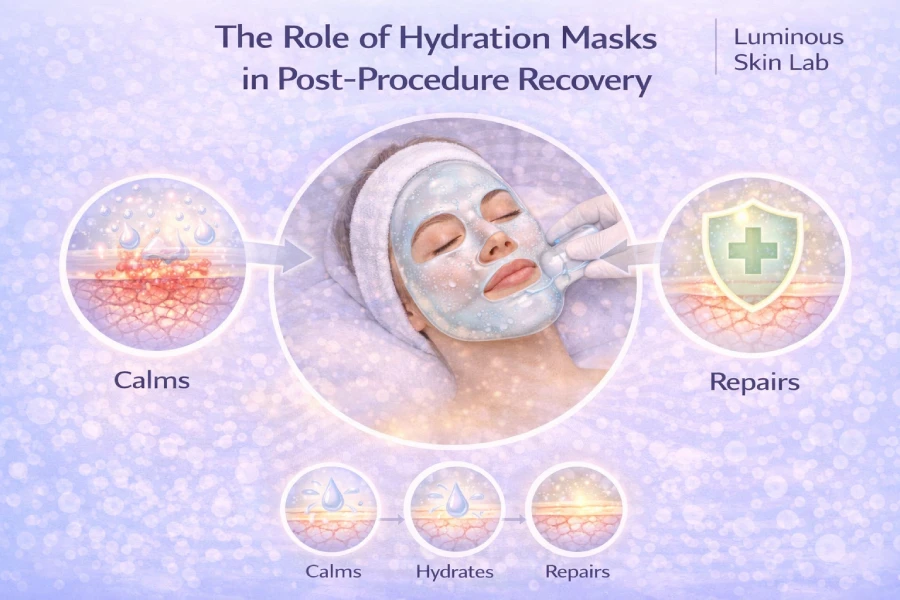
Hydration masks play an important role in post-procedure recovery because they help the skin retain moisture, reduce tightness, and support comfort after professional treatments. Estheticians often use hydration masks to combine water replenishment, calming support, and light occlusive action so the skin barrier can recover in a more stable environment.
Key Takeaways
- Hydration masks help support post-procedure moisture balance and skin comfort.
- Moisture retention is especially important when the skin barrier is temporarily vulnerable.
- Occlusive mask strategies can help reduce transepidermal water loss during recovery.
- Hydration masks are often used to calm visible stress after professional treatments.
- Targeted ampoules and HydroGlo Jelly Masks can support esthetic recovery protocols.
Post-procedure recovery is one of the most important phases in professional skincare. Treatments may be completed in a single session, but the quality of recovery often determines how comfortable the skin feels afterward and how the client perceives the overall experience.
That is why hydration masks are such an important part of many esthetic protocols. After procedures such as exfoliation, microneedling, resurfacing, or corrective facials, the skin may feel warmer, drier, tighter, or more reactive than usual. Hydration masks help transition the skin from active treatment into supportive recovery.
For estheticians, the value of hydration masks is not only that they feel soothing. Their role is functional. They help create conditions that support moisture balance, visible calmness, and better comfort while the barrier recovers.
Why the Skin Needs Extra Support After Procedures
Many professional treatments intentionally challenge the skin in order to stimulate renewal, improve penetration, or correct visible concerns. As a result, the skin barrier may become temporarily more vulnerable after the procedure. During this period, transepidermal water loss can increase and the skin may become more sensitive to environmental stress.
This is why post-procedure care needs to focus on stabilization, not more stimulation. Understanding why the skin barrier is vulnerable after facial treatments helps estheticians make better decisions about recovery support and finishing steps.
How Hydration Masks Support Moisture Retention
Hydration masks are often used because they help deliver moisture to the skin at a time when moisture loss is elevated. This support is especially valuable after treatments that leave the skin feeling tight or visibly dehydrated.
In many professional protocols, hydration is not treated as a single product step. It is layered strategically. A mask can help hold hydration closer to the skin for a longer period, which may improve comfort and help the barrier recover in a more protected environment.
This is one reason hydration masks are often associated with post-procedure recovery rather than general treatment finishing. Their role is more targeted when the skin needs help maintaining balance.
The Importance of Occlusion in Recovery Protocols
Occlusion is an important part of how many hydration masks work in recovery settings. By creating a more supportive surface environment, hydration masks can help reduce the rate at which the skin loses water. This is especially useful when the barrier has been temporarily challenged by professional treatment.
Occlusive support does not mean heavy or greasy treatment logic. In esthetic recovery protocols, it often means helping the skin hold onto hydration more effectively while minimizing additional stress. This is one reason masks are frequently used after procedures that increase dryness or sensitivity.
Why Hydration Masks Also Help Calm the Skin
Hydration masks are not only about moisture. They are also often chosen because they help reduce the appearance of post-procedure stress. Skin that feels inflamed or reactive may appear redder, warmer, or less comfortable after a treatment, and a hydration mask can help create a more soothing finish.
This calming benefit matters because client comfort is part of recovery quality. When the skin feels supported immediately after treatment, the procedure feels more complete and professionally managed.
A hydration mask does more than create a finishing experience. In many professional protocols, it serves as an important recovery tool that helps the skin retain moisture, feel calmer, and move more comfortably through the post-procedure window.
When Estheticians Commonly Use Hydration Masks
Hydration masks are commonly used after treatments that increase sensitivity, reduce surface stability, or raise the risk of dehydration. These may include:
- microneedling recovery protocols
- chemical peel recovery protocols
- post-exfoliation facials
- corrective treatments involving stronger stimulation
- facials for skin that already shows signs of dryness or compromised barrier function
The common logic across these treatments is that the skin benefits from support that is both calming and moisture-focused.
Professional Treatment Insights
Estheticians often support barrier repair treatments by pairing targeted products such as Hydration Ampoule with deeply hydrating recovery masks like Poly-Luronic™ HydroGlo Jelly Mask. This combination helps create a more supportive environment for post-procedure skin by improving hydration retention and visible comfort.
When used thoughtfully, this type of pairing allows the protocol to address more than one recovery need at once. The ampoule supports hydration delivery, while the mask helps the skin hold onto that support more effectively during the immediate recovery phase.
How Hydration Masks Improve the Client Experience
Clients often notice the recovery phase as much as the treatment itself. If the skin feels dry, tight, or uncomfortably warm after a procedure, the client may focus on discomfort rather than the benefits of the service. Hydration masks help change that experience.
A skin finish that feels calmer, softer, and better hydrated creates more confidence in the treatment process. That is why hydration masks are not only a recovery strategy. They are also a professional communication tool that shows the esthetician understands how to support the skin after active procedures.
Conclusion
Hydration masks play an important role in post-procedure recovery because they help support moisture retention, reduce visible stress, and improve comfort while the skin barrier rebalances. Their value is especially clear after treatments that temporarily increase sensitivity or transepidermal water loss.
For estheticians, hydration masks are more than a soothing finish. They are a recovery-focused tool that supports barrier-conscious treatment design. When paired with targeted ampoules and calming post-treatment care, they help the skin recover more comfortably and predictably.
That makes hydration masks one of the most practical and effective tools in modern professional recovery protocols.
Frequently Asked Questions
Why are hydration masks important after procedures?
How do hydration masks support barrier recovery?
What should estheticians pair with hydration masks?
Do hydration masks help calm inflammation?
Suggested Internal Links
About This Professional Guide
This article is part of the Luminous Skin Lab Esthetician Education Series designed to provide professional skincare knowledge for licensed estheticians and advanced practitioners.