Definition
This article explains barrier recovery after chemical peels within professional skincare protocols focused on hydration, barrier repair, and post-treatment recovery.
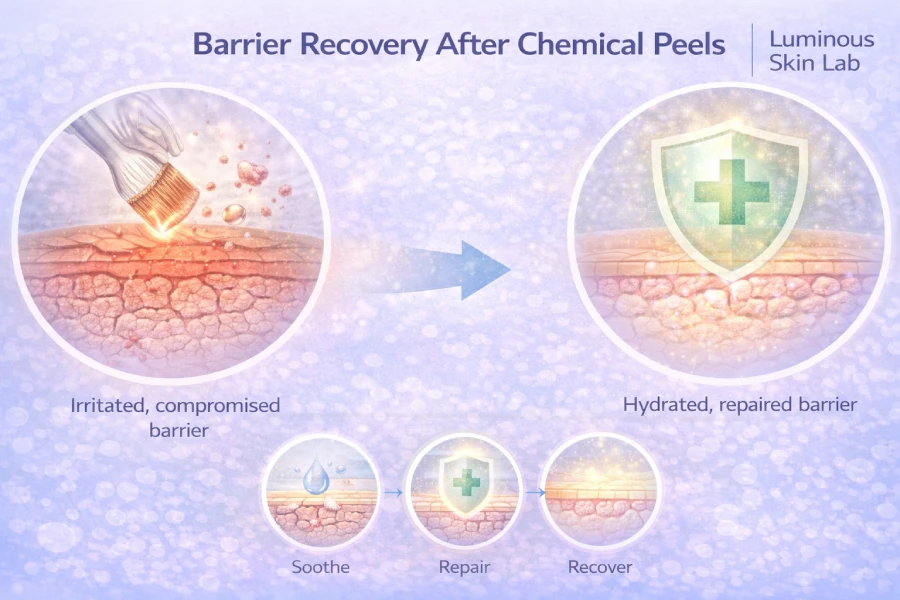
Chemical peels intentionally exfoliate the skin to improve texture and clarity, but this process temporarily weakens the skin barrier. Understanding how to properly support recovery helps estheticians reduce sensitivity, maintain hydration, and improve treatment outcomes.
Quick Answer
Barrier recovery after chemical peels is essential because exfoliation temporarily disrupts the skin barrier, increases sensitivity, and raises transepidermal water loss. Estheticians support recovery using hydration-focused treatments, calming ingredients, and barrier-conscious protocols that reduce inflammation and restore moisture balance.
Key Takeaways
- The skin barrier regulates hydration and protects the skin.
- Chemical peels temporarily disrupt barrier stability.
- Hydration and calming support are essential after treatment.
- Occlusive recovery strategies help reduce moisture loss.
- Professional recovery protocols improve comfort and outcomes.
Chemical peels are designed to improve skin appearance by accelerating exfoliation and stimulating renewal. While effective, this process temporarily disrupts the outermost layer of the skin, leaving the barrier more vulnerable during the recovery period.
This temporary disruption is expected and controlled, but it requires proper post-treatment support. Without hydration and calming care, the skin may feel tight, reactive, or visibly stressed after treatment. That is why recovery is not separate from the peel—it is part of the treatment itself.
Why Chemical Peels Disrupt the Skin Barrier
Chemical exfoliants such as AHAs and BHAs break down surface buildup and remove dead skin cells. This process improves texture and clarity but also reduces the immediate protective function of the skin barrier.
Understanding why the skin barrier becomes vulnerable after treatments helps estheticians design better recovery protocols and set proper expectations for clients.
The Role of Hydration in Post-Peel Recovery
Hydration is one of the most important elements of recovery after a chemical peel. When the barrier is compromised, the skin loses moisture more easily, leading to dryness and discomfort.
In professional protocols, hydration is often layered through serums, ampoules, and recovery masks. These steps help restore moisture levels while supporting the skin as it returns to balance.
Why Calming Ingredients Are Essential
After a chemical peel, the skin often shows signs of inflammation such as redness and sensitivity. Calming ingredients help reduce visible stress and improve the client’s comfort during recovery.
Supporting the skin with soothing formulations helps stabilize the barrier and prevents additional irritation during the healing process.
Barrier recovery is not optional after a chemical peel. It is a necessary part of the treatment protocol that ensures the skin heals properly and clients experience optimal results.
How Long Barrier Recovery Takes After Chemical Peels
Recovery time depends on the strength of the peel and the condition of the client’s skin. Mild peels may require only a few days for the skin to feel balanced again, while stronger peels may extend the recovery period.
For estheticians, the focus should be on supporting the quality of recovery rather than only the timeline. Proper hydration, calming care, and barrier support help the skin return to comfort more effectively.
Professional Treatment Insights
Estheticians often support barrier recovery by pairing targeted products such as Hydration Ampoule with deeply hydrating recovery masks like HydroGlo Jelly Mask. This combination helps improve moisture retention and reduce post-treatment stress.
Conclusion
Barrier recovery after chemical peels is essential because the skin becomes temporarily vulnerable during exfoliation. Hydration, calming ingredients, and barrier-supportive treatments help guide the skin through recovery and improve overall results.
Frequently Asked Questions
Why is skin barrier repair important after chemical peels?
What treatments support barrier recovery?
How long does barrier recovery take?
What should be avoided after a chemical peel?
Suggested Internal Links
About This Professional Guide
This article is part of the Luminous Skin Lab Esthetician Education Series designed to provide professional skincare knowledge for licensed estheticians and advanced practitioners.