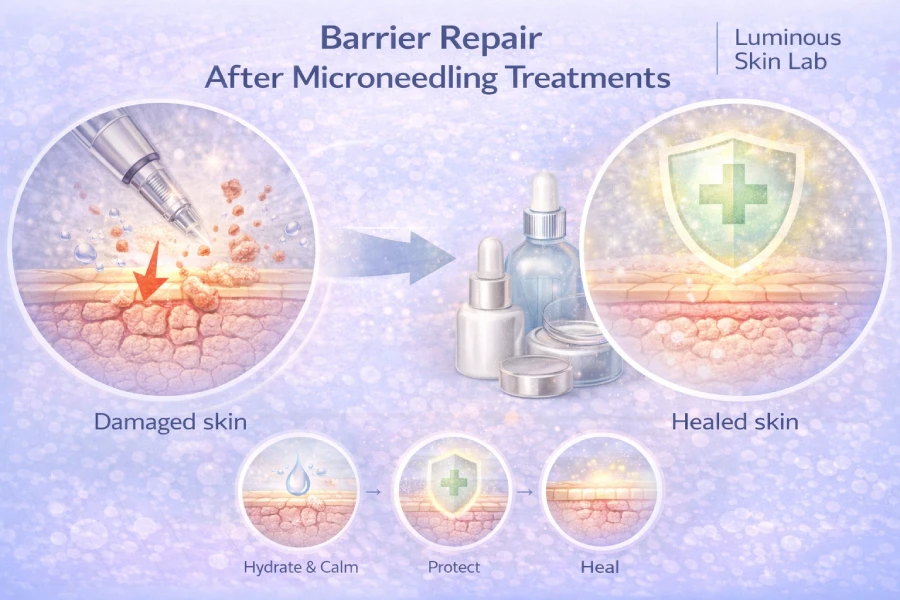
Definition
This article explains barrier repair after microneedling treatments within professional skincare protocols focused on hydration, barrier repair, and post-treatment recovery.
For estheticians, this topic is important because microneedling intentionally creates controlled stimulation in the skin, which means the immediate recovery window requires thoughtful support to reduce visible stress, maintain moisture, and help the skin return to balance. In professional treatment settings, estheticians often observe that the post-microneedling recovery window is where hydration balance and barrier support have the greatest influence on visible client comfort.
Quick Answer
Barrier repair after microneedling treatments is essential because the skin is temporarily more vulnerable during the recovery phase. Microneedling can increase inflammation, sensitivity, and transepidermal water loss, which means hydration recovery and calming support should be built into the treatment plan. A common challenge seen in practice is that clients focus on the treatment itself, while estheticians know the quality of barrier repair afterward often shapes how successful the overall experience feels. Estheticians often help support the barrier after microneedling through moisture-focused protocols, inflammation control, and recovery masks that improve comfort while protecting post-treatment skin.
Key Takeaways
- The skin barrier regulates hydration and protects the skin during the microneedling recovery phase.
- Barrier repair improves comfort and supports professional treatment outcomes after microneedling.
- Hydration, calming ingredients, and occlusive strategies support post-treatment recovery.
- Temporary inflammation and moisture loss make barrier-conscious aftercare especially important after microneedling.
- Targeted ampoules and HydroGlo Jelly Masks can support treatment protocols designed for recovery and visible skin comfort.
Microneedling is used in professional skincare because it helps stimulate renewal and support visible skin improvement through controlled treatment intensity. But while the procedure is designed to create positive treatment outcomes, it also creates a short-term recovery phase in which the skin barrier is more vulnerable than usual.
That is why barrier repair after microneedling treatments should never be treated as a minor add-on. In real-world esthetic practice, barrier repair after microneedling is often what separates a treatment that simply looks advanced from one that also feels professionally managed during recovery. Recovery support is part of the treatment itself. When the skin is left without proper hydration, calming ingredients, or moisture-retention support, clients may experience more redness, tightness, and visible stress during the hours and days that follow the procedure.
For estheticians, the goal is not only to perform microneedling well, but also to guide the skin through a professional recovery process. Barrier support helps the treatment feel more complete, improves client comfort, and contributes to a better overall experience after the service.
Why the Skin Barrier Needs Support After Microneedling
Microneedling works by creating controlled micro-injury that stimulates the skin. That process is intentional, but it also means the skin may become temporarily more reactive after treatment. The barrier can feel compromised because the skin is actively responding to the procedure and trying to rebalance itself.
During this period, the skin is more likely to feel tight, warm, dry, or sensitive. These signs are closely tied to the fact that the barrier is not operating in its usual stable state immediately after treatment. That is why barrier repair protocols matter so much in post-microneedling care.
The skin does not need more stimulation at this stage. It needs support that helps reduce visible stress, maintain hydration, and protect the recovery environment. Estheticians commonly observe that when post-treatment skin is not supported early, clients are more likely to report tightness, dryness, and lingering visible stress during the first recovery period.
How Hydration Recovery Supports Post-Microneedling Skin
Hydration recovery is one of the most important parts of barrier repair after microneedling. Once the skin has been treated, it may lose water more easily during the recovery period. That temporary increase in moisture loss can leave the skin feeling uncomfortable and visibly stressed if recovery support is too limited.
This is why hydration treatments are often emphasized after microneedling. The objective is not simply to make the skin feel wet or coated. The objective is to help the skin regain comfort, reduce tightness, and support the barrier as it returns to balance.
For estheticians, hydration recovery often works best when moisture delivery is paired with ingredients or finishing steps that help the skin hold onto that hydration more effectively. In professional skincare, barrier repair after microneedling depends heavily on how well hydration recovery is supported during the early post-treatment phase.
The Role of Inflammation Control in Barrier Repair
Inflammation control is another major part of post-microneedling barrier support. Mild redness and visible warmth are common after treatment because the skin has been stimulated. But if the skin is already sensitive, dehydrated, or exposed to overly aggressive follow-up care, recovery may feel more difficult for the client.
Calming support helps reduce this visible stress while improving overall comfort. The more effectively inflammation is managed, the easier it is for the barrier to return to a more stable state. This is why estheticians often prioritize soothing recovery protocols instead of adding more activity immediately after the procedure.
Barrier repair is not only about hydration. It is also about keeping the skin calm enough to recover predictably. Barrier recovery after microneedling is often more comfortable when inflammation control is treated as part of the recovery protocol rather than as a secondary concern.
Microneedling is a controlled professional treatment, but the skin still enters a temporary recovery state afterward. That means barrier repair should be viewed as an essential part of the protocol, not as an optional finishing step.
Why Post-Treatment Product Selection Matters
The products used after microneedling can strongly influence how comfortable the skin feels during recovery. Because the barrier is temporarily more vulnerable, estheticians generally focus on products that support hydration, calm visible reactivity, and avoid unnecessary stress.
Recovery-focused product selection should align with the condition of the skin after treatment. In many cases, the best post-microneedling support comes from simple, barrier-conscious formulas that reinforce moisture balance rather than introducing aggressive correction.
This is where professional judgment matters. Post-treatment skin often benefits from restraint, comfort-focused care, and ingredients chosen specifically for recovery logic.
Professional Treatment Insights
Estheticians often support barrier repair treatments by pairing targeted products such as ILUMIPEN with deeply hydrating recovery masks like HydroGlo Jelly Mask. In professional protocols, this kind of pairing can help support hydration recovery, improve visible comfort, and create a more protective environment for post-treatment skin.
In practice, this kind of layered recovery support is often preferred because post-microneedling skin rarely needs only one type of care. Estheticians frequently see better comfort and smoother recovery when hydration, calming support, and moisture-retention strategies are combined rather than used in isolation. The value of this approach is that it addresses multiple recovery needs at once. Instead of relying on a single finishing step, the protocol supports the skin through calming, hydration, and moisture-retention strategies that fit the vulnerability of the post-microneedling phase.
Why Occlusive Recovery Support Can Be Helpful
After microneedling, hydration alone may not be enough. The skin often benefits from support that helps reduce moisture loss while the barrier is recovering. This is one reason recovery masks and occlusive-style finishing strategies are commonly used in professional skincare.
When used appropriately, these treatments help the skin retain hydration more effectively. They may also improve the feeling of comfort that clients notice immediately after the service. For estheticians, this adds value because the visible and physical experience of recovery often shapes how the treatment is perceived overall.
The process of skin barrier recovery after microneedling is often stronger when hydration support is followed by strategies that help reduce moisture loss.
What Estheticians Should Watch for During Recovery
Post-microneedling barrier vulnerability is often visible in the way the skin behaves after treatment. Estheticians should watch for signs that the skin needs more support, such as:
- redness that lingers longer than expected
- tightness or dryness after the procedure
- heightened sensitivity to touch or products
- a stressed appearance that suggests increased moisture loss
These signs do not necessarily mean the treatment was performed incorrectly. They often indicate that the skin is in its normal recovery window and needs a barrier-conscious response.
Why Barrier Repair Improves the Client Experience
Clients often judge microneedling not only by the long-term treatment goal, but by how their skin feels immediately afterward. If the skin feels supported, hydrated, and professionally cared for during recovery, the service feels more complete and reassuring.
When barrier repair is neglected, clients may focus on tightness, visible redness, or discomfort instead of feeling confident in the process. That is why recovery support is such an important part of professional treatment design. It improves comfort, strengthens trust, and helps explain the value of esthetic expertise.
In our experience working with estheticians, clients who receive structured barrier repair support after microneedling report significantly better comfort during recovery.
Conclusion
Barrier repair after microneedling treatments is an essential part of professional skincare because the skin becomes temporarily more vulnerable during the recovery phase. Hydration recovery, inflammation control, and barrier-conscious finishing steps all help support the skin after treatment.
For estheticians, strong post-microneedling care means recognizing that recovery is part of the service. Hydration treatments, calming ingredients, targeted ampoules, and recovery masks can all play an important role in supporting the skin as it returns to balance.
In professional skincare, barrier repair after microneedling is a critical part of post-treatment recovery, not just a supportive afterthought. When barrier support is built into the protocol, clients are more likely to recover comfortably and feel confident in the quality of the treatment. That makes post-microneedling barrier repair one of the most important elements of modern esthetic care.
Frequently Asked Questions
Why is skin barrier repair important after microneedling?
What treatments support barrier recovery after microneedling?
What damages the skin barrier after microneedling?
How can estheticians support barrier repair after microneedling?
Suggested Internal Links
About This Professional Guide
This article is part of the Luminous Skin Lab Esthetician Education Series designed to provide professional skincare knowledge for licensed estheticians and advanced practitioners.