Definition
This article explains why the skin barrier is vulnerable after facial treatments within professional skincare protocols focused on hydration, barrier repair, and post-treatment recovery.
For estheticians, understanding post-facial barrier vulnerability is important because many treatment steps temporarily increase skin sensitivity, disrupt moisture balance, and raise transepidermal water loss during the recovery window.
Quick Answer
The skin barrier is often vulnerable after facial treatments because many professional services temporarily increase inflammation, reduce moisture retention, and disturb the skin’s protective outer layers. Treatments such as exfoliation, extractions, resurfacing, dermaplaning, and corrective facials can all leave the skin more reactive during the immediate recovery phase. Estheticians can support the barrier by using calming products, hydration strategies, and post-treatment protocols that reduce stress while restoring comfort and balance.
Key Takeaways
- The skin barrier regulates hydration and protects the skin.
- Barrier repair improves recovery after treatments.
- Hydration, calming ingredients, and occlusive strategies support recovery.
- Post-facial barrier vulnerability is often linked to temporary inflammation and increased transepidermal water loss.
- Recovery support matters most immediately after treatments that challenge the skin’s surface or increase sensitivity.
Many esthetic treatments are designed to improve the skin by challenging it in controlled ways. Exfoliation, extractions, resurfacing steps, active ingredient exposure, and corrective protocols can all support treatment goals. But these same steps can also make the skin barrier more vulnerable for a period of time after the facial is complete.
This vulnerability is not necessarily a problem when it is anticipated and supported correctly. In fact, much of professional skincare depends on understanding that the recovery window is part of the treatment itself. For estheticians, the real issue is not whether the skin is temporarily vulnerable. The issue is whether the protocol includes the right support to help the barrier recover comfortably and predictably.
That is why post-facial barrier awareness matters so much. Clients often notice tightness, redness, sensitivity, and dryness right away. These are common signs that the skin’s protective function has been temporarily challenged and needs hydration, calming care, and more thoughtful post-treatment support.
Why Facial Treatments Temporarily Disrupt the Barrier
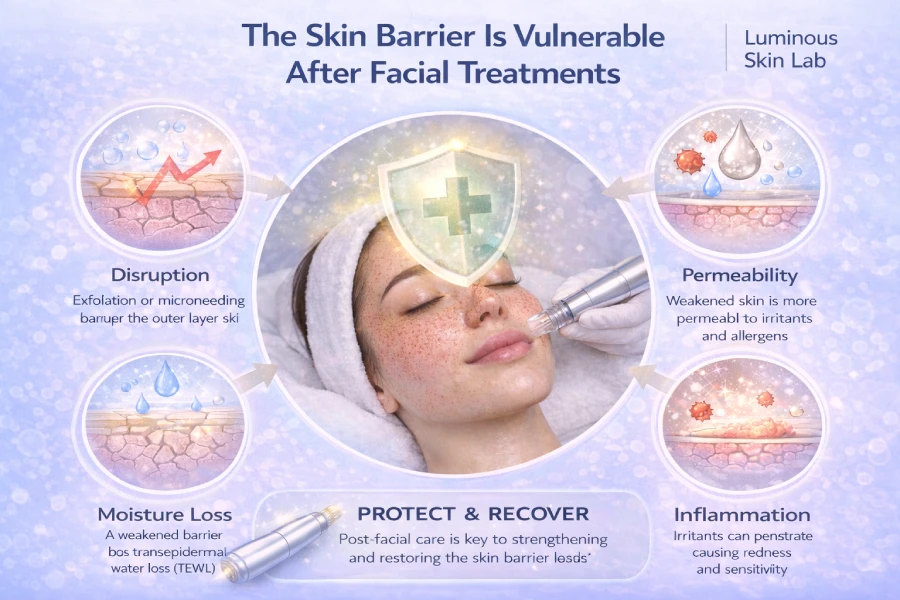
The skin barrier, closely associated with the stratum corneum, helps regulate moisture retention and protect the skin from outside stressors. During many professional facials, that barrier is intentionally challenged in order to improve skin texture, remove buildup, stimulate renewal, or enhance product penetration.
This challenge can come from several sources:
- exfoliating acids or enzymes that accelerate surface renewal
- physical exfoliation that reduces superficial barrier buildup
- extractions that create localized inflammation
- resurfacing treatments that increase temporary sensitivity
- corrective facials that rely on active ingredients or deeper stimulation
Even when these treatments are done correctly, the skin may still experience a short-term reduction in barrier stability. That is why post-treatment care needs to be part of the facial plan, not an afterthought.
The Role of Inflammation in Post-Facial Vulnerability
Inflammation is one of the main reasons the skin barrier becomes more vulnerable after facial treatments. When the skin is stimulated, exfoliated, or corrected, it often responds with temporary redness, warmth, and increased sensitivity. This is especially common after more active services or when the skin was already somewhat stressed before treatment.
For estheticians, inflammation matters because it is closely tied to comfort and recovery quality. Skin that looks redder, feels warmer, or reacts more easily may also be losing moisture more quickly and becoming more vulnerable to dehydration.
This is why calming care and moisture support are so important after a facial. Reducing post-treatment stress helps the barrier return to stability more effectively.
Why Moisture Loss Increases After Facial Treatments
Once the barrier is temporarily disrupted, transepidermal water loss (TEWL) often increases. This means the skin loses water more easily than it normally would. The result can be tightness, dryness, reactivity, and discomfort during the recovery period.
This is one of the main reasons facial aftercare protocols often prioritize hydration. Recovery is not only about calming visible redness. It is also about helping the skin maintain moisture while the barrier rebalances.
When estheticians understand this moisture-loss pattern, they can make better decisions about how to finish the treatment and what kind of post-treatment support the skin actually needs.
The skin barrier is often temporarily vulnerable after facial treatments, but that does not mean it has been permanently harmed. In most professional skincare settings, this vulnerability is part of a short-term recovery window that can be supported effectively with calming steps, hydration, and barrier-conscious aftercare.
Why Recovery Support Matters Immediately After a Facial
The period immediately after treatment is often when the barrier needs the most support. This is the moment when the skin may feel warm, tight, dehydrated, or more reactive than usual. If the protocol ends with no recovery strategy, the client may experience more discomfort and less confidence in the overall treatment experience.
That is why many professional facials include finishing steps specifically designed to support recovery, such as:
- hydration-focused serums or ampoules
- barrier-supportive ingredients
- calming products to reduce visible stress
- occlusive mask strategies to support moisture retention
These steps help transition the skin from treatment stimulus into recovery support.
How Hydration Supports the Barrier After Facials
Hydration is one of the most effective tools in post-facial barrier support. When the skin barrier is vulnerable, keeping moisture levels more stable helps reduce tightness, improve comfort, and support the environment needed for recovery.
This does not mean all hydration strategies work equally well. The best recovery support often combines moisture delivery with some level of retention support. In other words, the skin often benefits not only from receiving hydration, but also from being helped to hold onto it.
That is one reason barrier-conscious facial protocols often rely on professional hydration systems rather than treating hydration as a simple final add-on.
Why Calming Ingredients Matter During Recovery
When the skin is inflamed or reactive after treatment, calming ingredients become especially useful. These help reduce the appearance of post-treatment stress while making the client more comfortable during the barrier recovery phase.
For estheticians, calming support is part of recovery logic. A skin barrier that has been temporarily challenged does not usually benefit from more stimulation. It benefits from ingredients and treatment steps that reduce irritation while supporting hydration and moisture balance.
This is why recovery-focused protocols often combine hydration support with calming ingredients and barrier-aware finishing steps.
Estheticians often support post-facial barrier recovery by pairing targeted products such as Calming Ampoule with deeply hydrating recovery masks like HydroGlo Jelly Mask. This kind of pairing helps support moisture retention, improve comfort, and reduce the visible stress that can follow more active facial treatments.
What Estheticians Should Watch for After Treatments
Recognizing post-treatment barrier vulnerability is part of strong esthetic judgment. Some common signs include:
- visible redness that lasts beyond the treatment room
- tightness or dryness immediately after the facial
- increased sensitivity to products or touch
- a reactive appearance that suggests the skin needs more support
These signs do not always indicate a mistake. They often indicate that the skin is in a temporary recovery phase. What matters is whether the esthetician responds appropriately with a barrier-conscious plan.
Why Barrier Awareness Improves the Client Experience
Clients judge their treatment not only by what happens during the facial, but by how their skin feels afterward. When recovery is smoother, the treatment feels more effective and professional. When the skin feels tight, stressed, or dehydrated with no clear explanation or support, the client may feel uncertain even if the procedure was technically correct.
This is why barrier awareness improves both clinical outcomes and client confidence. The more clearly an esthetician understands temporary barrier vulnerability, the more effectively they can explain what the client is experiencing and what support will help.
Conclusion
The skin barrier is often vulnerable after facial treatments because many professional services temporarily increase inflammation, reduce moisture retention, and challenge the skin’s protective outer layers. This vulnerability is a normal part of many treatment processes, but it must be supported thoughtfully.
For estheticians, that means recognizing that recovery is part of the treatment. Hydration, calming ingredients, and occlusive recovery strategies all help the skin move from temporary disruption back toward comfort and balance.
When barrier support is built into the facial protocol, clients are more likely to recover comfortably and view the treatment as both effective and professional. That makes post-facial barrier care one of the most important parts of modern esthetic practice.
Frequently Asked Questions
Why is skin barrier repair important?
What treatments support barrier recovery?
What damages the skin barrier?
How can estheticians repair the barrier?
Suggested Internal Links
About This Professional Guide
This article is part of the Luminous Skin Lab Esthetician Education Series designed to provide professional skincare knowledge for licensed estheticians and advanced practitioners.