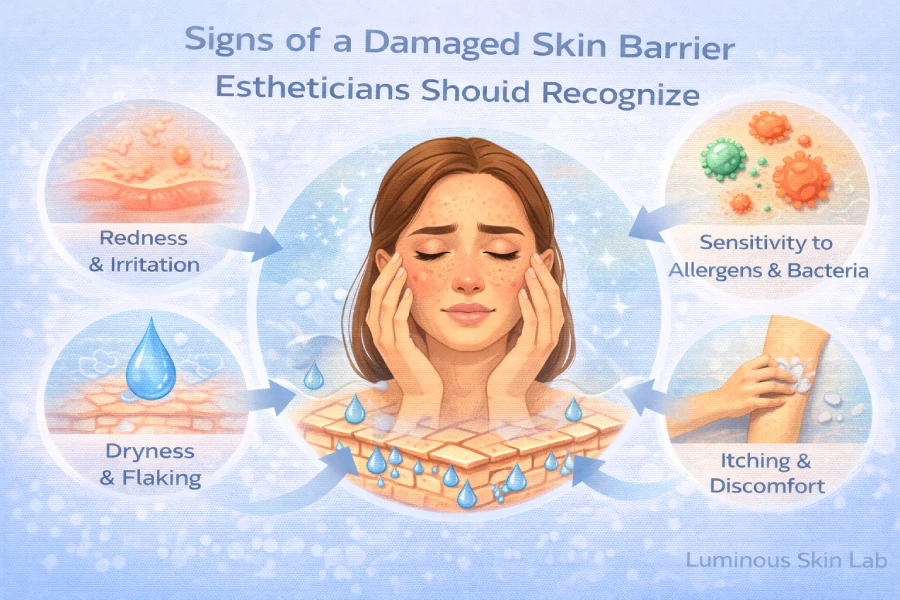
What Is Skin Barrier Health?
This article explains signs of a damaged skin barrier within the context of professional skincare, barrier repair science, and esthetic treatment recovery.
Quick Answer
This article explains signs of a damaged skin barrier estheticians should recognize for estheticians focusing on redness, dehydration, and sensitivity.
Key Takeaways
- Barrier health is critical to professional skincare outcomes.
- Hydration treatments help support skin recovery.
- Targeted ampoules and HydroGlo Jelly Masks can support treatment protocols.
- The skin barrier plays a central role in protecting the skin and maintaining hydration balance.
- Barrier disruption can lead to dehydration, irritation, and slower treatment recovery.
- Estheticians must recognize barrier damage signs and apply recovery-focused protocols.
Damaged Skin Barrier: A compromised outer skin defense that may present with redness, dehydration, irritation, and increased reactivity.
Skin Sensitivity: An increased tendency for the skin to react to treatments, products, or environmental stress when the barrier is weakened.
Recovery-Focused Protocol: A treatment approach designed to calm, hydrate, and support the skin when barrier disruption is present.
Why Recognizing Barrier Damage Matters
The skin barrier plays a central role in protecting the skin and maintaining hydration balance. When that barrier becomes compromised, the signs are often visible in the treatment room before the client even describes discomfort. This is why estheticians need to recognize barrier damage early. The earlier the issue is identified, the easier it becomes to shift the protocol toward support instead of overstimulation.
Barrier recognition is not just about identifying a problem. It is part of treatment judgment. It helps estheticians choose calmer, more appropriate services and protect long-term skin outcomes.
Redness as an Early Sign of Barrier Disruption
Redness is one of the most common visible signs of a damaged barrier. Skin that is more reactive than expected may be signaling that its protective function is already compromised. In professional skincare, redness matters because it can indicate that the skin needs support, not more aggressive treatment.
For estheticians, this makes redness more than a cosmetic concern. It is often a practical treatment-planning signal.
Why Dehydration Often Appears With Barrier Damage
Barrier disruption can lead to dehydration because the skin becomes less effective at maintaining hydration balance. Clients may describe tightness, dryness, or a feeling that the skin looks dull and feels uncomfortable even when they are using skincare regularly.
This is one reason hydration support becomes such an important part of recovery-focused care. Estheticians often need to restore comfort before moving into more active treatment goals.
Sensitivity and Increased Reactivity
Sensitivity is another major sign of a compromised barrier. Skin may react more easily to products, facial steps, or environmental exposure than it normally would. This increased reactivity is important in professional care because it can change how a client tolerates even routine treatments.
When sensitivity is present, the treatment plan often needs more caution, less stimulation, and a stronger focus on recovery support.
Estheticians often support barrier repair treatments by pairing targeted products such as Hydration Ampoule with deeply hydrating recovery masks like HydroGlo Jelly Mask.
Slower Recovery After Treatments
One of the clearest professional signs of barrier compromise is slower treatment recovery. The skin may stay pink, dry, or uncomfortable longer than expected after procedures. This matters because it affects both treatment satisfaction and future protocol planning.
Estheticians who notice delayed recovery can use that information to shift future sessions toward hydration, calming care, and less aggressive sequencing.
Why Recognition Improves Esthetic Decision-Making
Estheticians must recognize barrier damage signs and apply recovery-focused protocols. This improves not only treatment comfort, but also long-term client trust. Clients often judge the professionalism of a treatment not just by what happens during the service, but by how well their skin feels afterward.
That is why recognizing redness, dehydration, and sensitivity is such an important part of advanced esthetic practice. These signs help providers decide when the skin needs support first.
Frequently Asked Questions
What damages the skin barrier?
How can estheticians repair the barrier?
What does the skin barrier do?
Why is barrier repair important in professional skincare?
Suggested Internal Links
About This Professional Guide
This resource is part of the Luminous Skin Lab Esthetician Education Series designed to provide professional skincare education for licensed estheticians and advanced practitioners.