What Is Post-Treatment Skin Recovery?
Post-treatment skin recovery is the professional care process used to help the skin calm, rehydrate, stabilize, and protect its barrier after facial treatments, exfoliation, extractions, microneedling, nano infusion, peels, LED protocols, or other advanced esthetic services. It includes calming support, hydration, barrier repair, sun protection guidance, active ingredient management, and clear aftercare education for the client.
Quick Answer: What Should Estheticians Prioritize After Treatment?
Post-treatment skin recovery helps the skin return to a calmer, more comfortable, and better-supported state after professional facial treatments. Estheticians should focus on reducing visible irritation, supporting hydration, protecting the skin barrier, avoiding unnecessary stimulation, and educating clients on proper aftercare. Recovery protocols are especially important after microneedling, nano infusion, exfoliation, extractions, peels, and any treatment that may temporarily increase sensitivity or dryness.
What Every Esthetician Should Know About Post-Treatment Recovery
- Post-treatment recovery is part of the professional service, not an optional add-on.
- Hydration, calming support, and barrier protection are central to most recovery protocols.
- Skin may feel tight, warm, dry, pink, or sensitive after certain professional treatments.
- Recovery needs vary depending on treatment intensity, skin condition, and client sensitivity.
- LED therapy, cooling masks, targeted ampoules, and gentle aftercare can support the recovery phase.
- Clear client instructions help prevent over-exfoliation, irritation, and poor home-care choices after treatment.
Why Recovery Is a Professional Esthetic Skill
One of the clearest signs of advanced esthetic practice is not only how well a provider performs an active treatment, but how well they guide the skin through recovery afterward. Exfoliation, extractions, microneedling, nano infusion, peels, and corrective facial treatments can all create temporary stress on the skin. The recovery phase helps protect client comfort, support visible results, and build trust in the treatment process.
A strong recovery plan also helps reduce confusion for the client. Many clients do not know whether redness, tightness, dryness, or mild sensitivity is expected after treatment. When the esthetician explains what may happen, what to avoid, and how to support the skin, the client feels more confident and is less likely to use the wrong products at home.
What Happens to the Skin After Professional Treatments?
After a professional treatment, the skin may temporarily become more reactive. Depending on the service, the client may experience visible pinkness, warmth, dryness, tightness, flaking, tenderness, or a stronger awareness of the skin barrier. These responses can be normal after certain treatments, but they still require careful support.
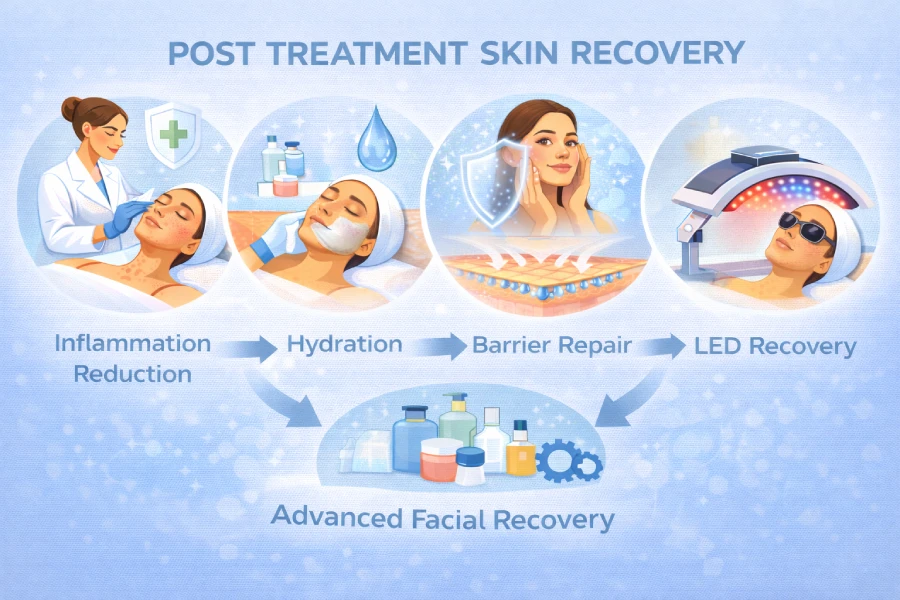
Professional recovery planning should focus on three major priorities: calming the skin, restoring hydration, and protecting the barrier. When these priorities are ignored, clients may be more likely to experience discomfort, irritation, product stinging, or unnecessary dryness after treatment.
Three Priorities That Guide the Recovery Phase
Post-treatment planning becomes easier when the esthetician evaluates each finishing step according to three questions: Is the skin being calmed? Is hydration being restored? Is the barrier being protected from unnecessary stimulation? These priorities form the practical foundation of the recovery guidance throughout this authority page.
Inflammation Reduction After Facial Treatments
Post-treatment inflammation is one of the most common concerns estheticians manage. Even when inflammation is mild and expected, the client’s comfort matters. Cooling support, calming ingredients, gentle finishing products, and thoughtful treatment sequencing can help the skin feel more settled before the client leaves the treatment room.
LED light therapy can also fit into recovery-focused protocols when selected appropriately. The ILUMILUX 2.0 may support conversations around light-based care and treatment continuity, especially when estheticians want to recommend a premium option for ongoing skin support between appointments.
Hydration as the Foundation of Skin Recovery
Hydration is one of the most important parts of post-treatment care because many advanced services can temporarily increase dryness or transepidermal water loss. When the skin feels tight or depleted after treatment, hydration support can improve comfort and help the barrier feel more balanced.
Hydrating ampoules, gentle serums, and recovery-focused masks can be used to support this phase. Poly-Luronic™ HydroGlo Jelly Masks fit naturally into post-treatment protocols because they support a cooling, comforting, and moisture-retaining finish after services where the skin may need extra hydration support.
Barrier Repair After Advanced Treatments
The skin barrier plays an important role in comfort, moisture retention, and overall skin resilience. After treatments such as microneedling, peels, stronger exfoliation, extractions, or repeated active services, the barrier may need extra support. Estheticians should recognize when the skin looks compromised, reactive, dry, tight, or overly stimulated.
Barrier-focused recovery may include gentle hydration, calming ingredients, reduced active ingredient use, sun protection guidance, and avoidance of unnecessary exfoliation. When barrier repair is built into the treatment plan, the client is more likely to experience a smoother recovery and better treatment confidence.
Recovery Considerations After Advanced Esthetic Treatments
Different professional treatments create different recovery expectations. Estheticians should adapt post-treatment education to the service performed, the treatment intensity, and the client’s skin response.
Microneedling
Microneedling recovery requires careful communication because the skin may appear pink, warm, dry, tight, or sensitive after the service. Estheticians should explain expected recovery timing, what products to use, what products to pause, and when the client should contact the provider if something feels unusual.
Nano Infusion & Microchanneling
Nano infusion and microchanneling-style treatments may involve less downtime than deeper corrective services, but recovery planning is still important. The skin may still need hydration, calming support, and ingredient simplicity after treatment.
Peels & Exfoliation
More active exfoliation can temporarily increase dryness, tightness, flaking, or product sensitivity. Barrier support, active-ingredient management, and clear sun-protection guidance are especially important during the recovery period.
Extractions & Corrective Facials
Extraction-heavy or corrective treatments may leave the skin visibly pink or sensitized. A calm finishing phase and conservative home care can help reduce unnecessary irritation after the appointment.
Recovery After Microneedling
Microneedling recovery requires careful communication because the skin may appear pink, warm, dry, tight, or sensitive after the service. Estheticians should explain expected recovery timing, what products to use, what products to pause, and when the client should contact the provider if something feels unusual.
After microneedling, recovery support commonly focuses on calming the skin, maintaining clean aftercare habits, avoiding harsh actives, supporting hydration, and protecting the skin from sun exposure. The ILUMIPEN can be positioned as a professional tool within microneedling education, while the recovery guidance should remain focused on safe, clear, and supportive aftercare.
Recovery After Nano Infusion and Microchanneling
Nano infusion and microchanneling-style treatments may involve less downtime than deeper corrective services, but recovery planning is still important. The skin may still need hydration, calming support, and ingredient simplicity after treatment.
These treatments often fit well into glow, hydration, brightening, and maintenance protocols. Recovery support may include targeted ampoules, gentle moisturizers, barrier-friendly finishing products, and clear home-care instructions that prevent clients from overusing exfoliants or strong actives too soon.
The Role of Occlusion in Recovery Protocols
Occlusion is not only a product feature; it can be part of a recovery strategy. In professional skincare, occlusive or semi-occlusive finishing steps may help reduce moisture loss and create a more comfortable post-treatment experience when used appropriately.
HydroGlo Jelly Masks are relevant in this part of the protocol because their cooling and moisture-supportive positioning helps create a polished finishing phase. For clients who feel heat, tightness, or dehydration after a service, a recovery mask can make the treatment feel more complete and professional.
What Clients Should Avoid After Advanced Treatments
Client education is one of the most important parts of post-treatment recovery. Even a well-performed service can be affected by poor aftercare. Estheticians should clearly explain what the client should avoid based on the treatment performed and the client’s skin condition.
Common post-treatment precautions may include avoiding harsh exfoliation, retinoids or strong active ingredients, excessive heat, sauna use, intense workouts, picking, scrubbing, direct sun exposure, and non-recommended products for a short period after treatment. The exact guidance should always match the professional service and provider instructions.
How Estheticians Can Explain Recovery to Clients
Clients often follow aftercare better when the explanation is simple and practical. Instead of using overly technical language, estheticians can explain that the skin needs time to calm, rehydrate, and rebuild comfort after treatment. This helps the client understand why gentle skincare, sun protection, and avoiding aggressive products matters.
A strong recovery explanation should include what the client may feel, what the client should avoid, what products to use, when to resume normal skincare, and when to contact the provider. This communication can reduce worry and improve the overall treatment experience.
Recovery protects the treatment experience. Post-treatment recovery is not only about calming the skin after the appointment. It protects the client’s confidence in the service. When the skin feels supported, the client is more likely to trust the treatment plan, return for future appointments, and follow professional aftercare recommendations.
Where Luminous Skin Lab Products Fit in Recovery Protocols
Luminous Skin Lab products can support post-treatment recovery when they are used with clear professional purpose. HydroGlo Jelly Masks fit naturally into hydration, cooling, and recovery-focused treatments. Targeted ampoules can support specific treatment goals such as hydration, calming, or brightness. The ILUMIPEN can support microneedling and nano infusion-style services, while ILUMILUX 2.0 can support LED-based recovery and ongoing skin maintenance conversations.
The most effective approach is to connect each product to a recovery need. Instead of presenting products as isolated add-ons, estheticians can explain how each step supports comfort, hydration, barrier care, or treatment continuity.
Post-treatment recovery should be treated as part of the professional protocol itself. The finishing phase is where the esthetician translates treatment intensity into a practical recovery plan: calming visible irritation, restoring hydration, protecting the barrier, simplifying home care, and setting clear expectations for the client. Products, devices, and masks are most useful when each one is connected to a specific recovery need rather than presented as an isolated add-on.
Frequently Asked Questions: Post-Treatment Skin Recovery
What is the main goal of post-treatment skin recovery?
The main goal of post-treatment skin recovery is to help the skin calm, rehydrate, stabilize, and protect its barrier after a professional treatment. Good recovery support can improve comfort, reduce visible irritation, and help the client follow aftercare instructions more successfully.
Why is hydration important after professional facial treatments?
Hydration is important because many professional treatments can temporarily increase dryness, tightness, or transepidermal water loss. Hydrating ingredients, calming products, and recovery masks can help the skin feel more comfortable while supporting a healthier-looking barrier.
How long does skin recovery take after a professional treatment?
Recovery time depends on the treatment type, treatment intensity, skin sensitivity, and home-care routine. A gentle hydration facial may have little to no downtime, while microneedling, peels, extractions, or more active treatments may require several days of careful recovery support.
What should clients avoid after advanced facial treatments?
Clients are commonly advised to avoid harsh exfoliation, strong active ingredients, excessive heat, direct sun exposure, picking, scrubbing, and non-recommended products after advanced facial treatments. The exact aftercare plan should be based on the treatment performed and the provider’s professional guidance.
How can LED light therapy support post-treatment recovery?
LED light therapy can be used in professional recovery protocols to support calming, comfort, and treatment continuity. The type of LED support selected should match the treatment goal, client condition, and professional protocol being used.
How can Luminous Skin Lab products fit into recovery protocols?
HydroGlo Jelly Masks can support hydration and cooling recovery, targeted ampoules can support specific treatment goals, ILUMILUX 2.0 can support LED-based care, and The ILUMIPEN can be referenced in recovery education for microneedling and nano infusion-style protocols.
Recovery Planning Completes the Professional Treatment
Post-treatment skin recovery is part of professional esthetic care, not an afterthought. The quality of the recovery plan influences client comfort, treatment confidence, home-care compliance, and the way the skin responds in the days following the appointment.
By consistently focusing on calming support, hydration, barrier protection, treatment-specific aftercare, and clear client education, estheticians can create a more complete and professional treatment experience across facial, exfoliation, extraction, microneedling, nano infusion, peel, and LED-based protocols.
Continue Your Professional Education
Professional Education from Luminous Skin Lab
This guide is part of the Luminous Skin Lab esthetician education library, created to help skincare professionals understand treatment recovery, barrier support, hydration planning, product selection, and professional aftercare education with more confidence.