What Are Professional Skincare Ingredients?
Professional skincare ingredients are active, supportive, or functional ingredients used in esthetic treatments to help improve hydration, barrier comfort, brightness, texture, acne-prone skin, aging concerns, sensitivity, and post-treatment recovery. For estheticians, ingredient knowledge is important because it connects skin analysis, treatment planning, product selection, and client education into one clear professional protocol.
Quick Answer: How Should Estheticians Organize Skincare Ingredients?
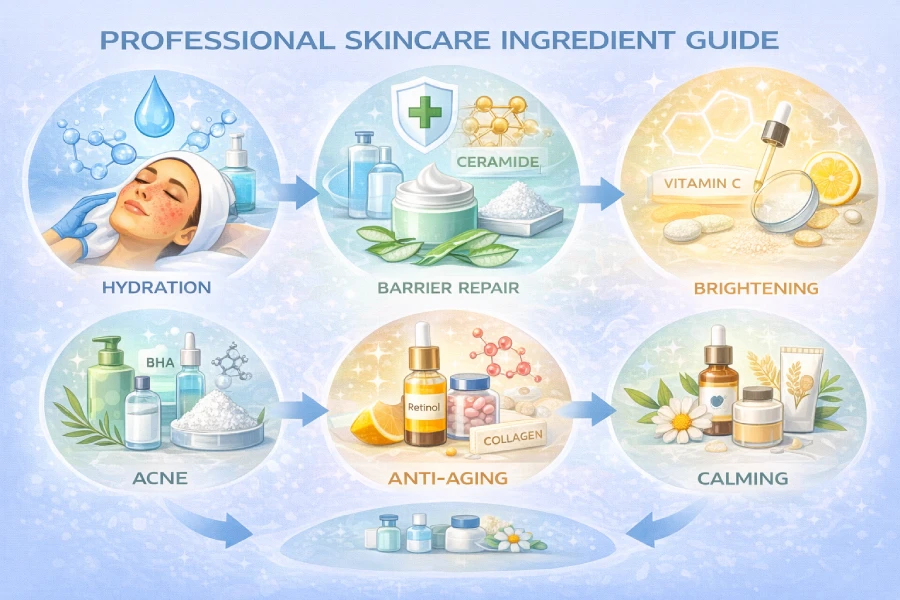
Professional skincare ingredients can be organized into major categories such as hydration ingredients, barrier repair ingredients, brightening ingredients, anti-aging ingredients, acne-support ingredients, and calming ingredients. Estheticians use these categories to choose products, build treatment protocols, support post-treatment recovery, and explain home-care recommendations to clients in a clear and practical way.
What Every Esthetician Should Know About Ingredient Selection
- Ingredient knowledge helps estheticians connect skin concerns to professional treatment choices.
- Hydration and barrier-supportive ingredients are important in nearly every skincare protocol.
- Brightening, acne-support, anti-aging, and calming ingredients should be selected based on skin condition and tolerance.
- More active ingredients are not always better; sequencing and compatibility matter.
- Post-treatment skin often needs calming, hydration, and barrier support before stronger corrective products.
- Clear ingredient education helps clients understand why specific products are recommended.
Why Ingredient Knowledge Matters in Professional Skincare
Ingredient knowledge is one of the most important skills in professional esthetics. Clients often ask what products they should use, which ingredients help their skin concern, and why one treatment is recommended over another. When estheticians understand ingredient categories, they can explain treatment choices more clearly and build more confident protocols.
Professional skincare is not only about choosing popular ingredients. It is about matching the right ingredient category to the client’s skin condition, treatment goal, sensitivity level, and recovery needs. A client with dehydration may need humectants and barrier support. A client with acne-prone skin may need clarifying support without damaging the barrier. A client with post-treatment sensitivity may need calming and recovery-focused ingredients before stronger corrective products.
How Estheticians Should Think About Ingredient Categories
Ingredients are easier to understand when they are grouped by function. Instead of memorizing long ingredient lists, estheticians can organize ingredients by what they are meant to support inside a professional treatment plan.
Common professional ingredient categories include:
Hydration Ingredients
Help attract, bind, and retain moisture in the skin.
Barrier Repair Ingredients
Help support comfort, resilience, and moisture retention.
Brightening Ingredients
Help improve the look of dullness, uneven tone, and discoloration.
Anti-Aging Ingredients
Help support firmness, texture, fine lines, and healthy-looking skin renewal.
Acne-Support Ingredients
Help address oiliness, congestion, breakouts, and post-acne appearance.
Calming Ingredients
Help support skin that feels sensitive, reactive, warm, or post-treatment.
Hydration Ingredients
Hydration ingredients are foundational in professional skincare because almost every skin type can benefit from better water balance. Dehydrated skin may appear dull, tight, rough, or more reactive, even when the client also has oiliness or breakouts.
Common hydration-supportive ingredients include hyaluronic acid, polyglutamic acid, glycerin, aloe, and other humectant systems. These ingredients help attract and hold water in the skin, making them useful in hydration facials, glow treatments, barrier-supportive protocols, and post-treatment recovery.
Poly-Luronic™ HydroGlo Jelly Masks fit naturally into hydration-focused protocols because they support a cooling, comforting, and moisture-retaining treatment finish. They can be used when estheticians want to create a more complete hydration experience inside the treatment room.
Barrier Repair Ingredients
Barrier repair ingredients are important when the skin feels dry, tight, sensitive, compromised, or easily irritated. The skin barrier helps reduce water loss and protect the skin from unnecessary irritation, so barrier support should be considered before and after active treatments.
Common barrier-supportive ingredients may include ceramides, cholesterol, fatty acids, panthenol, glycerin, soothing botanicals, and gentle moisturizers. These ingredients are especially useful after exfoliation, microneedling, peels, extractions, or when the client’s skin appears depleted or reactive.
Estheticians should also understand that barrier repair is not only a product category. It is a treatment strategy. Sometimes the best professional decision is to calm and support the skin before moving into stronger corrective services.
Brightening Ingredients
Brightening ingredients are used when clients are concerned with dullness, uneven tone, post-acne marks, or pigmentation appearance. These ingredients can be used in professional treatments and home-care routines, but they should be selected carefully based on skin sensitivity and treatment history.
Common brightening-supportive ingredients may include vitamin C, niacinamide, tranexamic acid, licorice extract, and exfoliation-supportive acids when appropriate. Brightening protocols often work best when they also include hydration and barrier support, because irritated skin may appear more uneven or reactive.
Anti-Aging Ingredients
Anti-aging ingredient education should focus on supporting firmness, texture, fine lines, hydration, and healthy-looking skin renewal. Clients often ask for “anti-aging” treatments, but the esthetician should identify whether the real concern is dryness, dullness, laxity, wrinkles, texture, or loss of glow.
Common anti-aging-supportive ingredients may include peptides, antioxidants, hydration complexes, growth factor-inspired formulas, retinoid alternatives where appropriate, and recovery-supportive ingredients. In professional protocols, these ingredients may be paired with LED light therapy, microneedling, nano infusion, hydration masks, and barrier-focused aftercare.
Acne-Support Ingredients
Acne-support ingredients are used to help manage oiliness, congestion, breakouts, and post-acne appearance. However, estheticians should avoid the mistake of treating acne-prone skin too aggressively. Over-exfoliation and barrier damage can make the skin feel more reactive and difficult to manage.
Common acne-support ingredients may include salicylic acid, niacinamide, sulfur, zinc, gentle exfoliating acids, calming botanicals, and oil-balancing systems. Acne-focused protocols should also include hydration and barrier support so the skin does not become overly dry, tight, or irritated.
Calming and Anti-Inflammatory Ingredients
Calming ingredients are important for sensitive skin, reactive skin, acne-prone skin, and post-treatment recovery. They are also useful after treatments that create temporary warmth, pinkness, tightness, or visible irritation.
Common calming-supportive ingredients may include aloe, centella asiatica, green tea, panthenol, allantoin, chamomile, and hydration-supportive systems. These ingredients can help estheticians create more comfortable treatment conclusions and better recovery-focused home-care recommendations.
Ingredient Compatibility and Sequencing
Ingredient compatibility is an important part of professional protocol design. Some ingredients work well together, while others may be too stimulating when combined in the same treatment or used too soon after an advanced service. Estheticians should consider the client’s barrier condition, treatment intensity, and home-care habits before layering multiple actives.
For example, a client receiving a brightening treatment may still need hydration and barrier support. A client receiving an acne-focused protocol may need calming ingredients to reduce visible stress. A client recovering from microneedling may need simple, gentle support before returning to stronger corrective products.
Skin Goal, Condition, Compatibility, and Recovery
The source guide emphasizes that ingredient choice should follow the client’s skin goal, current condition, tolerance, and recovery needs rather than popularity alone. This framework keeps ingredient selection connected to the full treatment plan.
Ingredient selection should follow the skin goal. The best ingredient choice is not always the strongest or trendiest ingredient. It is the ingredient category that matches the client’s skin goal, current condition, and tolerance. Professional estheticians create better results when they choose ingredients based on assessment, sequencing, and recovery logic.
How Ingredients Fit Into Professional Treatment Protocols
Professional ingredient use should be connected to a clear treatment purpose. Hydration ingredients may be used before and after active steps to support comfort. Barrier repair ingredients may be used when the skin is compromised or post-treatment. Brightening ingredients may be used for tone concerns. Acne-support ingredients may be used for congestion and oil imbalance. Calming ingredients may be used when the skin is reactive or recovering.
This ingredient-based thinking helps estheticians create more organized protocols and explain each step to clients. It also helps avoid random product layering, which can confuse clients and increase the risk of irritation.
Where Luminous Skin Lab Products Fit in Ingredient Education
Luminous Skin Lab products can support ingredient-based protocols when they are connected to specific treatment goals. Targeted ampoules can be used to support hydration, calming, brightening, anti-aging, or clarifying needs. Poly-Luronic™ HydroGlo Jelly Masks can support hydration, cooling comfort, occlusion, and moisture retention in professional treatment rooms.
The most effective approach is to explain the purpose behind each product step. When estheticians understand which ingredient category is being used and why it belongs in the protocol, client education becomes clearer and the treatment feels more professional.
Ingredient education is most useful when it is connected to a clear treatment purpose. Organizing ingredients by hydration, barrier repair, brightening, anti-aging, acne support, and calming function helps estheticians build protocols around the client’s skin condition and treatment goal rather than around isolated product trends.
Frequently Asked Questions: Professional Skincare Ingredients
What skincare ingredients are most important for estheticians to understand?
Estheticians should understand hydration ingredients, barrier repair ingredients, brightening ingredients, anti-aging ingredients, acne-support ingredients, and calming ingredients because these categories directly influence treatment planning, product selection, and client education.
Why is ingredient knowledge important in professional skincare?
Ingredient knowledge helps estheticians choose treatments more confidently, explain product benefits clearly, avoid unnecessary irritation, support the skin barrier, and match professional products to the client’s skin condition and treatment goal.
Which ingredients support hydration in professional treatments?
Common hydration-supportive ingredients include humectants such as hyaluronic acid, polyglutamic acid, glycerin, aloe, and moisture-binding complexes. These ingredients help attract and retain water in the skin and are often used in hydrating facials and recovery protocols.
Which ingredients support the skin barrier?
Barrier-supportive ingredients may include ceramides, cholesterol, fatty acids, humectants, soothing botanicals, and gentle moisturizers. These ingredients are commonly used when the skin feels dry, sensitive, compromised, or post-treatment.
How should estheticians choose ingredients for sensitive or reactive skin?
For sensitive or reactive skin, estheticians should prioritize calming, hydrating, and barrier-supportive ingredients while avoiding unnecessary exfoliation, strong actives, harsh fragrance, or aggressive combinations. The client’s skin history and current barrier condition should guide the protocol.
How can Luminous Skin Lab products fit into ingredient-based protocols?
Targeted ampoules can support hydration, calming, brightening, anti-aging, or clarifying goals, while Poly-Luronic™ HydroGlo Jelly Masks can support hydration, cooling comfort, and moisture retention inside professional treatment protocols.
Ingredient Knowledge Supports Better Professional Treatment Planning
Professional skincare ingredients become easier to use when estheticians understand them by function. Hydration, barrier repair, brightening, anti-aging, acne-support, and calming categories provide a practical framework for connecting product selection to the client’s actual skin condition and treatment goals.
When ingredient choice is combined with compatibility, sequencing, barrier awareness, and recovery planning, estheticians can create clearer professional protocols and explain recommendations to clients with more confidence.
Continue Your Professional Education
Professional Education from Luminous Skin Lab
This guide is part of the Luminous Skin Lab esthetician education library, created to help skincare professionals understand ingredient categories, treatment planning, product selection, recovery support, and client education with more confidence.