Definition
This article explains best ingredients for skin barrier repair within professional skincare protocols focused on hydration, barrier repair, and post-treatment recovery.
Quick Answer
This article explains best ingredients for skin barrier repair for estheticians focusing on ceramides, fatty acids, and cholesterol.
Key Takeaways
- Barrier health is critical to professional skincare outcomes.
- Hydration treatments help support skin recovery.
- Targeted ampoules and HydroGlo Jelly Masks can support treatment protocols.
- The skin barrier regulates hydration and protects against irritation.
- Barrier-focused treatments improve recovery after professional procedures.
- Hydration, occlusion, and calming ingredients support skin repair.
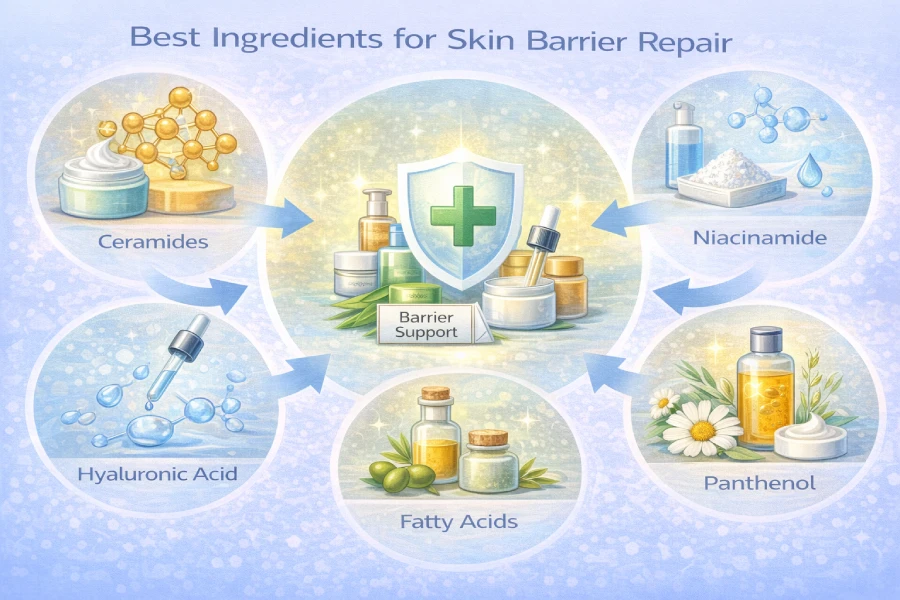
Ceramides: Barrier-supportive lipids that help strengthen the skin’s outer protective layer and improve moisture retention.
Fatty Acids: Lipid components that help support skin softness, barrier resilience, and protective function.
Cholesterol: A naturally occurring skin lipid that works alongside ceramides and fatty acids to support barrier integrity.
Why Ingredient Selection Matters in Barrier Repair
The skin barrier regulates hydration and protects against irritation, which is why ingredient selection matters so much in barrier-focused treatment design. Estheticians are often supporting skin that is dehydrated, stressed, sensitive, or recovering from professional procedures. In those cases, ingredient choice influences how comfortable the skin feels and how effectively it recovers.
Modern barrier repair is not usually about one hero ingredient used in isolation. It is more often about choosing ingredients that work together to support moisture retention, calmness, and structural barrier function.
Ceramides as Core Barrier Support Ingredients
Ceramides are often discussed as some of the most important ingredients for skin barrier repair because they directly relate to the skin’s protective outer structure. In professional skincare, ceramides make sense in recovery-focused treatments because they support moisture retention and help reinforce a more resilient barrier environment.
This is especially important when the skin has been stressed by over-exfoliation, environmental exposure, or aggressive treatment history.
Why Fatty Acids Matter in Recovery Protocols
Fatty acids are another important part of barrier support because they help maintain softness, comfort, and lipid balance. In practical esthetic treatment planning, fatty acids support the kind of protective finishing phase that compromised skin often needs.
That makes them especially relevant in protocols built around calming, hydration, and post-treatment repair.
The Role of Cholesterol in Skin Barrier Function
Cholesterol is frequently discussed alongside ceramides and fatty acids because barrier repair works best when the skin’s lipid support system is considered as a whole. In professional skincare education, cholesterol helps estheticians understand that barrier function is not just about adding moisture. It is also about supporting the structural lipid environment that allows the skin to hold that moisture more effectively.
This broader view strengthens treatment logic and helps providers think more clearly about ingredient strategy.
Estheticians often support barrier repair treatments by pairing targeted products such as Hydration Ampoule with deeply hydrating recovery masks like HydroGlo Jelly Mask.
Why Hydration and Occlusion Still Matter
Hydration, occlusion, and calming ingredients support skin repair because barrier recovery is not only about lipids. The skin also needs supportive moisture strategies and protection against further water loss. That is why barrier-focused treatments often include both active support and occlusive finishing steps.
In treatment-room practice, this is where masks, hydration support, and recovery-oriented finishing phases become especially important.
How Estheticians Use Ingredient Knowledge Professionally
Ingredient knowledge helps estheticians decide how to build recovery-focused protocols after procedures and how to recognize when the skin needs support before more active treatment. Understanding ceramides, fatty acids, cholesterol, hydration support, and calming ingredients improves both protocol quality and client education.
This matters because barrier-focused care is often more effective when it is explained clearly. Clients respond better when they understand that the treatment is designed to help restore balance, not just apply random soothing products.
Frequently Asked Questions
Why is barrier repair important?
What treatments support barrier recovery?
What damages the skin barrier?
How can estheticians repair the barrier?
Suggested Internal Links
About This Professional Guide
This article is part of the Luminous Skin Lab Esthetician Education Series created to provide professional skincare knowledge for licensed estheticians and advanced practitioners.