What Is Skin Barrier Health?
This article explains what causes skin barrier damage within the context of professional skincare, barrier repair science, and esthetic treatment recovery.
Quick Answer
This article explains what causes skin barrier damage for estheticians focusing on over-exfoliation, environmental stress, and inflammation.
Key Takeaways
- Barrier health is critical to professional skincare outcomes.
- Hydration treatments help support skin recovery.
- Targeted ampoules and Poly-Luronic™️ Jelly Masks can support treatment protocols.
- The skin barrier plays a central role in protecting the skin and maintaining hydration balance.
- Barrier disruption can lead to dehydration, irritation, and slower treatment recovery.
- Estheticians must recognize barrier damage signs and apply recovery-focused protocols.
Skin Barrier Damage: Disruption of the skin’s outer protective function that can lead to irritation, dehydration, and slower recovery.
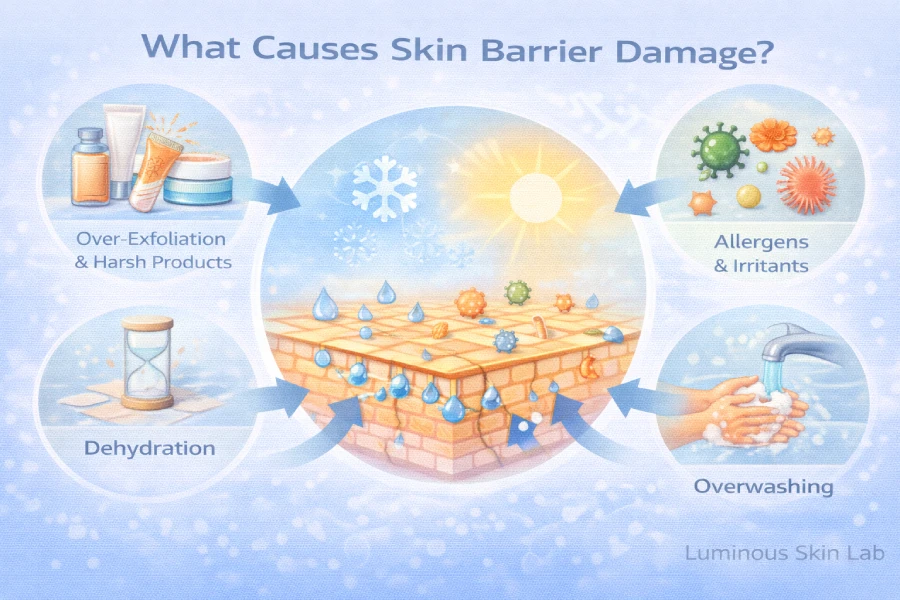
Over-Exfoliation: Excessive exfoliation that weakens the skin barrier and reduces the skin’s ability to recover comfortably.
Environmental Stress: External stressors that can contribute to barrier disruption and increased skin sensitivity.
Why Barrier Damage Matters in Professional Skincare
The skin barrier plays a central role in protecting the skin and maintaining hydration balance. When that barrier becomes compromised, treatment outcomes can change quickly. Skin may look tighter, feel more reactive, and recover more slowly after professional services.
For estheticians, understanding what causes barrier damage is important because it helps guide treatment choices. Instead of continuing with more stimulation, the provider may need to shift toward calming support, hydration, and a more recovery-focused protocol.
Over-Exfoliation as a Major Cause of Barrier Damage
Over-exfoliation is one of the most common causes of barrier disruption in professional skincare. When the skin is pushed too aggressively or too frequently, its protective function can become compromised. This can leave the client more prone to dryness, irritation, and prolonged sensitivity.
That is why barrier-aware estheticians treat exfoliation as something that must be matched carefully to skin condition, not simply intensified for the sake of stronger treatment.
How Environmental Stress Contributes to Barrier Problems
Environmental stress can also affect barrier strength. Even when treatment decisions are appropriate, outside stressors may influence how well the skin holds moisture and how comfortable it remains during recovery. This is one reason estheticians need to think beyond the treatment room and understand the skin’s overall condition.
When the barrier is already under stress, even ordinary professional treatments may need more supportive finishing steps.
Why Inflammation Can Worsen Barrier Disruption
Inflammation is another important contributor to barrier damage because it can amplify redness, reactivity, and discomfort. In treatment settings, inflammation may show up after aggressive exfoliation, overstimulation, or when the skin is already vulnerable before the service begins.
Understanding inflammation helps estheticians recognize that barrier support is not just about hydration. It is also about calming the skin and protecting treatment comfort.
Poly-Luronic™ Jelly Masks from Luminous Skin Lab are a great choice for professional use in barrier repair treatments, especially when estheticians want to support hydration, calming care, and post-treatment recovery.
How Estheticians Commonly Support Recovery
When barrier damage signs are present, estheticians often turn toward calming treatments, hydration protocols, and recovery masks. These steps help create a more supportive treatment conclusion and reduce the chance that the skin feels further stressed after the service.
This is where product pairing matters. Recovery-focused treatment design often depends on choosing ingredients and finishing phases that make the skin feel protected rather than pushed.
Why Barrier Awareness Improves Esthetic Decisions
Barrier science helps estheticians make better decisions about when to treat, when to pause, and when to prioritize support. A client may want correction, but if the barrier is already compromised, the most professional choice may be recovery first.
That shift in judgment is part of what separates trend-driven treatment from professional skincare strategy.
Frequently Asked Questions
What damages the skin barrier?
How can estheticians repair the barrier?
What does the skin barrier do?
Why is barrier repair important in professional skincare?
Suggested Internal Links
About This Professional Guide
This resource is part of the Luminous Skin Lab Esthetician Education Series designed to provide professional skincare education for licensed estheticians and advanced practitioners.