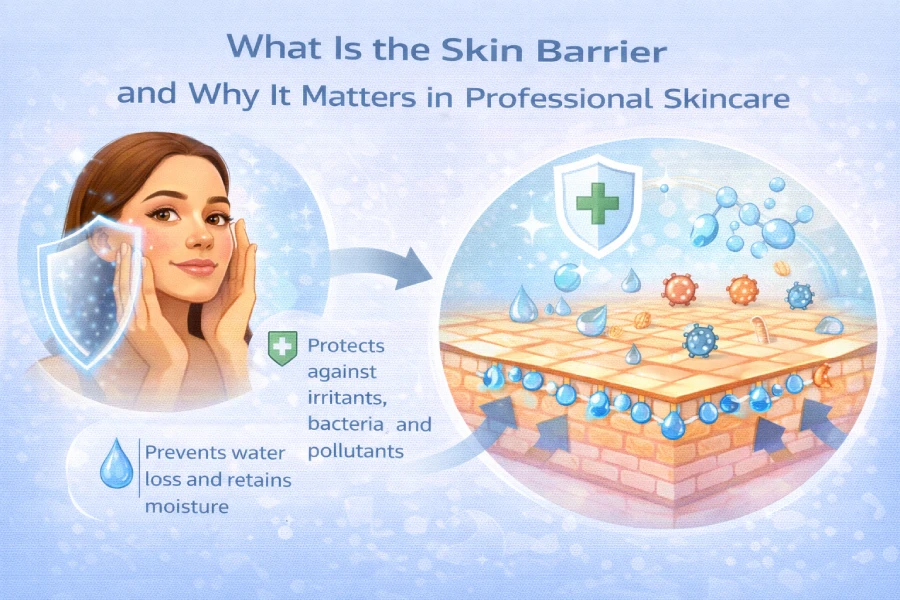
What Is Skin Barrier Health?
This article explains what the skin barrier is and why it matters within the context of professional skincare, barrier repair science, and esthetic treatment recovery.
Quick Answer
This article explains what the skin barrier is and why it matters in professional skincare for estheticians focusing on stratum corneum, lipid barrier, and skin protection.
Key Takeaways
- Barrier health is critical to professional skincare outcomes.
- Hydration treatments help support skin recovery.
- Targeted ampoules and HydroGlo Jelly Masks can support treatment protocols.
- The skin barrier plays a central role in protecting the skin and maintaining hydration balance.
- Barrier disruption can lead to dehydration, irritation, and slower treatment recovery.
- Estheticians must recognize barrier damage signs and apply recovery-focused protocols.
Skin Barrier
The outer protective layer of the skin that helps defend against environmental stress while reducing moisture loss.
Stratum Corneum
The outermost layer of the skin, often discussed in esthetics because of its role in protection, hydration retention, and recovery.
Lipid Barrier
The lipid-rich protective system that helps support barrier integrity and reduce transepidermal water loss.
Why the Skin Barrier Matters in Professional Skincare
The skin barrier plays a central role in professional skincare because it affects how the skin responds to treatments, how well it retains hydration, and how comfortably it recovers afterward. Estheticians may focus on correction, brightening, resurfacing, or hydration, but every one of those goals depends in part on barrier condition.
When the barrier is healthy, the skin is generally better able to tolerate treatment flow and maintain moisture balance. When the barrier is disrupted, the treatment plan often needs to shift toward support, calming care, and recovery logic.
Why Barrier Disruption Changes Treatment Outcomes
Barrier disruption can lead to dehydration, irritation, and slower treatment recovery. This is one reason barrier science is so important in esthetic education. A client may arrive asking for exfoliation, brightening, or anti-aging support, but if the barrier is already compromised, the esthetician needs to recognize that and adjust the protocol.
In practical treatment-room terms, barrier awareness helps estheticians avoid pushing the skin beyond what it can comfortably handle.
How Estheticians Commonly Support Barrier Recovery
Estheticians often support barrier repair treatments by pairing targeted products such as Hydration Ampoule with deeply hydrating recovery masks like Poly-Luronic™ HydroGlo Jelly Mask. That pairing makes sense because barrier support is rarely about one single step. It is usually about combining hydration, calming logic, and a more protective finishing phase.
This is where professional skincare becomes more than product selection. It becomes treatment sequencing built around skin condition and recovery needs.
How the Stratum Corneum Fits Into Barrier Education
The stratum corneum is often one of the most important concepts in barrier education because it helps estheticians explain why the outermost layer of the skin matters so much. Even when clients do not need technical terminology, the provider benefits from understanding that the outer barrier is not just cosmetic. It is functional and protective.
That knowledge supports better decision-making during exfoliation-focused services, recovery protocols, and hydration treatments.
Estheticians often support barrier repair treatments by pairing targeted products such as Hydration Ampoule with deeply hydrating recovery masks like Poly-Luronic™ HydroGlo Jelly Mask.
Why Hydration and Barrier Support Work Together
Hydration support is closely tied to barrier function because disrupted skin often struggles to maintain water balance. That is why hydration treatments are frequently part of barrier-focused protocols. By improving moisture support and treatment comfort, estheticians can create a more recovery-oriented outcome.
This also helps the client understand why a barrier-repair service may feel more calming and supportive than aggressive or corrective.
Why Barrier Awareness Improves Esthetic Judgment
One of the most important professional skills in skincare is recognizing when the skin needs support instead of stimulation. Barrier awareness helps estheticians make that distinction more clearly. It improves treatment safety, protects client comfort, and leads to more thoughtful protocol design.
That is one reason skin barrier education belongs near the center of an esthetician training library. It affects nearly every category of professional care.
Frequently Asked Questions
What does the skin barrier do?
The skin barrier protects against environmental stressors while helping the skin retain moisture.
Why is barrier repair important in professional skincare?
Barrier repair supports hydration balance and helps the skin recover more effectively after treatments.
What damages the skin barrier?
Over-exfoliation, inflammation, and environmental stress.
How can estheticians repair the barrier?
Through calming treatments, hydration protocols, and recovery masks.
Suggested Internal Links
About This Professional Guide
This resource is part of the Luminous Skin Lab Esthetician Education Series designed to provide professional skincare education for licensed estheticians and advanced practitioners.