How Do You Repair a Damaged Skin Barrier?
Repairing a damaged skin barrier means removing what is aggravating it and systematically rebuilding the skin's moisture-retaining lipid layer. The fastest, safest path is to simplify the routine, pause harsh actives, and support the barrier with humectants, lipids, and occlusion until it can hold water on its own again.
- Stop the damage first. Pause exfoliating acids, retinoids, and aggressive treatments while the barrier recovers.
- Simplify. A short routine of gentle cleanse, hydrate, and protect beats a long list of actives.
- Rebuild in layers. Pair humectants (which attract water) with lipids and occlusives (which hold it in).
- Protect daily. Sun and environmental stress slow repair; protection is part of the treatment.
- Give it time. Mild damage improves in two to four weeks; significant damage takes six to twelve.
- Reintroduce slowly. Bring actives back one at a time only once the skin is calm.
A compromised skin barrier is one of the most common reasons a client's skin stops responding the way it should. Products that once felt fine start to sting, hydration never seems to hold, and the skin looks red, flaky, or reactive. For estheticians, barrier repair is less about adding more and more about removing aggressors and rebuilding the skin's own defenses in the right order. This guide walks through how to recognize barrier damage, how long repair takes, and the in-treatment and homecare protocols that restore resilience.
Key Takeaways
- A damaged barrier shows up as tightness, stinging, redness, flaking, and dehydration that moisturizer alone won't fix.
- The first step is subtraction: pause acids, retinoids, and aggressive treatments.
- Repair works in layers — humectants to attract water, lipids and occlusives to seal it in.
- Daily protection from sun and environmental stress is part of the repair, not an afterthought.
- Mild damage improves in two to four weeks; more significant damage takes six to twelve.
- Actives are reintroduced one at a time, only after the skin is calm and stable.
How to Recognize a Damaged Skin Barrier
Before you can repair a barrier, you need to confirm that barrier damage is actually the problem. The hallmark signs are sensory and visible at once: skin that feels tight or stings when products are applied, redness or reactivity that wasn't there before, flaking or rough patches, and a persistent dehydrated look even when the client is moisturizing. Breakouts can appear too, because a weakened barrier lets irritants in and loses water out.
The common thread is a recent change: new actives layered too quickly, over-exfoliation, an aggressive peel or resurfacing treatment, or environmental stress. When a client's skin suddenly becomes reactive after doing “more,” the barrier is usually the reason. For a deeper checklist, see the signs of a damaged skin barrier and what causes skin barrier damage.
Step 1: Stop the Damage
Repair begins with subtraction, not addition. The single most effective move is to pause everything that is stripping or stressing the skin: exfoliating acids, retinoids, scrubs, high-strength vitamin C, and any in-treatment resurfacing. These ingredients and treatments aren't “bad” — they are simply too much for skin that can no longer defend itself. Continuing them while the barrier is open is what keeps the cycle going.
For the client, this means a temporary routine reset. For the treatment room, it means shelving peels and aggressive exfoliation until the barrier is stable. See ingredients to avoid on a compromised barrier for the full list.
Step 2: Rebuild in Layers
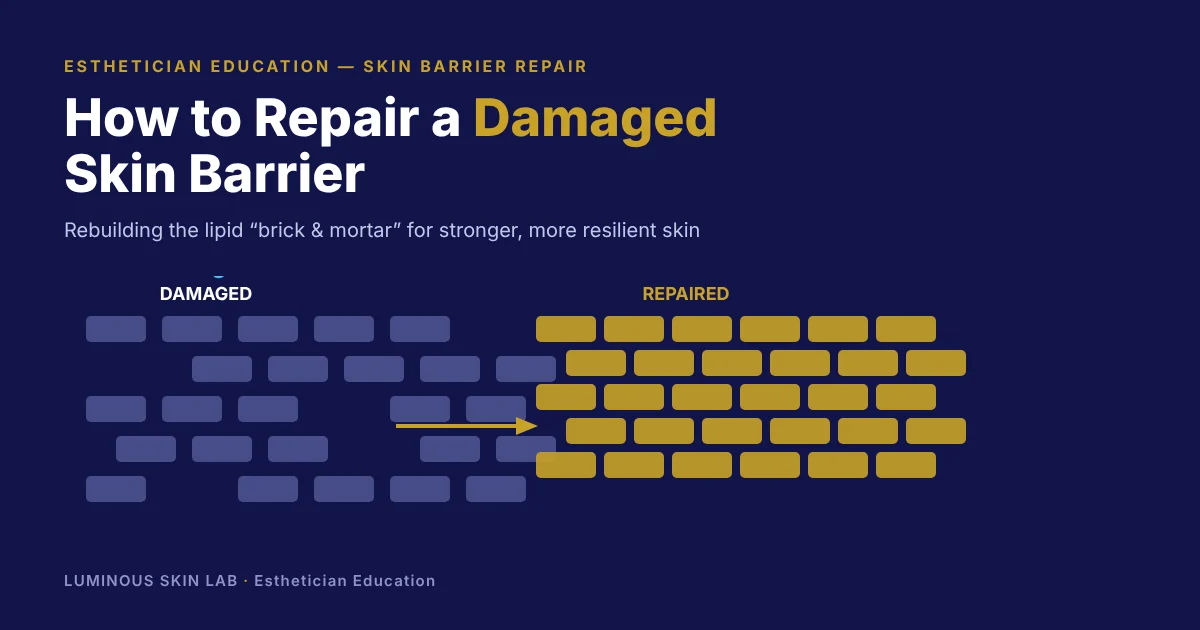
A healthy barrier holds water because of its lipid “brick and mortar” structure. Rebuilding it means supplying the components that let it hold moisture again, in the right order:
Humectants
Ingredients like hyaluronic acid, polyglutamic acid, and glycerin attract water into the skin and provide the moisture the barrier will hold.
Lipids
Ceramides, cholesterol, and fatty acids replenish the “mortar” between skin cells so the barrier can retain what the humectants attracted.
Occlusion
A protective finishing layer slows water loss while the barrier rebuilds, giving hydration time to do its work.
This layered logic matters because hydration alone isn't enough. Water-based products feel good briefly, but without lipids and occlusion to seal them in, the moisture evaporates and the skin is dehydrated again by afternoon. See the best ingredients for skin barrier repair for specifics.
Step 3: Support Repair in the Treatment Room
Professional treatment accelerates barrier repair when it's calming rather than stimulating. Hydration-focused facials, nutrient infusion, and occlusive recovery masks give the skin a concentrated dose of exactly what it needs without challenging it. The goal of every step is support: reduce inflammation, flood the skin with humectants and lipids, and seal with a protective finishing phase.
This is where recovery masks earn their place. A deeply hydrating, occlusive mask floods the skin with moisture and then holds it in while the client rests — a reset the barrier can't get from homecare alone. See professional facials for barrier repair and using jelly masks for barrier recovery.
Step 4: Protect and Give It Time
Barrier repair is as much about what you prevent as what you apply. Daily sun protection and shielding from environmental stress keep the skin from being re-damaged faster than it can heal. Equally important is managing expectations: a mildly compromised barrier often feels better within two to four weeks of consistent, gentle support, while more significant damage can take six to twelve weeks to fully stabilize. See how long skin barrier repair takes.
Step 5: Reintroduce Actives Slowly
Once the skin is calm — no stinging, redness settled, hydration holding — actives can return, but one at a time and at low frequency. Reintroducing a single acid or retinoid every couple of weeks lets you watch how the barrier responds and stop before it's overwhelmed again. Rushing back to a full active routine is the most common reason a repaired barrier breaks down a second time.
Barrier repair is sequencing, not a single product. The estheticians who get consistent results pair a calming, hydration-focused treatment plan with a disciplined homecare reset — subtraction first, then layered rebuilding, then slow reintroduction.
Frequently Asked Questions
How long does it take to repair a damaged skin barrier?
A mildly compromised barrier often improves within two to four weeks of consistent, gentle support, while more significant damage can take six to twelve weeks. The timeline depends on the degree of damage, how consistently aggravating steps are removed, and how well hydration and lipids are supported.
What are the signs of a damaged skin barrier?
Common signs include tightness, stinging or burning when applying products, increased redness or sensitivity, flaking, dehydration despite moisturizing, and breakouts or rough texture that appear after over-exfoliation or aggressive treatment.
Should you stop all active ingredients to repair the barrier?
Not necessarily all, but the routine should be simplified. Pausing exfoliating acids, retinoids, and strong actives while the barrier recovers reduces irritation and lets hydration and lipid support do their work. Actives can be reintroduced gradually once the skin is calm.
Can you over-moisturize a damaged skin barrier?
The goal is balanced support, not saturation. A damaged barrier benefits most from humectants that attract water paired with lipids and occlusives that hold it in. Relying on water-based hydration alone, without the lipids and occlusion that seal it, can leave the skin feeling temporarily plump but still dehydrated.
What professional treatments support barrier repair?
Calming, hydration-focused facials, occlusive recovery masks, and gentle nutrient infusion support barrier recovery. Aggressive exfoliation, strong peels, and intensive resurfacing are paused until the barrier is stable.
Suggested Internal Links
About This Professional Guide
This resource is part of the Luminous Skin Lab Esthetician Education Series designed to provide professional skincare education for licensed estheticians and advanced practitioners.