Definition
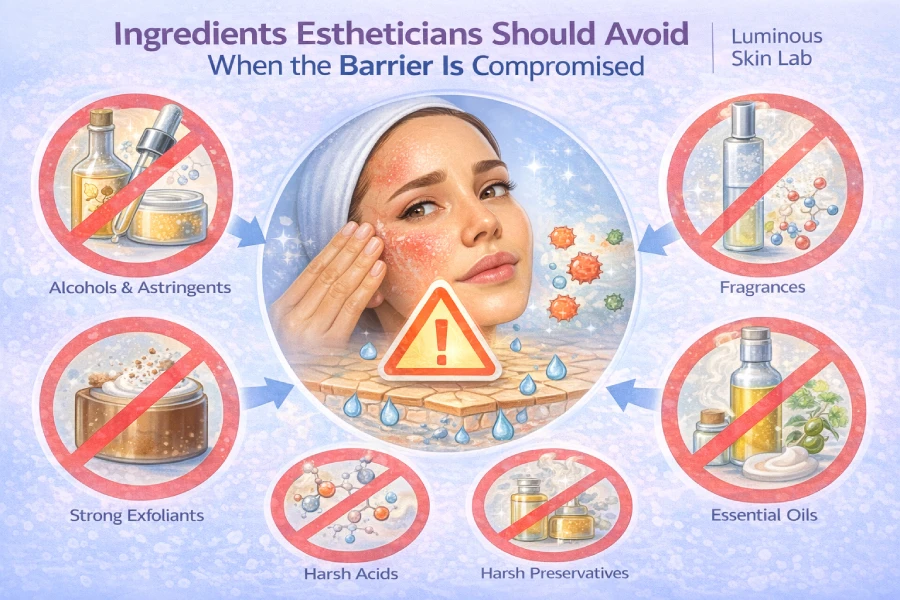
This article explains ingredients estheticians should avoid when the barrier is compromised within professional skincare protocols focused on hydration, barrier repair, and post-treatment recovery.
Quick Answer
This article explains ingredients estheticians should avoid when the barrier is compromised for estheticians focusing on strong acids, retinoids, and over-exfoliation.
Key Takeaways
- Barrier health is critical to professional skincare outcomes.
- Hydration treatments help support skin recovery.
- Targeted ampoules and HydroGlo Jelly Masks can support treatment protocols.
- The skin barrier regulates hydration and protects against irritation.
- Barrier-focused treatments improve recovery after professional procedures.
- Hydration, occlusion, and calming ingredients support skin repair.
Strong Acids: Potent exfoliating acids that can increase irritation and sensitivity when the barrier is already weakened.
Retinoids: Active ingredients often used for renewal and correction, but sometimes too stimulating for compromised skin.
Over-Exfoliation: Excessive exfoliation that disrupts barrier function and worsens dehydration, irritation, and sensitivity.
Why Ingredient Restraint Matters in Barrier Repair
The skin barrier regulates hydration and protects against irritation. When that barrier is compromised, ingredient selection becomes just as important as the treatments used. In professional skincare, the goal is not simply to keep applying actives because they are popular or effective under normal conditions. The goal is to protect recovery and avoid pushing already stressed skin further into irritation.
This is why estheticians need to know which ingredients to avoid when the barrier is weakened. Ingredient restraint is part of professional judgment and recovery-focused treatment design.
Why Strong Acids Can Be a Problem
Strong acids may be effective in resurfacing or correction-oriented protocols, but they can become problematic when the barrier is compromised. Skin that is already dry, tight, inflamed, or reactive may not tolerate aggressive acid exposure well. Instead of helping the skin improve, strong acids can worsen irritation and delay recovery.
That is why barrier-focused care often requires a temporary step back from highly stimulating exfoliating ingredients until the skin is more stable.
Why Retinoids May Need to Be Avoided Temporarily
Retinoids are widely respected in skincare, but they are not always appropriate when barrier function is already weakened. In compromised skin, retinoids may contribute to additional dryness, flaking, reactivity, or discomfort. For estheticians, this does not mean retinoids are bad ingredients overall. It means timing matters.
When the barrier is stressed, the professional priority often shifts from correction to support, calmness, and hydration restoration.
Over-Exfoliation as an Ongoing Risk
Over-exfoliation is one of the most common reasons barrier health deteriorates in the first place. That is why estheticians must not only avoid excessive exfoliation treatments, but also recognize when ingredient combinations create an over-exfoliating environment. Even a client with good intentions may arrive using too many strong actives at once.
In these cases, the treatment room conversation becomes part of barrier repair. Education matters just as much as product choice.
Estheticians often support barrier repair treatments by pairing targeted products such as Calming Ampoule with deeply hydrating recovery masks like HydroGlo Jelly Mask.
Why Calming and Hydration-Focused Ingredients Make More Sense
Barrier-focused treatments improve recovery after professional procedures, and that is one reason calming and hydration-centered ingredients become more important when the barrier is compromised. Instead of choosing ingredients that push rapid turnover or strong resurfacing, estheticians often shift toward recovery masks, hydration support, and more protective finishing steps.
This helps the skin restore moisture balance and reduces the likelihood of further irritation.
How Estheticians Can Use This Knowledge Professionally
Estheticians who understand which ingredients to avoid are better able to protect treatment outcomes and client comfort. This knowledge supports better protocol adjustments, better aftercare recommendations, and better long-term trust. Clients often need to hear not only what to use, but also what to pause.
That is why knowing when to avoid strong acids, retinoids, and excessive exfoliation is such an important part of barrier repair education.
Frequently Asked Questions
Why is barrier repair important?
What treatments support barrier recovery?
What damages the skin barrier?
How can estheticians repair the barrier?
Suggested Internal Links
About This Professional Guide
This article is part of the Luminous Skin Lab Esthetician Education Series created to provide professional skincare knowledge for licensed estheticians and advanced practitioners.