Definition
This article explains how long skin barrier repair takes within professional skincare protocols focused on hydration, barrier repair, and post-treatment recovery.
For estheticians, this topic matters because clients often want to know when their skin will feel normal again. Recovery timelines depend on how compromised the barrier is, what caused the damage, and whether the skin is receiving enough hydration, calming support, and barrier-conscious care during the healing phase.
Quick Answer
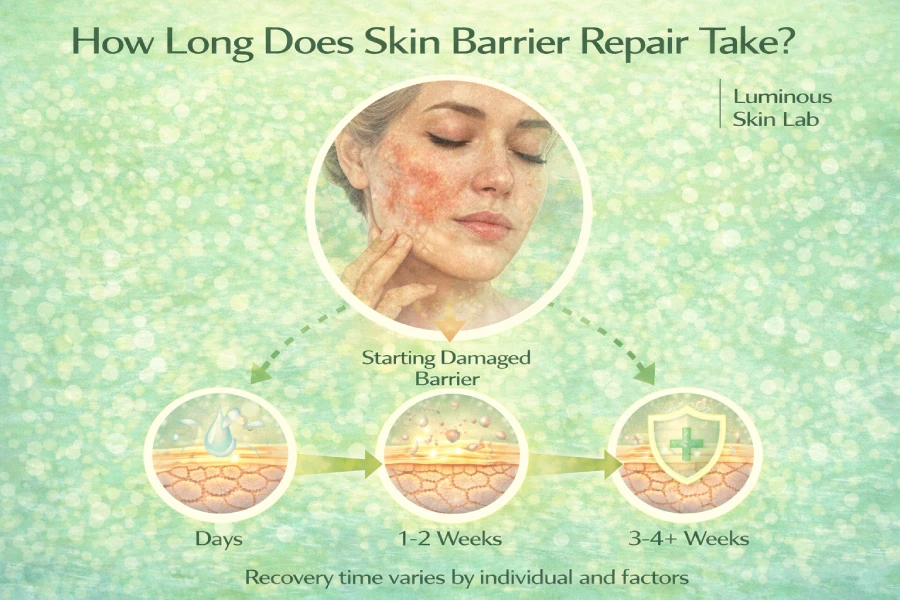
Skin barrier repair can take anywhere from several days to several weeks depending on the level of damage, the source of irritation, and how consistently recovery support is provided. Mild barrier disruption may improve relatively quickly, while more compromised skin often needs longer recovery with hydration, calming care, and reduced exposure to further stress.
Key Takeaways
- Skin barrier repair timelines vary based on the severity of barrier damage.
- Mild irritation may improve quickly, while more compromised skin often needs weeks of support.
- Hydration and moisture retention play a major role in recovery speed.
- Treatment expectations should be explained clearly so clients understand that healing is gradual.
- Hydration ampoules and HydroGlo Jelly Masks can support professional recovery protocols during barrier repair.
One of the most common questions clients ask is how long skin barrier repair will take. It is an understandable concern because barrier damage often feels uncomfortable in ways clients notice immediately. Their skin may feel tight, dry, red, reactive, or unusually sensitive, and they want to know when that discomfort will improve.
For estheticians, the answer is rarely the same for every client. Barrier repair does not follow a single universal timeline because the skin can be mildly stressed, moderately compromised, or significantly weakened depending on what caused the problem. Home care habits, treatment history, environmental exposure, and inflammation all affect the pace of recovery.
This is why setting expectations matters so much. Clients usually feel more confident when they understand that barrier healing is gradual and that recovery support is part of the professional plan rather than a sign that something has gone wrong.
Why Barrier Repair Timelines Can Vary So Much
The skin barrier repairs at different speeds depending on the condition of the skin and the level of disruption. A client with mild over-exfoliation may recover faster than someone dealing with repeated irritation, strong actives, chronic dehydration, or post-treatment inflammation.
This variation matters because clients often compare their experience to what they see online or what someone else told them. In reality, barrier repair timelines are highly individual. Estheticians should evaluate the current condition of the skin rather than relying on a fixed recovery estimate.
What Mild Barrier Damage Recovery May Look Like
When barrier disruption is mild, the skin may begin to feel more comfortable within a relatively short period once irritation is reduced and hydration support is added. Tightness may improve, reactivity may decrease, and the skin may start to feel less stressed after several days of more supportive care.
This kind of recovery is more likely when the damage is recent, the skin is otherwise healthy, and the client stops the routine habits that triggered the barrier stress in the first place.
Why More Compromised Skin Often Needs Longer Support
More severely compromised skin usually needs a longer recovery window. This is often the case when the client has been over-exfoliating for an extended period, layering too many active products, or recovering from aggressive treatments without enough barrier support.
In these situations, the skin may continue to feel reactive even after irritating steps are removed. That is because the barrier needs time not only to calm down, but also to regain its ability to hold moisture and tolerate normal daily stress more effectively.
This is why treating severely dehydrated skin is closely tied to understanding longer repair timelines in professional skincare.
The Role of Hydration in Recovery Speed
Hydration is one of the most important factors in barrier repair because skin that holds moisture more effectively is usually more comfortable during recovery. When the barrier is weak, transepidermal water loss often increases, which can make the skin feel tight and prolong visible stress.
Hydration support helps improve the environment in which the skin heals. This does not mean hydration instantly repairs the barrier, but it does mean recovery is often more comfortable and more stable when hydration is built into the treatment plan.
This is also why hydration is critical for skin barrier recovery, especially when the healing timeline is longer than the client expects.
Why Recovery Is Slower When Stress Continues
One reason barrier repair can take longer is that clients may continue doing the things that caused the damage in the first place. Harsh cleansing, repeated exfoliation, strong actives, sun exposure, and poor recovery support can all slow progress.
If the skin is repeatedly stressed while trying to heal, the repair timeline often stretches out. That is why successful barrier recovery depends not only on what estheticians apply in treatment, but also on what the client stops doing between appointments.
Clients often hope the skin barrier will recover immediately once they switch products or get a calming treatment. In reality, improvement often happens in stages. Comfort may improve first, while full stability may take longer depending on the severity of barrier damage.
How Estheticians Should Set Client Expectations
Client communication is a major part of barrier repair planning. Estheticians should explain that the timeline depends on how damaged the barrier is, how reactive the skin has become, and how consistently the recovery protocol is followed.
It helps to explain that early signs of progress may include less tightness, less burning, better comfort after cleansing, and reduced visible stress. Full stability may take longer, especially if the skin has been compromised for some time.
This is why clear client communication about barrier damage is so important during recovery planning.
Professional Treatment Insights
Estheticians often support barrier repair treatments by pairing targeted products such as Hydration Ampoule with deeply hydrating recovery masks like HydroGlo Jelly Mask. This kind of pairing helps improve comfort, reduce visible stress, and create a more supportive environment while the skin moves through its repair timeline.
The value of this approach is that it supports the client through the recovery process rather than expecting the skin to heal with minimal assistance. Professional hydration support often helps make the timeline feel more manageable and the treatment plan more reassuring.
Why Understanding the Timeline Improves the Client Experience
Clients often feel discouraged when the barrier does not recover as quickly as they hoped. When estheticians explain the timeline realistically, clients are less likely to mistake gradual healing for treatment failure.
That understanding builds trust and improves compliance. Instead of expecting an instant reset, the client begins to see recovery as a process that requires patience, consistency, and proper support.
Conclusion
Skin barrier repair can take days to weeks depending on how compromised the skin is, what caused the damage, and how effectively recovery support is managed. Mild damage may improve relatively quickly, while more stressed skin often requires longer healing time and more careful barrier-conscious care.
For estheticians, the most important role is not only supporting the skin with hydration and calming treatment, but also setting realistic expectations. When clients understand that healing is gradual, they are more likely to follow the recovery plan and trust the process.
This makes timeline education an important part of professional skin barrier repair care.
Frequently Asked Questions
How long does skin barrier repair usually take?
Why do some clients recover faster than others?
Can hydration speed up barrier recovery?
How should estheticians explain barrier repair timelines to clients?
Suggested Internal Links
About This Professional Guide
This article is part of the Luminous Skin Lab Esthetician Education Series designed to provide professional skincare knowledge for licensed estheticians and advanced practitioners.