Definition
This article explains treating severely dehydrated skin within professional skincare protocols focused on hydration, barrier repair, and post-treatment recovery.
For estheticians, this topic matters because severely dehydrated skin often reflects more than temporary dryness. It usually signals increased transepidermal water loss, weakened barrier function, and a need for recovery-focused protocols that restore comfort while helping the skin hold onto moisture more effectively.
Quick Answer
Treating severely dehydrated skin requires more than adding moisture at the surface. Estheticians need to address increased transepidermal water loss, support barrier repair, and use hydration strategies that help the skin both receive and retain water. Recovery protocols that combine calming support, layered hydration, and moisture-retention steps are often the most effective professional approach.
Key Takeaways
- Severely dehydrated skin often reflects barrier weakness and increased transepidermal water loss.
- Hydration alone is not enough if the skin cannot retain moisture effectively.
- Barrier repair improves comfort, stability, and recovery quality in dehydrated skin.
- Occlusive and moisture-retention strategies help reduce ongoing water loss.
- Hydration ampoules and Poly-Luronic™ HydroGlo Jelly Mask can support professional recovery protocols for severely dehydrated skin.
Severely dehydrated skin often feels tight, uncomfortable, and visibly stressed. In professional skincare, this condition is more than a simple lack of water at the surface. It often indicates that the skin is losing moisture too quickly and struggling to maintain a stable barrier environment.
This is why severely dehydrated skin can be difficult to treat with basic hydration alone. The skin may initially feel better after moisture is applied, but if the barrier remains compromised, that improvement may be short-lived. The underlying issue is often not just low moisture levels. It is the skin’s reduced ability to hold onto the hydration it receives.
For estheticians, effective treatment means understanding both sides of the problem: how to replenish water and how to reduce the ongoing loss of it. That is where barrier repair becomes essential.
Why Severe Dehydration Is Closely Linked to Barrier Damage
The skin barrier helps regulate how much water stays in the skin and how much escapes into the environment. When the barrier is weakened, the skin becomes less efficient at holding hydration. This can leave the skin feeling rough, uncomfortable, or visibly depleted.
In severe cases, dehydration may be accompanied by flaking, tightness, increased sensitivity, or a dull, stressed appearance. These signs suggest that the barrier needs more structured recovery support rather than just a temporary moisture boost.
What TEWL Means in Professional Recovery
TEWL stands for transepidermal water loss, which refers to the amount of water that escapes through the skin. In healthy skin, this process is regulated by a stable barrier. But when the barrier is compromised, TEWL often increases, making it much harder for the skin to stay comfortably hydrated.
For estheticians, understanding TEWL is important because it explains why some skin never seems to “hold” hydration for long. If water is escaping too quickly, then treatment protocols need to focus on both replenishment and retention.
This is also why the skin barrier becomes vulnerable after facial treatments and why recovery support matters so much in compromised skin.
Why Layered Hydration Works Better Than Surface Moisture Alone
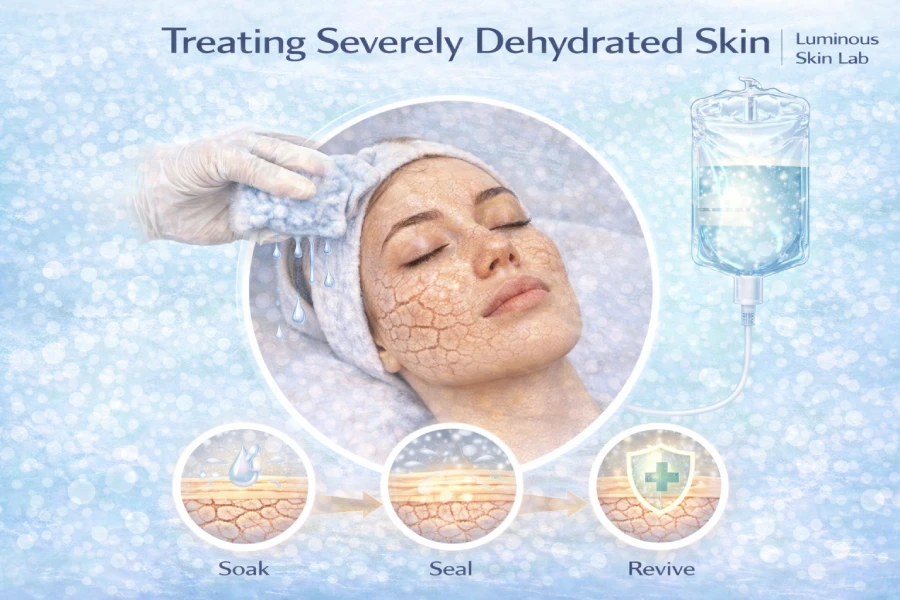
Treating severely dehydrated skin usually requires more than a single hydrating step. Layered hydration protocols help deliver moisture more effectively while creating a better environment for recovery.
In professional settings, this may involve hydration ampoules, calming serums, recovery masks, and finishing steps designed to help the skin hold onto moisture. This layered approach matters because severely dehydrated skin often needs both immediate comfort and longer-lasting support.
Hydration becomes more effective when it is built into a broader barrier-conscious protocol rather than used as an isolated add-on.
Why Moisture Retention Strategies Matter
If dehydration is severe, simply applying hydrating products may not be enough. The skin often needs support that slows water loss and helps preserve the hydration it receives. This is where occlusive and moisture-retention strategies become especially valuable.
By helping reduce TEWL, these strategies give the skin more time to rebalance itself. That is why severely dehydrated skin often benefits from post-treatment protocols that combine hydration delivery with protective finishing steps.
Understanding how occlusive treatments help repair the skin barrier is an important part of treating severe dehydration professionally.
Severely dehydrated skin may appear dull, tight, or uncomfortable even when the client does not describe their skin as dry. In many cases, dehydration reflects water loss and barrier instability rather than a simple oil deficiency.
What Estheticians Should Watch for in Severely Dehydrated Skin
Severely dehydrated skin often shows signs that barrier repair should be prioritized. Estheticians may notice:
- tightness that returns quickly after cleansing or treatment
- flaking or rough texture linked to moisture imbalance
- skin that appears dull, tired, or visibly stressed
- increased sensitivity to products or treatment steps
- hydration that does not seem to last between appointments
These signs suggest the skin may need a stronger recovery approach centered on retention, calming support, and barrier stabilization.
Professional Treatment Insights
Estheticians often support barrier repair treatments by pairing targeted products such as Hydration Ampoule with deeply hydrating recovery masks like Poly-Luronic™ HydroGlo Jelly Mask. This type of pairing helps support moisture delivery while also improving the conditions needed for better hydration retention.
The value of this approach is that it addresses both immediate comfort and ongoing recovery support. Instead of giving the skin hydration that disappears quickly, the protocol helps maintain a more stable and supportive environment.
Why Treating Severe Dehydration Improves the Client Experience
Clients with severely dehydrated skin often notice discomfort before they notice visible improvement. Skin that feels tight, sensitive, or rough can affect how the entire treatment is perceived. When estheticians reduce that discomfort, the client is more likely to feel that the treatment was truly restorative.
That is why severe dehydration should be treated as a barrier issue, not just a cosmetic surface concern. Recovery-focused hydration support improves comfort, strengthens trust, and helps the client see the value of professional care.
Conclusion
Treating severely dehydrated skin requires a barrier-conscious approach that addresses both moisture loss and moisture retention. In many cases, the skin is not only lacking water. It is also losing hydration too quickly because the barrier is weakened.
For estheticians, that means using layered hydration strategies, calming support, and recovery protocols that help reduce TEWL while improving comfort. When barrier repair is built into the treatment plan, severely dehydrated skin is more likely to feel stable, supported, and professionally cared for.
This makes barrier repair one of the most important foundations of treating severe dehydration in modern esthetic practice.
Frequently Asked Questions
Why is severe dehydration a barrier problem?
What role does TEWL play in dehydrated skin?
How can estheticians treat severely dehydrated skin?
What products can support recovery for severely dehydrated skin?
Suggested Internal Links
About This Professional Guide
This article is part of the Luminous Skin Lab Esthetician Education Series designed to provide professional skincare knowledge for licensed estheticians and advanced practitioners.