Definition
This article explains how occlusive treatments help repair the skin barrier within professional skincare protocols focused on hydration, barrier repair, and post-treatment recovery.
Quick Answer
This article explains how occlusive treatments help repair the skin barrier for estheticians focusing on occlusion, moisture retention, and recovery masks.
Key Takeaways
- Barrier health is critical to professional skincare outcomes.
- Hydration treatments help support skin recovery.
- Targeted ampoules and HydroGlo Jelly Masks can support treatment protocols.
- The skin barrier regulates hydration and protects against irritation.
- Barrier-focused treatments improve recovery after professional procedures.
- Hydration, occlusion, and calming ingredients support skin repair.
Occlusion: A skincare strategy that helps reduce moisture loss by forming a protective layer over the skin.
Moisture Retention: The skin’s ability to hold water effectively and maintain comfort during recovery.
Recovery Mask: A treatment mask used to support hydration, calm stressed skin, and improve post-treatment barrier recovery.
Why Occlusion Matters in Barrier Repair
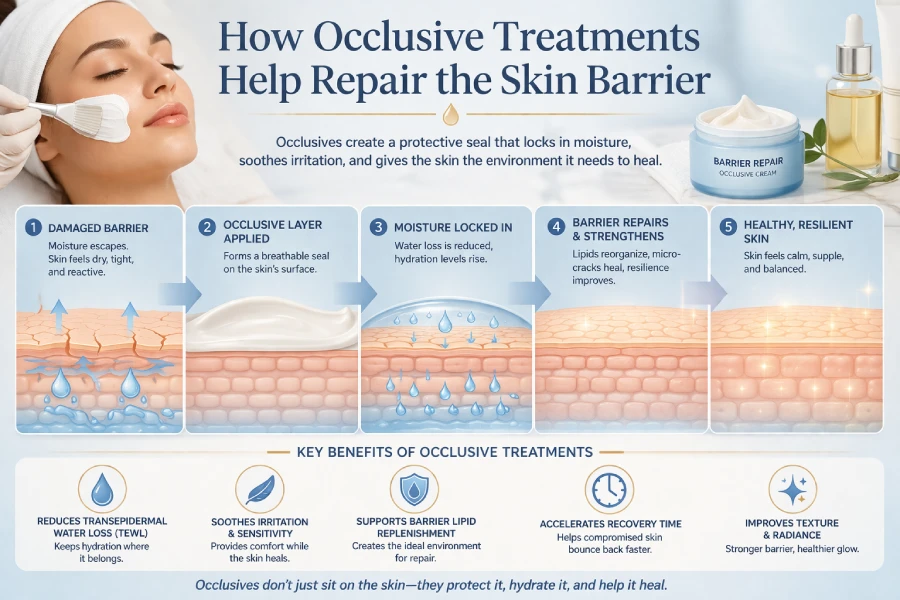
The skin barrier regulates hydration and protects against irritation. When the barrier is compromised, the skin loses moisture more easily and becomes more vulnerable to dryness, sensitivity, and delayed recovery. Occlusive treatments matter because they help create a more protective environment at the skin surface, reducing the amount of water that escapes while recovery is taking place.
For estheticians, this makes occlusion an important part of post-treatment care. It is not only about comfort. It is also about improving how well the skin holds onto the hydration needed for recovery.
How Moisture Retention Supports Barrier Recovery
Moisture retention is one of the key reasons occlusive treatments are used in barrier-focused protocols. When the skin is able to hold hydration more effectively, it generally feels less tight, less stressed, and better supported after professional procedures. This is especially important following exfoliation, active treatments, or any service that may temporarily weaken the skin’s protective function.
That is why barrier repair often includes not only hydration ingredients, but also strategies that help keep that hydration in place.
Why Recovery Masks Fit Naturally Into Occlusive Protocols
Recovery masks are often used because they combine hydration support with a more protective finishing phase. In professional skincare, this makes them especially useful when the goal is to calm the skin and reduce further moisture loss after treatment. Occlusive masks help create the kind of supportive surface environment that compromised skin often needs.
This is also why recovery masks can feel so important in barrier-focused facials. They help the skin transition from active treatment into recovery more smoothly.
How Occlusive Treatments Improve Post-Treatment Support
Barrier-focused treatments improve recovery after professional procedures, and occlusion is often part of that improvement. By reducing water loss and supporting a more stable recovery environment, occlusive treatments help protect the skin while it is regaining balance. This makes them relevant in protocols centered on hydration, calming support, and recovery-focused finishing steps.
In treatment-room terms, occlusion helps estheticians support the skin rather than leave it exposed after more active work has been completed.
Estheticians often support barrier repair treatments by pairing targeted products such as Poly-Luronic™ HydroGlo Jelly Mask with deeply hydrating recovery masks like Hydration Ampoule.
Why Occlusion Works Best as Part of a Larger Strategy
Occlusive treatments are most effective when they are used as part of a broader barrier repair strategy rather than as a stand-alone step. Hydration, calming support, and thoughtful recovery sequencing all contribute to better outcomes. Occlusion works within that larger system by helping hold moisture at the skin surface and supporting post-treatment comfort.
This broader view helps estheticians explain why barrier repair involves multiple supportive layers, not just one product or one ingredient.
Frequently Asked Questions
Why is barrier repair important?
What treatments support barrier recovery?
What damages the skin barrier?
How can estheticians repair the barrier?
Suggested Internal Links
About This Professional Guide
This article is part of the Luminous Skin Lab Esthetician Education Series created to provide professional skincare knowledge for licensed estheticians and advanced practitioners.