Definition
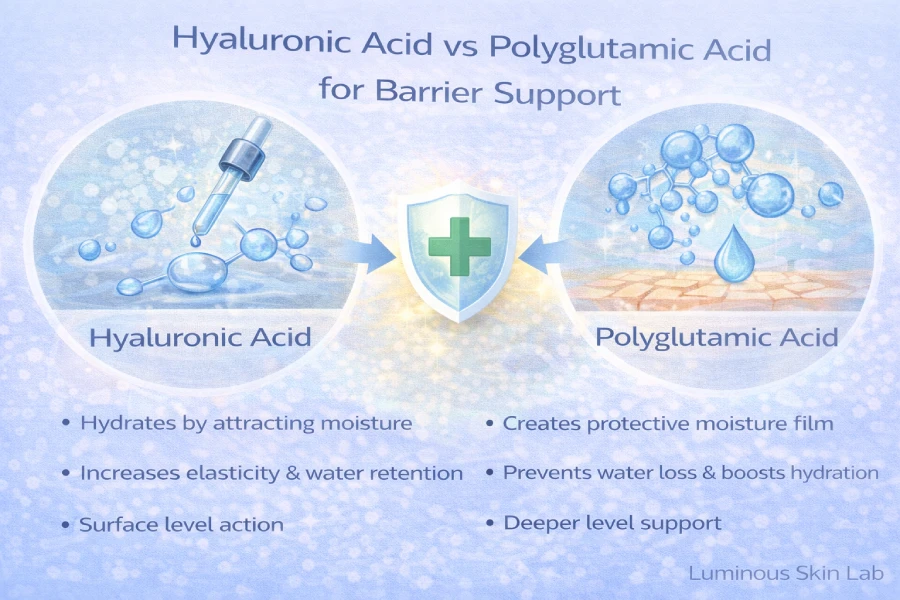
This article explains hyaluronic acid vs polyglutamic acid for barrier support within professional skincare protocols focused on hydration, barrier repair, and post-treatment recovery.
Quick Answer
This article explains hyaluronic acid vs polyglutamic acid for barrier support for estheticians focusing on hydration science, molecular water retention, and ingredient synergy.
Key Takeaways
- Barrier health is critical to professional skincare outcomes.
- Hydration treatments help support skin recovery.
- Targeted ampoules and HydroGlo Jelly Masks can support treatment protocols.
- The skin barrier regulates hydration and protects against irritation.
- Barrier-focused treatments improve recovery after professional procedures.
- Hydration, occlusion, and calming ingredients support skin repair.
Hyaluronic Acid: A hydration-focused ingredient widely used to help the skin attract and retain water.
Polyglutamic Acid: A hydration-supportive ingredient often discussed for its moisture retention properties and barrier-friendly support role.
Ingredient Synergy: The way two or more ingredients work together to create stronger hydration and recovery support than either one alone.
Why This Comparison Matters in Barrier Support
The skin barrier regulates hydration and protects against irritation, which is why hydration-focused ingredient comparisons matter so much in professional skincare. Estheticians often need to decide not only which ingredient is popular, but which one makes the most sense within a barrier repair protocol, a recovery facial, or a post-treatment hydration strategy.
That is why comparing hyaluronic acid and polyglutamic acid is useful. Both ingredients are associated with hydration support, but they may be positioned differently depending on treatment goals, finishing phases, and how the provider wants to explain moisture retention to the client.
Hyaluronic Acid in Barrier-Focused Skincare
Hyaluronic acid is often discussed in professional skincare because of its strong association with hydration science and water-binding support. In treatment-room education, it is commonly used to explain how the skin can be helped to maintain a more hydrated appearance and feel more comfortable after stress or treatment.
For barrier-focused care, hyaluronic acid makes sense when the goal is to support moisture availability and improve overall hydration balance in a way clients can understand easily.
Polyglutamic Acid and Moisture Retention Support
Polyglutamic acid is often discussed in relation to moisture retention and supportive hydration layering. In barrier repair conversations, it can be especially relevant when estheticians want to focus on keeping hydration at the skin surface and building a more supportive post-treatment environment.
This makes it a useful ingredient in professional discussions about recovery, occlusion, and finishing-phase comfort. It often fits naturally into more recovery-oriented hydration strategies.
Why Ingredient Synergy Matters More Than Ingredient Competition
In professional skincare, hyaluronic acid and polyglutamic acid do not always need to be positioned as competitors. Ingredient synergy is often more useful than ingredient comparison alone. Barrier-focused treatments improve recovery after professional procedures, and that often happens best when ingredients are selected to work together rather than forced into a winner-versus-loser framework.
This is especially true in hydration-centered protocols, where moisture attraction, retention, and finishing support all matter at the same time.
Estheticians often support barrier repair treatments by pairing targeted products such as Poly-Luronic™ HydroGlo Jelly Mask with deeply hydrating recovery masks like Hydration Ampoule.
How Estheticians Can Use This Comparison Professionally
For estheticians, the most useful question is not simply whether hyaluronic acid or polyglutamic acid is better in all situations. The more practical question is how each ingredient supports hydration and which treatment context makes the most sense for each one. That allows the provider to build smarter protocols and explain them more clearly to clients.
Hydration, occlusion, and calming ingredients support skin repair most effectively when they are selected as part of a complete barrier-focused strategy.
Why This Matters in Post-Treatment Recovery
Post-treatment recovery often depends on how well the skin maintains moisture and avoids additional stress. That is why both hyaluronic acid and polyglutamic acid can matter in barrier-supportive care. They fit into a larger conversation about hydration science, comfort, and long-term resilience after professional procedures.
For modern esthetic practice, this kind of ingredient understanding improves both treatment quality and client trust.
Frequently Asked Questions
Why is barrier repair important?
What treatments support barrier recovery?
What damages the skin barrier?
How can estheticians repair the barrier?
Suggested Internal Links
About This Professional Guide
This article is part of the Luminous Skin Lab Esthetician Education Series created to provide professional skincare knowledge for licensed estheticians and advanced practitioners.