Definition
This article explains how estheticians should explain skin barrier damage to clients within professional skincare protocols focused on hydration, barrier repair, and post-treatment recovery.
For estheticians, this topic matters because many clients do not understand why their skin suddenly feels tight, reactive, or uncomfortable. Clear communication helps clients understand the condition of their skin, trust the treatment plan, and follow barrier-focused recovery recommendations more consistently.
Quick Answer
Estheticians should explain skin barrier damage to clients in simple, practical language that connects symptoms to the skin’s protective function. Clients need to understand that barrier damage means the skin is losing moisture more easily and reacting more strongly than usual, which is why calming care, hydration, and recovery-focused treatment planning are often necessary before stronger correction continues.
Key Takeaways
- Client education helps make barrier repair easier to understand and follow.
- Simple language improves trust during consultations and treatment planning.
- Clients respond better when symptoms are explained in practical terms.
- Barrier repair recommendations are easier to follow when clients understand why recovery matters.
- Hydration support, calming care, and recovery masks can become easier to recommend when the barrier condition is clearly explained.
Many clients have heard the phrase “skin barrier damage,” but they do not always know what it actually means. They may understand that their skin feels dry, irritated, or sensitive, but they often do not connect those symptoms to a weakened protective barrier. This is where esthetician communication becomes especially important.
How an esthetician explains the issue can shape how seriously the client takes recovery. If barrier damage is explained in language that feels confusing, overly technical, or disconnected from the client’s own experience, the client may not fully understand why the treatment plan has changed or why certain products are being recommended.
For estheticians, the goal is not to make the explanation sound more scientific than necessary. The goal is to make it understandable, relevant, and reassuring. Clients need to know what is happening, why it matters, and what the recovery plan is designed to do.
Why Clear Explanation Matters During Consultations
Consultations are often the moment when a client is most open to guidance, especially if their skin feels uncomfortable or unpredictable. If the esthetician can explain barrier damage clearly, the client is more likely to understand why the focus needs to shift from aggressive correction to recovery support.
This matters because many clients expect fast treatment results. Without explanation, they may assume that more exfoliation, more active ingredients, or stronger correction is the answer. A clear consultation helps them understand that the skin may need stabilization first.
How to Describe Skin Barrier Damage in Simple Language
Clients usually do not need an advanced scientific explanation of the stratum corneum or transepidermal water loss in the first few minutes of consultation. What they often need is a simple description they can immediately relate to.
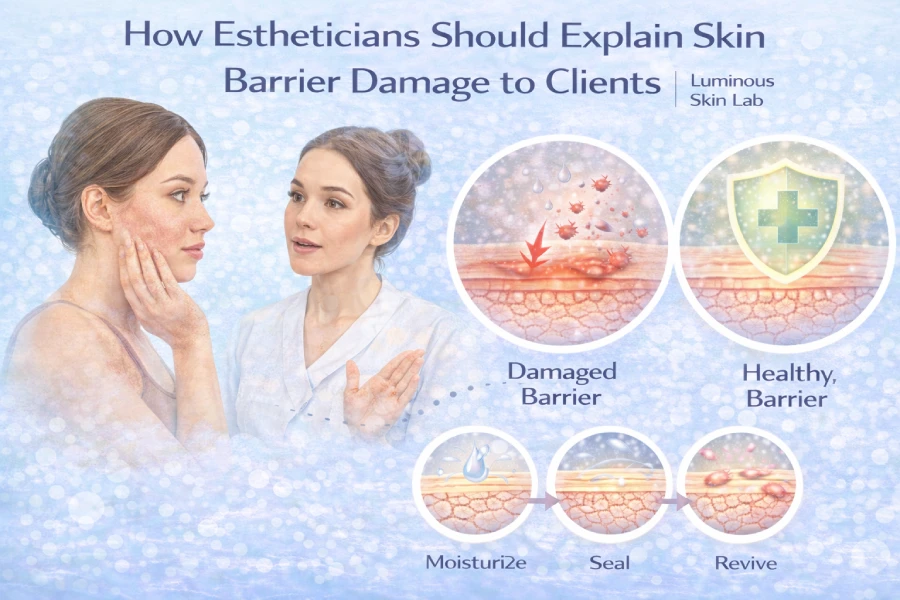
An esthetician might explain that the skin barrier is the protective outer layer that helps keep moisture in and irritation out. When it becomes damaged, the skin can lose hydration more easily and react more strongly to products, treatments, weather, or friction.
This type of explanation helps clients connect the idea of barrier damage to symptoms they already recognize, such as tightness, redness, dryness, flaking, or sensitivity.
Why Clients Need to Understand Symptoms, Not Just Terms
Saying that a client has barrier damage is not always enough. Clients are more likely to understand and accept the treatment plan when the esthetician explains what that damage looks and feels like in real life.
For example, if a client feels that their skin burns when they apply products, gets red after cleansing, or feels tight throughout the day, those symptoms can be linked directly to barrier weakness. This makes the explanation feel relevant rather than abstract.
Understanding the signs of a damaged skin barrier can help estheticians improve how they describe the condition during consultations.
How Education Supports Better Treatment Planning
When clients understand why barrier repair matters, they are usually more willing to accept a slower, more supportive treatment plan. They are also more likely to follow recovery recommendations between sessions.
This is especially important when the esthetician needs to delay stronger corrective treatment. If the client understands that recovery is part of the professional process, the treatment plan feels intentional rather than disappointing.
This is one reason client education is not separate from treatment planning. It is part of treatment planning.
Why Reassurance Matters When Explaining Barrier Damage
Clients often feel worried when they hear that their barrier is damaged. Some assume they have permanently harmed their skin or that their progress has been lost. Estheticians should address this concern directly.
A reassuring explanation helps the client understand that barrier damage is often temporary and manageable when the skin receives the right support. This makes the conversation feel solution-focused rather than alarming.
The best explanation of skin barrier damage is not the most technical one. It is the one that helps the client understand what is happening to their skin, why recovery matters, and what the treatment plan is designed to improve.
What Estheticians Should Emphasize During the Conversation
When explaining barrier damage to clients, estheticians should usually focus on:
- what the skin barrier does
- how the client’s current symptoms relate to barrier weakness
- why the skin needs hydration, calming care, and recovery support
- why stronger correction may need to wait temporarily
- what the client can do at home to support recovery
This structure helps the client understand both the condition and the plan without feeling overwhelmed.
Professional Treatment Insights
Estheticians often support barrier repair treatments by pairing targeted products such as Hydration Ampoule with deeply hydrating recovery masks like HydroGlo Jelly Mask. When clients understand that these treatments are designed to reduce visible stress, improve comfort, and help the skin hold onto moisture more effectively, they are more likely to view recovery support as an essential part of treatment rather than a temporary detour.
This is where good communication strengthens professional results. The esthetician is not only applying a treatment. They are also helping the client understand why that treatment matters.
Why Better Explanations Improve Client Trust
Clients are more likely to trust treatment changes when they understand the reasoning behind them. If an esthetician explains barrier damage well, the client is less likely to feel confused about why corrective treatment is being slowed down or why recovery-focused care is taking priority.
That trust improves compliance, follow-up, and long-term treatment relationships. In many cases, the quality of the explanation is part of the quality of the service itself.
Conclusion
Estheticians should explain skin barrier damage to clients using simple, practical language that connects the condition to real symptoms and clear recovery goals. Clients do not need an overly technical explanation. They need one that helps them understand what their skin is experiencing and why the treatment plan matters.
For estheticians, that means focusing on education, reassurance, and treatment logic. When clients understand that barrier repair supports hydration, comfort, and better recovery, they are more likely to trust the process and follow through with care.
This makes clear communication one of the most important professional tools in modern skin barrier repair treatment planning.
Frequently Asked Questions
Why should estheticians explain skin barrier damage clearly to clients?
How can estheticians describe skin barrier damage in simple language?
What should clients understand about barrier repair?
How does client education improve treatment planning?
Suggested Internal Links
About This Professional Guide
This article is part of the Luminous Skin Lab Esthetician Education Series designed to provide professional skincare knowledge for licensed estheticians and advanced practitioners.