Definition
This article explains how estheticians can reduce post-treatment inflammation within professional skincare protocols focused on hydration, barrier repair, and post-treatment recovery.
Post-treatment inflammation is a natural response to many professional skincare procedures, but managing it effectively improves comfort, recovery speed, and overall treatment outcomes.
Quick Answer
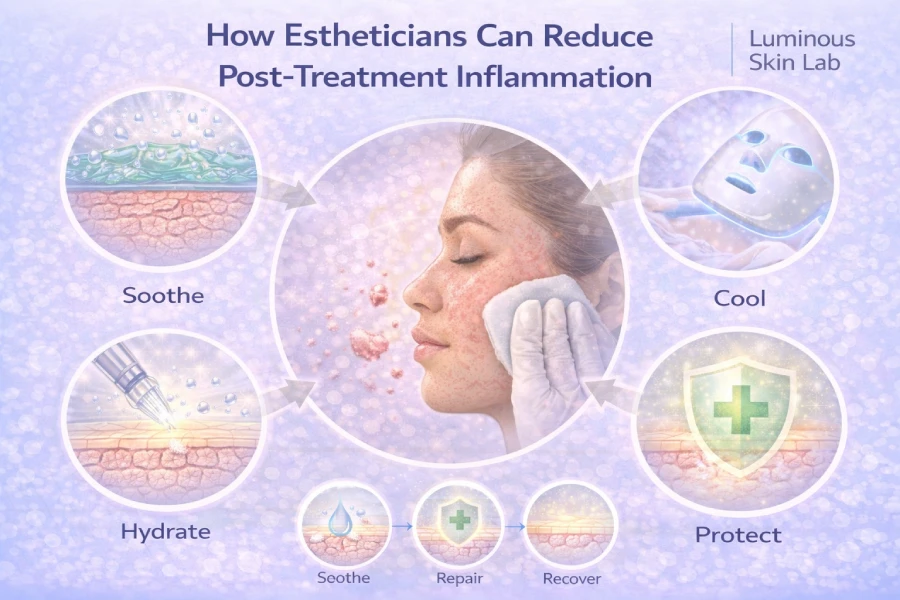
Estheticians reduce post-treatment inflammation by combining hydration, calming ingredients, cooling techniques, and recovery-focused skincare protocols. These strategies help minimize redness, reduce discomfort, and support the skin barrier during the recovery phase.
Key Takeaways
- Post-treatment inflammation is a natural response to skin stimulation.
- Hydration and calming ingredients help reduce visible redness.
- Cooling techniques improve comfort immediately after treatments.
- Barrier support is essential during inflammation recovery.
- Professional protocols improve both comfort and client confidence.
Inflammation is a common and expected response after many professional skincare treatments. Procedures such as exfoliation, microneedling, extractions, and chemical peels stimulate the skin, often leading to temporary redness, warmth, and sensitivity.
While this response is part of the treatment process, managing inflammation effectively is critical. Proper recovery support helps the skin return to balance more quickly while improving the client’s overall experience.
What Causes Post-Treatment Inflammation
Post-treatment inflammation is typically triggered by controlled skin stimulation. This may include exfoliation, active ingredients, mechanical treatments, or deeper corrective procedures that challenge the skin barrier.
Understanding why the skin barrier becomes vulnerable after treatments helps estheticians manage inflammation more effectively and design better recovery protocols.
The Role of Cooling Techniques
Cooling strategies are often used immediately after treatments to reduce visible redness and improve comfort. These may include chilled tools, cooling masks, or soothing application techniques that help calm the skin.
Cooling does not replace hydration or barrier repair, but it enhances the recovery process by quickly reducing discomfort.
How Hydration Helps Reduce Inflammation
Hydration plays a key role in stabilizing the skin during inflammation. When the skin is well-hydrated, it is better able to maintain balance and recover from stress.
Layered hydration using serums, ampoules, and masks helps reduce tightness and supports barrier function during recovery.
Why Calming Ingredients Are Critical
Calming ingredients help reduce visible redness and improve skin comfort. These ingredients are especially important after treatments that leave the skin more sensitive or reactive.
Supporting the skin with soothing formulations prevents additional irritation and helps the barrier return to stability more effectively.
Reducing post-treatment inflammation not only improves recovery but also enhances how clients perceive the treatment. Comfortable recovery leads to higher satisfaction and trust.
The Role of LED Therapy in Inflammation Control
LED therapy is often used in professional skincare to support calming protocols. It can help reduce visible redness and improve overall skin comfort after treatment.
In many protocols, LED therapy is combined with hydration and calming treatments to create a more complete recovery strategy.
Professional Treatment Insights
Estheticians often support inflammation reduction by pairing targeted tools such as ILUMILUX with calming formulations like Calming Ampoule. This approach helps improve comfort while supporting the skin during recovery.
Conclusion
Post-treatment inflammation is a normal part of many skincare procedures, but managing it effectively is essential. Hydration, calming ingredients, cooling techniques, and barrier-conscious care all contribute to better recovery and improved treatment outcomes.
Frequently Asked Questions
What causes post-treatment inflammation?
How can inflammation be reduced?
Does hydration help?
Is LED therapy useful?
Suggested Internal Links
About This Professional Guide
This article is part of the Luminous Skin Lab Esthetician Education Series designed to provide professional skincare knowledge for licensed estheticians and advanced practitioners.