What Happens to the Skin Immediately After Nano Infusion?
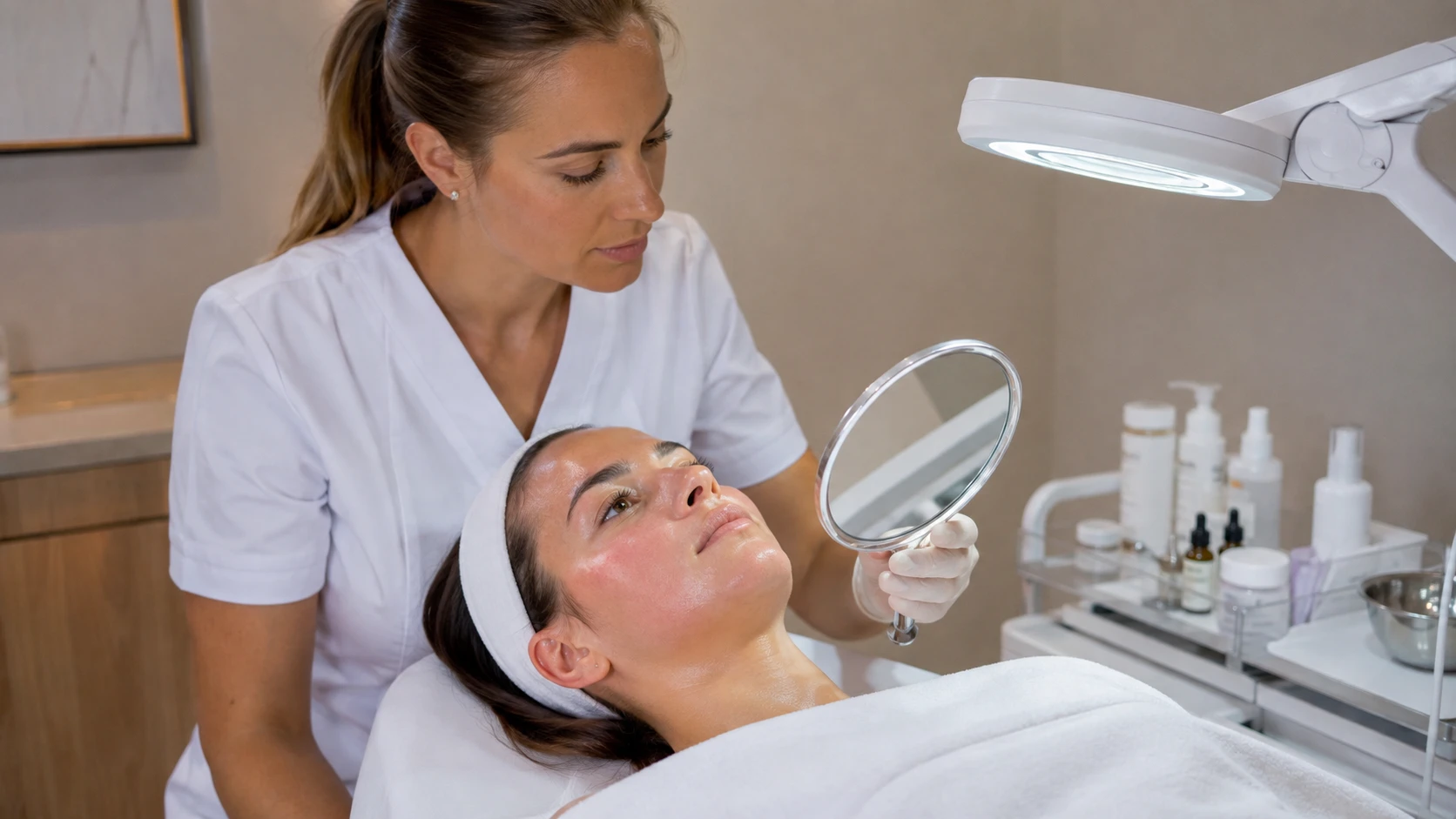
After nano infusion, the skin moves through a predictable recovery sequence beginning with a brief period of heightened permeability and mild vascular response, followed by barrier re-sealing, and completing with a consolidation phase in which hydration and surface texture improvements become visible. Because nano infusion works at the stratum corneum level rather than in the dermis, this recovery sequence is significantly shorter than post-microneedling recovery, with most clients experiencing full resolution within 24 to 72 hours.
- Mild redness or flush typically appears within minutes of the nano infusion pass and resolves within one to four hours for most clients.
- Microchannels created by the nano-tip remain transiently open for several hours, dramatically increasing ingredient absorption during this window.
- Transepidermal water loss (TEWL) is temporarily elevated immediately after the treatment, making immediate occlusive hydration support clinically important.
- Skin sensitivity is heightened for 12 to 24 hours post-treatment; active ingredients like retinoids and AHAs should be avoided during this window.
- Visible results—improved texture, hydration, and radiance—typically become apparent 24 to 48 hours after the session once post-treatment redness has fully resolved.
- Full barrier recovery completes within 48 to 72 hours, at which point the skin can tolerate its normal homecare routine including active ingredients.
One of the most common challenges estheticians face when introducing nano infusion into their service menu is client education about what to expect after the treatment. Clients accustomed to facials with no visible skin response can be surprised by even mild transient redness, while clients who have heard about microneedling may expect a more significant recovery period than nano infusion actually requires. Both misunderstandings lead to the same outcome: clients who are confused about their recovery timeline and less confident in the treatment they just received.
The clinical reality is that nano infusion creates a highly specific and well-understood skin response that is distinct from other modalities. Because the nano-tips interact with the stratum corneum rather than the living dermis, the skin’s response is primarily a surface-level permeability event rather than a wound healing cascade. Understanding the precise sequence of what happens—minute by minute and hour by hour—allows estheticians to deliver aftercare guidance that is not only clinically accurate but also reassuring for clients who might otherwise worry about what they are experiencing.
This article provides a detailed breakdown of the post-nano infusion skin response, covering the three recovery phases, the biological mechanisms driving each phase, and the practical implications for esthetician aftercare protocols. Whether a practitioner is new to nano infusion or looking to refine their client communication around this treatment, a thorough understanding of the post-treatment skin response is the foundation of a professional, results-oriented practice.
What Every Esthetician Should Understand About Post-Nano Infusion Skin Response
- Nano infusion recovery occurs in three distinct phases: immediate permeability (0–2 hours), stabilisation (2–24 hours), and consolidation (24–72 hours).
- The enhanced absorption window immediately post-treatment is the single most important clinical opportunity—applying the right ingredients in this window directly determines treatment outcomes.
- Transient erythema is a normal vascular response, not a sign of damage; communicating this clearly prevents unnecessary client concern and cancellations.
- TEWL increases post-treatment; occlusive hydration support applied immediately after the nano infusion pass actively accelerates barrier re-sealing.
- The skin is not ready for active ingredients, makeup, or heat exposure for a minimum of 12 hours and ideally 24 hours post-treatment.
- Unlike microneedling, nano infusion does not trigger a multi-week dermal healing cascade; results appear quickly and downtime is minimal.
- Consistent series adherence (typically 3–6 sessions) is required to achieve cumulative improvements in collagen support, tone, and hydration—a single session delivers temporary benefits only.
The Immediate Phase: What Happens in the First Two Hours
The moment a nano infusion treatment concludes, the skin enters what practitioners refer to as the immediate phase—a window of heightened biological activity that begins with the final pass of the nano-tip device and typically runs for the first one to two hours post-treatment. This phase is characterised by two simultaneous events: increased skin permeability and a transient vascular response.
Why the Skin Flushes After Nano Infusion
The mild redness that many clients display immediately after nano infusion is a predictable cutaneous vascular response. Even though nano infusion does not penetrate the dermis, the physical stimulation of the stratum corneum by silicon or stainless steel nano-tips activates nociceptive and mechanoreceptive signals in the upper epidermis that trigger a localised increase in surface blood flow through a process called neurogenic inflammation. This is not a pathological response; it is the same mild flushing mechanism that occurs with facial massage or light exfoliation. In most clients, this redness resolves within 30 to 90 minutes. Clients with rosacea-prone, sensitive, or highly reactive skin may retain mild flushing for up to four hours, which is well within the clinical normal range for this treatment type.
The Open-Channel Absorption Window
More clinically significant than the vascular response is the temporary increase in stratum corneum permeability. The nano-tips create microchannels in the outermost epidermal layers that measurably increase transdermal delivery of topically applied ingredients. Research on microchannel permeability enhancement consistently demonstrates that the greatest absorption advantage occurs immediately after channel creation, with permeability gradually declining as corneocytes re-seal over the following hours. This means the product applied immediately after the nano infusion pass—before the microchannels begin to close—achieves significantly deeper epidermal penetration than the same product applied to intact skin. This absorption window is the primary clinical mechanism by which nano infusion delivers its ingredient-infusion benefit, and it should be treated as the highest-priority moment in the entire treatment protocol.
The Barrier Biology Behind Post-Treatment Recovery
To understand why post-nano infusion aftercare decisions matter so much, estheticians need a working knowledge of how the skin barrier—specifically the stratum corneum—responds to the physical perturbation created by nano infusion. The stratum corneum is not a passive film; it is a dynamically regulated structure that responds to disruption through coordinated lipid synthesis and corneocyte re-organisation.
Transepidermal Water Loss and Why It Elevates Post-Treatment
One of the measurable consequences of stratum corneum disruption is an increase in transepidermal water loss (TEWL). Under normal conditions, the lipid bilayers between corneocytes act as a waterproof seal that limits water vapour movement from the viable epidermis to the external environment. When the stratum corneum is physically disrupted—even at the minimal level that nano infusion creates—the continuity of these lipid bilayers is temporarily compromised, allowing water to move more freely across the skin surface. Elevated TEWL after nano infusion is transient and self-correcting, but it does mean that in the hours immediately following a treatment, the skin is more vulnerable to dehydration than it would be under normal conditions. This is why applying an occlusive mask immediately post-treatment is a functional clinical decision rather than a cosmetic luxury.
How the Stratum Corneum Re-Seals After Nano Infusion
The re-sealing process is driven primarily by lamellar body secretion—keratinocytes in the upper viable epidermis release lipid-rich lamellar bodies that migrate into the intercellular spaces of the stratum corneum and are enzymatically processed into the mature ceramide, fatty acid, and cholesterol structures that form the barrier lipid bilayers. This process begins within hours of disruption and proceeds continuously over the following 24 to 48 hours. Providing the skin with occlusive support during this re-sealing window does not prevent the natural process; it reduces the rate of water loss while the process completes, leading to better-hydrated skin at the end of recovery compared to skin that was left unsupported.
Key Parameters of Stratum Corneum Recovery After Nano Infusion
The skin’s recovery from nano infusion involves a predictable cascade of barrier repair events driven by the stratum corneum’s inherent self-sealing biology. Understanding the timescales and magnitude of these events informs clinical aftercare decisions at every stage of the recovery window.
Microchannel permeability is at its peak immediately post-treatment and declines progressively as keratinocytes re-seal the disruption. Estheticians who apply treatment serums and recovery masks within the first ten minutes of completing the nano infusion pass capture the majority of the permeability advantage. Delaying application to the end of the appointment reduces the clinical benefit of the infusion step.
TEWL elevation after nano infusion is modest compared to more aggressive modalities—typically representing a transient increase that normalises within 24 to 48 hours in well-supported skin. Occlusive post-treatment protocols demonstrably reduce peak TEWL during this window.
The Three Recovery Phases: A Clinical Timeline for Estheticians
Organising the post-nano infusion recovery into three clinically distinct phases gives estheticians a practical framework for both treatment room decisions and client communication. Each phase has specific characteristics, specific risks if under-supported, and specific aftercare priorities that differ from the phases before and after it.
What Clients Experience During Each Phase
From the client’s perspective, the three phases feel distinctly different. In the immediate phase, most clients are aware of some warmth, mild tingling, or a visible flush that they can feel when they look in a mirror. This is the phase where clear, confident client communication matters most—explaining that redness is a normal part of the treatment response, that it will resolve within an hour or two for most people, and that the skin is currently in its highest-absorption state reassures clients and reinforces the clinical value of what they just experienced.
The stabilisation phase is typically the most comfortable for clients, as the initial redness fades and the skin begins to feel calm and well-hydrated. The most important communication point during this phase is reinforcing the 12 to 24-hour avoidance protocol—clients who feel “fine” by mid-afternoon may be tempted to apply their usual active serums or go to the gym. Estheticians who communicate this restriction before the client leaves the treatment room, with a written aftercare card or digital aftercare guide, consistently see better client compliance and fewer adverse reactions than those who rely on verbal instruction alone.
The consolidation phase is when clients begin to notice and appreciate their results. The mild initial flush is gone, the skin feels smooth and well-hydrated, and fine lines and texture irregularities appear softened. Setting this expectation correctly during consultation—framing the 24 to 48-hour post-treatment window as when results “reveal themselves”—improves client satisfaction scores and increases the likelihood of rebooking for a series continuation.
The single most impactful protocol change estheticians working with nano infusion consistently report is moving the recovery mask application from the end of the treatment to immediately after the nano infusion pass—while the client is still on the table and before any cooling or massage steps. In practice, applying the Poly-Luronic™ Jelly Mask within five to eight minutes of completing the final pass creates a measurable difference in how the skin looks when the client sits up. When the mask is applied in this window, the skin consistently holds hydration more evenly across the face, and the post-treatment flush calms noticeably faster—typically within 20 to 30 minutes of the mask being on, compared to 60 to 90 minutes for clients who receive only a serum finish. Estheticians who previously used a standard sheet mask in the same position note that the sheet mask’s limited occlusive properties allow continued evaporative water loss even while the mask is in place, which means the absorption window closes faster without the hydration payoff the open microchannels create. The alginate matrix of the jelly mask creates a physical seal that actively slows TEWL during the re-sealing process, which is the key functional difference in the post-treatment outcome.
Six Skin Responses Estheticians Observe After Nano Infusion
While the three-phase framework describes the overall recovery arc, estheticians encounter a range of specific individual skin responses in the treatment room and in client follow-up. Understanding the clinical context of each response prevents unnecessary alarm and allows practitioners to communicate with confidence when clients report their post-treatment experience.
Transient Erythema
A uniform, mild pink flush across the treated area is the most commonly observed post-nano infusion response. It is a normal vascular reaction to mechanical stratum corneum stimulation and typically resolves within one to four hours. Clients with reactive or rosacea-prone skin may retain mild redness for up to six hours, which remains within the clinical normal range.
Surface Warmth and Tingling
Many clients report feeling warmth or mild tingling in the treated area during and immediately after nano infusion. This is caused by the same neurogenic mechanism that produces erythema—the cutaneous nerve endings in the upper epidermis responding to mechanical stimulation. The sensation typically subsides within 30 to 60 minutes and is reliably reduced by applying a cooling occlusive mask immediately post-treatment.
Tightness or Dryness the Next Day
Some clients experience a sensation of skin tightness or mild dryness 12 to 24 hours after nano infusion, particularly if post-treatment hydration support was inadequate. This reflects the temporary elevation in TEWL as the stratum corneum re-seals. Clients should be advised in advance that this sensation may occur and instructed to apply a gentle, non-active moisturiser if it develops. Estheticians who incorporate thorough in-clinic recovery masks see this complaint far less frequently.
Mild Surface Flaking
Light flaking in the 24 to 72-hour window can occur, particularly in clients with pre-existing skin texture irregularities or areas of congestion. This represents loosened corneocyte cohesion at the stratum corneum surface from the nano-tip pass. Clients should avoid manual exfoliation, scrubbing, or picking. Gentle cleansing and continued hydration support allow the flaking to resolve naturally without disrupting the underlying recovery process.
Improved Radiance and Texture
By 24 to 48 hours post-treatment, once any initial redness has fully cleared, most clients notice improved skin radiance and a smoother surface texture. This reflects the combined effect of enhanced serum absorption during the treatment, the organised hydration delivered by the post-treatment recovery mask, and the mild physical disruption of the stratum corneum surface creating a more even light-reflection pattern. This is the result clients should be educated to look for and appreciate.
Heightened Product Sensitivity
For 12 to 24 hours after nano infusion, clients may notice that their usual homecare products sting, tingle, or feel more intense than normal. This is a direct consequence of temporarily elevated skin permeability allowing product ingredients to penetrate more deeply than usual. This is why all active ingredients—including vitamin C, retinoids, AHAs, BHAs, and fragranced products—must be deferred until the 24-hour barrier re-sealing window has passed.
Setting Correct Client Expectations Before and After the Treatment
One of the most effective ways to improve client satisfaction with nano infusion outcomes is to set accurate expectations before the session begins rather than managing surprises after it ends. Clients who understand in advance what they will experience—including any transient redness, the temporary sensitivity window, and the timeline for visible results—are significantly more confident in the treatment process and more likely to complete a recommended series rather than discontinuing after one or two sessions.
The Pre-Treatment Consultation Conversation
During the consultation, estheticians should briefly describe the three recovery phases in client-friendly language. A straightforward framing works well: “Right after the treatment, your skin will look a little pink for an hour or so—that’s completely normal and it will settle quickly. For the rest of the day, we want to keep things gentle and hydrating on your skin. By tomorrow or the day after, you’ll start to see the results—the skin usually looks smoother and more luminous once the treatment has fully settled.” This framing accurately describes all three phases without technical jargon, normalises the recovery experience, and positions the 24-to-48-hour result reveal as something the client actively looks forward to rather than waits through.
Post-Treatment Discharge Instructions
Written or digital aftercare instructions reinforce the verbal consultation and give clients a reference point when they have questions at home. At minimum, post-treatment instructions should cover: the 12-to-24-hour avoidance list for active ingredients, heat, and makeup; guidance on what gentle cleansing and moisturising looks like for their specific skin type; and a note that if any discomfort, redness, or unusual reaction develops beyond the normal recovery window, they should contact the spa. Clients who receive structured aftercare communications consistently report higher satisfaction scores, higher rebooking rates, and greater perceived value from their treatments—outcomes that directly support the profitability of a nano infusion service menu.
Managing the Minority of Unusual Reactions
While the vast majority of clients experience only the normal three-phase recovery described in this article, a small subset—primarily those with compromised barrier function, undiagnosed reactivity, or who violated the pre-treatment preparation guidelines—may experience prolonged redness, swelling, or sensitivity extending beyond 24 hours. Estheticians should have a clear internal protocol for managing these cases: when to advise a client to seek medical assessment, how to document the treatment and response, and when to modify or pause the nano infusion series for that individual. Building this clinical decision framework before beginning to offer nano infusion services protects both client welfare and practitioner liability.
Professional and Scientific References
This article draws on published research in stratum corneum biology, barrier repair mechanisms, transdermal delivery science, and clinical practice literature on microchannel-based skin treatments.
- Elias, P.M. & Feingold, K.R. (Eds.). Skin Barrier. Taylor & Francis, 2006. Foundational reference establishing the lamellar body secretion mechanism responsible for post-disruption barrier lipid recovery.
- Lademann, J., et al. “Penetration and storage of particles in human skin: perspectives and safety aspects.” European Journal of Pharmaceutics and Biopharmaceutics, 2007. Research on microchannel-mediated transdermal ingredient delivery and permeability enhancement timescales.
- Proksch, E., et al. “Skin as an organ of protection.” Journal of Investigative Dermatology, 2008. Clinical overview of stratum corneum repair responses to physical disruption, including TEWL elevation and normalisation timelines.
- Draelos, Z.D. “The science behind skin care: Moisturizers.” Journal of Cosmetic Dermatology, 2018. Analysis of occlusive ingredient mechanisms and their role in accelerating barrier re-sealing after stratum corneum disruption.
- Dayan, N. (Ed.). Skin Aging Handbook: An Integrated Approach to Biochemistry and Product Development. William Andrew, 2008. Reference for post-procedural skin response management and the clinical rationale for occlusive post-treatment protocols.
The clinical evidence for post-nano infusion recovery consistently points to the same conclusion: what happens to the skin in the first ten minutes after the treatment is the highest-leverage moment in the entire protocol. An occlusive, dual-humectant recovery mask applied while the microchannels are still open delivers a hydration outcome that no after-the-fact homecare routine can replicate. Poly-Luronic™ Jelly Mask is specifically formulated to serve this post-treatment recovery function, combining polyglutamic acid and hyaluronic acid in an alginate-based occlusive matrix that simultaneously delivers ingredient payload through open microchannels and physically reduces TEWL as the barrier re-seals. For estheticians building a nano infusion service protocol that delivers consistent, visible results and strong client retention, incorporating a well-formulated post-treatment recovery mask into the immediate-phase aftercare sequence is the single most impactful protocol decision available.
Explore the Poly-Luronic™ Jelly Mask LineFrequently Asked Questions: What Happens to the Skin After Nano Infusion
Why does my client’s skin look red right after nano infusion?
Mild redness after nano infusion is a normal vascular response to the nano-tip creating temporary microchannels in the stratum corneum. The silicon or stainless steel nano-tips trigger a localised increase in blood flow as the skin’s natural wound response activates, even though tissue disruption is minimal compared to microneedling. This transient erythema typically resolves within one to four hours for most skin types. Darker or more reactive skin may show mild flushing for slightly longer, which is why post-treatment cooling and hydration support are important protocol steps rather than optional extras.
How long does skin stay sensitive after a nano infusion treatment?
Most clients experience heightened skin sensitivity for 12 to 24 hours after nano infusion. During this window, the microchannels created by the nano-tip remain transiently open, increasing the skin’s permeability to both beneficial ingredients and potential irritants. Estheticians should advise clients to avoid active ingredients like retinoids, AHAs, BHAs, and vitamin C during this period. By the 24-hour mark, the stratum corneum has largely re-sealed the microchannels and barrier function begins to normalise, though full barrier recovery typically completes within 48 to 72 hours.
Does nano infusion cause the same skin response as microneedling?
No, the skin response after nano infusion is significantly milder than after microneedling. Microneedling creates true dermal punctures that trigger a measurable wound healing cascade including platelet activation, growth factor release, and collagen induction over several weeks. Nano infusion works primarily at the stratum corneum level, creating temporary microchannels that improve product absorption without penetrating into the dermis. This means post-treatment redness, swelling, and sensitivity resolve much faster after nano infusion—usually within hours rather than days. Clients can typically return to normal activities the same day, which is one of the defining clinical advantages of nano infusion as a low-downtime treatment.
What actually happens inside the skin during nano infusion recovery?
During nano infusion recovery, the skin progresses through three overlapping phases. In the immediate phase (zero to two hours), microchannels in the stratum corneum are transiently open, product absorption is at its peak, and surface blood flow is slightly elevated. In the stabilisation phase (two to 24 hours), the microchannels begin to close as keratinocytes in the outer layers re-seal the surface, sensitivity gradually decreases, and any applied hydration ingredients begin to integrate into the epidermal layers. In the consolidation phase (24 to 72 hours), the skin barrier completes its recovery, any residual redness fully resolves, and the cumulative benefits of the infused ingredients—improved hydration, smoother texture, and temporary reduction in surface congestion—become more visible as skin calms and normalises.
Can clients wear makeup after nano infusion on the same day?
Most estheticians advise clients to wait a minimum of 12 hours before applying makeup after nano infusion, and some protocols recommend waiting the full 24 hours. While the treatment does not create deep dermal wounds, the microchannels in the stratum corneum remain partially open for several hours, meaning cosmetic products applied too soon may introduce comedogenic oils, preservatives, or fragrance compounds into the deeper epidermal layers at higher concentrations than normal. For clients who must wear makeup the same day, the safest approach is a mineral powder formulation with no fragrance or parabens, applied no earlier than six to eight hours post-treatment.
Why does skin feel unusually dry or tight the day after nano infusion?
Temporary dryness or tightness the day after nano infusion is a common response that occurs because the stratum corneum’s lipid organisation is briefly disrupted by the nano-tip pass. This transient disruption increases transepidermal water loss (TEWL) in the first 24 to 48 hours as the barrier re-seals. Clients who did not receive adequate occlusive hydration support immediately post-treatment are most likely to report this sensation. Estheticians can significantly reduce next-day dryness by incorporating a well-formulated hydration mask immediately after the nano infusion pass, before the microchannels begin to close, to saturate the epidermal layers with humectants and support barrier lipid recovery.
When do clients start seeing results after nano infusion?
Many clients notice an immediate improvement in skin texture and radiance in the first 24 to 48 hours after nano infusion, once any mild post-treatment redness has subsided. This initial improvement reflects the enhanced absorption of treatment serums and the temporary improvement in stratum corneum organisation. Deeper concerns such as fine line softening, improved skin tone evenness, and sustained hydration improvements typically require a series of treatments spaced one to two weeks apart, with the most clinically meaningful results observed after three to six sessions. Clients should be educated on this timeline during consultation so their expectations are aligned with the incremental nature of nano infusion outcomes.
Is peeling or flaking normal after a nano infusion treatment?
Mild surface flaking in the 24 to 72 hours after nano infusion can occur, particularly in clients with existing texture irregularities, congestion, or very dry skin. This happens because the nano-tip pass creates a gentle physical disruption at the stratum corneum surface that can loosen the cohesion of superficially bound corneocytes. Unlike chemical exfoliation or aggressive microdermabrasion, this flaking is minimal and typically resolves on its own. Clients should be advised not to manually exfoliate, scrub, or pick at any flaking skin, and to maintain consistent gentle cleansing and hydration to support a smooth shedding process.
Why do estheticians use the Poly-Luronic™ Jelly Mask specifically after nano infusion?
The Poly-Luronic™ Jelly Mask is well-suited to the post-nano infusion recovery window because its occlusive gel matrix creates a sealed environment over the temporarily open microchannels, reducing transepidermal water loss at the exact moment when TEWL is most elevated. The combination of polyglutamic acid and hyaluronic acid in the formulation means the mask delivers hydration both at the stratum corneum surface and at deeper epidermal levels simultaneously—matching the enhanced absorption window that nano infusion creates. In practice, estheticians find that applying the mask within five to ten minutes of completing the nano infusion pass, while the microchannels are still open, delivers noticeably better hydration retention compared to applying a serum alone or using a standard sheet mask, which lacks the same occlusive seal.
Understanding Post-Nano Infusion Recovery Is a Core Clinical Competency
The three phases of post-nano infusion skin response—immediate permeability, stabilisation, and consolidation—are not incidental side effects of the treatment. They are the mechanism by which nano infusion delivers its clinical benefit. The enhanced absorption window in the immediate phase is the fundamental biological event that makes nano infusion a more effective ingredient delivery modality than topical application alone. Understanding this sequence, and building a post-treatment protocol that takes direct advantage of it, is what separates a clinically sophisticated nano infusion service from one that treats the nano-tip as a “fancy facial” tool.
For estheticians, the practical implications are clear: invest the most clinical attention in the first ten minutes after the nano infusion pass. The recovery mask, the cooling step, and the sealing of the skin’s hydration state during this window will do more for the client’s outcome than any homecare product they take home. Educate clients on the three-phase timeline before they leave the treatment room, provide written aftercare guidance, and frame the 24-to-48-hour result reveal as the payoff they should look forward to.
Estheticians who combine this clinical understanding of the post-treatment skin response with a thoughtfully structured series protocol and consistent client education will find that nano infusion becomes one of their highest-satisfaction, highest-rebooking services—a treatment that reliably delivers visible results within the first 48 hours and builds meaningful, long-term client outcomes over a treatment series.