How Do You Combine Nano Infusion With a Hydration Mask in a Facial Protocol?
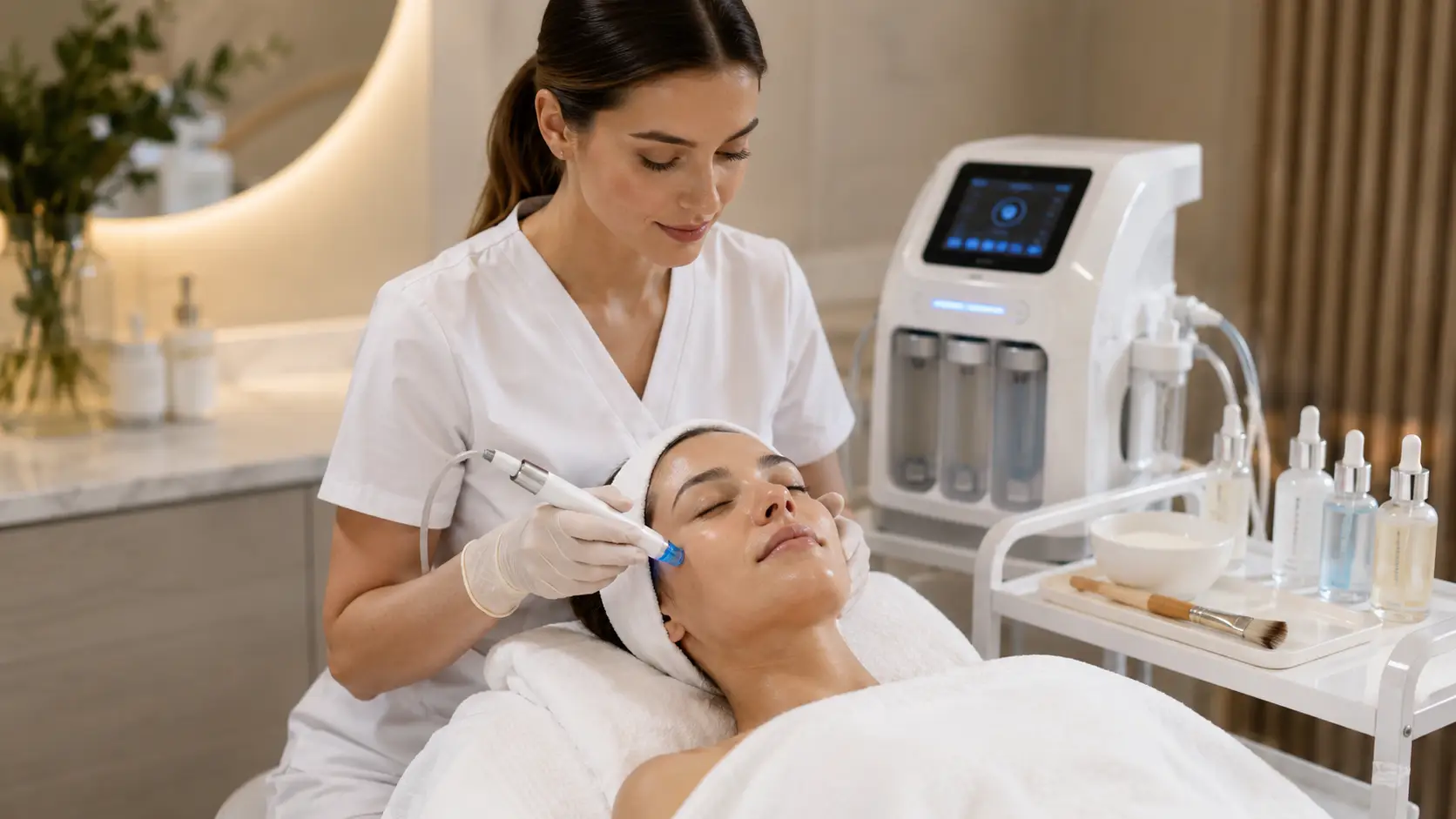
Nano infusion and a hydration mask work together as a two-phase infusion-and-seal protocol. During nano infusion, a targeted serum is applied to the skin and driven deeper through temporary microchannels created by the device. Immediately after the infusion pass, an occlusive hydration mask is applied over the treated skin to seal in the infused actives, extend the absorption window, and support barrier recovery. The mask comes after the device work — never before.
- Nano infusion creates temporary microchannels in the stratum corneum that increase ingredient absorption for a short post-treatment window — the hydration mask capitalizes on this window by locking in moisture and active ingredients.
- Water-based serums containing hyaluronic acid, peptides, or PDRN are the most effective choices for the infusion pass when a hydration mask finishing step will follow.
- The mask should be fragrance-free and free of active exfoliants — post-infusion skin has heightened permeability and is more sensitive to potential irritants.
- Standard mask timing of 10 to 20 minutes applies after nano infusion, providing a natural service window for massage or client education.
- This protocol is one of the most accessible advanced treatment combinations for new estheticians — the sequence is straightforward, the risk profile is low, and client results are consistently visible and satisfying.
- The finishing mask should be applied within 30 to 60 seconds of completing the final infusion pass to capture the peak absorption window.
One of the first questions new estheticians ask when they start exploring nano infusion is how to build it into a complete facial rather than offering it as a standalone step. The answer, for most treatment room contexts, is straightforward: nano infusion pairs exceptionally well with a hydration mask as the finishing phase of the service. When sequenced correctly, the two steps work in genuine synergy — the infusion pass drives targeted serums deeper into the skin than topical application alone could achieve, and the hydration mask seals everything in while supporting the skin’s recovery from the temporary permeability increase the device creates.
This is not a complicated combination to execute. There are no competing technologies to manage, no timing conflicts to navigate, and no advanced contraindication knowledge required beyond the baseline you should already carry for nano infusion. What matters is understanding the logic of the sequence, selecting serums that are appropriate for both the infusion context and the skin being treated, and knowing what kind of mask to reach for and why.
This guide walks through every element of that protocol in practical terms — from how the two steps interact biologically, to what to apply and when, to how to troubleshoot the most common sequencing mistakes new estheticians make when they first attempt this combination.
What You Need to Know Before Combining Nano Infusion With a Hydration Mask
- The sequence is always: cleanse → prep → nano infusion with serum → hydration mask → remove → finish. Never apply the mask before the infusion pass.
- Nano infusion temporarily increases skin permeability, which amplifies both the serum infused during the device pass and the hydrating ingredients in the finishing mask.
- Water-based serums are required for the infusion pass — oil-based formulations do not penetrate nano microchannels effectively.
- Apply the hydration mask within 30 to 60 seconds of completing the infusion pass to capture the peak absorption window before microchannels close.
- Fragrance-free, exfoliant-free masks are required for post-infusion application — this is a safety standard, not a preference.
- The 10 to 20 minute mask dwell time creates a natural service window for scalp massage, hand massage, or client education and rebooking conversations.
- Clients typically notice immediate visible hydration improvement, skin plumpness, and a healthy glow post-removal — which makes this protocol an effective client retention tool for new estheticians building their book.
Why Nano Infusion and a Hydration Mask Are a Natural Protocol Pairing
To understand why this combination works so well, it helps to understand what each step actually does to the skin at the tissue level — and why those effects are complementary rather than redundant.
What Nano Infusion Does to Skin Permeability
Nano infusion devices use a tip embedded with extremely fine silicon or metal nano-pyramids that create temporary micro-disruptions in the outermost layers of the stratum corneum as the device is passed over the skin. Unlike microneedling, these disruptions do not penetrate into the dermis or cause bleeding — the treatment sits entirely within the outermost skin layers and is considered needle-free from a regulatory standpoint in most jurisdictions. The practical result is a transient increase in transepidermal permeability: the skin’s outermost barrier temporarily allows greater passage of topically applied molecules, including the serum being infused during the device pass.
This permeability window is time-limited. The microchannels created during nano infusion begin closing within minutes of the device leaving the skin. This is the biological fact that makes the sequencing of a hydration mask finishing step so important — the mask needs to be applied quickly, while that window is still open and the skin is still in a receptive state.
What a Hydration Mask Adds to the Protocol
An occlusive or semi-occlusive hydration mask applied immediately after nano infusion serves three distinct functions within the protocol. First, it adds a second layer of hydrating actives on top of the serum infused during the device pass, contributing ingredients such as hyaluronic acid, ceramides, or peptides from the mask formulation itself. Second, the occlusive layer physically seals the treated skin surface, dramatically reducing transepidermal water loss during the treatment window and locking the infused serum in place as it absorbs. Third, the cooling and calming effect of a well-formulated hydration mask supports the skin’s recovery from the mild warmth and temporary reactivity that some clients experience following the infusion pass.
The result is a combined treatment outcome that neither step could produce independently. Nano infusion without a finishing mask leaves the infusion window partially unused and the skin unprotected during recovery. A hydration mask without nano infusion delivers only surface-level ingredient absorption, without the enhanced penetration the infusion pass enables.
Why This Combination Suits Beginners Particularly Well
New estheticians are often looking for advanced treatment combinations that produce compelling results without requiring a high degree of technical complexity or a long learning curve. This pairing checks both boxes. The nano infusion pass requires practice to master across different skin types and face zones, but the mask application step is fully within standard esthetician skill from day one. The protocol is self-contained, low-risk, and produces results clients can see and feel immediately post-treatment — which makes it one of the most effective early service additions for building client trust and rebooking rates in a new practice.
Choosing the Right Serum for the Infusion Pass
Serum selection for the nano infusion pass is one of the most consequential decisions in this protocol. The device creates a temporary pathway for ingredient delivery, but the quality and type of ingredient you choose to send through that pathway determines the actual skin outcome. Getting this right before you apply the finishing mask matters.
The Water-Based Rule
Water-based serums are the only appropriate choice for the nano infusion pass. The nano channels created by the device are extremely fine, and water-soluble molecules move through them far more readily than oil-based compounds. Oil-based serums, balms, and facial oils are incompatible with nano infusion technique — they do not infuse effectively, they can coat the nano tips and reduce device performance, and they sit on the skin surface rather than being driven deeper. Always verify that the serum you plan to use during the infusion pass has a water-based formulation before adding it to your protocol.
Serum Types That Work Best Before a Hydration Mask Finish
When you know the protocol is finishing with an occlusive hydration mask, serum selection for the infusion pass can be more targeted. The mask will handle broad hydration and the sealing function, so the infusion serum can focus on the specific active concern you want to address for this client. The most effective serum categories for this protocol context include:
- Hyaluronic acid or multi-weight HA serums — foundational hydration delivery that works synergistically with the moisture-sealing function of the finishing mask.
- Peptide serums — signal peptides and anti-aging peptides benefit from enhanced delivery through the infusion window; the mask then seals them in for extended contact time.
- PDRN (polydeoxyribonucleotide) serums — particularly valuable for clients with compromised, sensitized, or post-procedure skin; PDRN supports tissue repair and recovery through the infusion window.
- Growth factor serums — appropriate for mature skin clients where collagen support is a primary treatment objective.
- Brightening or antioxidant serums (vitamin C, niacinamide) — suitable for pigmentation or environmental damage concerns, though always confirm the formulation is non-irritating before post-infusion application.
Avoid serums containing active exfoliants such as AHAs, BHAs, or retinoids for nano infusion use on standard skin. Post-infusion permeability increases the penetration of these actives beyond their intended use levels and raises the risk of irritation or sensitization, particularly for new practitioners building their technique confidence.
The Complete Step-by-Step Protocol for Beginners
The following sequence represents the complete treatment workflow for combining nano infusion with a hydration mask finishing step. Each phase has specific timing and technique considerations that affect the outcome of the next step. Follow this structure consistently as you build confidence with the combination before adapting it to your own service style.
Nano Infusion + Hydration Mask: Beginner Step-by-Step Sequence
- Consultation and intake (5 minutes): Confirm client skin history, current products, known sensitivities, and treatment goals. Review contraindications for nano infusion. Confirm serum and mask selection based on skin concern.
- Cleanse (3–5 minutes): Double cleanse with a gentle, non-stripping cleanser appropriate for the client’s skin type. The skin surface must be free of makeup, SPF, and product residue before nano infusion. Any residue on the skin can be driven deeper through the infusion microchannels.
- Tone or prep (2–3 minutes): Apply a balancing toner or hydrating prep mist to normalize the skin surface and provide initial hydration before the infusion pass. Allow to absorb fully before proceeding.
- Apply infusion serum (1–2 minutes): Apply a thin, even layer of your selected water-based serum across the treatment zones. Work in sections — forehead, cheeks, nose, chin — applying fresh serum as you advance the device rather than applying all serum at once and allowing it to absorb before you begin.
- Perform nano infusion pass (8–12 minutes): Work methodically across all treatment zones using your preferred technique — stamping or light circular motion depending on the device and zone. Maintain consistent, gentle pressure. Keep the serum visible and wet on the skin surface as you work each zone — dry skin means you need more serum, not more pressure.
- Apply finishing serum layer (optional, 1 minute): After completing all infusion passes, a final thin layer of the same serum can be patted gently onto the skin without the device. This is optional but adds a small additional volume of active ingredient before the mask seals the surface.
- Apply hydration mask immediately (30–60 seconds post-infusion): Mix and apply your hydration mask within 30 to 60 seconds of completing the infusion pass. The microchannels are at peak permeability immediately post-treatment and begin closing within minutes. Speed matters here — prepare your mask materials before you begin the infusion pass so they are ready the moment you finish.
- Mask dwell time (10–20 minutes): Allow the mask to set for the manufacturer’s recommended time. Use this window for scalp massage, hand and arm massage, décolleté attention, or a natural rebooking conversation. Avoid touching the face or disturbing the mask during this phase.
- Remove mask and finish (3–5 minutes): Remove the mask per product protocol. Follow with your standard barrier-supportive finishing steps — a lightweight moisturizer and broad-spectrum SPF if the client is leaving daytime. Avoid any active ingredients, retinoids, or exfoliants in the immediate post-treatment finish on the day of the infusion.
Timing Considerations Specific to This Combination
The most important timing element in this entire protocol is the gap between finishing the infusion pass and getting the mask onto the skin. New estheticians frequently underestimate how quickly this window matters. In practice, the most effective approach is to have the mask completely mixed and ready in its bowl before you begin the infusion treatment — so that the transition from device to mask brush is seamless. Any delay of more than two minutes between finishing the infusion and applying the mask begins to reduce the enhanced absorption benefit the infusion pass created.
If you are using a jelly mask that requires mixing, mix it immediately before starting the infusion pass and keep it covered so it does not begin setting prematurely. A jelly mask with a 10 to 15 minute set time, mixed and ready before you pick up the device, will still be in optimal application consistency when you finish the infusion pass two to four minutes later.
Choosing the Right Hydration Mask for a Post-Nano Infusion Finishing Step
Not every hydration mask is appropriate for post-nano infusion application. The temporary permeability increase that makes this combination so effective also makes it a more sensitive application context than standard mask use. The mask selection criteria are straightforward but non-negotiable for safe professional practice.
Occlusion Level and Mask Type
The finishing mask should provide meaningful occlusion — enough physical coverage and film formation to slow transepidermal water loss and hold the infused serums against the skin during the dwell period. Jelly masks and hydrogel masks are both excellent choices because their high water content provides simultaneous cooling and occlusion. Sheet masks with hydrogel or serum bases are also appropriate. Thin rinse-off cream masks without significant film-forming properties are less effective in this context because they do not provide the sealing function that maximizes the post-infusion absorption window.
Ingredient Safety for Post-Infusion Skin
Because nano-infused skin has temporarily elevated permeability, every ingredient in the finishing mask will penetrate more readily than it would on intact skin. This makes the ingredient safety criteria for mask selection stricter than for standard facial contexts. The mask must meet all of the following criteria for safe post-infusion application:
- Fragrance-free: Synthetic fragrance on temporarily sensitized, permeable skin carries a real irritation and sensitization risk. This is not optional for post-infusion use.
- No active exfoliants: AHAs, BHAs, enzymes, and retinoids must not be present in the finishing mask formulation. Post-infusion permeability means these actives will penetrate far more deeply than intended.
- No artificial dyes: Dyes serve no clinical function and add unnecessary sensitization risk on compromised skin.
- Calming or barrier-supportive ingredients preferred: Hyaluronic acid, ceramides, peptides, panthenol, aloe vera, and allantoin are all appropriate choices. These are the categories that support skin recovery from the infusion while delivering measurable hydration results.
Mask Format Considerations for New Estheticians
Jelly masks are a popular choice for this protocol in new esthetician practices for several practical reasons. They require active preparation and application, which gives the service visible texture and ritual that clients notice and remember. The removal experience — peeling as a single intact piece — creates a memorable treatment endpoint. And because they are occlusive by nature, they reliably create the post-infusion sealing effect the protocol requires. For new estheticians building their service confidence, the jelly mask format provides a clear, structured finishing step with consistent outcomes that are easy to predict and explain to clients.
For Hydration-Focused Protocols
Water-based hyaluronic acid or peptide serums are the primary infusion choice when a hydration mask is the finishing step. The infusion pass delivers deep-layer hydration actives; the mask seals and extends them.
For Recovery and Repair Protocols
PDRN or growth factor serums are appropriate for post-procedure or sensitized skin clients. The healing actives are driven deeper during infusion, and the barrier-supportive mask layer reinforces recovery.
Jelly Masks
High occlusion, visible cooling effect, memorable removal experience. Ideal for hydration-first protocols. Must be fragrance-free and free of active exfoliants for post-infusion use.
Hydrogel or Sheet Masks
Pre-formed, simple to apply, appropriate occlusion level. Good for time-efficient protocols. Same ingredient safety criteria apply — fragrance-free, no active exfoliants, calming formulation.
Visualizing the Protocol: What Happens at Each Stage
Understanding the biological logic of this protocol at each stage helps new estheticians explain it to clients with genuine confidence and adapt it intelligently when a client’s skin type or concern requires a modification.
Common Mistakes New Estheticians Make With This Combination
Most errors in this protocol come from misunderstanding the timing logic or from defaulting to standard facial sequencing habits that do not account for the enhanced permeability state nano infusion creates. The following are the errors estheticians most commonly encounter in their first sessions with this combination, along with how to correct them.
Applying the Mask Too Late
The single most common mistake is allowing too much time to pass between finishing the infusion pass and applying the finishing mask. Estheticians who prepare their mask after completing the infusion — mixing the powder, setting up the bowl, assembling the brush — lose the first two to four minutes of the absorption window doing preparation they should have completed before picking up the device. The correction is simple: have all mask materials prepared, mixed, and covered before you begin the infusion treatment. The moment you set down the device, the only remaining step before applying the mask should be to pick up the brush.
Using an Oil-Based Serum for the Infusion Pass
Oil-based formulations and serums containing silicones or heavy emollients do not infuse effectively through nano microchannels. They sit on the skin surface rather than being driven deeper, they can clog the device tips over time, and they create a barrier that interferes with the mask adhesion and sealing function in the finishing step. Always verify the formulation is water-based before it goes on the skin during the infusion pass.
Choosing a Mask With Active Exfoliants or Fragrance
Estheticians who use their standard facial masks without reviewing the formulation for post-infusion safety occasionally apply products containing glycolic acid, lactic acid, salicylic acid, or synthetic fragrance over infused skin. On standard skin, these ingredients may be well-tolerated. On post-infusion skin with elevated permeability, the same concentrations can penetrate to an unintended depth and cause irritation, redness, or sensitization. Maintain a separate, clearly labelled set of post-infusion-safe masks in your treatment room so you are never reaching for the wrong product under time pressure.
Applying Too Much Pressure During the Infusion Pass
New estheticians sometimes interpret client discomfort or a lack of visible skin response as a cue to increase device pressure. Excessive pressure during nano infusion does not improve serum delivery — it increases the risk of micro-trauma, temporary redness, and inconsistent tip contact across the treatment surface. Consistent light-to-moderate pressure with the appropriate tip speed for the zone being treated produces better results than heavy-handed technique. The hydration mask finishing step is far more forgiving of technique variation than the infusion pass itself, so do not compensate for an uncertain infusion technique with mask pressure.
Forgetting to Explain the Protocol to the Client
Clients who do not understand why a second treatment step follows the device work occasionally try to remove the mask themselves or ask whether it is necessary. A brief, confident 30-second explanation before the treatment begins — covering why the mask comes directly after the device, what it does for their skin, and what they will feel and see when it is removed — eliminates this entirely and significantly enhances the client’s perception of the treatment as sophisticated and purposeful.
Estheticians who have built this combination into their regular service menu consistently report that the most reliable protocol structure involves selecting the serum before the client even arrives, based on the intake form, and preparing the mask materials on the side trolley before the client sits down. In high-volume practice, the Poly-Luronic™ Peptide Ampoule from the Luminous Skin Lab Professional Ampoule Set is frequently the default infusion serum for hydration-focused protocols, used in the infusion pass and optionally patted as a final layer before the mask goes on. For clients coming in with compromised or post-procedure skin, practitioners switch to the PDRN Regeneration Ampoule from the same set, which provides tissue repair support through the infusion window before the barrier-supportive hydration mask seals the treatment.
Practitioners note that the ampoule-plus-mask workflow produces consistently more pronounced immediate skin results than nano infusion alone — clients routinely comment on the visible hydration, glow, and skin softness before they have even seen a mirror. This predictability of outcome is particularly valuable for new estheticians building their confidence, because it creates a reliable client experience that supports rebooking without requiring the practitioner to oversell or overpromise.
How to Explain This Treatment to Clients in Plain Language
One of the most effective things a new esthetician can do for their practice is develop a confident, non-technical explanation of their treatments that clients find compelling rather than confusing. For this particular protocol, the explanation is genuinely simple because the logic is intuitive once you frame it correctly.
A Script That Works for Most Clients
Consider this kind of language when explaining the protocol before the treatment begins:
“What we’re doing today is a two-step treatment. First, I’ll use a device that gently opens tiny pathways in the top layer of your skin — just at the surface, no needles, completely comfortable — and I’ll infuse a serum directly through those pathways so it absorbs much deeper than it would if I just applied it with my hands. The moment I finish that step, I’m going to apply your hydration mask right away, while those pathways are still open, to seal everything in and add an extra layer of hydration on top. The mask stays on for about fifteen minutes while I work on your hands and scalp, and when we take it off, your skin is going to feel noticeably more hydrated and plump than anything you’ve felt from a regular facial mask.”
This explanation is accurate, uses no jargon that requires clarification, and creates a specific expectation — noticeably more hydrated and plump — that the protocol reliably delivers on. Setting a concrete expectation you know you can meet is one of the most effective client retention strategies available to a new esthetician.
Handling the Question About Needles
Clients who see the word “nano” sometimes assume the treatment involves needles or that it will be painful. The clarification is straightforward: nano infusion uses ultra-fine silicon or metal tips that work entirely within the outermost skin layer — no needles, no bleeding, no meaningful downtime. Most clients describe the sensation as a light vibration with occasional mild warmth. Having this explanation ready and delivering it calmly before the client asks is more effective than waiting to respond to a worried question mid-treatment.
Adapting the Protocol for Different Skin Types and Concerns
Once you have the standard protocol structure firmly established, adapting it for different skin types is primarily a matter of adjusting serum selection and confirming that your mask choice is appropriate for the skin condition being treated. The core sequence does not change.
Dry and Dehydrated Skin
Dry and dehydrated skin clients are the ideal candidates for this protocol. The infusion pass delivers hyaluronic acid or a peptide-HA combination to a depth that standard serums cannot reach, and the hydration mask seals that moisture in during a period when dehydrated skin is most receptive to absorption. These clients typically show the most dramatic immediate post-treatment results, which makes this a particularly effective protocol for converting new clients into regular bookings.
Sensitive and Reactive Skin
Sensitive skin requires careful serum and mask selection, but the protocol itself is well-tolerated when the correct formulations are used. Choose a fragrance-free, barrier-supportive serum for the infusion pass — ceramide-based or PDRN-based options are appropriate. Confirm the finishing mask is free of all potential sensitizers. Use lighter device pressure and fewer passes across reactive zones. These clients benefit significantly from the barrier recovery function of the post-infusion occlusive mask.
Mature and Anti-Aging Focused Clients
For clients with fine lines, loss of firmness, or age-related dehydration as primary concerns, a peptide-forward or growth-factor serum in the infusion pass combined with a plumping hydration mask produces visible results that support both client satisfaction and treatment plan compliance. The temporary plumping effect from the hydration protocol also provides an immediate visual result that supports the client’s confidence in longer-term treatment outcomes.
Oily and Congestion-Prone Skin
Oily skin clients can benefit from this protocol, but serum selection requires more care. Choose lightweight, non-comedogenic water-based serums — niacinamide, low-weight hyaluronic acid, or BHA-free antioxidant formulations are appropriate choices. Avoid heavy peptide serums with emollient components. The finishing mask should be a lighter occlusive format rather than a thick jelly mask, or alternatively a hydrogel mask with balancing actives, to avoid contributing to congestion.
Professional and Scientific References
The treatment science and protocol principles referenced in this article draw from professional esthetics education literature and cosmetic chemistry research:
- Transepidermal drug delivery via microchannel formation — mechanisms of enhanced ingredient absorption through temporary barrier disruption. Established dermatology and cosmetic science literature on transdermal delivery systems.
- Nano infusion and microchanneling as esthetician-scope treatments — scope of practice analysis across multiple US states. National esthetics regulatory reference material, 2023–2025.
- Polydeoxyribonucleotide (PDRN) in post-procedure repair and wound healing support. Peer-reviewed dermatology literature on PDRN tissue recovery mechanisms.
- Polyglutamic acid (PGA) and hyaluronic acid (HA) synergistic hydration mechanisms. MDPI 2024; Typology 2021–2025; cosmetic formulation literature.
- Occlusion-enhanced ingredient absorption in professional facial protocols. Applied esthetics education references on occlusive mask delivery systems.
- Client communication frameworks in esthetics practice — treatment explanation and expectation management. Professional esthetics business education literature.
For new estheticians building their first nano infusion and hydration mask protocol, having a serum set specifically formulated for the infusion pass makes a meaningful difference in both treatment outcomes and protocol confidence. The Luminous Skin Lab Professional Ampoule Set provides individual, single-use ampoules formulated specifically for nano infusion, microneedling, and post-procedure care — including the Poly-Luronic™ Peptide Ampoule for hydration-forward protocols and the PDRN Regeneration Ampoule for clients with compromised or recovery-focused skin. Each ampoule is water-based, fragrance-free, and designed for professional use in exactly the kind of infusion-and-seal protocol described throughout this guide.
Explore the Professional Ampoule SetFrequently Asked Questions: Nano Infusion and Hydration Mask Protocols
Do you apply the hydration mask before or after nano infusion?
The hydration mask always comes after nano infusion, not before. Nano infusion creates temporary microchannels that enhance ingredient absorption, so the serum goes on first during the device pass, and the occlusive hydration mask is applied as the finishing step to seal everything in and support recovery. Reversing this sequence wastes the absorption window the device creates.
What kind of serum should I use during nano infusion before applying the mask?
Water-based serums with smaller molecular weights absorb most effectively through nano-infused microchannels. Hydrating serums containing hyaluronic acid, peptides, or PDRN are ideal choices for a protocol that finishes with an occlusive hydration mask. Avoid oil-based formulations during the device pass, as they do not infuse effectively and can interfere with the nano tips.
How long should I wait after nano infusion before putting the hydration mask on?
You do not need to wait long — typically 30 to 60 seconds is sufficient to allow the serum applied during nano infusion to settle before applying the mask. The goal is to let the infused serum begin absorbing before the occlusive mask layer locks everything in. Applying the mask immediately after the final device pass is standard professional practice.
Can beginners do nano infusion and a hydration mask in the same treatment?
Yes, and this combination is actually one of the most beginner-friendly advanced treatment pairings available. Nano infusion is considered within esthetician scope of practice in most states, and adding a hydration mask as the finishing step requires no additional technical skill beyond standard mask application. The sequence is straightforward: cleanse, prep, infuse with serum, apply mask, remove, and finish.
What type of hydration mask works best after nano infusion?
Occlusive or semi-occlusive hydration masks that seal in the serums infused during the treatment produce the best results. Jelly masks, hydrogel masks, and sheet masks formulated with hyaluronic acid or ceramides are all appropriate choices. The mask should be fragrance-free and free of active exfoliants since nano-infused skin has heightened permeability and is more sensitive to potential irritants immediately post-treatment.
Why does nano infusion make hydration masks work better?
Nano infusion creates temporary microchannels in the outermost skin layers that increase transepidermal permeability for a short window following treatment. During this window, both the serum applied during the device pass and the hydrating ingredients from the finishing mask absorb more effectively than they would on intact, untreated skin. The combination delivers deeper hydration than either treatment could achieve independently.
How do I explain this treatment combination to clients who have never heard of nano infusion?
Keep the explanation sensory and results-focused. Tell clients that nano infusion is a treatment that gently opens tiny pathways in the skin to drive their customized serum deeper than it would normally reach, and that the hydration mask applied immediately after seals everything in for maximum results. Most clients respond well to the phrase: it is like giving your skin a deep drink and then locking the moisture in.
Should I adjust the nano infusion serum when I know I am finishing with a hydration mask?
Yes. When you are planning to follow nano infusion with an occlusive hydration mask, you can use a slightly lighter serum application during the device pass because the mask will add a second layer of hydrating ingredients on top. This approach lets you target specific concerns during infusion — such as peptides for anti-aging or PDRN for repair — while the mask handles the broad hydration and sealing step.
How does the Luminous Skin Lab Professional Ampoule Set work in a nano infusion and hydration mask protocol?
The Luminous Skin Lab Professional Ampoule Set provides targeted single-use serums formulated specifically for nano infusion and post-procedure care. For a hydration-focused protocol, the Poly-Luronic Peptide Ampoule delivers dual-depth humectant hydration and anti-aging peptides during the infusion pass, while the PDRN Regeneration Ampoule supports healing and recovery for clients with more compromised or sensitive skin. Finishing the protocol with a hydration mask after ampoule infusion seals the active ingredients in and extends the hydration result beyond the treatment window.
Building a Protocol That Delivers More Than the Sum of Its Parts
The nano infusion and hydration mask combination is one of the most effective first advanced treatment pairings a new esthetician can add to their service menu — not because it is the most technically complex, but because the logic of the combination produces results that clients feel and see immediately, the sequence is straightforward to execute consistently, and the risk profile is appropriately matched to an early-career practitioner’s skill level.
What separates estheticians who execute this protocol with confidence from those who are still figuring it out is rarely technique — it is the understanding of why each step matters and how the two phases interact. When you know that the mask is not just a nice finishing step but the mechanism that captures the absorption window the device creates, you treat the timing with the seriousness it deserves. When you know why the serum must be water-based and why the mask must be fragrance-free, you make those decisions automatically rather than guessing in the moment.
That knowledge — clear, functional, and grounded in how the skin actually responds to treatment — is the foundation of a practice that clients trust and return to. Build the protocol right from the start, and it will serve you for the entire length of your career.