What Does Microneedling With PRP Actually Do and Is It Worth It?
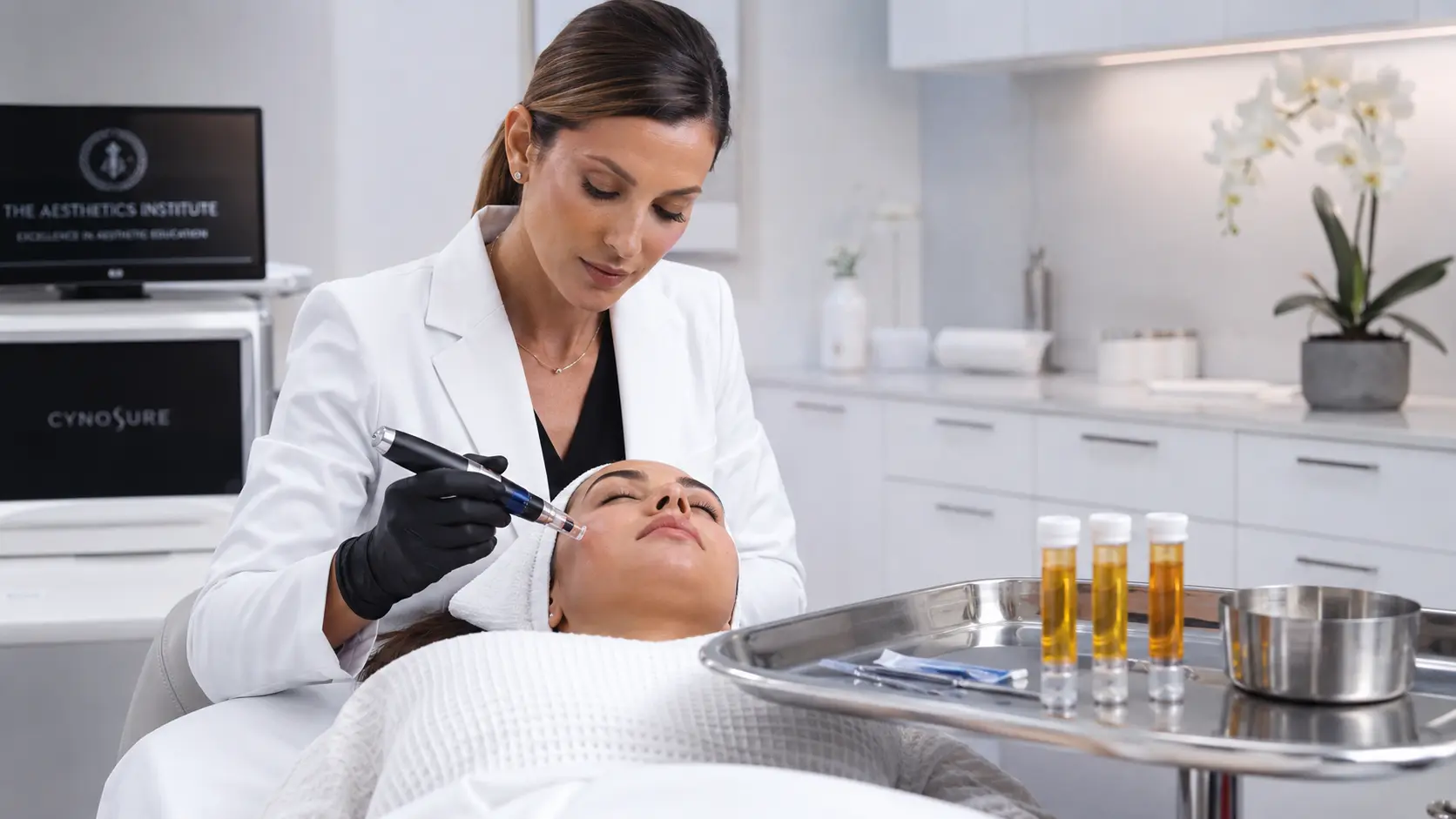
Microneedling with PRP (platelet-rich plasma) is an advanced combination treatment that amplifies the collagen induction effects of microneedling by delivering a concentrated solution of the client’s own platelet-derived growth factors directly into the dermis through the microchannels created by the needling device. The result is a significantly enhanced wound healing cascade, accelerated collagen and elastin synthesis, and improved growth factor delivery compared to microneedling alone. Clinical evidence supports its effectiveness for acne scarring, skin texture refinement, fine lines, and early skin laxity.
- PRP is derived from the client’s own blood via centrifugation — a medical procedure. The blood draw and PRP preparation fall outside esthetician scope of practice in all U.S. states.
- PRP is applied topically during the microneedling pass, not injected. The microchannels created by the needles dramatically increase PRP’s transdermal penetration depth compared to surface-only application.
- The primary growth factors in PRP that amplify microneedling outcomes include platelet-derived growth factor (PDGF), transforming growth factor beta (TGF-β), vascular endothelial growth factor (VEGF), and epidermal growth factor (EGF).
- Post-treatment recovery is more intensive than with microneedling alone — the first 72 hours are critical and require complete avoidance of all active ingredients and dedicated hydration support.
- Results appear progressively over six to twelve weeks as collagen matures. A series of three to six sessions spaced four to six weeks apart is standard protocol.
- Contraindications include clotting disorders, thrombocytopenia, active infection, and anticoagulant medications — all requiring medical history review before treatment.
Among the advanced combination treatments that have entered mainstream aesthetic practice over the past decade, microneedling with platelet-rich plasma stands apart for the depth of its biological rationale. Unlike many combination protocols that layer modalities for additive effect, microneedling and PRP are mechanistically designed for each other: one creates the access pathway, the other delivers the biological catalyst to stimulate the body’s own repair and regeneration systems at a depth and concentration that topical products alone cannot approach.
For estheticians working in medical spa environments, physician-supervised practices, or advanced clinical settings, understanding microneedling with PRP at the protocol level — its science, sequencing, post-treatment requirements, and role boundaries — is increasingly essential professional knowledge. Even estheticians who do not perform the combination directly will encounter clients who have received it, ask questions about it, and need post-treatment guidance that requires a working understanding of what the treatment actually does to the skin.
This guide addresses all of it: the biology of PRP, why its combination with microneedling is mechanistically superior to either treatment alone, how the protocol is correctly sequenced, what post-treatment recovery looks like and why it matters, where esthetician scope of practice begins and ends, and how professional hydration therapy in the immediate post-treatment window contributes meaningfully to recovery outcomes.
What Every Esthetician Working Near Microneedling With PRP Needs to Know
- PRP preparation requires venipuncture and centrifugation — both medical procedures outside esthetician scope of practice regardless of supervision level in most states.
- The microneedling component of the combination may fall within esthetician scope depending on state regulations and depth parameters — always verify current state board rules.
- The microchannels created during microneedling increase transdermal penetration of applied substances by up to 10,000 times compared to intact skin — making PRP application during the procedure functionally distinct from topical use alone.
- Post-treatment recovery with PRP is more intense than microneedling alone and typically involves 24 to 72 hours of heightened redness, swelling, and skin sensitivity.
- Active ingredients — retinoids, AHAs, BHAs, vitamin C, niacinamide — are contraindicated for a minimum of 72 hours post-treatment and often for five to seven days depending on depth used.
- Professional occlusive hydration therapy applied immediately post-treatment is clinically appropriate and supports barrier recovery during the period of heightened permeability.
- Understanding the growth factors in PRP and their roles in collagen induction gives estheticians the knowledge base to speak authoritatively about outcomes when supporting clients through recovery.
What Is Platelet-Rich Plasma and How Is It Prepared?
Platelet-rich plasma is an autologous biological preparation — meaning it is derived from the client’s own blood, eliminating the risk of allergic reaction or immune rejection. The preparation process involves collecting a sample of the client’s venous blood, typically 15 to 60 milliliters depending on the treatment protocol, and processing it through centrifugation to separate its components by density.
The Centrifugation Process
Blood centrifuged at calibrated speeds for defined time periods separates into three distinct layers: the red blood cell layer at the bottom, the platelet-poor plasma layer at the top, and between them, the buffy coat — the platelet-rich plasma fraction. The PRP layer is extracted with a syringe and represents a concentration of platelets typically three to eight times higher than normal whole blood. This concentrated platelet fraction contains the growth factors that make PRP biologically active in wound healing and collagen synthesis contexts.
The Growth Factors in PRP That Matter for Skin
When platelets are activated — which occurs upon contact with collagen in the dermis, or through the addition of calcium chloride or thrombin before application — they release their alpha-granule contents. These alpha-granules contain the growth factors responsible for PRP’s regenerative effects:
- Platelet-Derived Growth Factor (PDGF): Stimulates fibroblast proliferation and migration, driving new collagen and elastin production. Promotes angiogenesis — new blood vessel formation that supports tissue repair.
- Transforming Growth Factor Beta (TGF-β): One of the most potent regulators of collagen synthesis. TGF-β directly upregulates type I and type III collagen production by dermal fibroblasts and plays a critical role in scar remodeling, making it particularly relevant for acne scar treatment.
- Vascular Endothelial Growth Factor (VEGF): Promotes angiogenesis and new capillary formation, improving nutrient and oxygen delivery to healing tissue. Enhanced vascularization supports the proliferative phase of wound healing and contributes to the post-treatment glow effect clients observe.
- Epidermal Growth Factor (EGF): Stimulates keratinocyte proliferation and migration, accelerating re-epithelialization after barrier disruption. EGF plays a primary role in the rapid surface healing observed in the days immediately following microneedling with PRP.
- Insulin-Like Growth Factor (IGF): Supports fibroblast activity and collagen synthesis. Works synergistically with PDGF and TGF-β in the collagen remodeling cascade.
Why Microneedling and PRP Are Mechanistically Designed for Each Other
Microneedling creates controlled access pathways through the stratum corneum and into the dermis. These microchannels dramatically increase the transdermal penetration of substances applied to the skin surface during the procedure — research estimates penetration enhancement of up to 10,000-fold compared to intact skin for appropriate molecular-weight compounds.
PRP is the biological catalyst delivered through these channels. Growth factors — PDGF, TGF-β, VEGF, EGF — delivered directly to the dermis amplify the healing cascade that microneedling initiates, producing a collagen and elastin synthesis response significantly greater than microneedling-induced inflammation alone could achieve.
The synergistic mechanism: Microneedling’s controlled injury triggers the inflammatory phase of wound healing. PRP’s growth factors are delivered into that inflammatory environment where they interact with recruited fibroblasts, keratinocytes, and endothelial cells at the exact biological moment when receptor sensitivity is highest, amplifying both the magnitude and duration of the regenerative response.
Why Blood Draw and PRP Preparation Are Outside Esthetician Scope
Venipuncture — the insertion of a needle into a vein to collect blood — is an invasive medical procedure regulated by state medical practice acts and nursing boards, not cosmetology boards. In all U.S. states, performing venipuncture without a medical license constitutes unlicensed practice of medicine. This boundary is unambiguous and non-negotiable regardless of supervision arrangements. The centrifugation and processing of blood is similarly a clinical laboratory procedure outside esthetician scope.
The role of estheticians working within a medical team performing PRP-enhanced microneedling is clearly defined: they may perform the microneedling component within their scope and state-specific depth parameters, apply the PRP provided and prepared by the licensed medical professional, and manage post-treatment recovery protocols. They do not touch blood collection, centrifuge operation, or PRP preparation under any esthetic license arrangement.
How Is a Microneedling With PRP Treatment Correctly Sequenced?
The protocol sequence for microneedling with PRP is not arbitrary — the order of each step is determined by the biological requirements of PRP activation and the mechanical physics of microchannel penetration. Deviating from correct sequencing meaningfully reduces treatment efficacy.
Skin Preparation and Cleansing
The treatment area is thoroughly cleansed to remove all makeup, sunscreen, and surface debris. A gentle, fragrance-free cleanser appropriate for the skin type is used. No active ingredients — AHAs, enzymes, or retinoids — are applied at this stage. The skin must be completely clean and dry before any needling begins.
Blood Draw and PRP Preparation (Medical Personnel)
A licensed medical professional collects the blood sample and processes it through centrifugation to extract the PRP fraction. This step typically takes 10 to 15 minutes and should begin before or simultaneously with client preparation so that activated PRP is ready for immediate application. PRP should be used within 30 minutes of preparation to ensure growth factor viability.
Topical Anesthesia (If Protocol Calls for It)
A compounded topical anesthetic is applied and allowed to sit under occlusion for 20 to 45 minutes, depending on the product and depth of treatment planned. The anesthetic must be completely removed before PRP application — residual anesthetic on the skin surface can denature growth factors. Thorough cleansing after anesthetic removal is essential.
PRP Application Before and During Microneedling
PRP is applied to the skin surface immediately before each microneedling pass. As the device creates microchannels, the PRP on the surface is simultaneously driven into the dermis. Most protocols apply PRP continuously throughout the procedure — applying a fresh layer before each pass across each treatment zone — to ensure that open microchannels always have growth factors available for penetration.
Microneedling Pass(es)
The microneedling device is passed over the treatment area according to the protocol depth and pattern appropriate for the target concern. Deeper passes for acne scarring, shallower passes for general texture and fine line treatment. The PRP on the skin surface lubricates the device and is driven into microchannels with each pass.
Final PRP Application Post-Needling
A final layer of PRP is applied immediately after the needling pass is completed. Microchannels remain open for approximately 15 to 30 minutes post-procedure, allowing continued passive absorption of growth factors during this window. The PRP is not wiped off — it is left to absorb naturally.
Professional Recovery Support Application
Once PRP absorption is complete — typically 15 to 20 minutes after the final application — a professional occlusive hydration treatment is applied to support barrier recovery and reduce transepidermal water loss through the compromised skin. This is the point at which professional hydration masks play their clinical role in the protocol.
Which Skin Concerns Does Microneedling With PRP Address Most Effectively?
Not all skin concerns respond equally to microneedling with PRP. Understanding the evidence base for each indication allows estheticians in supportive roles to set accurate client expectations and identify when this combination is a strong clinical choice versus when alternative modalities may be more appropriate.
Acne Scarring — Strongest Evidence
Atrophic acne scarring — particularly rolling and boxcar scars — represents the indication with the most robust clinical evidence for microneedling with PRP. Multiple randomized controlled trials have demonstrated that the combination produces superior scar improvement scores compared to microneedling alone. TGF-β in PRP is particularly active in collagen remodeling of scar tissue, while PDGF stimulates fibroblast activity in the hypocellular, fibrotic scar bed. Ice-pick scars respond less predictably and may require adjunct procedures such as subcision. A series of four to six sessions at four to six week intervals is the standard recommendation for acne scar treatment.
Skin Texture, Pore Size, and Tone
General skin texture refinement — including large pore appearance, uneven surface texture, and loss of radiance — responds well to microneedling with PRP at shallower depth settings. EGF’s stimulation of keratinocyte proliferation accelerates surface cell turnover, producing a visible smoothing and brightening effect within two to four weeks of treatment. VEGF-driven angiogenesis improves microcirculation, contributing to the improved skin tone and luminosity that clients consistently observe post-series.
Fine Lines and Early Skin Laxity
Fine lines and early skin laxity respond to the collagen and elastin synthesis amplification that PRP provides. New type I collagen produced in response to TGF-β and PDGF replaces degraded collagen matrix, improving skin firmness and reducing the appearance of fine lines over the six-to-twelve-week remodeling window. Results for deep static wrinkles and significant laxity are more modest — deeper concerns typically require combination with energy-based devices or injectable treatments for meaningful improvement.
Post-Inflammatory Hyperpigmentation
PRP’s anti-inflammatory growth factor profile can support reduction of post-inflammatory hyperpigmentation, though results in this category are more variable and highly dependent on skin type and post-treatment sun protection compliance. Fitzpatrick skin types IV through VI require careful needle depth management and conservative PRP protocols to minimize the risk of triggering additional post-inflammatory hyperpigmentation through the treatment itself.
Hair Loss — Scalp Application
When applied to the scalp, PRP with microneedling or injection shows documented effectiveness for androgenetic alopecia. PDGF and EGF stimulate follicular stem cell activity and prolong the anagen (growth) phase of the hair cycle. This is a medically supervised application that estheticians encounter primarily as a client education topic rather than a treatment they perform.
What Does Post-Treatment Recovery Look Like After Microneedling With PRP?
Recovery from microneedling with PRP is consistently more intensive than from microneedling alone, and the difference is biologically predictable: the growth factors in PRP amplify the inflammatory cascade that microneedling initiates, producing a more robust healing response. Clients who understand this mechanism in advance are better prepared for the recovery experience and less likely to misinterpret normal healing as a treatment complication.
The First 24 Hours: Inflammation Phase
Immediately post-treatment, the skin will appear erythematous (red) and feel warm, tight, and sensitive — similar in appearance to a moderate sunburn. Pinpoint petechiae (small bruise-like spots) from needle trauma are common and resolve within 24 to 48 hours. Minor swelling, particularly around the eyes and cheeks, is expected. This inflammatory response is the biological mechanism of action — it is not a sign of adverse reaction in the absence of other concerning symptoms.
During this window, the client should avoid touching the face, applying makeup, using hot water, and all topically active ingredients. A gentle, fragrance-free cleanser used with clean hands and cool-to-lukewarm water is appropriate for the first cleanse at 4 to 6 hours post-treatment. SPF is essential before any sun exposure.
Hours 24 to 72: Proliferative Phase Begins
Redness and warmth typically begin to resolve between 24 and 72 hours post-treatment as the acute inflammatory phase transitions to the proliferative phase. Mild flakiness or peeling may appear as the surface begins to shed microtraumatized cells. This is normal and should not be accelerated with physical or chemical exfoliation. Clients often describe skin as feeling dry and tight during this phase — dedicated hydration support is critical.
Active Ingredient Contraindication Window
All active ingredients — retinoids, AHAs, BHAs, benzoyl peroxide, vitamin C, niacinamide at high concentrations, and peptide serums — should be avoided for a minimum of 72 hours post-treatment and ideally five to seven days depending on the depth of microneedling used. Skin permeability is significantly elevated during this window, meaning active ingredients applied post-procedure penetrate more deeply and can produce sensitization, irritation, and inflammation that disrupts the healing cascade rather than supporting it.
The Role of Professional Hydration in Post-PRP Recovery
The 15 to 30 minutes immediately after the final PRP application — when microchannels remain open and the skin barrier is maximally compromised — represents a clinically significant window for professional hydration support. Applying an occlusive hydration treatment during this window serves two simultaneous functions: it reduces transepidermal water loss through the barrier-disrupted skin surface, and it delivers humectants through the still-open microchannels into the upper dermis where the healing cascade is most active.
Practitioners incorporating a professional occlusive hydration step into their post-PRP protocol using the Poly-Luronic™ Jelly Mask by Luminous Skin Lab consistently report a noticeably improved immediate post-treatment skin response compared to barrier cream or plain HA serum application alone. The specific advantage observed in post-PRP contexts is the PGA component’s hyaluronidase inhibition: in the immediate post-procedure window, skin inflammatory enzymes — including hyaluronidase — are significantly upregulated as part of the acute healing response. PGA’s inhibition of hyaluronidase protects the substantial HA content of the PRP itself, the HA in any serums applied during the procedure, and the skin’s own endogenous HA at precisely the moment when all three are most vulnerable to enzymatic degradation.
The practical application sequence that practitioners report using: once PRP absorption is confirmed at approximately 15 to 20 minutes post-needling, the jelly mask is mixed at the standard ratio, applied in a single even layer over the entire treatment area, allowed to set for 10 to 12 minutes, then removed as a single piece. Clients uniformly report that the cooling and occlusive effect during this step is one of the most comfortable and reassuring parts of the post-treatment experience, transitioning them from the discomfort of the active treatment to a distinctly calming recovery sensation. The immediate post-removal skin appearance — reduced redness, visible hydration, and surface smoothness — supports client confidence in the recovery process.
Days 3 Through 7: Remodeling Phase Visible Changes
By days three to five, most clients are presentable in public and redness has substantially resolved. Skin may still feel slightly sensitive and appear subtly drier than baseline as barrier function re-establishes. Clients can typically return to their regular skincare routine — excluding retinoids, which most protocols delay for seven to fourteen days depending on depth — by day five to seven. Early texture improvements begin to be perceptible as surface healing completes. Sunscreen discipline during this period directly affects long-term treatment outcomes, particularly for any pigmentation component of the concern being treated.
Where Does Esthetician Scope of Practice Begin and End With Microneedling With PRP?
Understanding the scope of practice boundaries for microneedling with PRP is professional protection for the esthetician and safety protection for the client. These boundaries are not bureaucratic formalities — they reflect real clinical risk thresholds that correspond to specific steps in the protocol.
The Microneedling Component
In states where esthetician microneedling is permitted, the needling step itself may fall within scope depending on depth parameters specified by the state cosmetology board. Always verify current regulations with your specific state board before offering any microneedling service.
PRP Application to Skin Surface
Applying PRP that has been prepared by a licensed medical professional to the skin surface is a topical application step that may fall within esthetician scope in a supervised medical setting. The esthetician handles the product; they do not prepare it.
Venipuncture and Blood Collection
Inserting a needle into a vein to collect blood is a medical procedure that requires a medical or nursing license. No esthetic license — at any level, under any supervision arrangement — permits an esthetician to perform venipuncture.
PRP Preparation and Centrifugation
Operating a centrifuge to process blood into PRP fractions is a clinical laboratory procedure requiring medical licensing. Blood processing is regulated by medical practice acts and CLIA (Clinical Laboratory Improvement Amendments), not cosmetology boards.
Working Within Medical Spa Environments
Estheticians working in medical spa settings under physician or nurse practitioner oversight may legitimately perform the microneedling step of the combination protocol in states where microneedling falls within their licensed scope at the depth parameters being used. In these environments, clear written protocols defining each team member’s role, the depth parameters permitted for the esthetician, and the supervision arrangement are essential professional protections. Insurance coverage must specifically extend to the services being performed — this should be verified with your liability insurer before performing any component of a PRP-enhanced microneedling protocol.
What Estheticians Always Own: Recovery and Education
Regardless of whether an esthetician performs any part of the active treatment, they own the post-treatment recovery support and client education components. Understanding PRP science well enough to explain what the client’s skin is doing during recovery, why the recovery protocol matters, which active ingredients to avoid and for how long, and when to contact the treating provider with concerns — this is esthetician expertise that directly affects clinical outcomes and client compliance.
Who Should Not Receive Microneedling With PRP?
Contraindications for microneedling with PRP include all standard microneedling contraindications plus additional considerations specific to the blood preparation component. Medical history review is non-negotiable before any PRP procedure.
Absolute Contraindications
- Blood clotting disorders: Including hemophilia, von Willebrand disease, or any condition affecting platelet function or blood coagulation. PRP preparation requires functional platelets and normal clotting capacity.
- Anticoagulant medications: Warfarin, heparin, newer oral anticoagulants, and high-dose aspirin therapy affect platelet function and coagulation in ways that both complicate blood draw and reduce PRP growth factor concentration.
- Thrombocytopenia: Low platelet count makes PRP preparation clinically ineffective and increases bleeding risk.
- Active infection or inflammation in the treatment area: Including active acne pustules, herpes simplex outbreak, or any open wound or skin infection.
- Systemic immunosuppression or autoimmune disease in active flare.
- Pregnancy and breastfeeding.
- Systemic retinoid use within six months.
Relative Contraindications Requiring Medical Assessment
- History of keloid or hypertrophic scarring — microneedling is generally contraindicated; PRP does not mitigate this risk.
- Fitzpatrick skin types IV through VI — require conservative needle depth and careful post-treatment management to minimize post-inflammatory hyperpigmentation risk.
- Active cancer or recent oncology treatment — growth factor therapies of any kind require oncologist clearance.
- Chronic NSAIDs or anti-inflammatory medications — may reduce PRP efficacy by suppressing the inflammatory response that PRP is intended to modulate.
How Does Microneedling With PRP Compare to Other Advanced Microneedling Combinations?
PRP is one of several biologics and advanced topical agents used in combination with microneedling to amplify collagen induction outcomes. Understanding how PRP’s mechanism compares to growth factors, peptides, and exosomes helps estheticians in educational and supportive roles speak accurately about the clinical reasoning behind protocol choices.
PRP vs. Growth Factor Serums
Synthetic or plant-derived growth factor serums offer a commercially accessible alternative to PRP that falls fully within esthetician scope of practice. They do not require blood draw, carry no communicable disease risk, and can be standardized in concentration in ways that autologous PRP cannot be. However, growth factor serums contain individual isolated growth factor molecules rather than PRP’s full complement of multiple growth factor families working in synergy with fibrin scaffolding and other platelet-released bioactives. For clients who cannot tolerate the blood draw or do not have access to PRP services, growth factor serums with microneedling represent a meaningful alternative.
PRP vs. Exosomes
Exosomes are extracellular vesicles containing a complex payload of microRNA, proteins, and signaling molecules that communicate between cells and modulate gene expression related to healing and regeneration. Exosome therapy with microneedling represents an emerging category that some early research suggests may offer advantages over PRP in cellular signaling depth. Exosome products used topically with microneedling are within esthetician scope. However, the regulatory landscape for exosome products is evolving rapidly, and estheticians should verify current FDA guidance before incorporating exosome treatments into their practice.
PRP vs. Peptides
Signal peptides and carrier peptides with microneedling target specific collagen synthesis pathways through synthetic messenger sequences, without the full growth factor cascade of PRP or the cellular signaling complexity of exosomes. Peptide serums are fully within esthetician scope, predictably formulated, and appropriate for clients who are not candidates for more intensive biologic combinations. They represent the most accessible entry point for estheticians building microneedling protocols with advanced ingredient support.
Professional and Scientific References
The clinical science referenced in this article draws from peer-reviewed dermatology literature and established aesthetic medicine education sources:
- Platelet-rich plasma in dermatology and aesthetics — systematic review and meta-analysis. Journal of the American Academy of Dermatology, multiple publications 2018–2024. Confirms superiority of PRP-enhanced microneedling over microneedling alone for atrophic acne scarring based on multiple RCT datasets.
- Growth factor mechanisms in wound healing — PDGF, TGF-β, VEGF, EGF roles in fibroblast recruitment, collagen synthesis, and angiogenesis. Wound Repair and Regeneration; Journal of Investigative Dermatology, established literature.
- Microchannel penetration enhancement — transdermal drug delivery through microneedle-created pathways. Journal of Controlled Release; Advanced Drug Delivery Reviews, 2015–2023. Penetration enhancement estimates of 100 to 10,000-fold depending on molecular weight and channel depth.
- PRP platelet concentration and growth factor output — centrifugation protocol optimization. Platelets; Blood Transfusion, 2020–2024. Standard therapeutic PRP represents 3 to 8-fold platelet concentration versus whole blood baseline.
- Post-inflammatory hyperpigmentation risk in Fitzpatrick IV–VI with microneedling. Journal of Clinical and Aesthetic Dermatology, 2019–2024. Conservative depth parameters and post-treatment sun protection identified as primary risk mitigation factors.
- Scope of practice regulations for estheticians performing microneedling by state — ongoing reference: Professional Beauty Association; state cosmetology board publications.
For practitioners seeking a professional hydration mask formulated to perform in the demanding post-procedure context of microneedling with PRP recovery, our education team consistently references the Poly-Luronic™ Jelly Mask by Luminous Skin Lab. The proprietary PGA + HA dual-humectant system delivers the occlusion, surface hydration, and hyaluronidase inhibition that make it particularly well-matched to post-PRP skin: PGA’s surface seal reduces TEWL through the compromised barrier, HA delivers moisture to the deeper layers accessible through still-open microchannels, and PGA’s inhibition of hyaluronidase protects the substantial HA content present in PRP itself during the critical first hour of post-treatment recovery. The formulation is fragrance-free, clean-label, and designed for clinical post-treatment use — meeting the safety standard for application on skin in a disrupted state.
Explore the Poly-Luronic™ Jelly Mask LineFrequently Asked Questions: Microneedling With PRP
What exactly is PRP and why is it used with microneedling?
PRP stands for platelet-rich plasma — a concentration of platelets and growth factors derived from the client’s own blood. It is used with microneedling because the microchannels created by the needles allow PRP to penetrate significantly deeper into the skin than topical application alone, amplifying the delivery of platelet-derived growth factor, transforming growth factor beta, vascular endothelial growth factor, and epidermal growth factor directly to the dermis where collagen and elastin synthesis occurs.
Can estheticians perform microneedling with PRP on their own?
No. The blood draw and centrifugation required to prepare PRP constitutes a medical procedure that falls outside the scope of practice for licensed estheticians in every U.S. state. Estheticians who work within medical spa environments or physician-supervised clinics may perform the microneedling component under medical direction while a licensed medical professional handles blood collection and PRP preparation, but estheticians should never independently perform venipuncture, centrifugation, or topical PRP application without proper medical oversight.
How long does it take to see results from microneedling with PRP?
Most clients notice initial skin texture improvement within two to four weeks as the inflammatory healing cascade resolves and early collagen remodeling begins. More significant results — including visible reduction in fine lines, acne scarring, and skin laxity — typically appear at six to twelve weeks post-treatment as new collagen matures. Full collagen remodeling from a single session continues for up to six months. A series of three to six treatments spaced four to six weeks apart is generally recommended for optimal outcomes.
Why does skin look worse before it looks better after microneedling with PRP?
The initial inflammatory response — redness, swelling, and occasionally pinpoint bruising — is the skin’s normal wound healing reaction to controlled injury and represents the first phase of collagen induction. Platelet activation from PRP releases cytokines and growth factors that amplify this inflammatory phase, which can temporarily make skin appear more reactive than with microneedling alone. This heightened response is expected and resolves within 24 to 72 hours in most clients, followed by the proliferative phase where new tissue formation begins.
What is the correct timing for applying PRP during a microneedling treatment?
PRP is applied topically to the skin surface immediately before and throughout the microneedling pass, not after the treatment has concluded. This ensures that the growth factors are actively present in the microchannels as they are created, maximizing transdermal delivery while the channels are open. A second application of PRP is often made immediately after needling before any occlusive recovery product is applied, to allow residual uptake through still-open microchannels.
What conditions respond best to microneedling with PRP?
Microneedling with PRP shows the strongest clinical evidence for acne scarring, particularly atrophic ice-pick and rolling scars, fine lines and early skin laxity, overall skin texture and tone refinement, hyperpigmentation post-inflammation, and early hair loss when applied to the scalp. Results for deep static wrinkles and significant skin laxity are more modest and may require combination with other medical aesthetic treatments for optimal outcomes.
How should skin be cared for in the 72 hours after microneedling with PRP?
In the 72 hours immediately following microneedling with PRP, skin care should focus entirely on barrier support and hydration. Clients should avoid all active ingredients including retinoids, AHAs, BHAs, vitamin C, and niacinamide during this window. Gentle, fragrance-free cleansers and barrier-supportive moisturizers are appropriate. Sun protection is essential. In-clinic, applying a professional occlusive hydration mask immediately post-treatment before the client leaves supports the initial recovery phase by reducing transepidermal water loss and providing humectant delivery through still-open microchannels.
Who should not get microneedling with PRP?
Contraindications for microneedling with PRP include active acne or skin infection in the treatment area, blood clotting disorders or anticoagulant medication use, thrombocytopenia (low platelet count), history of keloid scarring, active autoimmune conditions, pregnancy, and use of systemic retinoids within six months of treatment. Fitzpatrick skin types IV through VI require careful needle depth management to reduce post-inflammatory hyperpigmentation risk. Medical history review is required before any PRP procedure.
What role do professional hydration masks play in microneedling with PRP recovery and how does the Poly-Luronic Jelly Mask support that protocol?
Professional hydration masks applied immediately after microneedling with PRP serve two critical functions: they reduce transepidermal water loss through the compromised barrier and deliver humectants through the heightened permeability of post-procedure microchannels. The Poly-Luronic Jelly Mask by Luminous Skin Lab is formulated with a PGA and HA dual-humectant system that is particularly well-suited to this recovery context. PGA’s surface occlusion reduces TEWL while HA delivers moisture to deeper layers. PGA also inhibits hyaluronidase, protecting the skin’s own HA during the vulnerable post-procedure window, and stimulates NMF production and HA synthase upregulation to support longer-term barrier recovery. The fragrance-free, clean-label formulation meets the post-treatment safety standard required for application on compromised skin.
Microneedling With PRP: An Advanced Protocol That Rewards Deep Professional Knowledge
Microneedling with PRP is among the most biologically sophisticated combination treatments in aesthetic practice today. Its clinical superiority over microneedling alone is well-supported by evidence, and its mechanism — controlled injury plus concentrated autologous growth factor delivery through the access pathways injury creates — is as elegant as it is effective. Understanding that mechanism at depth is not just academic knowledge for the estheticians who support these protocols. It is the clinical foundation that makes thoughtful post-treatment recovery guidance, accurate client education, and professional recovery support strategies genuinely impactful on real-world treatment outcomes.
The boundaries of esthetician scope within PRP-enhanced microneedling protocols are clear and must be respected without exception. Blood collection and PRP preparation are medical procedures. Within those boundaries, however, estheticians bring meaningful expertise to patient preparation, microneedling technique in qualifying states, immediate post-treatment recovery support, and the longer arc of client education and retention that determines whether a client invests in a full treatment series or stops after one session.
The recovery phase — particularly the first 24 to 72 hours when barrier integrity is most compromised and skin is most responsive to professional hydration support — is an area where esthetician knowledge, protocol design, and product selection have direct clinical relevance. Knowing why occlusive hydration therapy during this window matters, what a fragrance-free clean-label formulation does for compromised post-procedure skin, and how PGA’s hyaluronidase inhibition protects the HA content of PRP itself during the critical absorption window — that knowledge distinguishes an esthetician who is a genuine clinical partner in advanced aesthetic care from one who is simply present in the room.