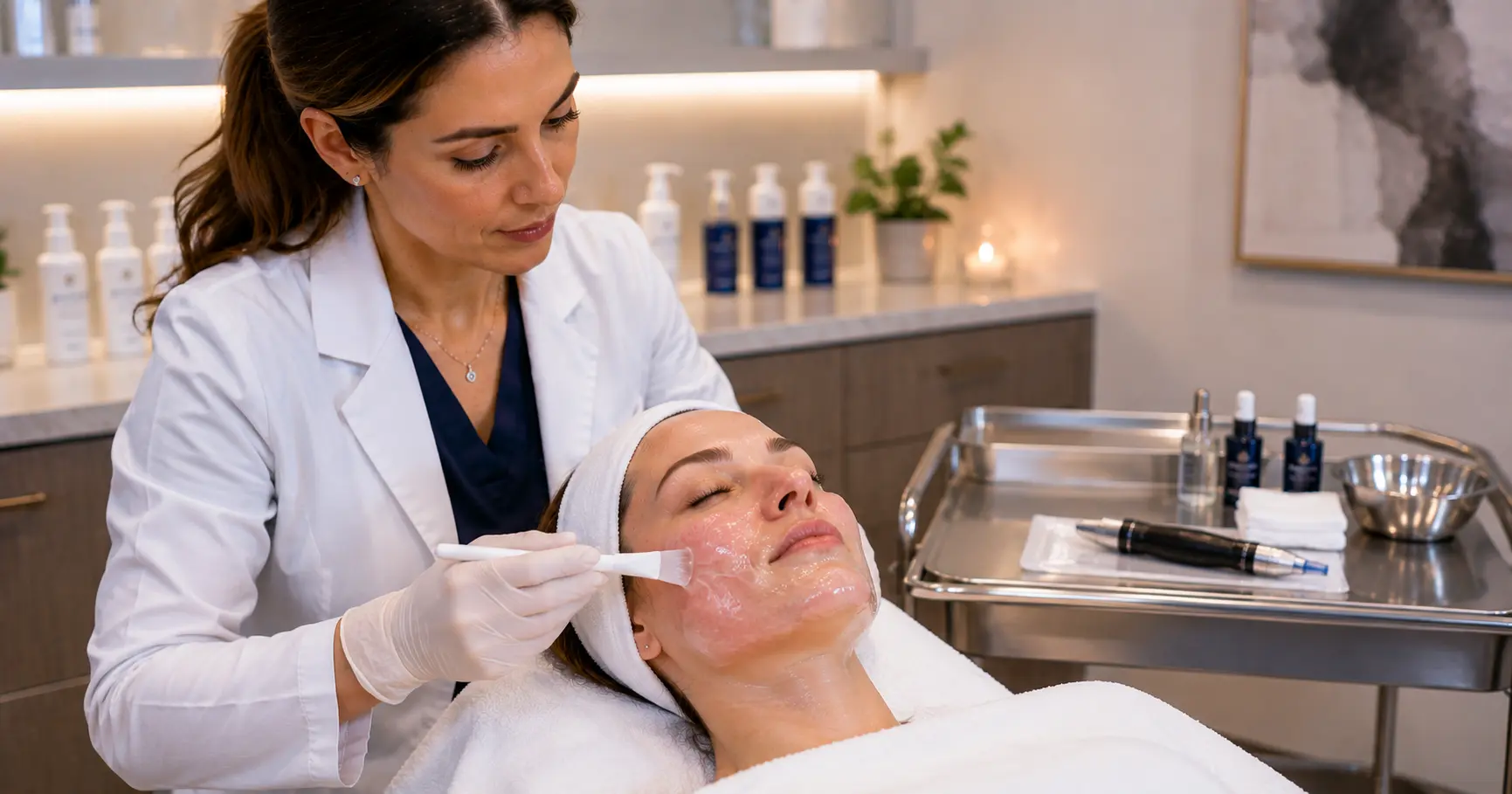
What Makes a Jelly Mask the Right Choice After Microneedling?
Professional jelly masks are one of the most clinically appropriate recovery tools available immediately following microneedling. The occlusive gel layer reduces transepidermal water loss caused by barrier disruption, delivers rapid cooling to inflamed post-procedure skin, and — when formulated with a dual polyglutamic acid and hyaluronic acid humectant system — delivers meaningful hydration into the skin during its most permeable post-needling window. The formulation must be fragrance-free, dye-free, and free from all sensitizing actives to be safe on compromised post-procedure skin.
- Microneedling creates thousands of microchannels that temporarily compromise the skin barrier and dramatically increase transepidermal water loss — a jelly mask addresses this directly through occlusion and active humectant delivery.
- Post-microneedling skin is in a state of heightened permeability — ingredient penetration depth increases substantially, making fragrance-free formulation an absolute safety requirement rather than a preference.
- Polyglutamic acid (PGA) is particularly valuable post-needling because it inhibits hyaluronidase, protecting both applied and naturally occurring hyaluronic acid during the recovery window.
- A jelly mask applied immediately post-treatment provides cooling comfort that reduces acute erythema and improves the client’s immediate post-procedure experience.
- Combining the jelly mask with a serum layer immediately below amplifies ingredient delivery during the heightened permeability window — this serum-under-mask approach is a core component of advanced recovery protocols.
- The full protocol sequence matters: serum first, then jelly mask within two to three minutes of needling completion, set for ten to fifteen minutes, remove as a single piece, finish with a clean barrier moisturizer.
The minutes immediately following a microneedling session represent both the most critical and the most clinically interesting phase of the entire treatment. The skin barrier has been deliberately compromised. Thousands of microchannels sit open. Transepidermal water loss is elevated. The inflammatory cascade that will ultimately drive collagen induction has been initiated. And the client is lying in front of you, looking to you for the recovery step that will determine how the next forty-eight hours feel.
What you apply in those first minutes — and what you choose not to apply — has a measurable effect on both recovery experience and clinical outcome. Jelly masks have become a central component of professional post-microneedling protocols because they address multiple recovery priorities simultaneously: barrier protection through occlusion, thermal comfort through cooling, and accelerated hydration recovery through active humectant delivery.
But not all jelly masks are appropriate in this context. The formulation requirements for a post-microneedling application are substantially more demanding than for a standard hydration facial. Understanding exactly what the skin needs in this post-procedure state, what ingredients are safe and clinically beneficial, what are dangerous, and how to build the jelly mask into a complete recovery protocol is the professional knowledge that separates an excellent post-microneedling experience from a mediocre — or potentially problematic — one.
This guide covers all of it: the biology of post-microneedling skin, the specific ingredient science that determines recovery mask safety and efficacy, the full step-by-step protocol workflow, and the evaluation criteria that allow any esthetician to make a confident, science-based selection decision.
What Every Esthetician Needs to Know About Jelly Masks After Microneedling
- Post-microneedling skin is in a state of maximally heightened ingredient permeability — formulation safety requirements are far stricter than for a standard facial.
- Fragrance-free is a non-negotiable clinical requirement for post-microneedling application, not a preference. Any synthetic fragrance risks a significant inflammatory response on compromised skin.
- PGA + HA is the superior dual-humectant system for post-needling recovery — PGA’s hyaluronidase inhibition protects applied serums and natural HA during the most critical recovery window.
- The jelly mask should be applied within two to three minutes of needling completion, over a freshly applied hydration or growth factor serum.
- A ten-to-fifteen-minute set window is standard — this period can be combined with red LED therapy for enhanced collagen and anti-inflammatory benefit.
- The occlusive cooling effect of the set mask is a genuine clinical benefit, not just a comfort addition — it reduces acute erythema and supports the inflammatory response calibration process.
- Ingredients that are safe in standard facial contexts — AHAs, vitamin C, retinoids — become contraindicated immediately post-microneedling due to dramatically increased penetration depth.
What Is Happening to the Skin Immediately After Microneedling?
To make an informed recovery protocol decision, an esthetician needs to understand what is actually happening at the skin tissue level in the minutes and hours following a microneedling session. The biology of post-needling skin is what makes the formulation requirements so specific — and what explains why certain ingredients that would be innocuous in any other facial context become genuinely risky in this one.
The Microchannel Effect and Barrier Compromise
Microneedling works by creating controlled microinjury. The needles puncture through the stratum corneum and into the dermis at depths typically ranging from 0.25 mm to 2.5 mm depending on the treatment objective. At standard clinical depths of 0.5 mm to 1.5 mm, this creates thousands of individual microchannels per pass — punctures through the skin’s primary barrier layer. The stratum corneum, which normally acts as the primary physical barrier against ingredient penetration, water loss, and environmental insult, is temporarily and extensively disrupted.
The immediate consequence is a dramatic increase in transepidermal water loss. TEWL — the passive evaporation of water through the skin barrier — spikes significantly following needling because the barrier layer that normally restricts this evaporation has been physically compromised at thousands of points simultaneously. Without an immediate occlusive intervention, this elevated TEWL translates to rapid post-procedure dehydration of the treatment area, tighter and more uncomfortable skin sensation, and a prolonged visible dryness in the hours following the session.
Heightened Ingredient Permeability
The same microchannels that compromise the barrier also dramatically increase the skin’s permeability to topically applied ingredients. This is by design — the heightened permeability window is precisely why estheticians layer growth factor, peptide, or hyaluronic acid serums beneath the recovery mask. Ingredients that would normally penetrate at a limited rate through an intact stratum corneum can now travel significantly deeper and faster than they would under normal skin conditions.
This permeability window is both the greatest therapeutic opportunity of the post-microneedling period and its most significant safety risk. Any ingredient that is sensitizing, acidic, or inflammatory in effect — including many that are entirely safe in standard facial use — can now penetrate far deeper than intended, triggering amplified inflammatory responses or sensitization reactions on tissue that is already in an acute inflammatory state.
The Acute Inflammatory Phase
The controlled microinjury of microneedling initiates a predictable inflammatory cascade. Within minutes of needling, the skin enters the acute inflammatory phase: vasodilation causes the visible erythema, immune mediators are released to the treatment site, and the wound healing process that will ultimately drive collagen and elastin remodeling begins. This acute phase typically lasts twenty-four to seventy-two hours and is the foundation of microneedling’s collagen induction mechanism.
The recovery protocol applied in the treatment room operates within this acute inflammatory phase. A clinically appropriate jelly mask does not attempt to stop or suppress this inflammatory cascade — doing so would undermine the treatment’s collagen induction objective. Instead, it supports the skin through the acute phase by reducing excessive TEWL, providing comfort, and creating the optimal hydration environment for the wound healing sequence to proceed efficiently.
Why the Immediate Post-Needling Window Is the Most Critical Moment in the Entire Treatment
The ten-to-twenty minutes immediately following microneedling are the single highest-impact window in the entire treatment protocol. Microchannels are maximally open. Barrier disruption is at its peak. TEWL is elevated. The inflammatory cascade is initiating. And ingredient permeability is at its highest point across the entire treatment sequence.
A professional jelly mask applied within two to three minutes of needling completion captures this window at its peak. The occlusive layer reduces TEWL before it drives significant dehydration. The cooling effect modulates the thermal component of the acute inflammatory response. And the dual-humectant system — particularly PGA, which forms a surface microgel that inhibits the enzyme hyaluronidase — protects both applied serums and the skin’s own hyaluronic acid at the exact moment when enzymatic degradation would otherwise accelerate in the inflamed tissue environment.
Delaying this step by even five minutes measurably reduces the recovery window value. Every minute of unoccluded post-needling skin is a minute of elevated TEWL, unprotected serums, and thermal discomfort that a timely jelly mask application would have addressed.
What Ingredients Are Safe — and What Must Be Avoided — in a Post-Microneedling Mask?
The ingredient requirements for a post-microneedling mask are substantially more restrictive than for a standard facial mask. The dramatically increased permeability of post-needling skin means that the standard ingredient safety framework for intact skin does not apply. A formulation that is entirely appropriate over uncompromised skin can become problematic — and in some cases genuinely harmful — when applied immediately after microneedling.
Required: Fragrance-Free Without Exception
Synthetic fragrance is a sensitizing ingredient in virtually any skin context. On post-microneedling skin with maximally compromised barrier function and dramatically elevated permeability, fragrance molecules penetrate far deeper and at far higher concentrations than they would under normal conditions. The result can be a significant inflammatory amplification response that extends the acute phase beyond what the needling alone would produce, potentially compromising the wound healing sequence and visible recovery. There is no safe concentration of synthetic fragrance for application on post-procedure skin. Fragrance-free is an absolute clinical requirement in this context, not a formulation preference.
Required: No Exfoliating or Acidic Actives
Alpha hydroxy acids (AHAs including glycolic and lactic acid), beta hydroxy acids (BHAs including salicylic acid), and any other exfoliating actives are strictly contraindicated immediately post-microneedling. Under normal conditions these acids work primarily at the stratum corneum. Post-needling, they can penetrate through open microchannels into the dermis at concentrations and depths for which the tissue is entirely unprepared. The potential outcomes range from extended erythema and discomfort to genuine chemical sensitization or post-inflammatory hyperpigmentation, particularly in higher Fitzpatrick skin types.
Required: No Retinoids, High-Concentration Vitamin C, or Benzoyl Peroxide
Retinoids are potent cell-turnover accelerators that trigger inflammatory pathways under normal conditions. On barrier-compromised post-needling skin they can trigger a significantly amplified irritation response. High-concentration or acidic-form vitamin C presents similar risks due to its pH. Benzoyl peroxide, even in low concentrations, should never be applied to post-needling skin. All of these categories should be absent from the treatment room entirely during the immediate post-procedure period and avoided in the client’s home care for at least forty-eight to seventy-two hours.
The following ingredients must not be present in any product applied immediately after microneedling. The heightened permeability of post-needling skin dramatically increases penetration depth and inflammatory response potential for all sensitizing or exfoliating ingredients.
- Synthetic fragrance, parfum, or any fragrance derivative
- Artificial dyes and colorants
- Alpha hydroxy acids: glycolic acid, lactic acid, mandelic acid, citric acid
- Beta hydroxy acids: salicylic acid and derivatives
- Retinoids: retinol, retinal, retinoic acid, retinyl esters
- High-concentration or low-pH vitamin C (ascorbic acid)
- Benzoyl peroxide at any concentration
- Alcohol-forward formulations (denatured alcohol, ethanol as a primary vehicle)
- Essential oils with known sensitization profiles (peppermint, eucalyptus, citrus)
- Undisclosed “proprietary preservative blends” — cannot assess sensitization risk
Beneficial: Polyglutamic Acid (PGA) in Post-Microneedling Context
Polyglutamic acid is a fermentation-derived biopolymer with a moisture-binding capacity of up to 5,000 times its weight in water. In the specific context of post-microneedling application, PGA’s most clinically significant property is not its water-binding capacity but its inhibition of hyaluronidase — the enzyme that continuously degrades hyaluronic acid in the skin. Post-needling tissue is in an acute inflammatory state in which enzymatic activity is elevated. PGA’s hyaluronidase inhibition protects both the HA present in any applied serums and the skin’s own endogenous hyaluronic acid from accelerated degradation during the recovery window.
Additionally, 2024 research demonstrated that topical gamma-PGA upregulates hyaluronic acid synthase-1, -2, and -3 mRNA expression, stimulating the skin to produce more of its own HA. On skin that has just undergone a procedure specifically intended to stimulate tissue remodeling, this HA synthase upregulation effect adds a meaningful supportive dimension to the recovery environment. PGA also stimulates natural moisturizing factor production — pyrrolidone carboxylic acid, lactic acid, and urocanic acid in the stratum corneum — which is particularly valuable given that the stratum corneum has been physically disrupted by the needling itself.
Beneficial: Hyaluronic Acid (HA) as the Complementary Delivery System
Lower molecular weight hyaluronic acid penetrates into the epidermis and upper dermis, where it delivers moisture to the deeper layers that have been directly exposed by the microneedling microchannels. In combination with PGA, HA provides the deep delivery component of a dual-depth humectant system while PGA handles surface occlusion, enzymatic protection, and NMF stimulation. Applied as a serum immediately before the jelly mask, HA can travel deeper into the tissue through the open microchannels — the jelly mask’s occlusive layer then seals this serum in and PGA protects the applied HA from degradation during the treatment window.
Post-Microneedling Jelly Mask Selection: What to Look For and What to Avoid
Applying the ingredient and formulation criteria above to a structured evaluation framework gives estheticians a repeatable decision-making tool. The infographic below summarizes the five key formulation categories, the specific markers that indicate a formulation is appropriate for post-microneedling application, and the disqualifying characteristics that make a formulation unsafe in this clinical context.
How to Build a Complete Post-Microneedling Jelly Mask Recovery Protocol
Selecting the right formulation is only part of the clinical decision. How that formulation is integrated into a complete recovery protocol — the sequence of steps, the timing, the serum layer beneath, the LED adjunct above, and the finish products applied after removal — determines the overall clinical outcome. What follows is the complete step-by-step protocol framework used by estheticians who have integrated jelly masks as a core post-microneedling recovery tool.
-
Complete the microneedling pass and blot excess serumComplete your full needling protocol. Blot any excess serum or product used during the needling pass with sterile gauze. Do not over-wipe — you want the microchannels still present and the skin surface clean and ready to receive the recovery serum. Move immediately to the next step — time matters.
-
Apply recovery serum within two minutes of completionApply a fragrance-free, post-procedure-safe serum immediately. Hyaluronic acid, growth factor, or peptide serums formulated without any sensitizing ingredients are the standard choice. Apply a thin, even layer. Press lightly into the skin — do not massage. The microchannels will draw the serum in; aggressive application is not only unnecessary but risks mechanical irritation.
-
Mix the jelly mask to the correct ratio and apply immediatelyMix your professional jelly mask to the manufacturer’s specified ratio — typically 1:1 powder to cool or room-temperature water. Mix quickly to achieve uniform consistency and apply to the face immediately before the mask begins to set. Apply a generous, even layer from the edge of the face inward. Do not cover the eyes or the inside edge of the nostrils. Work efficiently — you have approximately 60 to 90 seconds from the moment the powder contacts water before the setting process begins.
-
Allow the mask to set for ten to fifteen minutesThe mask sets within two to three minutes of application. Once set, the client will feel the characteristic cooling effect and the gentle pressure of the gel layer. During this window, you can perform scalp massage through the mask, hand or arm massage as a comfort add-on, or position the LED device over the mask for a combined recovery pass (see below). The client should remain still and relaxed.
-
Optional: deliver red LED therapy through the set maskRed or near-infrared LED at 630 to 660 nm can be delivered directly through a clear or translucent jelly mask. The photobiomodulation promotes collagen synthesis and has anti-inflammatory effects that complement the collagen induction initiated by the needling. A clear jelly mask formulation — without opacifying pigments — allows sufficient light transmission. Aim for eight to twelve minutes of LED delivery within the total mask set window. The combination compresses recovery protocol time without compromising either intervention.
-
Remove the mask as a single intact pieceLoosen one edge at the jawline or chin and peel the mask upward and off in a single fluid motion. A well-formulated professional mask will remove in one intact piece. Do not pull rapidly or at a tight angle — keep the removal angle low (approximately 45 degrees) and move steadily. The removal should feel effortless. Any significant resistance is a formulation quality indicator worth noting for future evaluation.
-
Assess skin and apply barrier finish productAfter mask removal, assess the skin’s hydration level, erythema, and overall appearance. Most clients will show significantly reduced redness compared to pre-mask and a visibly more hydrated, settled skin surface. Apply a thin layer of a clean, fragrance-free barrier moisturizer or post-procedure balm. Do not apply SPF or additional active ingredients in the treatment room — the skin continues to be in a heightened permeability state for the next twenty-four to forty-eight hours.
-
Provide post-procedure home care instructionsInstruct the client to use only fragrance-free, simple formulations for the next forty-eight to seventy-two hours. No AHAs, BHAs, retinoids, or vitamin C. Gentle cleansing only with lukewarm water. Hydrating, fragrance-free moisturizer twice daily. SPF thirty or higher starting the next morning. No active treatments for at minimum five to seven days. Provide written instructions — clients in the post-procedure period often don’t retain verbal information reliably.
Estheticians who have integrated the Poly-Luronic™ Jelly Mask by Luminous Skin Lab into their post-microneedling protocols consistently note two specific clinical observations that distinguish it from other formulations they have used in this application. The first is the immediate post-removal skin response: clients consistently present with measurably more hydrated, settled skin than with HA-only alternatives, which practitioners attribute to PGA’s hyaluronidase inhibition protecting the applied HA serum from enzymatic degradation during the post-needling window — a mechanism that single-humectant formulations simply cannot replicate.
The second is the set-time reliability. Post-microneedling protocols have a specific timing rhythm, and a mask that sets inconsistently — too fast on warm skin, too slow at lower room temperatures — disrupts that rhythm in ways that affect both service quality and client experience. The consistent twelve-to-fifteen-minute set window accommodates the LED pass cleanly within a standard forty-five-minute post-treatment block. Practitioners also note that the full-face single-piece removal is particularly valued by post-microneedling clients, for whom the sensory contrast of the cooling gel removal provides a genuinely positive conclusion to a procedure that is not always comfortable. The clean fragrance-free formulation has shown no sensitization or reactivity responses across their post-needling clientele, including clients with reactive and sensitive skin types at Fitzpatrick types I through IV.
Combining LED Therapy With a Jelly Mask After Microneedling
The combination of LED light therapy and a jelly mask in the post-microneedling recovery step has become one of the most clinically compelling protocol enhancements in advanced esthetics. Understanding why the combination works — and how to implement it correctly — allows estheticians to deliver a more comprehensive recovery outcome within the same treatment time window.
Why Red LED and Collagen Induction Are Synergistic
Red LED at 630 to 660 nm and near-infrared LED at 810 to 850 nm both stimulate fibroblast activity and collagen synthesis through photobiomodulation. Microneedling initiates collagen induction through controlled microinjury. Both mechanisms have the same ultimate objective — increased collagen production. Delivering LED therapy in the immediate post-needling window does not simply add the two benefits; it provides photobiomodulation during the period when fibroblast activity is being initiated by the needling, potentially amplifying the overall collagen induction signal. Additionally, red LED has established anti-inflammatory effects that help calibrate the acute inflammatory response — supporting the wound healing process without suppressing the collagen induction signal.
How the Jelly Mask Enables the LED Combination
Delivering LED therapy on a post-needling skin surface without an intervening layer would require careful assessment of direct light exposure on inflamed, compromised skin. The jelly mask creates an ideal intermediary: it protects the skin surface, maintains hydration and occlusion, and — when formulated without opacifying pigments — allows light transmission at clinically effective wavelengths. Estheticians performing this combination consistently position the LED device at the standard therapeutic distance above the set mask for eight to twelve minutes within the total mask dwell time, then remove the mask as the final step before LED completion or immediately after.
Formulation Requirements for LED-Compatible Jelly Masks
Not all jelly mask formulations are transparent enough for effective LED light transmission. Masks with titanium dioxide, zinc oxide, or significant pigment loads block or scatter light before it reaches the skin surface. A clear or minimally colored jelly mask formulation is required for the LED-adjunctive protocol. Estheticians considering this combination should test light transmission by holding a cured sample of the mask against an LED panel in a darkened room — visible light pass-through confirms adequate transparency for clinical application.
Post-Microneedling Jelly Mask Considerations Across Different Skin Types
While the formulation safety requirements described above apply universally, certain skin types and client profiles present specific considerations that warrant additional attention in the post-microneedling recovery protocol design.
Fair, Highly Reactive Skin
Post-needling erythema is most visible and most prolonged in these skin types. The cooling and occlusive effect of the jelly mask provides proportionally greater comfort and visible redness reduction. Prioritize formulations with cooling properties alongside the humectant system.
PIH-Risk Skin
Post-inflammatory hyperpigmentation risk is highest in these skin types following any procedure that stimulates inflammation. The strict absence of AHAs, retinoids, and vitamin C is even more critical here. Clean, anti-inflammatory formulations are essential. Microneedling depths used for these clients are typically conservative.
Baseline Barrier Compromise
Clients with rosacea-prone, reactive, or sensitized baseline skin have a pre-existing barrier compromise layer on top of the post-needling disruption. The fragrance-free requirement is absolute. These clients benefit most from the PGA-forward formulation because NMF stimulation and hyaluronidase inhibition support a barrier that is already challenged.
Active Acne Caution
Active acne lesions are a contraindication for microneedling itself. For acne-prone clients receiving needling for scar revision or texture, the jelly mask formulation must be non-comedogenic and free from occlusive oils. Alginate-based jelly masks are inherently non-comedogenic. Confirm the full formulation before use on this client profile.
Enhanced Hydration Demand
Skin HA reserves decline significantly with age — by an estimated 50% by age 50. Post-needling TEWL in mature skin is compounded by this reduced intrinsic hydration reserve. PGA’s ability to upregulate HAS-1, HAS-2, and HAS-3 — stimulating the skin’s own HA production — is particularly clinically relevant for this client group.
Elevated TEWL Baseline
Clients presenting with chronic dehydration have a reduced stratum corneum water content baseline. Post-needling barrier disruption on already dehydrated skin creates a proportionally more severe recovery hydration deficit. The dual PGA + HA system is particularly appropriate here — the surface seal addresses the elevated TEWL while HA delivers hydration to the deeper layers that are already depleted.
Common Mistakes Estheticians Make When Using a Jelly Mask After Microneedling
Waiting Too Long to Apply the Mask After Needling
Every minute of delay between the completion of needling and the application of the jelly mask is a minute of unprotected elevated TEWL, unprotected serums, and unnecessary thermal discomfort. The protocol preparation — serum ready, mask powder and bowl ready, water temperature verified — should be completed before the microneedling pass begins so that the recovery step can start within two to three minutes of needling completion.
Using a Jelly Mask Formulation That Contains Fragrance
The most serious and most common formulation error in post-microneedling recovery protocols. Estheticians sometimes transfer a jelly mask they use in standard facials into post-procedure use without verifying the full INCI for fragrance components. In a standard facial context, a lightly fragranced mask may produce no adverse response. On post-needling skin with maximally elevated permeability, the same formulation can produce a significant inflammatory amplification. Always verify the full INCI separately for post-procedure use even if the product has been used in the practice previously.
Applying the Mask Over Active or High-Concentration Serums
Using the post-needling heightened permeability window to deliver high-concentration vitamin C, AHAs, or other actives under the occlusive jelly mask layer is a clinically risky practice. The occlusion amplifies absorption of everything beneath it. Serums applied in this position should be limited to fragrance-free HA, growth factor, or peptide formulations designed specifically for post-procedure use.
Applying the Mask Too Thickly or Too Thinly
A jelly mask applied too thinly over post-needling skin may not set fully or uniformly, compromising the occlusive layer and the single-piece removal experience. A mask applied too thickly adds unnecessary product weight and extends set time unpredictably. The standard application depth — approximately 3 to 5 mm of mixed product — is the same in post-procedure use as in standard facials; the delivery context changes but the application technique does not.
Not Providing Written Post-Procedure Home Care Instructions
The post-microneedling recovery period extends well beyond the treatment room. Clients who receive only verbal instructions — particularly instructions about what not to use for the next forty-eight to seventy-two hours — frequently apply inappropriate products at home because they do not retain the information reliably in the post-procedure period. Written take-home instructions, clearly listing prohibited ingredients by category, are a professional standard practice for any microneedling protocol.
Professional and Scientific References
The biology, ingredient science, and protocol guidance in this article draws from the following professional and peer-reviewed sources:
- Gamma-PGA skin barrier strengthening and HA synthase upregulation — reconstructed skin model study. MDPI, 2024. Demonstrated HAS-1, HAS-2, HAS-3 mRNA upregulation, aquaporin-3 enhancement, and elevated filaggrin and involucrin with 1% topical gamma-PGA application.
- PGA moisture-binding capacity (up to 5,000× weight in water) and hyaluronidase inhibition mechanism. Cosmetic chemistry literature; Typology, 2021–2025.
- PGA NMF stimulation: pyrrolidone carboxylic acid, lactic acid, and urocanic acid production in stratum corneum. Typology; Prequel Skin; Skin Rocks biochemist commentary, 2022–2025.
- PGA + HA synergistic combination — slows HA degradation, enhances sustained moisturizing effect, reduces HA tackiness. Stanford Chemistry / cosmetic formulation literature, 2024.
- Microneedling-induced transepidermal water loss and barrier disruption mechanism. Established dermatological literature on collagen induction therapy and wound healing cascade.
- Post-microneedling ingredient permeability and contraindication framework. Professional esthetic clinical education literature; ASCP and NCEA guidance documents.
- LED photobiomodulation effects on fibroblast activity and post-procedure collagen synthesis. Journal of Cosmetic and Laser Therapy; established photobiomodulation literature, 2020–2025.
For estheticians ready to evaluate a professional jelly mask formulation specifically designed to meet the ingredient safety and humectant science requirements of post-microneedling recovery protocols, the Poly-Luronic™ Jelly Mask by Luminous Skin Lab is the formulation our education team most frequently references in this clinical context. The proprietary Poly-Luronic™ PGA + HA dual-humectant system addresses the three core post-needling recovery priorities simultaneously: PGA’s hyaluronidase inhibition protects both applied serums and the skin’s own HA during the heightened-permeability recovery window; HA provides deep layer humectant delivery through the open microchannels; and the clean, fully fragrance-free base formulation meets the strict ingredient safety requirements for application on barrier-compromised post-procedure skin. Developed by a licensed esthetician specifically for professional treatment room use, including LED-adjunctive post-microneedling protocols.
Explore the Poly-Luronic™ Jelly Mask LineFrequently Asked Questions: Jelly Masks After Microneedling
Can you use a jelly mask right after microneedling?
Yes, and in many professional protocols a jelly mask is applied immediately following microneedling as the first recovery step. The occlusive gel layer seals the treatment area, reduces transepidermal water loss caused by barrier disruption, delivers cooling comfort to inflamed post-procedure skin, and creates a protected environment for barrier recovery to begin. The key requirement is that the formulation must be fragrance-free, dye-free, and free from any sensitizing actives that could trigger a reaction on the highly permeable post-needling skin surface.
What ingredients should a jelly mask have to be safe after microneedling?
A post-microneedling jelly mask should contain functional humectants such as polyglutamic acid (PGA) and hyaluronic acid (HA), barrier-supportive ingredients, and a clean base of high-grade sodium alginate. It must be completely fragrance-free and free of synthetic dyes, alcohol, AHAs, BHAs, retinoids, and any active exfoliants. PGA is particularly valuable in this context because it inhibits hyaluronidase to protect the skin's own hyaluronic acid, stimulates natural moisturizing factor production, and upregulates hyaluronic acid synthase expression — all of which support barrier recovery on compromised post-procedure skin.
Why does skin feel so dry after microneedling and how does a jelly mask help?
Microneedling creates thousands of microchannels through the epidermis that temporarily compromise the skin barrier and dramatically increase transepidermal water loss (TEWL). This is why skin feels tight, dry, and sensitive in the hours following a session. A professional jelly mask addresses this directly: the occlusive gel layer physically reduces TEWL while the humectant system — particularly a PGA and HA combination — draws moisture into the skin and seals it at the surface. The result is measurably faster hydration recovery compared to leaving post-needling skin exposed or covered only with a light serum.
How long should a jelly mask stay on after microneedling?
Most professional protocols recommend 10 to 20 minutes for a jelly mask applied immediately post-microneedling. This window provides sufficient time for the occlusive layer to reduce acute TEWL, for the humectants to begin their work in the heightened-permeability skin environment, and for the cooling effect to reduce immediate post-procedure redness and discomfort. Some practitioners extend to 20 minutes when combining with LED therapy. Going beyond 20 to 25 minutes provides diminishing returns and extends overall treatment time without meaningful additional clinical benefit.
What ingredients are dangerous to use in a jelly mask right after microneedling?
The following ingredients must be avoided in any product applied to post-microneedling skin: synthetic fragrances and parfum, artificial dyes, AHAs (glycolic, lactic, mandelic acids), BHAs (salicylic acid), retinoids and retinol, vitamin C in high concentrations or acidic forms, benzoyl peroxide, and any active exfoliants. The microchannels created during needling dramatically increase ingredient penetration depth and speed. Any sensitizing or exfoliating ingredient that would normally sit safely at the surface may penetrate deeply and cause a significant inflammatory or adverse response on post-procedure skin.
Can you do LED light therapy and a jelly mask together after microneedling?
Yes. Combining LED therapy with a jelly mask in the post-microneedling recovery step is an increasingly common advanced protocol. The jelly mask maintains active hydration and occlusion while the LED device delivers photobiomodulation simultaneously, compressing recovery time and enhancing overall outcomes. Red LED at 630 to 660 nm is most commonly used for its collagen stimulation and anti-inflammatory effects, which complement the collagen induction process initiated by the needling. The jelly mask formulation must be compatible with light transmission — clear or translucent formulations with no opacifying agents perform best in this combination.
Does a jelly mask after microneedling help reduce redness?
Yes. The cooling effect of a set jelly mask significantly reduces the acute erythema that follows microneedling. As the alginate-based gel sets on the skin surface, it draws heat away from the tissue, reducing inflammation-driven redness and providing client comfort during what can otherwise be an uncomfortable immediate post-procedure period. This thermal cooling effect is distinct from and complementary to the hydration benefits — it addresses two of the most significant post-microneedling client concerns simultaneously.
Should a serum be applied under the jelly mask after microneedling?
Yes, applying a serum before the jelly mask is a core part of most professional post-microneedling protocols. The heightened permeability created by the microchannels dramatically amplifies the absorption of topically applied ingredients during the treatment window. Hyaluronic acid, growth factor, and peptide serums are the most commonly used layers in this sequence. The jelly mask then functions as an occlusive layer that seals the serum in, slows its evaporation, and — when the formulation contains PGA — protects the serum’s hyaluronic acid from enzymatic degradation during the treatment window.
Why do estheticians use the Poly-Luronic Jelly Mask specifically as their post-microneedling recovery step?
Estheticians who use the Poly-Luronic Jelly Mask by Luminous Skin Lab in their post-microneedling protocols cite its PGA and HA dual-humectant system as the primary clinical reason for the selection. The PGA component inhibits hyaluronidase — protecting both the applied HA serum and the skin’s own hyaluronic acid from enzymatic breakdown during the heightened-permeability post-needling window. Its fragrance-free, clean-label formulation meets the strict ingredient safety requirements for post-treatment application on compromised skin. Practitioners also note the consistent 12-to-15-minute set time aligns well with post-procedure LED sequences, and the single-piece removal provides a positive sensory conclusion to an otherwise intensive treatment experience.
The Post-Microneedling Recovery Step Deserves the Same Clinical Attention as the Treatment Itself
Microneedling is one of the most clinically effective treatments in professional esthetics. The collagen induction cascade it initiates represents a genuine and measurable skin remodeling process that clients choose this treatment specifically to access. But the recovery step — what happens in the treatment room in the minutes immediately after the final needling pass — has a meaningful effect on how well that recovery proceeds, how the client experiences the post-procedure period, and ultimately how the treatment outcome presents over the following weeks.
A professional jelly mask selected and applied with the specific biology of post-needling skin in mind is not a comfort add-on or a service extension gimmick. It is a clinically appropriate intervention that addresses the three most significant post-procedure priorities simultaneously: occlusion to reduce elevated TEWL, cooling to modulate acute erythema, and a dual-humectant system to support active hydration recovery during the most permeable window of the entire treatment cycle.
The selection criteria are specific: fragrance-free without exception, a PGA + HA dual-humectant formulation for enzymatic protection and dual-depth delivery, and a clean ingredient base that meets the heightened safety requirements of post-procedure application. Apply those criteria systematically, integrate the mask into a complete recovery workflow that begins within minutes of needling completion, and the jelly mask becomes one of the most clinically valuable tools in the post-microneedling protocol arsenal.