What Are the Best Products to Use After Microneedling?
The best products after microneedling are those that support barrier repair, deliver deep hydration through the temporarily open micro-channels, and protect compromised skin from sensitizing ingredients. The ideal immediate post-treatment sequence is: a fragrance-free hyaluronic acid or growth factor serum applied first while the skin is most permeable, followed immediately by a professional occlusive recovery mask to seal in applied actives and protect the disrupted barrier. A PGA and HA dual-humectant system provides the most clinically effective hydration coverage in this context — PGA seals the surface and inhibits enzymatic HA breakdown while HA delivers moisture to deeper skin layers simultaneously.
- Apply hydrating serums within minutes of treatment completion — the heightened permeability window for maximum absorption lasts approximately two to four hours post-procedure.
- Fragrance-free, alcohol-free, and sensitizer-free formulations are non-negotiable requirements for all products applied to post-microneedling skin.
- Avoid retinol, vitamin C, AHAs, BHAs, and physical exfoliants for a minimum of five to seven days post-treatment.
- An occlusive recovery mask applied over serums amplifies penetration, reduces transepidermal water loss, and accelerates barrier recovery in a single treatment step.
- PGA inhibits hyaluronidase — the enzyme that degrades both applied and naturally occurring HA — making it uniquely valuable for extending the hydration benefit during the post-treatment recovery window.
- SPF application is required on day one and every day of the healing period; advise clients to use a mineral-based, fragrance-free broad-spectrum SPF 30 or higher.
Microneedling creates a controlled cascade of micro-trauma across the treatment area. Thousands of tiny channels penetrate through the stratum corneum, triggering the wound healing response that drives collagen and elastin production — the fundamental mechanism behind the procedure’s efficacy for scarring, texture improvement, fine lines, and skin density. But those same micro-channels that initiate the healing cascade also temporarily eliminate the skin’s primary defense against topical ingredient penetration.
This is simultaneously the greatest opportunity and the most significant risk in the immediate post-treatment period. The products applied in the minutes and hours following a microneedling session penetrate skin far more effectively than at any other time — which means the right products accelerate healing and dramatically enhance outcomes, while the wrong products can cause sensitization, inflammation, delayed healing, or in sensitive skin types, post-inflammatory hyperpigmentation.
Estheticians who understand the science of post-microneedling skin state — what is happening at a cellular level, why permeability is heightened, and what ingredient categories serve recovery versus compromise it — are positioned to design protocols that maximize the collagen induction window, minimize client discomfort and downtime, and deliver the kind of consistent, visible results that drive client retention and referrals. This guide covers the complete picture: what to apply and when, the science behind each product category decision, what to avoid and why, and how to structure a professional recovery protocol that clients can follow with confidence at home.
What the Post-Microneedling Product Protocol Must Accomplish
- Capitalize on the heightened permeability window by applying high-quality humectants and actives immediately — the absorption advantage closes within two to four hours.
- Seal applied actives against transepidermal water loss with an occlusive recovery layer while the barrier is disrupted.
- PGA + HA together provide dual-depth hydration: surface occlusion and HA protection via hyaluronidase inhibition at the surface, deep moisture delivery in the dermis and epidermis.
- Fragrance-free and alcohol-free are absolute formulation requirements — not preferences — for every product applied to post-microneedling skin.
- Retinol, vitamin C, AHAs, BHAs, and physical exfoliants are categorically contraindicated for a minimum of five to seven days.
- Mineral SPF on day one is a clinical requirement — post-procedure skin is highly vulnerable to UV-triggered hyperpigmentation.
- The at-home protocol clients follow after leaving the treatment room is as consequential to outcomes as the in-treatment protocol itself — written aftercare instructions are a professional standard.
Why Post-Microneedling Skin Is Fundamentally Different From Normal Skin
Understanding what microneedling physically does to the skin’s barrier helps estheticians make ingredient decisions from first principles rather than from rote protocol memory. That foundation matters most when a client asks why they can’t use their usual serum, or when you are evaluating a new product for post-treatment suitability.
The Micro-Channel Effect: Bypass of the Stratum Corneum
The stratum corneum is the skin’s primary barrier against the external environment. It is composed of corneocytes — flattened, protein-rich dead skin cells — embedded in a lipid matrix of ceramides, cholesterol, and fatty acids. This brick-and-mortar architecture is what limits topical ingredient penetration under normal conditions. Most molecules larger than approximately 500 Daltons cannot effectively cross an intact stratum corneum through passive diffusion.
Microneedling creates thousands of vertical perforations through the stratum corneum, temporarily bypassing this limitation. The micro-channels created by a professional needle depth of 0.5 to 2.5 mm reach the epidermis and, at deeper settings, the upper dermis. For a brief window following treatment, molecules that would ordinarily remain on the skin’s surface can penetrate into the lower epidermis and dermis directly through these channels — including humectants, growth factors, peptides, and other actives that are normally too large to cross the intact barrier.
This heightened permeability is maximally open immediately post-treatment and begins to close within two to four hours as the first stages of healing close the channel openings. Within 24 hours, surface closure of the micro-channels is substantially complete, though full barrier restoration takes several days to weeks depending on needle depth, number of passes, and individual healing capacity.
The Inflammatory Cascade and Why It Matters for Product Selection
Immediately following microneedling, the controlled micro-trauma triggers the inflammatory phase of wound healing. Platelet-rich plasma forms at the injury sites, pro-inflammatory cytokines signal the recruitment of fibroblasts, and the wound healing cascade initiates the collagen and elastin synthesis that is the ultimate goal of the procedure. The visible redness, mild swelling, and skin warmth immediately after treatment are external signs of this internal activity.
This inflammatory state has a direct implication for product selection: anything that increases inflammatory signaling beyond what the controlled healing cascade requires slows recovery and can compromise outcomes. Acidic actives, alcohol, fragrance compounds, and physical irritants applied to skin already in an inflammatory healing state do not simply cause surface irritation — they create additional inflammatory load that the skin’s healing system must manage alongside the intended wound repair response.
The Permeability Window: What It Means for Product Sequencing
The two-to-four-hour window of maximum post-microneedling permeability represents the highest potential for topical ingredient delivery that most clients will experience in a professional treatment context. Humectants applied within this window penetrate skin layers they would not ordinarily reach. Growth factors delivered during this period access fibroblast populations at depths that reinforce the collagen induction response.
This is why the immediate post-treatment product sequence — applied in the treatment room before the client leaves — is not simply a comfort measure. It is a clinical extension of the microneedling protocol itself. The esthetician who applies a well-formulated humectant serum and occlusive recovery mask immediately post-treatment is actively influencing outcome quality, not simply managing client experience.
The Best Product Categories After Microneedling and What Each One Does
Effective post-microneedling product selection organizes into five distinct functional categories. Understanding the mechanism of each category — and why it serves recovery at a specific phase — allows estheticians to evaluate individual products with precision rather than defaulting to brand familiarity or price point.
Category 1: Hyaluronic Acid Serums
Hyaluronic acid is the most universally appropriate immediate post-microneedling active ingredient. As a naturally occurring polysaccharide already present in skin tissue, it carries an extremely low sensitization risk even on severely compromised barrier skin. Applied within the permeability window, lower molecular weight HA can penetrate into the epidermis and upper dermis through the open micro-channels, delivering deep hydration at layers not ordinarily accessible to topical application.
Select HA serums that are formulated in a water base, free from alcohol, fragrance, essential oils, and preservatives with known sensitization profiles. Multi-weight HA formulations — combining both low molecular weight (deeper penetration) and high molecular weight (surface hydration film) variants — provide coverage across multiple skin depths within a single application step.
Category 2: Growth Factor Serums
Growth factors are signaling proteins that communicate with fibroblasts and keratinocytes to accelerate healing and stimulate collagen and elastin synthesis. In the context of microneedling, where the collagen induction cascade has been deliberately initiated, growth factor application during the permeability window provides additional biochemical support to the healing process. EGF (epidermal growth factor), TGF-β (transforming growth factor beta), and FGF (fibroblast growth factor) are among the most common candidates in professional post-microneedling formulations.
Growth factor serums must be 100% fragrance-free and formulated without alcohols, acids, or other actives that would compromise the post-treatment skin environment. Many estheticians layer a growth factor serum first, followed by an HA serum, before applying the occlusive recovery mask — taking advantage of the permeability window to deliver both the biochemical healing signal and the immediate hydration support simultaneously.
Category 3: Peptide Serums
Peptides are short-chain amino acid sequences that function as cell-communicating signals, instructing skin cells to perform specific functions including collagen and elastin production, inflammation modulation, and barrier repair. In post-microneedling contexts, signal peptides that stimulate collagen synthesis — such as palmitoyl tripeptide-1 and palmitoyl tetrapeptide-7 — and barrier-supportive peptides are particularly relevant.
Like growth factors, peptides must be delivered in fragrance-free, alcohol-free vehicles. Their relatively larger molecular size under normal circumstances makes the post-microneedling permeability window especially valuable for peptide delivery, as some peptide sequences that cannot cross an intact stratum corneum can access deeper skin layers through the open micro-channels.
Category 4: Occlusive Recovery Masks
An occlusive recovery mask serves a fundamentally different purpose from the serum layer applied beneath it. Where serums deliver actives into the skin, the occlusive mask layer seals those actives against the surface, prevents transepidermal water loss through the disrupted barrier, provides a physical protective layer against environmental contamination, and delivers a therapeutic cooling effect that reduces post-procedure inflammation and client discomfort.
Professional jelly masks represent the highest-performance occlusive format for post-microneedling application. The gel layer provides significantly more complete physical occlusion than a sheet mask fabric, the set-and-peel format creates a contained recovery environment during the critical first 10 to 20 minutes of healing, and formulations incorporating PGA + HA deliver additional humectant support simultaneously with the occlusive function.
Category 5: Mineral Broad-Spectrum SPF
Post-microneedling skin is hypersensitive to UV radiation. The disrupted barrier and active inflammatory state dramatically increase susceptibility to UV-triggered hyperpigmentation — a risk that is compounded in Fitzpatrick skin types III through VI where post-inflammatory hyperpigmentation is already an elevated concern under normal conditions. Mineral SPF (zinc oxide or titanium dioxide based, SPF 30 or higher, fragrance-free) applied at the end of the treatment room protocol and reapplied throughout the healing period is not optional — it is a clinical requirement with direct outcome consequences.
Chemical sunscreens are contraindicated immediately post-microneedling. The octocrylene, avobenzone, and oxybenzone compounds in chemical filters are absorbed transdermally and may cause sensitization or inflammatory response through the open micro-channels. Advise all clients to use only mineral-based SPF for a minimum of seven days post-treatment.
How to Layer Products After Microneedling: The Professional Protocol Sequence
Product sequencing after microneedling is not arbitrary. Each layer builds on the one beneath it, and the order of application determines both penetration depth and interaction between ingredients. The protocol below represents the evidence-informed standard for professional in-treatment recovery sequencing.
In-Treatment Room Protocol Stage Detail
Immediate Skin Preparation
Remove any blood pinpoints or surface serum residue with sterile saline or an isotonic gentle rinse. Never use alcohol-based wipes, astringent toners, or standard cleansers at this stage. The disrupted barrier makes virtually all solvents, surfactants, and active cleansing agents potentially irritating during the first minutes post-treatment.
Growth Factor or Peptide Serum Application
Apply immediately — within two to four minutes of treatment completion. Growth factors and peptides benefit most from the open channel state because their molecular size makes them poor candidates for passive transdermal delivery under normal conditions. Press gently into the skin rather than rubbing; do not use downward strokes that may displace material across the surface rather than into the channels.
Hyaluronic Acid Serum Layer
Layer over the growth factor serum. A multi-weight HA formulation provides low molecular weight HA access to deeper skin layers through the micro-channels while high molecular weight HA builds a hydration film at the surface. Allow 30 to 60 seconds before proceeding to the occlusive layer. Do not pat dry between steps — the moisture on the skin surface assists the next application.
Occlusive Recovery Mask — Apply Immediately
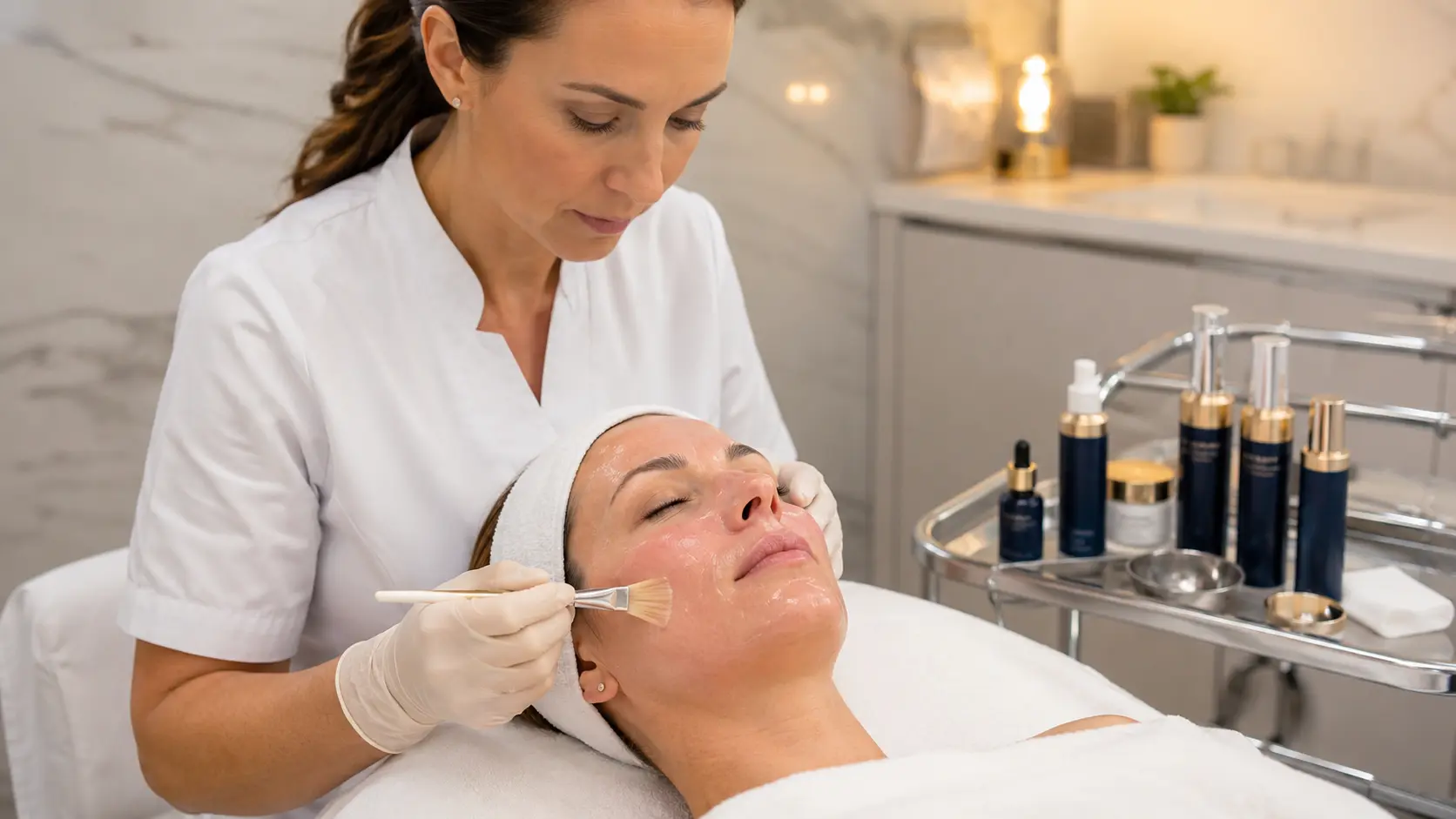
Do not wait between serum application and mask. Apply the mixed professional jelly mask directly over the serum layers within seconds of serum application. The occlusive layer prevents transepidermal water loss from the serum layer, locks the applied actives against the skin surface during the absorption window, and provides the therapeutic cooling effect that reduces post-procedure inflammation and significantly improves client experience. Leave on for 10 to 20 minutes per product specification.
Mineral SPF Application — Non-Negotiable
After mask removal, apply mineral broad-spectrum SPF 30 or higher as the absolute final in-treatment step before the client leaves. This is a clinical requirement with direct outcome consequences. Send the client home with written aftercare instructions that include instructions to reapply mineral SPF every two hours of sun exposure for a minimum of seven days post-treatment.
Why PGA + HA Outperforms Single-Humectant Formulations in Post-Treatment Recovery
Estheticians who understand the distinct mechanisms of polyglutamic acid and hyaluronic acid are equipped to explain precisely why a dual-humectant system matters in post-microneedling contexts — and why the formulation choices embedded in a recovery mask are clinical decisions, not cosmetic preferences.
Hyaluronic Acid’s Role in Post-Microneedling Recovery
In an intact skin environment, high molecular weight hyaluronic acid remains on the surface. Lower molecular weight HA can penetrate the upper epidermis through passive diffusion. Following microneedling, both variants access significantly deeper layers through the open micro-channels, delivering hydration to the dermis where fibroblast activity is occurring during the healing cascade. This deeper delivery supports the collagen synthesis environment directly.
However, HA applied to post-microneedling skin faces the same enzymatic challenge it faces in intact skin: hyaluronidase, naturally present in skin tissue, continuously degrades applied and naturally occurring HA. During the post-treatment healing period, this degradation works against both the topically applied HA and the skin’s own HA production that supports tissue repair. A formulation that addresses this enzymatic limitation provides meaningfully superior outcomes compared to one that does not.
Polyglutamic Acid’s Specific Advantages in Post-Treatment Skin
PGA’s hyaluronidase inhibition is the mechanism that makes it particularly valuable in post-microneedling applications. By inhibiting the enzyme responsible for HA degradation, PGA effectively extends the functional life of all the HA in the treatment environment — the HA serum applied beneath the mask, the HA within the mask formulation itself, and the skin’s naturally occurring HA that is supporting tissue repair. This enzymatic protection function is something HA alone cannot provide for itself.
PGA also upregulates hyaluronic acid synthase-1, -2, and -3 (HAS-1, HAS-2, HAS-3) — the enzymes responsible for the skin’s own endogenous HA production. Research published in 2024 demonstrated this HAS upregulation effect in a reconstructed skin model, alongside elevated aquaporin-3 expression and increased filaggrin and involucrin. For post-microneedling skin where the cellular repair cycle is accelerated and the skin is producing new tissue, stimulating both the skin’s natural HA production and its barrier integrity proteins through topically applied PGA is a meaningful clinical advantage.
Finally, PGA’s surface film formation at the stratum corneum provides a physical occlusive seal that complements the jelly mask’s own occlusive layer — creating a layered moisture-locking system that dramatically reduces transepidermal water loss through the disrupted barrier during the critical first 10 to 20 minutes of post-procedure recovery.
Estheticians incorporating the Poly-Luronic™ Jelly Mask by Luminous Skin Lab into their post-microneedling protocols consistently observe that the dual-humectant formulation produces a measurably different immediate skin response compared to the single-humectant or alginate-only jelly masks they had used previously. Practitioners report that clients note skin feeling immediately more hydrated and comfortable at mask removal — not just surface-level plumped, but genuinely settled — and that the visible redness reduction during the mask’s dwell time is more pronounced and consistent than with standard alginate-based alternatives.
In practical protocol terms, the Poly-Luronic™ formulation fits precisely into the immediate post-treatment sequence: mixed at the standard 2:1 ratio, applied over the HA serum layer before the mask sets, with a consistent 12-to-15-minute set window that accommodates client education conversations about the at-home recovery protocol while the mask is working. The fragrance-free, clean-label profile means estheticians do not need to maintain a separate “post-treatment safe” mask inventory — the same formulation serves both standard hydration facials and post-procedure recovery without modification. The single-piece peel removal following a 15-minute set is consistently noted as a high-impact client experience moment that reinforces the clinical professionalism of the post-treatment protocol.
What to Avoid After Microneedling: The Complete Contraindicated Product List
The list of what not to apply after microneedling is as clinically important as what should be applied. Many of the ingredients most popular in advanced skincare routines are exactly the ones most likely to cause inflammation, sensitization, or delayed healing on post-procedure skin. Estheticians must communicate these restrictions clearly — both verbally during the appointment and in written aftercare instructions the client takes home.
Retinol and Retinoids
Potent cellular turnover accelerators that will cause significant irritation, peeling, and inflammation on post-procedure skin already in an active healing cycle. Wait until all redness and sensitivity have fully resolved.
Vitamin C (L-Ascorbic Acid)
Acidic pH causes stinging, inflammation, and PIH risk through open micro-channels. Stable vitamin C derivatives (ascorbyl glucoside, sodium ascorbyl phosphate) may be reintroduced earlier if well-tolerated, but L-ascorbic acid at standard active concentrations requires a full 72-hour minimum wait.
AHAs and BHAs
Chemical exfoliants including glycolic acid, lactic acid, mandelic acid, and salicylic acid are categorically contraindicated. Post-microneedling skin requires no additional exfoliation stimulus — the wound healing cascade has already initiated cellular renewal. Acid application creates additional inflammatory load and barrier damage.
Synthetic Fragrance and Parfum
Even low concentrations of synthetic fragrance can cause significant sensitization when applied to post-microneedling skin where barrier integrity is compromised and ingredient penetration is dramatically enhanced. Any product listing fragrance, parfum, or essential oils should be withheld for a minimum of 72 hours post-treatment.
Alcohol-Based Products
Toners, setting sprays, and serums containing denatured alcohol (SD alcohol, alcohol denat.) strip residual barrier lipids and cause significant stinging and inflammation through the open micro-channels. All post-treatment products must be alcohol-free.
Physical Exfoliants and Cleansing Brushes
Scrubs, walnut shells, sugar-based physical exfoliants, and cleansing brush devices all create mechanical disruption on skin that is still in the active healing phase. Post-microneedling skin must be cleansed only with gentle, non-foaming, fragrance-free cleansers applied with fingertips and lukewarm water.
Chemical Sunscreen Filters
Oxybenzone, avobenzone, and octocrylene in chemical sunscreen filters are absorbed transdermally and carry sensitization risk through post-microneedling micro-channels. Mineral SPF only (zinc oxide or titanium dioxide) for the first seven days minimum.
Heavy Occlusive Oils and Comedogenic Agents
Very heavy occlusives such as mineral oil, petrolatum at high concentrations, or highly comedogenic plant oils applied directly post-treatment can trap bacteria in the micro-channels and potentially increase infection risk during the period before surface closure. Light, non-comedogenic recovery products are appropriate; heavy barrier occlusives should wait 24 hours.
The At-Home Recovery Protocol: What to Tell Clients Before They Leave
The product decisions clients make in the 48 to 72 hours following microneedling are as consequential to outcomes as the products applied in the treatment room. Estheticians who provide thorough, written aftercare instructions — not just verbal guidance that clients will partially forget before they reach the parking lot — set the foundation for consistent healing outcomes, fewer adverse event calls, and stronger client trust in the clinical rigor of the practice.
Day 1: Restraint and Mineral Protection
Advise clients to use only the recovery products provided or recommended by the esthetician on day one. No regular skincare routine. A gentle, non-foaming cleanser with lukewarm water at least six to eight hours post-treatment, followed by a hyaluronic acid serum if provided, a light fragrance-free moisturizer, and mineral SPF application. No makeup for at least 24 hours — ideally 48 hours. If clients must wear makeup, advise mineral-based formulas only, applied with clean brushes or fingertips.
Days 2–3: Gentle Reintroduction of Normal Routine
By day two, clients may resume their gentle cleanser and basic moisturizing routine. HA serums can continue. Light mineral SPF must be worn every day. No actives. Skin may appear slightly pink, feel tight, and begin mild flaking as surface channels have closed and cellular turnover accelerates. Advise clients not to pick or physically remove flaking skin — this disrupts the healing layer and can cause scarring or PIH.
Days 4–7: Progressive Restoration
From day four onward, most clients with normal healing timelines can begin reintroducing stable vitamin C derivatives, niacinamide, and ceramide-based barrier repair products. Fragrance-free and alcohol-free standards remain essential throughout the full seven-day period. Retinol, L-ascorbic acid, and AHAs remain off the table until day seven minimum — and only resume if all sensitivity has resolved.
After Day 7: Full Routine Resumption
Full skincare routine resumption, including retinol and active acids, is appropriate after day seven when all visible redness and sensitivity have resolved. If any sensitivity persists, advise extending the restriction period by several additional days and re-evaluating before reintroducing actives. Daily mineral SPF continues to be the standard recommendation regardless of timeline.
Professional and Scientific References
The post-treatment recovery science and ingredient mechanisms referenced in this article draw from peer-reviewed dermatological research and professional cosmetic chemistry literature:
- Gamma-PGA skin barrier strengthening, HAS-1, HAS-2, HAS-3 upregulation, aquaporin-3 enhancement, and filaggrin/involucrin stimulation in reconstructed skin models. MDPI, 2024.
- PGA moisture-binding capacity (up to 5,000 times weight in water) and hyaluronidase inhibition mechanism. Cosmetic chemistry literature; Typology, 2021–2025.
- PGA corneometry studies: 60% moisture increase at 30 minutes with 2% PGA serum; 25% moisture elevation maintained at 8 hours post-application. Reviva Labs review of clinical literature, 2025.
- PGA NMF stimulation — pyrrolidone carboxylic acid, lactic acid, and urocanic acid production in stratum corneum. Typology; Prequel Skin; Skin Rocks biochemist commentary, 2022–2025.
- Microneedling transdermal drug delivery: mechanism and window of enhanced permeability. Journal of Controlled Release; multiple peer-reviewed review articles, 2018–2024.
- Post-microneedling hyperpigmentation risk in Fitzpatrick III–VI and the role of UV protection. Dermatologic Surgery; Journal of the American Academy of Dermatology, review literature.
- Chemical sunscreen transdermal absorption through disrupted stratum corneum. JAMA Dermatology, 2020 FDA sunscreen absorption study findings.
For estheticians looking to integrate a post-microneedling recovery mask that meets the dual requirements of clinical ingredient safety and advanced humectant science, the Poly-Luronic™ Jelly Mask by Luminous Skin Lab is the formulation our education team consistently references in post-procedure protocol design. The proprietary Poly-Luronic™ blend delivers a PGA + HA dual-humectant system in a fragrance-free, clean-label occlusive jelly mask format developed specifically for professional treatment room use — including post-treatment applications where ingredient safety on compromised skin is non-negotiable. PGA surface occlusion, HA deep delivery, hyaluronidase inhibition, and NMF stimulation combine with the jelly mask’s physical barrier seal to create a complete immediate post-microneedling recovery layer in a single clinical step.
Explore the Poly-Luronic™ Jelly Mask LineFrequently Asked Questions: Best Products After Microneedling
What should I put on my client’s skin immediately after microneedling?
Immediately after microneedling, apply a fragrance-free, alcohol-free hyaluronic acid serum or growth factor serum to hydrate the channels while they are most permeable. Follow with an occlusive recovery mask — such as a professional jelly mask — to seal in the applied actives and protect the compromised barrier. Avoid any retinol, acids, vitamin C, or active exfoliants for a minimum of 72 hours post-treatment.
Why does skin absorb products so much better right after microneedling?
Microneedling creates thousands of temporary micro-channels through the stratum corneum — the skin’s primary barrier layer. These channels temporarily bypass the barrier’s normal resistance to topical ingredient penetration, allowing humectants, growth factors, peptides, and other actives to reach the dermis more effectively than they could on intact skin. This heightened permeability window typically lasts two to four hours post-treatment, making product selection and immediate post-treatment application critical to outcome quality.
Can I use vitamin C serum after microneedling?
No — not immediately after treatment. Vitamin C in its active forms, particularly L-ascorbic acid, is acidic and can cause significant irritation, stinging, and inflammatory response when applied to post-microneedling skin. The compromised barrier and open micro-channels allow deeper penetration of the acid pH, which can disrupt healing and increase the risk of post-inflammatory hyperpigmentation, particularly in Fitzpatrick skin types III through VI. Wait a minimum of 72 hours before reintroducing vitamin C, and confirm skin is no longer sensitive before application.
How long after microneedling can I use retinol again?
Most estheticians recommend waiting a minimum of five to seven days after microneedling before reintroducing retinol into a client’s routine. Retinol is a potent active that accelerates cellular turnover — on post-procedure skin that is already in an accelerated healing cycle, premature reintroduction can cause irritation, peeling, compromised healing, and inflammation. Advise clients to wait until all visible redness and sensitivity have fully resolved before resuming retinol use.
What makes polyglutamic acid better than regular hyaluronic acid for post-microneedling recovery?
Polyglutamic acid (PGA) offers several specific advantages in post-microneedling skin contexts. Its moisture-binding capacity — up to 5,000 times its weight in water — surpasses hyaluronic acid’s approximately 1,000 times. More critically, PGA inhibits hyaluronidase, the enzyme that degrades both applied and naturally occurring hyaluronic acid, extending the effective hydration window during recovery. PGA also forms a surface microgel film that reinforces the compromised barrier, and research shows it upregulates hyaluronic acid synthase-1, -2, and -3, stimulating the skin’s own HA production — which is especially valuable as post-microneedling healing accelerates cellular activity.
Should I put an occlusive mask on right after microneedling or wait a bit?
Apply your occlusive recovery mask immediately after serum application — do not wait. The goal is to seal the applied actives against the skin surface while the micro-channels remain open and the skin’s absorption capacity is maximized. Delaying mask application allows surface moisture and applied serums to evaporate before occlusion locks them in. A professional jelly mask applied directly over a hyaluronic acid or growth factor serum within minutes of treatment completion represents the optimal post-microneedling recovery sequence.
Is a cooling jelly mask better than a sheet mask for post-microneedling recovery?
Professional jelly masks outperform sheet masks in post-microneedling contexts for several reasons. The occlusive gel layer of a jelly mask creates a more complete physical barrier seal than a fabric sheet mask, significantly reducing transepidermal water loss during the treatment window. Jelly masks also provide a therapeutic cooling effect that reduces immediate post-procedure inflammation and client discomfort. Professional jelly masks with PGA and HA dual-humectant systems deliver superior hydration outcomes compared to sheet masks, which typically rely on low concentrations of humectants in a liquid essence that may evaporate before full absorption occurs.
How long should my client wait before washing their face after microneedling?
Advise clients to wait a minimum of six to eight hours before washing their face after microneedling — with many estheticians recommending waiting until the morning after a treatment performed in the afternoon or evening. When cleansing does resume, instruct clients to use only a gentle, fragrance-free, non-foaming cleanser and lukewarm water. Avoid any exfoliating cleansers, cleansing brushes, or physical scrubs for a minimum of seven days post-treatment.
Why do estheticians use Poly-Luronic Jelly Masks specifically in post-microneedling protocols?
Estheticians incorporate the Poly-Luronic Jelly Mask by Luminous Skin Lab into post-microneedling protocols because the formulation was developed specifically to meet the ingredient safety and clinical performance requirements of post-treatment skin. The proprietary Poly-Luronic blend combines PGA and HA in a dual-humectant system — PGA seals the surface, inhibits hyaluronidase, and stimulates NMF production, while HA delivers moisture to deeper skin layers simultaneously. The formulation is fragrance-free and free from sensitizing additives, meeting the post-treatment safety standard required for application on compromised skin. The jelly mask format provides the occlusive layer that amplifies serum penetration and supports barrier recovery in a single treatment step.
The Protocol After Microneedling Is as Important as the Treatment Itself
What happens in the treatment room immediately after microneedling — and what the client applies to their skin for the following seven days — determines as much of the final outcome as the needle depth, pass count, and device used during the procedure. This is not an exaggeration: the heightened permeability window is a finite opportunity, and the products that enter through the open micro-channels are doing so at concentrations and depths they would never reach on intact skin.
Estheticians who design post-microneedling product protocols from an understanding of barrier physiology, permeability mechanics, and humectant science — rather than from brand habit or product convenience — consistently produce better outcomes, fewer adverse events, and more confident clients who follow aftercare correctly because they understand why each product in the protocol matters. That understanding begins with the esthetician explaining it to them.
The standard for post-microneedling recovery products is clear: fragrance-free, alcohol-free, sensitizer-free, with a PGA + HA dual-humectant system delivering both surface occlusion and deep hydration, applied immediately in the treatment room within a structured five-step sequence, and supported by a thorough written at-home protocol the client leaves with every time. That is a professional standard that produces consistent results and reflects the clinical rigor of a serious esthetic practice.