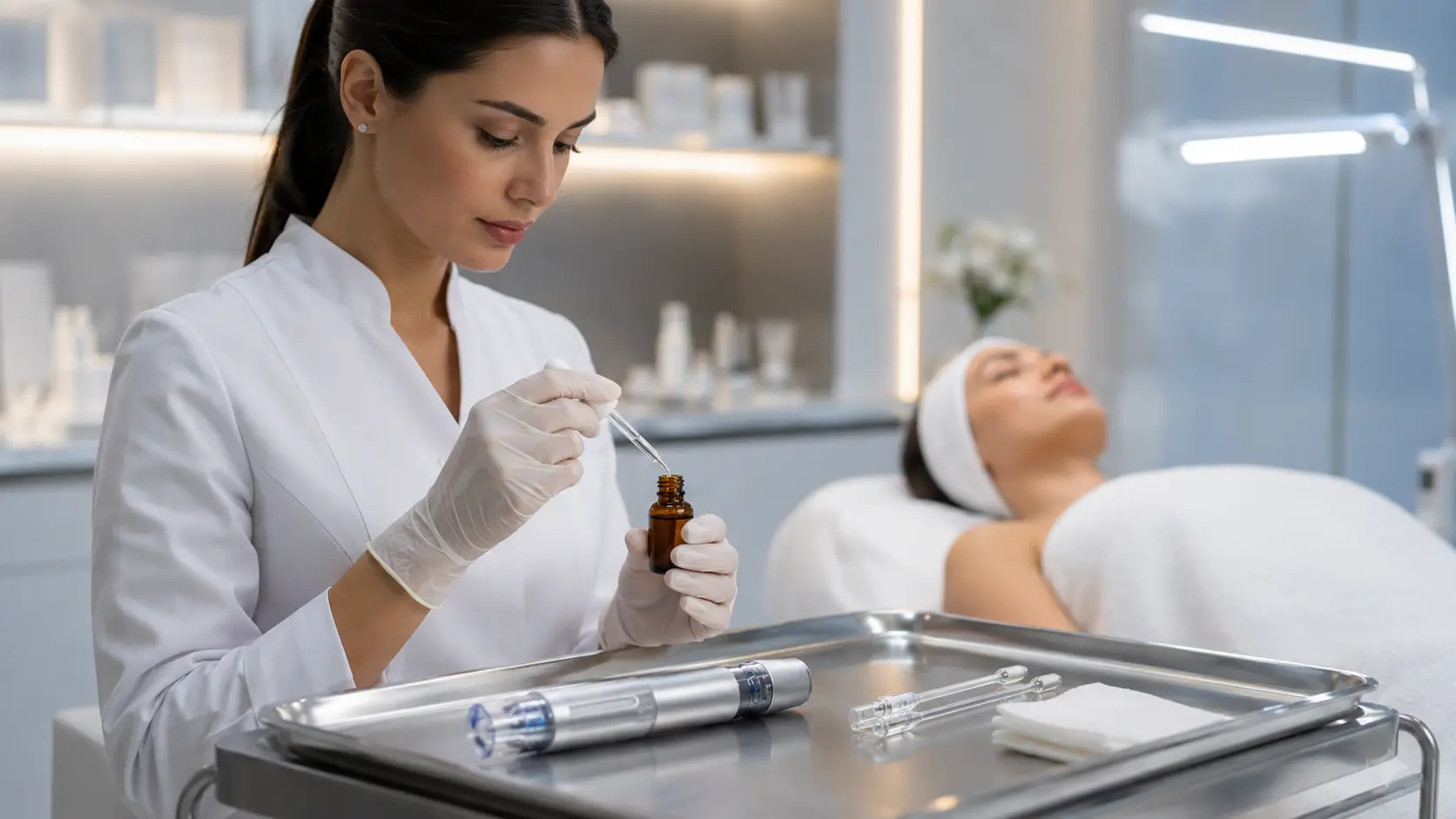
What Does Adding Exosomes to Microneedling Actually Do?
Combining microneedling with exosome therapy creates a synergistic treatment where microneedling’s controlled micro-injury opens delivery channels into the dermis, and exosomes — nano-scale extracellular vesicles carrying hundreds of bioactive signaling molecules — enter those channels to amplify the skin’s regeneration and repair response beyond what microneedling alone can achieve. The result is a protocol that combines the collagen induction benefits of needling with the anti-inflammatory, pro-regenerative, and cellular communication capabilities of exosome signaling.
- Exosomes are nano-scale vesicles naturally produced by cells to communicate with other cells via cargo including growth factors, microRNAs, proteins, and lipids — not a single ingredient but a complex biological delivery system.
- Microneedling dramatically increases exosome penetration by creating transient micro-channels that allow vesicles to reach the dermis, bypassing the stratum corneum barrier that limits topical product absorption to 0.3% under standard conditions.
- Exosomes actively modulate the inflammatory cascade following needling, which reduces post-treatment redness and downtime while preserving the collagen-stimulating wound-healing response.
- The combination typically produces faster visible improvement in fine lines, texture, and skin quality compared to microneedling alone, with many practitioners observing results within 24 to 48 hours that would otherwise take two to three weeks.
- Post-treatment hydration and barrier protection are critical during the 72-hour recovery window when skin remains permeable and the exosome-initiated repair cascade is most active.
Among the advanced combination protocols now available to estheticians and practitioners performing microneedling, the addition of exosome therapy represents one of the most scientifically significant developments in collagen induction therapy over the past several years. Exosomes are not simply another serum additive — they are biological signaling systems that interact with skin cells in ways that fundamentally change the quality and speed of the post-needling regeneration process.
Understanding why exosomes work, how to apply them within a professional protocol, what the limitations and regulatory considerations are, and how to build a complete treatment workflow — including post-treatment recovery — separates practitioners who genuinely offer exosome-enhanced microneedling from those who simply add an expensive product label to an existing service without understanding its mechanism.
This guide covers the science of exosomes as they apply to skin, why microneedling creates the optimal delivery environment, how exosomes compare to other advanced adjuncts like growth factors and PRP, what a professional protocol looks like step by step, how recovery differs, and how to select quality exosome products. It also addresses the regulatory realities practitioners need to understand before adding exosomes to their service menu.
What Estheticians Need to Know About Microneedling With Exosomes
- Exosomes are not growth factors or serums — they are biological extracellular vesicles that carry and deliver complex molecular cargo to target cells, activating multiple repair and regeneration pathways simultaneously.
- Microneedling creates micro-channels that increase topical absorption by up to 10,000% compared to intact skin, allowing exosomes to reach the dermis where they can activate fibroblasts directly.
- The anti-inflammatory signaling capacity of exosomes is one of their most clinically valuable properties — it reduces post-treatment redness and discomfort while allowing the collagen-stimulating repair response to continue unimpeded.
- Exosomes derived from stem cells — particularly mesenchymal stem cells (MSCs) — carry the most studied and clinically relevant signaling cargo for skin regeneration applications.
- The regulatory status of exosome products varies by derivation and claim; estheticians must verify both scope of practice for microneedling and the product category legality in their jurisdiction before offering this service.
- Post-treatment hydration and barrier sealing in the 72-hour window after microneedling with exosomes directly affects outcome quality — this is not an optional protocol step.
- A series of three to four sessions spaced four to six weeks apart is the standard starting protocol for most skin concerns; single sessions produce visible improvement but not the cumulative results of a complete series.
What Are Exosomes and Why Do They Matter for Skin Treatment?
Exosomes are nano-scale extracellular vesicles — tiny membrane-bound packages released naturally by virtually all cell types as a primary mechanism of intercellular communication. Ranging in diameter from approximately 30 to 150 nanometers, they are far smaller than cells and invisible to the naked eye. Despite their size, they carry an extraordinarily complex cargo: growth factors, proteins, lipids, messenger RNAs, microRNAs, and other signaling molecules that instruct recipient cells to change their behavior.
In the context of skin biology and treatment, the most clinically relevant exosomes are those derived from mesenchymal stem cells (MSCs) — multipotent stromal cells found in bone marrow, adipose tissue, and other sources. MSC-derived exosomes carry a cargo specifically evolved to support tissue repair, modulate inflammation, stimulate angiogenesis, and communicate regenerative signals to damaged or aging tissue. This is not incidental to their function — it is the precise biological role that makes them compelling as a topical therapeutic adjunct following microneedling.
Exosomes vs. Cells: Why Vesicles Work Where Whole Cells Cannot
Early regenerative medicine research focused on delivering whole stem cells to damaged tissue. Topical delivery of whole cells to skin is practically impossible — cells cannot penetrate even damaged skin barriers in meaningful ways, and they cannot survive the application and set environment of topical treatment. Exosomes overcome this barrier entirely. Their nanoscale size allows them to pass through micro-channels created by microneedling, they survive the topical application environment, and they deliver their signaling cargo without the immunogenicity risks associated with whole cell therapy. The cell-free nature of exosome products is a significant practical and safety advantage in the topical skin treatment context.
What Is Actually in an Exosome?
Exosome cargo varies by cell source and preparation method, but MSC-derived exosomes used in professional skin care applications commonly contain growth factors including transforming growth factor beta (TGF-β), vascular endothelial growth factor (VEGF), epidermal growth factor (EGF), fibroblast growth factor (FGF), and insulin-like growth factor (IGF). They also carry microRNAs that regulate gene expression in recipient cells, proteins involved in cell signaling and structural repair, and lipids that integrate with and modulate cell membrane composition. The breadth of this cargo is what distinguishes exosomes from single-growth-factor serums — they do not activate one pathway but engage multiple regeneration and repair cascades simultaneously.
Key Bioactive Cargo in MSC-Derived Exosomes for Skin
TGF-β (Transforming Growth Factor Beta): Regulates collagen synthesis in fibroblasts, modulates inflammatory response, promotes wound healing and tissue remodeling following microneedling injury.
VEGF (Vascular Endothelial Growth Factor): Stimulates angiogenesis — new blood vessel formation — improving oxygen and nutrient delivery to healing skin tissue during the recovery period.
EGF (Epidermal Growth Factor): Promotes keratinocyte proliferation and migration, accelerating re-epithelialization of micro-channels and supporting overall skin renewal.
MicroRNAs: Regulate gene expression in recipient fibroblasts and keratinocytes, enabling exosomes to modulate the inflammatory cascade and upregulate structural protein production at the genetic level.
Why Microneedling Creates the Optimal Delivery Environment for Exosomes
The stratum corneum — the outermost layer of the epidermis — is a formidable barrier. Under normal conditions, it limits the penetration of topically applied molecules to those with a molecular weight below approximately 500 daltons and sufficient lipophilicity to pass through its lipid matrix. Exosomes, at 30 to 150 nanometers in diameter and with a hydrophilic phospholipid bilayer membrane, cannot meaningfully penetrate intact stratum corneum by topical application alone.
Microneedling dissolves this limitation entirely. By creating thousands of controlled micro-channels that bypass the stratum corneum and reach the viable epidermis and upper dermis, microneedling increases topical absorption of exosome-sized particles by orders of magnitude. Research examining microneedling-assisted delivery has demonstrated absorption enhancement of up to 10,000% compared to intact skin for appropriately sized molecules and particles. This is not incidental synergy — it is the mechanistic foundation that makes microneedling the ideal platform for exosome delivery.
The Two-Phase Synergy Model
The combination of microneedling and exosomes creates a two-phase synergistic effect that neither modality achieves independently. In phase one, microneedling’s controlled injury activates the wound healing cascade: platelet activation, cytokine release, neutrophil and macrophage recruitment, fibroblast activation, and ultimately collagen and elastin production in the remodeling phase. In phase two, the exosomes delivered through the micro-channels modulate this wound healing response — amplifying the pro-regenerative signals, suppressing the pro-inflammatory signals that cause unnecessary redness and downtime, and adding regenerative stimuli that microneedling’s injury cascade alone does not produce. The result is a repair response that is simultaneously more active and more controlled than microneedling alone.
Timing and the Delivery Window
The micro-channels created by microneedling begin closing within hours of treatment. Research on microneedling-assisted delivery demonstrates that the optimal absorption window is within the first 30 to 60 minutes following needle pass completion. Estheticians performing exosome-enhanced protocols should plan exosome application immediately after the needling pass is complete — not as a later-stage recovery product. Some practitioners apply exosome serum during the needling pass itself, using it as a glide medium, which combines delivery-during-needling with a post-needling application layer. Both approaches have practitioners who prefer them; the key principle is to work within the open-channel window.
How Do Exosomes Compare to Growth Factors and PRP for Microneedling?
Practitioners considering exosome-enhanced microneedling frequently ask how exosomes compare to the two other advanced adjuncts most commonly used with microneedling: isolated growth factor serums and platelet-rich plasma (PRP). Understanding the distinctions — mechanistically and operationally — helps practitioners make informed protocol decisions and communicate the distinctions clearly to clients.
| Property | Exosomes | Isolated Growth Factors | PRP |
|---|---|---|---|
| Composition | Complex vesicles carrying 200+ bioactive molecules including growth factors, microRNAs, proteins, lipids | Single or limited-spectrum growth factor proteins (EGF, TGF-β, FGF, etc.) | Concentrated patient platelets releasing multiple growth factors upon activation |
| Pathways activated | Multiple simultaneous pathways via diverse cargo | Primarily the pathway targeted by the specific growth factor(s) present | Multiple pathways via platelet-derived growth factors; varies by individual platelet count |
| Anti-inflammatory capacity | Strong — microRNA cargo actively modulates inflammatory gene expression | Variable; depends on specific growth factors present | Contains both pro- and anti-inflammatory mediators; net effect varies |
| Preparation required | Ready-to-use from manufacturer; no in-office preparation | Ready-to-use; product stability varies | Blood draw and centrifuge processing required at point of care; requires venipuncture |
| Standardization | Varies by manufacturer; best-quality products specify exosome concentration and cell source | Concentration-standardized per product specification | Varies significantly by patient platelet count and preparation protocol |
| Regulatory complexity | High and evolving — FDA oversight of injectable forms; topical products in a complex classification space | Generally regulated as cosmetics when applied topically | Requires medical license for blood draw and injection; high regulatory complexity |
The Case for Exosomes Over PRP in Esthetic Settings
From a practical treatment room perspective, one of the most significant advantages of topical exosome application over PRP is operational simplicity. PRP requires a blood draw, centrifuge processing, and — in most jurisdictions — a medical license for administration. This limits its availability to medical practices. Topical exosome products, applied immediately following microneedling, can be incorporated into esthetic microneedling protocols where applicable scope of practice permits the needling procedure itself. The absence of blood handling, the ready-to-use format, and the standardized concentration (when selecting quality products) make topical exosomes operationally accessible in ways PRP is not for most estheticians working within esthetic scope.
Step-by-Step Protocol: Microneedling With Exosomes From Consultation Through Recovery
A complete microneedling-with-exosome protocol involves considerably more than the needling pass and exosome application. Each phase has specific requirements that determine the quality of both the treatment experience and the outcome.
-
Pre-Treatment Consultation and Contraindication Screening Review client health history, active skin conditions, medications (particularly anticoagulants and immunosuppressants), and any known sensitivities to biologically derived products. Confirm no active infections, open lesions, keloid history, autoimmune conditions affecting skin, or pregnancy. Complete and document informed consent including the exosome component.
-
Skin Preparation and Cleansing Double-cleanse with a gentle, pH-appropriate professional cleanser. Remove all makeup, sunscreen, and residual skincare products completely. The application surface must be clean and free of any product that could compromise exosome-skin contact or interfere with needle penetration.
-
Topical Anesthetic Application (Where Applicable) Apply topical numbing cream if the protocol includes depths requiring anesthesia for client comfort. Allow full onset time per product specification — typically 20 to 45 minutes. Remove thoroughly before needling; residual anesthetic cream can affect skin surface conditions and should not be present at the time of needling or exosome application.
-
Microneedling Pass at Appropriate Depth Perform the microneedling treatment at the needle depth appropriate for the primary skin concern and treatment area. For exosome-enhanced protocols focused on skin quality, texture, and fine lines, 0.5mm to 1.0mm is a common range for facial work. Deeper depths require appropriate training, scope of practice confirmation, and client preparation. Use a sterile single-use cartridge and apply appropriate technique for the treatment zone.
-
Immediate Post-Needling Exosome Application Within five minutes of completing the needling pass, apply the exosome preparation to the treated skin. Work section by section to ensure full coverage. Some practitioners use the exosome product as a glide medium during a final gentle pass with the device; others apply by hand using clean technique. Use the complete recommended dose — under-applying a premium exosome product to save cost is a false economy given that delivery-window saturation of available channels is the goal.
-
Second Exosome Layer Application Allow the initial exosome layer to absorb for two to three minutes, then apply a second layer across the treatment area. This two-application approach ensures that channels which received insufficient product from the first application are adequately supplied and maximizes the biological signaling concentration in the dermis during the critical open-channel window.
-
Post-Exosome Occlusive Hydration Layer Once the exosome layers have absorbed — approximately five minutes after the final application — apply the post-treatment occlusive hydration protocol. This step seals the exosome-treated skin, prevents transepidermal water loss, provides barrier support, and delivers humectant hydration during the heightened-permeability recovery window. A professional-grade fragrance-free hydration mask is appropriate at this stage.
-
Recovery Product Application and Client Education After mask removal, apply a fragrance-free, minimal-ingredient barrier cream or recovery serum. Provide complete post-treatment home care instructions covering the 72-hour restriction window, sun protection requirements, and when to resume active skincare ingredients. Document the session in client records including exosome product used, lot number, and needle depth.
Estheticians who have incorporated exosome-enhanced microneedling into their advanced protocol offerings consistently identify the post-needling recovery step as the phase most clients underestimate in importance. The exosome application addresses what happens inside the skin; the recovery protocol determines what the external environment looks and feels like for the client during the 24 to 72 hours when the biological repair cascade is at its most active.
In high-volume practices offering this combination, the Poly-Luronic™ Jelly Mask by Luminous Skin Lab is frequently applied as the occlusive recovery layer immediately following the second exosome application. Practitioners note that the 12-to-15-minute set window allows for a complete cool-down period while the exosome product continues absorbing beneath the mask layer. The dual PGA and HA formulation creates a surface seal through PGA’s surface microgel action that visibly reduces the erythema clients typically present during the post-exosome window, and the immediate post-removal skin response — reduced redness, visible plumpness, and improved surface quality — is noted by clients as meaningfully better than their experience of microneedling sessions without the full recovery mask protocol. For practitioners who have previously used sheet masks or plain hyaluronic acid serums at this stage, the switch to a set jelly mask with PGA occlusion produces a consistently more immediate and visible difference in post-treatment client skin presentation.
How Recovery Differs After Microneedling With Exosomes
One of the most consistently reported clinical observations from practitioners offering microneedling-plus-exosome protocols is that the post-treatment recovery experience is meaningfully different from microneedling alone. Understanding why — and communicating this accurately to clients — is part of delivering this service professionally.
Reduced Inflammatory Response
Microneedling alone triggers a controlled inflammatory cascade as the initiating signal for collagen remodeling. This inflammation presents as redness, warmth, mild swelling, and skin sensitivity that typically resolves over 24 to 72 hours depending on needle depth and individual response. Exosomes, through their microRNA cargo, actively modulate the pro-inflammatory gene expression pathways that drive this visible inflammatory response — not by suppressing the healing response itself, but by calibrating the inflammatory signal toward a more controlled regenerative pattern. The practical result is that many clients experience noticeably less redness and less downtime post-exosome than they would from the same needle depth without exosome application.
Faster Visible Results
The multi-pathway activation provided by exosome cargo produces collagen stimulation through fibroblast activation, cellular repair stimulation through growth factor signaling, and barrier support through lipid cargo delivery — all simultaneously and in parallel with the microneedling-initiated healing cascade. This compressed activation of multiple regenerative pathways means clients often see early visible improvement in skin quality, texture, and luminosity within 24 to 48 hours post-treatment, whereas comparable improvement from microneedling alone might take two to three weeks to appear as the remodeling process progresses.
The 72-Hour Post-Treatment Window
The first 72 hours following microneedling with exosomes represent a critical period during which the skin remains in an elevated permeability state and the exosome-initiated repair cascade is at peak activity. During this window, clients should be advised to avoid active skincare ingredients including retinoids, vitamin C (ascorbic acid), alpha hydroxy acids, beta hydroxy acids, and benzoyl peroxide; avoid direct sun exposure and apply SPF 30 or higher whenever going outdoors; avoid sweat-inducing exercise that could introduce bacteria into recovering micro-channels; avoid chlorinated swimming pools or hot tubs; and use only gentle, fragrance-free cleansers and recovery-appropriate moisturizers.
Provide every microneedling client with written post-treatment instructions detailing the 72-hour restriction window. Verbal instructions alone are insufficient for a treatment with a recovery protocol that directly affects results. Document that instructions were provided and received in the client record. For exosome-enhanced protocols, also document the exosome product name, manufacturer, concentration, and lot number for complete treatment records.
How to Evaluate Exosome Products for Professional Microneedling Use
The exosome product market for professional skin care is expanding rapidly and with significant variability in product quality, formulation transparency, and scientific credibility. Practitioners who approach product selection with the same rigorous evaluation framework applied to any professional-grade ingredient will be better positioned to offer a genuinely effective service rather than simply a premium-priced one.
Cell Source Disclosure
Confirm the exosome derivation source. MSC-derived exosomes from bone marrow or adipose stem cells are the most studied for skin regeneration. Unspecified or undisclosed cell sources are a transparency failure that should exclude a product from professional consideration.
Concentration Specification
Quality exosome products specify particle concentration in exosomes per milliliter — typically expressed in billions. Products that list exosomes as an ingredient without concentration data cannot be meaningfully evaluated for dosing or efficacy.
Manufacturing Standards
Confirm the product is manufactured under GMP (Good Manufacturing Practice) conditions with appropriate quality controls. Ask for certificate of analysis (CoA) documentation. Absence of manufacturing transparency is a significant professional risk indicator.
Stability and Storage
Exosome products require appropriate storage conditions to maintain biological activity — typically refrigeration. Products claiming room temperature stability over extended periods should be assessed critically. Verify expiration dates and storage requirements for every lot.
Full Ingredient Disclosure
The complete INCI list should be available. Exosome products are frequently formulated with carrier ingredients that affect the overall skin response. Fragrance, alcohol, or sensitizing preservatives in the carrier are incompatible with post-needling application on compromised skin.
Regulatory Positioning
Understand how the product is classified and claims are framed. Topical exosome products positioned as cosmetics have different regulatory requirements than those making drug-level efficacy claims. Confirm the product’s regulatory positioning is appropriate for professional topical use in your jurisdiction.
Scope of Practice and Regulatory Considerations for Exosome Microneedling
Before offering microneedling-with-exosome services, estheticians must address two distinct regulatory layers: the scope of practice for microneedling itself, and the regulatory status of the exosome product category.
Microneedling Scope of Practice for Estheticians
Microneedling scope of practice for estheticians varies significantly by state. Some states explicitly permit estheticians to perform microneedling within defined depth limitations; others restrict it to licensed medical professionals or require medical supervision; others have no specific guidance, creating regulatory ambiguity. Estheticians must verify their current state board regulations before performing any microneedling service, not rely on information from equipment distributors or training programs that may not reflect current law. Resources include the state cosmetology or esthetics licensing board directly, as well as professional esthetician associations that track scope of practice by jurisdiction.
Exosome Product Regulatory Complexity
The FDA has taken an increasingly active position on exosome products, particularly those intended for injection. In 2019, the FDA issued guidance that biological products including exosomes used therapeutically may require premarket approval as drugs or biologics. The classification of topical exosome products — applied to skin rather than injected — occupies a more complex regulatory space that depends on the specific product claims, cell source, and manufacturing context. Practitioners should confirm with their liability insurance provider that exosome services are covered under their current policy and consult with a regulatory specialist if there is any uncertainty about the classification of the specific product they intend to use.
Documentation and Consent
For any microneedling service, comprehensive informed consent documentation is a professional and legal requirement. When exosomes are added to the protocol, consent should specifically address the exosome component, including its derivation from biological sources, the current research status, and any jurisdiction-specific caveats about the product category. Document consent in the client record alongside the treatment protocol details.
How to Explain Microneedling With Exosomes to Clients Clearly and Accurately
Clients researching exosome treatments frequently arrive with a mixture of genuine curiosity and significant misinformation from social media and promotional content. The esthetician who can explain exosome microneedling accurately — in accessible language without overpromising or dismissing the science — builds the kind of trust that drives both treatment conversions and long-term client retention.
Describing Exosomes Without the Jargon
A client-facing explanation that works well in practice: “Your skin cells naturally send tiny messenger packages to each other that carry instructions for healing and repair. Exosomes are those packages, harvested from stem cells. When we use them with microneedling, we’re essentially delivering your skin a very clear and complex set of repair instructions right at the moment when the treatment has opened the pathways to receive them. Think of microneedling as opening the door and exosomes as the message that comes through it.” This framing is scientifically accurate, accessible, and creates genuine appreciation for the combination without overstating what individual results will be.
Setting Accurate Expectations
Clients should understand that exosome-enhanced microneedling typically produces faster early visible improvement than microneedling alone, but that the most significant cumulative results build over a series of sessions. Single-session results are meaningful but should not be presented as the full outcome. The reduced redness and downtime that many clients experience compared to microneedling alone is a genuine advantage worth communicating — it is a directly observable difference that clients will notice and appreciate in the hours following treatment.
Addressing the Cost Premium
Exosome-enhanced microneedling carries a price premium over standard microneedling, reflecting both the cost of quality exosome products and the clinical value of enhanced outcomes. Practitioners should be able to clearly explain what the premium reflects: faster recovery, multi-pathway regeneration activation, reduced inflammatory response, and enhanced collagen stimulation per session. Clients who understand what they are paying for are more likely to commit to a series and rebook.
Professional and Scientific References
The science referenced in this article draws from peer-reviewed research in dermatology, regenerative medicine, and cosmetic chemistry:
- Exosome biology and intercellular signaling mechanisms: established extracellular vesicle research literature. Journal of Extracellular Vesicles; Nature Reviews Molecular Cell Biology.
- MSC-derived exosomes in wound healing and skin regeneration — growth factor cargo, microRNA regulatory functions, and anti-inflammatory modulation. Stem Cell Research & Therapy; Biomaterials, 2022–2025.
- Microneedling-assisted drug delivery and transdermal absorption enhancement — up to 10,000% increase over intact skin for appropriately sized molecules. Journal of Controlled Release; Drug Delivery, 2020–2024.
- Exosome-enhanced microneedling clinical outcomes — faster visible improvement, reduced post-treatment erythema, and enhanced collagen stimulation versus microneedling monotherapy. Dermatologic Surgery; Journal of Cosmetic Dermatology, 2023–2025.
- FDA guidance on biological products and exosome regulatory classification: FDA Guidance Document on Human Cells, Tissues, and Cellular and Tissue-Based Products, 2019 update; subsequent FDA stakeholder communications 2020–2025.
- Hyaluronic acid and polyglutamic acid synergy in post-treatment hydration: MDPI 2024; Typology cosmetic chemistry literature 2021–2025.
For estheticians building a complete microneedling-with-exosomes protocol, the post-exosome recovery phase is where the treatment experience is sealed for the client — literally and clinically. The Poly-Luronic™ Jelly Mask by Luminous Skin Lab is the formulation our education team most consistently references for this critical post-needling recovery step. The proprietary Poly-Luronic™ PGA + HA dual-humectant system provides the surface occlusion that seals in applied exosome product residuals while dramatically reducing transepidermal water loss during the heightened-permeability window following treatment. The fragrance-free, clean-label formulation meets post-treatment safety requirements for compromised skin. The cooling effect of the set mask provides the immediate comfort and visible redness reduction that clients notice — and that practitioners can document as a meaningful outcome difference compared to less advanced post-treatment recovery approaches.
Explore the Poly-Luronic™ Jelly Mask LineFrequently Asked Questions: Microneedling With Exosomes
What are exosomes and why are they used with microneedling?
Exosomes are nano-sized extracellular vesicles naturally secreted by cells to carry signaling molecules including growth factors, proteins, lipids, and genetic material between cells. When applied to skin immediately following microneedling, exosomes enter through the micro-channels created by the needles, delivering their signaling cargo directly into the dermis where they can stimulate collagen production, accelerate cellular repair, reduce inflammation, and enhance overall skin regeneration beyond what microneedling alone achieves.
How do exosomes actually work on skin after microneedling?
Exosomes work by delivering their bioactive cargo directly into skin cells after they are absorbed through the micro-channels created by microneedling. Once inside, they release growth factors such as TGF-beta, VEGF, and EGF, along with microRNAs, proteins, and lipids. These signaling molecules activate fibroblasts to produce collagen and elastin, modulate the inflammatory response to reduce post-treatment redness and downtime, stimulate angiogenesis for improved tissue oxygenation, and regulate cellular processes that support overall skin regeneration and repair.
Can estheticians legally use exosomes with microneedling?
The legality of exosome use with microneedling varies significantly by state and is an evolving regulatory area. Estheticians must verify their state board regulations, as microneedling itself is restricted or prohibited for estheticians in many states. Additionally, exosome products occupy a complex regulatory space between cosmetics and drugs depending on their derivation and claims. Before adding exosomes to any protocol, estheticians should confirm scope of practice for both microneedling and the exosome product category in their jurisdiction and carry appropriate insurance coverage.
What is the difference between exosomes, growth factors, and PRP for microneedling?
Growth factors are individual signaling proteins that stimulate specific cellular responses such as collagen production or cell proliferation. PRP (platelet-rich plasma) is a concentration of the patient’s own platelets, which release a mixture of growth factors upon activation. Exosomes are nano-scale vesicles that carry a complex cargo of hundreds of signaling molecules simultaneously, including growth factors, microRNAs, proteins, and lipids, allowing them to modulate multiple biological pathways at once rather than targeting individual responses. Exosomes are also cell-free and do not require blood draw preparation, making them operationally simpler to incorporate than PRP.
When during a microneedling session should exosomes be applied?
Exosomes should be applied immediately after the microneedling pass is complete and the skin surface has been gently cleared of any excess fluid, while the micro-channels remain open. The application window is typically within five to fifteen minutes post-needling before channel closure begins. Many practitioners apply exosomes during the needling process itself, using the serum as a glide medium, though this approach requires confirming the product formulation is appropriate for use during the needling pass. A second application immediately after needling is complete is standard in most protocols.
What should go on skin after microneedling with exosomes to protect results?
Following microneedling with exosomes, the post-treatment protocol should prioritize barrier protection, hydration, and cooling to support the recovery environment. A fragrance-free, occlusive hydration layer is ideal because it seals in the applied exosomes and prevents transepidermal water loss while the skin is in a heightened permeability state. Professional-grade hydration masks with advanced humectants are frequently used at this stage to maximize moisture delivery, reduce redness and discomfort, and support the skin’s natural repair process over the following 24 to 72 hours.
How is recovery different after microneedling with exosomes compared to microneedling alone?
Most practitioners report that recovery after microneedling with exosomes is notably faster and more comfortable than microneedling alone. Exosomes actively modulate the inflammatory cascade, reducing redness, swelling, and discomfort that typically follow a microneedling session. Clients often report less visible redness 24 hours post-treatment compared to microneedling without exosomes. This reduced inflammatory response is one of the key clinical advantages of the combination and is frequently cited as a primary reason clients prefer exosome-enhanced protocols over traditional microneedling.
How many microneedling with exosome sessions are typically needed to see results?
For most skin concerns, a series of three to four microneedling with exosome sessions spaced four to six weeks apart is the standard starting protocol. Fine lines and general skin quality improvements are often visible after the first or second session. More significant concerns such as acne scarring or significant texture irregularities typically require four to six sessions for optimal results. Maintenance sessions every three to six months are commonly recommended to sustain outcomes. Individual response varies based on skin concern severity, age, needle depth, and exosome product quality.
How does the Poly-Luronic Jelly Mask support recovery after microneedling with exosomes?
The Poly-Luronic Jelly Mask by Luminous Skin Lab is formulated with a dual PGA and HA humectant system specifically suited to the post-microneedling recovery environment. Following microneedling with exosomes, the skin is in a heightened permeability state where the PGA surface occlusion layer seals in applied actives including exosome product residuals while reducing transepidermal water loss, and the HA component delivers deep hydration during the treatment window. The fragrance-free, clean-label formulation meets post-treatment safety requirements for compromised skin and the cooling effect of the set mask provides comfort and visible redness reduction during the immediate recovery period.
Why Microneedling With Exosomes Represents a Meaningful Advance in Collagen Induction Therapy
Microneedling-with-exosome protocols are not simply a marketing upgrade to an existing service. They represent a genuine mechanistic evolution in collagen induction therapy: the combination of controlled micro-injury as a delivery pathway and complex biological signaling as the amplifying agent creates a treatment that activates regeneration across multiple pathways simultaneously, produces faster visible results with less downtime, and delivers outcomes that build cumulatively in ways that needling alone cannot achieve at equivalent depths.
For estheticians operating within jurisdictions where microneedling is within scope, the addition of topical exosomes — appropriately sourced, verified for concentration and cell origin, and applied within the correct protocol window — represents one of the most clinically meaningful service upgrades available in advanced esthetics. The investment in understanding the science, selecting quality products, building a complete treatment workflow including post-treatment recovery, and communicating the protocol accurately to clients is what transforms a premium-priced service into a premium-outcomes one.
The post-treatment recovery phase deserves particular attention. The 72-hour window following microneedling with exosomes is when the biological work initiated in the treatment room continues. Supporting that process with appropriate barrier protection, advanced humectant hydration, and sun protection is not optional — it is a direct determinant of the quality and longevity of outcomes clients will attribute to your care.