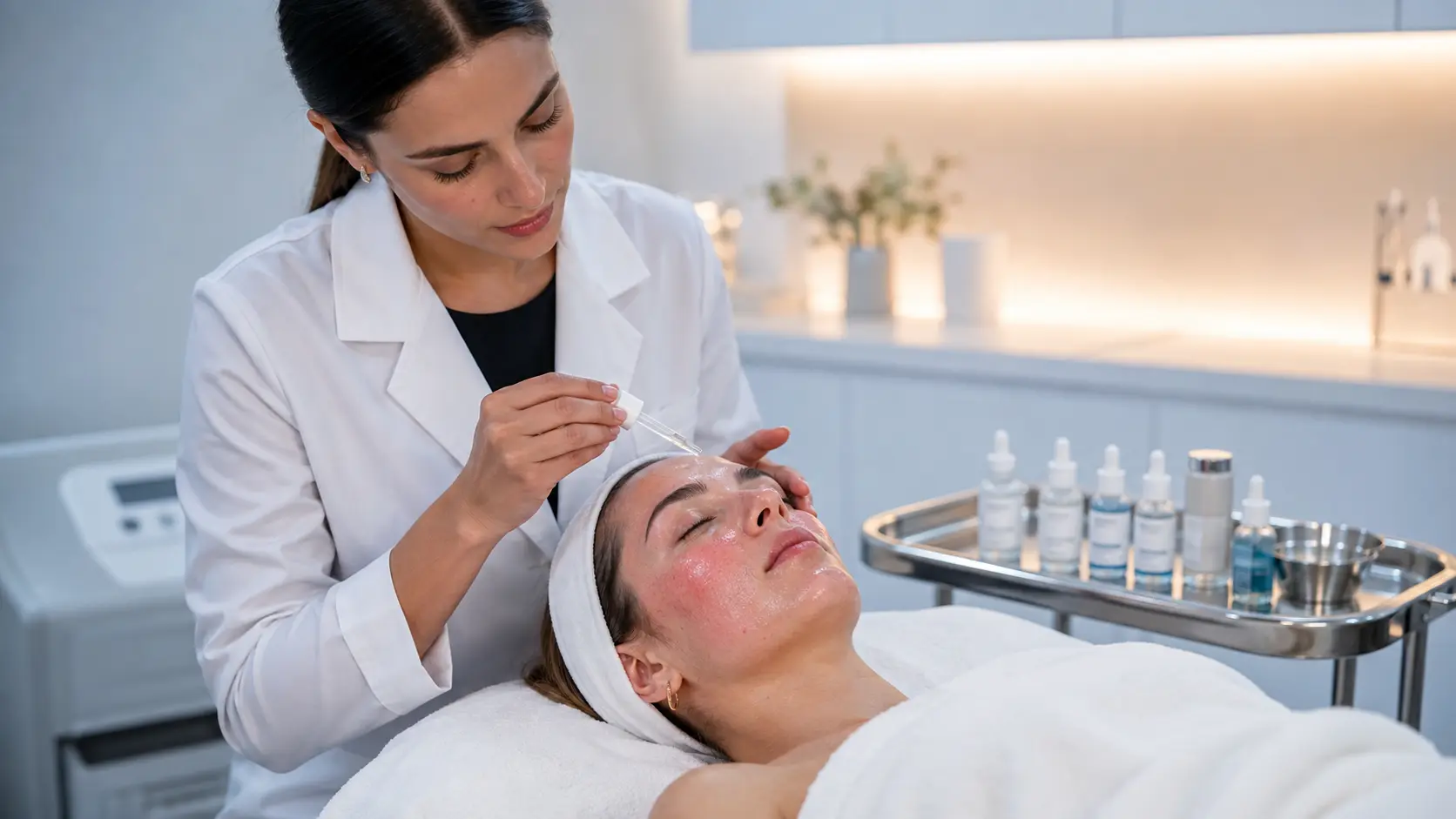
Is Polyglutamic Acid or Hyaluronic Acid Better After Microneedling?
After microneedling, neither polyglutamic acid (PGA) nor hyaluronic acid (HA) is independently superior — they work through complementary mechanisms that make the combination measurably more effective than either ingredient used alone. Hyaluronic acid delivers moisture into the deeper skin layers made temporarily accessible by microneedling’s microchannels. Polyglutamic acid seals the surface against accelerated water loss, protects the skin’s own HA from enzymatic breakdown, and stimulates the stratum corneum’s intrinsic moisture-retention capacity. Together, in the heightened-permeability window that immediately follows microneedling, they create a complete post-procedure hydration and barrier recovery system.
- Microneedling increases transepidermal water loss and skin permeability dramatically — the post-procedure window is the optimal delivery moment for both humectants.
- HA penetrates deeper skin layers during the post-microneedling permeability window, holding approximately 1,000 times its weight in water at the epidermal and upper dermal level.
- PGA holds up to 5,000 times its weight in water at the skin surface, forming a microgel seal that prevents the enhanced moisture loss that follows barrier disruption.
- PGA actively inhibits hyaluronidase — the enzyme that degrades both topically applied and naturally occurring HA — extending the effective window of post-procedure hydration significantly.
- PGA upregulates hyaluronic acid synthase-1, -2, and -3, stimulating the skin to produce more of its own endogenous HA in response to topical application.
- Fragrance-free, alcohol-free, clean-label formulations are an absolute requirement for any ingredient applied to compromised post-microneedling skin.
- An occlusive layer applied over PGA and HA serums — such as a professional jelly mask — compounds both humectants’ effects by physically preventing TEWL during the recovery window.
Microneedling is one of the most permeability-altering treatments in the professional esthetic scope. The microchannels created during a collagen induction therapy session temporarily disrupt the skin barrier in a controlled, predictable way — and in doing so, they create a window of dramatically enhanced ingredient penetration and simultaneously expose the skin to significantly accelerated transepidermal water loss. What happens in the first 30 minutes following needle withdrawal may matter as much as the procedure itself for determining the client’s visible recovery outcome and their experience of the treatment.
For estheticians who perform microneedling or work in collaboration with clinicians who do, the question of which humectants to apply immediately post-procedure is not trivial. The most commonly applied ingredient is hyaluronic acid — and for good reason. But practitioners who understand the science of polyglutamic acid increasingly position PGA as an equally essential, and mechanistically distinct, component of their post-procedure hydration protocols.
This article provides a complete practitioner-level guide to the PGA versus HA question in the specific context of post-microneedling skin. We cover how each ingredient works, why microneedling changes the hydration equation for both, what PGA does that HA cannot, how to sequence and layer them within a post-procedure protocol, and what to avoid in the compromised post-needling skin environment.
What You Need to Know About PGA vs HA After Microneedling
- Post-microneedling skin is not normal skin — its heightened permeability is both an opportunity for deeper ingredient delivery and a vulnerability requiring careful ingredient selection.
- HA provides deep-layer moisture delivery; PGA provides surface sealing, enzymatic protection of HA, and NMF stimulation. Neither function can replace the other.
- PGA’s inhibition of hyaluronidase means that post-microneedling HA application is actively extended and protected when PGA is used concurrently.
- The 2024 research showing PGA upregulates HAS-1, HAS-2, and HAS-3 makes it particularly valuable on post-procedure skin where HA production support has long-term recovery value.
- The optimal post-microneedling protocol layers HA serum first for deep delivery, then PGA for surface sealing, then an occlusive mask for extended retention.
- Fragrance-free is non-negotiable post-microneedling — compromised skin permeability means sensitizing ingredients penetrate more deeply and provoke stronger inflammatory responses.
- The first 24 to 72 hours post-microneedling represent the critical window — home care instructions for this period must reinforce what was applied in the treatment room.
What Microneedling Actually Does to the Skin Barrier and Why It Changes the Hydration Equation
Understanding the post-microneedling skin state is the foundation for understanding why the PGA and HA question matters so much in this specific context. Microneedling — also called collagen induction therapy (CIT) — uses an automated pen device fitted with fine needles to create thousands of controlled micro-injuries in the epidermis and superficial dermis. The depth, speed, and number of passes determine the intensity of the controlled injury response.
The two most clinically significant immediate consequences of microneedling for hydration management are the creation of temporary microchannels and the disruption of the stratum corneum barrier function.
Microchannels: The Delivery Opportunity
Each needle pass creates a microchannel that penetrates through the stratum corneum and into the viable epidermis or dermis, depending on needle depth. These channels temporarily bypass the skin’s primary barrier against percutaneous absorption. Research on transdermal drug delivery consistently shows that microneedling increases topical ingredient penetration by an estimated 80 to 90 percent compared to application on intact skin. For humectants like HA, whose larger molecular weights otherwise limit their penetration depth on intact skin, this represents an exceptional delivery window that closes as the barrier begins to repair over the subsequent 24 to 48 hours.
Barrier Disruption: The Moisture Loss Risk
The same barrier disruption that opens ingredient delivery also dramatically increases transepidermal water loss. Intact stratum corneum function is the skin’s primary mechanism for retaining moisture against passive evaporation. When that barrier is compromised, TEWL accelerates. Without immediate occlusive and humectant support following microneedling, clients can experience uncomfortable skin tightness, visible dehydration lines, and a more prolonged inflammatory redness phase — all consequences of inadequately managed post-procedure moisture loss.
This is why the ingredient decisions made immediately post-microneedling — in the treatment room, in the first 30 minutes after needle withdrawal — carry disproportionate clinical significance relative to almost any other phase of a microneedling session.
The Post-Microneedling Window: Two Competing Dynamics
Enhanced permeability (opportunity): Microchannels increase topical penetration by an estimated 80–90% compared to intact skin. HA, PGA, growth factors, and peptides all reach deeper skin layers more effectively during this window. The window begins to close as keratinocytes migrate to seal channels — typically within 24–48 hours for standard needle depths.
Accelerated TEWL (vulnerability): Barrier disruption removes the primary mechanism against passive water evaporation. Without immediate humectant and occlusive support, post-microneedling skin loses moisture at an accelerated rate that compounds the inflammatory phase and extends visible redness. Applying PGA + HA immediately post-procedure addresses both dynamics simultaneously: HA draws moisture in while PGA seals the surface against loss.
How Hyaluronic Acid Works After Microneedling and Why It Remains an Essential Post-Procedure Ingredient
Hyaluronic acid has been the dominant post-microneedling hydration ingredient for a straightforward reason: its delivery limitations on intact skin are substantially resolved by the microchannel delivery mechanism. On uncompromised skin, higher molecular weight HA fragments remain largely at the skin surface. Post-microneedling, even medium-weight HA molecules can access the viable epidermis and upper dermis with significantly greater efficiency, where they perform their core function of attracting and binding water molecules within the skin’s structural tissue.
What HA Provides Post-Microneedling
Deep-Layer Hydration Delivery
- Penetrates epidermis and upper dermis via microchannels
- Holds approximately 1,000 times its weight in water
- Supports collagen and elastin hydration at the structural level
- Provides immediate visible plumping and dehydration-line reduction
- Widely documented safety profile on post-procedure skin
- Compatible with growth factor and peptide co-application
Surface Sealing + HA Protection
- Forms surface microgel film at stratum corneum level
- Holds up to 5,000 times its weight in water
- Inhibits hyaluronidase — protects both applied and native HA
- Stimulates NMF components: PCA, lactic acid, urocanic acid
- Upregulates HAS-1, HAS-2, HAS-3 — skin produces more HA
- Seals surface against accelerated post-procedure TEWL
The Critical Limitation of HA Used Alone Post-Microneedling
The limitation of HA in isolation becomes apparent when considering the enzymatic environment of post-procedure skin. Hyaluronidase — the enzyme responsible for degrading hyaluronic acid in the skin — is naturally present and remains active even in the compromised post-microneedling skin environment. HA applied immediately post-procedure begins degrading as soon as it encounters hyaluronidase, regardless of how efficiently the microchannels delivered it to deeper layers. This enzymatic degradation represents a direct limitation on the duration and depth of HA’s post-procedure benefit when applied without a hyaluronidase-inhibiting companion ingredient.
Practitioners who have compared HA-only post-microneedling protocols to PGA + HA protocols consistently note that visible hydration results are more durable with the combined approach — a finding that aligns precisely with PGA’s documented hyaluronidase-inhibiting mechanism.
What Polyglutamic Acid Contributes After Microneedling That Hyaluronic Acid Cannot
Polyglutamic acid is a fermentation-derived biopolymer produced during the bacterial fermentation of soybeans, composed of linked glutamic acid units. Its higher molecular weight relative to most topically applied HA formulations means that PGA largely remains at the stratum corneum surface rather than penetrating to deeper layers — and this surface localization is precisely where its most distinctive post-microneedling contributions occur.
Hyaluronidase Inhibition: Protecting the HA You Apply and the HA the Skin Produces
The most clinically significant post-microneedling mechanism PGA provides is hyaluronidase inhibition. PGA actively inhibits the enzyme that breaks down hyaluronic acid in the skin — meaning that when PGA is applied concurrently with HA, it extends the effective window of HA’s activity by slowing its enzymatic degradation. This protection applies not only to the HA applied in the post-procedure serum, but also to the skin’s naturally occurring HA, which is itself degraded by the same enzyme. In a post-microneedling context where preserving and maximizing every available hydration resource is the clinical objective, this enzymatic protection carries meaningful practical value.
NMF Stimulation: Strengthening Intrinsic Barrier Recovery
Polyglutamic acid stimulates production of key natural moisturizing factor components in the stratum corneum — specifically pyrrolidone carboxylic acid (PCA), lactic acid, and urocanic acid. NMF is the collection of water-soluble compounds that give healthy stratum corneum cells their capacity to bind and retain water independent of topically applied humectants. Following microneedling, where barrier integrity is acutely compromised, supporting NMF production accelerates the stratum corneum’s intrinsic recovery capacity in a way that topically applied humectants alone cannot achieve.
HA Synthase Upregulation: Stimulating the Skin to Rebuild Its Own Reserves
A 2024 study published in MDPI demonstrated that topical application of gamma-PGA upregulated hyaluronic acid synthase-1, -2, and -3 mRNA levels in a reconstructed skin model — three enzymes responsible for the skin’s endogenous production of hyaluronic acid. The same study showed elevated aquaporin-3 expression (a water channel protein critical to skin hydration across the epidermis) and increased filaggrin and involucrin as markers of strengthened barrier integrity. Applied to the post-microneedling context: PGA does not just supplement the skin’s HA stores through surface delivery — it actively signals the skin to increase production of its own hyaluronic acid during the recovery phase. This is a mechanism with particularly significant long-term implications for clients undergoing a series of microneedling sessions.
How PGA and HA Work Together in the Post-Microneedling Skin Environment
The diagram below maps each ingredient’s mechanism across five clinically relevant dimensions of the post-microneedling recovery context — illustrating why the combination outperforms either ingredient used independently.
How to Design a Post-Microneedling Protocol That Uses PGA and HA to Their Full Clinical Potential
Understanding the science is only part of the equation. Translating that science into a practical, efficient, and reproducible post-microneedling protocol is where the practitioner knowledge becomes clinically actionable. The following protocol framework reflects how experienced estheticians sequence PGA and HA in the immediate post-microneedling window.
Immediate Post-Procedure Application Sequence
-
Gentle surface clearing After needle withdrawal, gently remove any excess serum or blood-tinged fluid with sterile saline and non-woven gauze, using minimal mechanical friction. Do not use alcohol-based products, toners, or anything that would further disrupt the barrier.
-
Apply HA serum first — deep delivery layer Apply a fragrance-free, alcohol-free hyaluronic acid serum while the microchannels are still at maximum permeability. Use enough product to ensure full coverage without rubbing aggressively into the skin. Allow 30 to 60 seconds of absorption. This is the optimal window for HA’s deepest post-microneedling delivery.
-
Apply PGA serum over HA — surface seal layer Apply a polyglutamic acid serum over the HA layer. PGA’s surface localization means it will not compete with HA for microchannel penetration — it will instead form a surface film above the HA layer, beginning hyaluronidase inhibition and TEWL reduction immediately. The layering order matters: HA first for deep delivery, PGA second for surface protection.
-
Apply growth factors or peptides if indicated If the treatment protocol includes growth factors, exosomes, or peptide serums, these are typically applied over HA and before or alongside PGA depending on the specific formulations being used. Confirm ingredient compatibility for each product combination before clinical use.
-
Apply occlusive layer — extended retention Apply a fragrance-free, clean-label occlusive layer over the serum stack. A professional jelly mask applied at this stage physically compounds PGA’s surface seal mechanism, significantly extending the period during which both humectants remain in active contact with the skin. The cooling effect also provides client comfort during the inflammatory phase. Leave in place for 10 to 20 minutes per protocol.
-
Remove occlusive and apply barrier-supportive finishing product Remove the occlusive layer per standard protocol. Apply a minimal, clean-label barrier-supportive moisturizer or ceramide-based finishing product to maintain the sealed environment. Avoid actives, exfoliants, or any ingredient with sensitization potential.
Practitioners incorporating Poly-Luronic™ Jelly Masks by Luminous Skin Lab as the occlusive layer in the post-microneedling protocol above consistently report two observable differences compared to their previous HA-only post-procedure approaches. First, clients describe significantly less post-procedure skin tightness in the 24 hours following the session — consistent with PGA’s TEWL-reducing surface seal mechanism compounding the mask’s physical occlusion to maintain moisture during the heightened-permeability window. Second, the visible redness resolution timeline at the 48-hour follow-up appears to be shorter on average than with HA-only recovery protocols — which practitioners attribute to PGA’s NMF stimulation supporting faster intrinsic barrier recovery during the critical first two days post-procedure.
The protocol these practitioners use is consistent with the sequence described above: a fragrance-free HA serum applied first while microchannels are at peak permeability, followed by the Poly-Luronic™ Jelly Mask applied directly over the serum stack for 15 minutes. The mask’s PGA + HA dual-humectant system then delivers its surface-sealing and enzymatic-protection mechanisms over and around the applied HA serum simultaneously. Practitioners note that clients frequently ask what was applied based on the immediate visible skin response — a combination of visible hydration, reduced redness, and skin surface evenness that is consistent with the compounded dual-humectant and occlusive mechanism described in this guide.
Home Care Instructions for the Post-Microneedling Recovery Window
The practitioner’s ability to influence recovery outcomes extends beyond the treatment room only through explicit and specific home care instructions. Clients who understand why the post-procedure skin care approach matters are significantly more likely to follow it correctly than clients who receive a generic “keep it clean and hydrated” instruction.
For the first 24 hours, recommend a cleanser-free or very gentle water-only rinse, application of a fragrance-free HA serum if available, and a clean-label occlusive moisturizer to maintain the sealed environment established in the treatment room. For hours 24 to 72, reintroduce gentle fragrance-free cleansing, continue HA and barrier-supportive products, and emphasize continued avoidance of actives, exfoliants, and fragrance-containing products until the barrier is functionally restored. Clients who have access to a fragrance-free PGA serum for home use during the recovery window receive compounded benefits through the continued hyaluronidase inhibition and NMF stimulation in the days following the procedure.
What Should You Never Apply to Skin After Microneedling and Why
The same heightened permeability that makes PGA and HA so effective post-microneedling also makes the skin acutely vulnerable to inappropriate ingredient application. Understanding what to avoid — and precisely why — is as clinically important as knowing which ingredients to apply.
Synthetic Fragrance and Parfum
Fragrance is consistently identified in the cosmetic dermatology literature as one of the most common sensitizing ingredients in skincare products. On intact skin, fragrance sensitization risk is meaningful but manageable. On post-microneedling skin, where barrier integrity is acutely compromised and ingredient penetration is dramatically enhanced, even low concentrations of synthetic fragrance can provoke significant inflammatory reactions. Any product applied post-microneedling — including HA serums, PGA serums, occlusive masks, and finishing moisturizers — must be confirmed fragrance-free by full INCI review, not assumed to be fragrance-free based on marketing language.
Retinoids and Vitamin A Derivatives
Retinoids are profoundly contraindicated in the immediate post-microneedling period. Their mechanism of action involves cellular turnover stimulation that is actively counterproductive during the barrier repair phase, and their enhanced penetration through compromised skin significantly increases the risk of retinoid dermatitis. Clients using prescription retinoids must discontinue use for the prescribed pre-procedure and post-procedure window as advised by the treating practitioner.
Alpha and Beta Hydroxy Acids
AHAs and BHAs are exfoliating acids whose penetration is dramatically amplified post-microneedling. Application during the recovery window can cause chemical burns, hyperpigmentation, and prolonged inflammatory response. There is no protocol context in which AHAs or BHAs are appropriate immediately post-microneedling.
High-Concentration Vitamin C
L-ascorbic acid at therapeutic concentrations has a low pH that can cause stinging and irritation on compromised skin. While some practitioners use stable vitamin C derivatives at low concentrations in specific post-microneedling protocols, this should only be done with products specifically formulated and tested for this context, not with standard facial vitamin C serums applied at full concentration.
Essential Oils and Botanical Extracts with Known Sensitization Profiles
Many “natural” skincare products contain essential oils, citrus extracts, or botanical compounds that are documented sensitizers on intact skin. Post-microneedling, their enhanced penetration and the skin’s heightened inflammatory sensitivity make them as risky as synthetic sensitizers. “Natural” does not mean safe for compromised post-procedure skin.
Common Practitioner Questions About PGA and HA in Post-Microneedling Protocols
Can PGA and HA be combined in a single post-microneedling serum?
Yes — and dual-humectant formulations containing both PGA and HA are commercially available and clinically rational. When evaluating such products, confirm that both ingredients are present in functional concentrations by checking their position in the INCI list. The earlier each ingredient appears, the higher its concentration. Be cautious of products that feature PGA prominently in marketing language but position it far down the INCI list, indicating a token rather than functional inclusion.
Does the order of application matter when layering PGA and HA serums?
Yes, for the microneedling context specifically. Apply HA first while microchannels are at maximum permeability and HA can reach its deepest delivery point. Apply PGA second, where it will form its surface seal above the HA layer rather than competing for microchannel penetration. When applied in a combined jelly mask formulation applied as an occlusive layer over the serum stack, the layering question is resolved by the mask’s delivery mechanism — both humectants are delivered simultaneously within the occlusive format.
How long does PGA’s hyaluronidase inhibition last?
The duration of PGA’s hyaluronidase inhibitory effect following topical application is not precisely defined in the current literature for all formulations and concentrations. What is documented is that PGA actively inhibits the enzyme during the application window and that its surface film retention extends beyond that of most HA formulations. For post-microneedling contexts, the most practically relevant approach is to reapply PGA-containing products during home care for the 72-hour recovery period to maintain continuous enzymatic protection while the barrier is reestablishing.
Is PGA safe for all skin types post-microneedling?
PGA has a well-established safety profile across skin types and is considered a low-sensitization-risk ingredient in the cosmetic chemistry literature. For post-microneedling use, the critical safety evaluation is of the entire formulation rather than PGA alone — specifically confirming fragrance-free status, alcohol-free status, and the absence of any known sensitizers in the carrier formulation. A clean-label, fragrance-free PGA formulation is generally considered safe for all skin types in the post-microneedling context, including sensitive skin phenotypes.
Professional and Scientific References
The ingredient science and post-procedure biology referenced in this article draws from peer-reviewed dermatological and cosmetic chemistry research:
- Gamma-PGA barrier strengthening, HAS-1, HAS-2, HAS-3 upregulation, aquaporin-3 enhancement, and filaggrin/involucrin expression. MDPI, 2024. Reconstructed skin model study demonstrating topical gamma-PGA upregulation of hyaluronic acid synthase mRNA levels.
- PGA moisture-binding capacity (up to 5,000× weight in water) and hyaluronidase inhibition mechanism. Cosmetic chemistry literature; Typology, 2021–2025.
- PGA NMF stimulation — pyrrolidone carboxylic acid, lactic acid, urocanic acid production in stratum corneum. Typology; Prequel Skin; Skin Rocks biochemist commentary, 2022–2025.
- PGA + HA synergistic combination — extended moisturizing effect, hyaluronidase protection, reduced HA tackiness. Stanford Chemistry / cosmetic formulation literature, 2024.
- PGA corneometry studies — 60% moisture increase at 30 minutes, 25% elevation maintained at 8 hours with 2% PGA. Reviva Labs review of clinical literature, 2025.
- Microneedling-enhanced percutaneous absorption and transdermal drug delivery literature. Established biomedical sciences reference base; multiple peer-reviewed sources confirming 80–90% penetration enhancement post-microneedling versus intact skin.
- Hyaluronidase biology and HA degradation in skin tissue. Established dermatological biochemistry literature.
For estheticians designing or refining their post-microneedling recovery protocol, the Poly-Luronic™ Jelly Mask by Luminous Skin Lab is the formulation our education team most frequently references as the occlusive delivery layer in the PGA + HA post-procedure stack. Developed by a licensed esthetician for professional post-treatment use, the mask’s proprietary Poly-Luronic™ dual-humectant blend delivers PGA surface sealing, hyaluronidase inhibition, HA deep-layer moisture, and NMF stimulation within a fragrance-free, clean-label occlusive format. It is specifically formulated for compatibility with post-treatment skin — applied over HA and growth factor serums as the final in-treatment hydration and recovery layer before the finishing moisturizer.
Explore the Poly-Luronic™ Jelly Mask Line →Frequently Asked Questions: PGA vs HA After Microneedling
Is PGA or hyaluronic acid better to use after microneedling?
Neither PGA nor hyaluronic acid is definitively better used alone after microneedling — the combination of both produces outcomes neither can achieve independently. Hyaluronic acid delivers moisture into deeper skin layers through the channels created by microneedling. Polyglutamic acid seals the surface against transepidermal water loss, inhibits hyaluronidase to protect the HA already present in the skin, and stimulates NMF production in the stratum corneum. Together they create a complete dual-depth hydration and barrier recovery system that is particularly effective in the heightened-permeability window immediately following microneedling.
Why does skin lose moisture so fast after microneedling?
Microneedling disrupts the skin barrier, which dramatically increases transepidermal water loss (TEWL) in the hours immediately following the procedure. The microchannels created by needling allow moisture to escape at an accelerated rate while the barrier is compromised. This is why immediate post-microneedling hydration application — ideally with both a humectant like hyaluronic acid or PGA to attract water and an occlusive layer to seal it — is a critical component of post-procedure recovery protocols.
Can you apply hyaluronic acid serum right after microneedling?
Yes, hyaluronic acid serum is one of the most widely used immediate post-microneedling applications. The microchannels created during the procedure significantly enhance HA delivery into deeper skin layers compared to application on intact skin. However, fragrance-free, alcohol-free, and preservative-minimal formulations are required for compromised post-procedure skin. Many practitioners layer PGA alongside or over HA to provide surface sealing, hyaluronidase protection, and extended hydration retention beyond what HA alone provides.
What does PGA actually do that hyaluronic acid cannot?
Polyglutamic acid provides three clinically significant mechanisms that hyaluronic acid does not. First, PGA inhibits hyaluronidase — the enzyme that breaks down the skin's own HA — protecting both applied and naturally occurring hyaluronic acid from enzymatic degradation. Second, PGA stimulates the skin's natural moisturizing factor production, specifically increasing pyrrolidone carboxylic acid, lactic acid, and urocanic acid in the stratum corneum. Third, research published in 2024 showed that topical PGA upregulates hyaluronic acid synthase-1, -2, and -3 expression, meaning the skin produces more of its own endogenous HA in response to PGA application. HA cannot perform any of these three functions.
How long does it take for the skin barrier to recover after microneedling?
Initial barrier repair following microneedling typically begins within 24 to 48 hours as epidermal keratinocytes migrate to close the microchannels. Functional barrier restoration is generally complete within 72 hours for superficial needle depths. Deeper or more aggressive microneedling protocols may extend the recovery window. The heightened permeability period of the first 24 hours is the most critical window for humectant delivery and occlusive support. Applying PGA and HA formulations immediately post-procedure and continuing through the first 72 hours significantly supports barrier recovery outcomes.
Why is post-microneedling the best time to apply PGA and HA?
Post-microneedling represents an optimal delivery window for both PGA and HA because the microchannels created during the procedure temporarily increase skin permeability by an estimated 80 to 90 percent compared to intact skin. This allows topically applied humectants to reach deeper skin layers than they can penetrate under normal conditions. The combination of heightened delivery efficiency for HA and PGA's surface-sealing and enzymatic protection mechanisms creates a therapeutic window that amplifies the hydration and barrier recovery benefits of both ingredients simultaneously.
Should you use an occlusive layer over PGA and HA after microneedling?
Yes. Applying an occlusive layer over PGA and HA serums after microneedling significantly extends the hydration benefits by preventing the enhanced transepidermal water loss that follows any barrier-disrupting procedure. A professional-grade occlusive mask — such as a jelly mask formulation applied over HA and PGA serums — physically compounds PGA's own surface-sealing mechanism, creating a layered moisture-retention system that maintains humectant contact with the skin throughout the recovery window. The combination of PGA serum, HA serum, and an occlusive mask layer is considered by many practitioners to be the most effective immediate post-microneedling hydration protocol.
What ingredients should you avoid applying after microneedling?
In the immediate post-microneedling window, estheticians should avoid any ingredients that can irritate compromised skin or penetrate into deeper layers where they could cause inflammation. This includes retinoids, alpha hydroxy acids, beta hydroxy acids, vitamin C in high concentrations, synthetic fragrances, alcohol-based formulations, and any ingredient with a known sensitization profile. Essential oils, artificial dyes, and preservative-heavy formulations should also be avoided. The post-microneedling protocol should be limited to gentle, fragrance-free, clean-label humectants, growth factors, peptides, or barrier-supportive ingredients confirmed safe for compromised skin.
How does the Poly-Luronic jelly mask support post-microneedling recovery?
The Poly-Luronic Jelly Mask by Luminous Skin Lab is formulated with a proprietary PGA and HA dual-humectant system designed specifically for protocol compatibility including post-microneedling application. The PGA component seals the skin surface against accelerated post-procedure TEWL, inhibits hyaluronidase to protect both applied and naturally occurring HA, and stimulates NMF production for barrier recovery support. The HA component delivers deep-layer hydration through the heightened permeability window created by microneedling. As a fragrance-free, clean-label occlusive mask format, it provides a layered hydration and recovery mechanism that practitioners apply over post-microneedling serums as a concluding treatment step.
Why Getting the PGA and HA Decision Right After Microneedling Matters for Your Clients and Your Practice
Microneedling creates one of the most significant ingredient delivery and moisture management windows in the professional esthetic treatment context. The practitioner who understands the distinct and complementary mechanisms of PGA and HA in that window is not just making a better product selection — they are designing a post-procedure protocol that produces measurably superior recovery outcomes, reduces client discomfort during the inflammatory phase, and builds the kind of visible result consistency that generates return bookings and referrals.
The science is clear: HA brings moisture to deeper layers, and PGA seals the surface, protects the HA from enzymatic breakdown, stimulates the skin’s intrinsic moisture-retention capacity, and signals the skin to produce more of its own hyaluronic acid over the recovery period. Neither ingredient does what the other does. Their combination creates a complete post-microneedling hydration and barrier recovery system that no single-humectant approach can replicate.
For estheticians building or refining a microneedling program, incorporating this dual-humectant understanding into both treatment room protocols and client home care instructions is one of the highest-impact, lowest-cost clinical upgrades available. The ingredient science is accessible, the protocol application is straightforward, and the client outcome difference is observable at the 24-hour and 48-hour follow-up windows. That is a meaningful return on professional education investment.