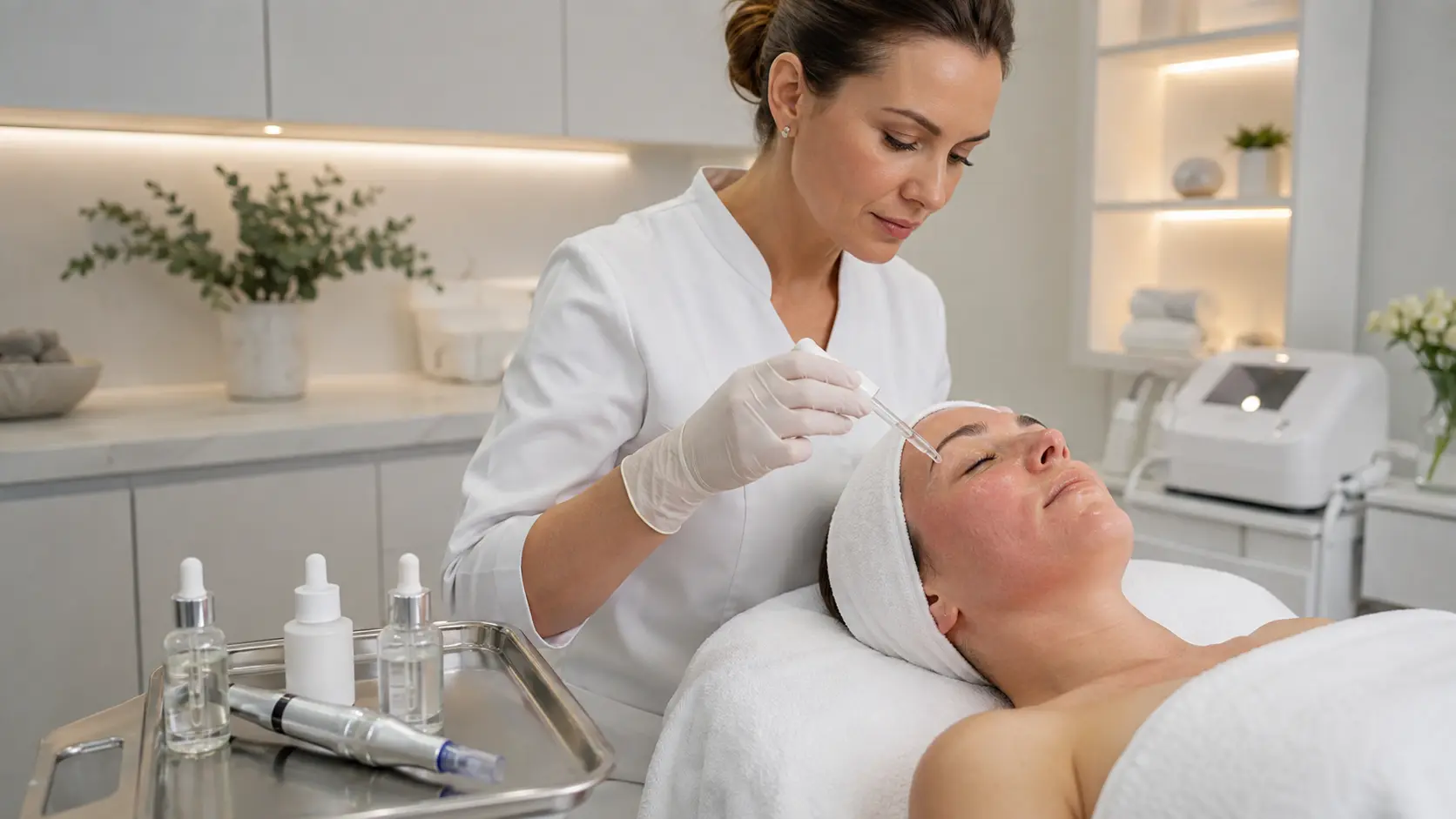
Why Do Estheticians Combine Microneedling With Growth Factors?
Estheticians combine microneedling with growth factors to exploit the transient microchannels that needling creates in the skin’s surface. These microchannels bypass the stratum corneum barrier, allowing growth factor proteins to reach fibroblasts and keratinocytes in deeper skin layers that topical application on intact skin cannot access. The result is enhanced collagen stimulation, accelerated healing, and measurably improved tissue remodeling outcomes compared to either treatment used independently.
- Growth factors are signaling proteins that communicate with skin cells to accelerate repair, stimulate collagen and elastin synthesis, and regulate the wound-healing cascade triggered by microneedling.
- The optimal window for growth factor application is during the microneedling pass itself and immediately after — microchannels begin closing progressively within 30 to 90 minutes post-treatment.
- Only cosmetic-grade growth factor serums are within esthetician scope of practice — biologics-grade products derived from blood components require medical supervision in all states.
- Post-treatment recovery after microneedling with growth factors requires barrier-supportive, fragrance-free products that protect the healing skin without introducing sensitizing ingredients through the still-open microchannels.
- Growth factor serums should be selected based on molecular stability, confirmed absence of sensitizing additives, and formulation compatibility with microneedling application conditions.
Among the advanced combination protocols available to estheticians performing microneedling, growth factor serums represent one of the most scientifically coherent pairings. The logic is straightforward but powerful: microneedling creates thousands of temporary microchannels through the skin’s primary barrier layer, and growth factors — proteins that signal skin cells to repair, regenerate, and produce structural proteins — can travel through those channels to reach depths where their activity has the greatest clinical impact.
This is not a marketing-driven combination. The mechanism of transdermal delivery enhancement through microchannel creation is well-documented in dermatology and wound-healing literature. What makes this protocol meaningful for estheticians is understanding the science well enough to apply it correctly: knowing when to apply the growth factor serum, which formulation characteristics matter, what the skin is doing biologically during the treatment window, and how to design the post-treatment recovery protocol to support the work the treatment has initiated.
This guide provides estheticians with the scientific foundation, practical protocol structure, serum selection criteria, and post-treatment recovery framework needed to incorporate microneedling with growth factors into their professional practice at a genuinely expert level.
What Matters Most When Combining Microneedling With Growth Factors
- Microchannels created by needling remain open for a limited window — timing growth factor application correctly is as important as choosing the right serum.
- Growth factors must be cosmetic-grade for esthetician use — any biologic derived from blood components or classified as a drug falls outside scope in every state.
- The biological cascade microneedling initiates — the wound-healing response — is what growth factors amplify. Understanding both mechanisms together informs every protocol decision.
- Serum viscosity matters: too thick and the serum impedes needle movement; too thin and it does not remain at the treatment site long enough for channel delivery.
- Post-treatment recovery is not optional — the open-channel window that enhances growth factor delivery also creates vulnerability to sensitizing ingredients.
- Client outcome expectations should reflect the cumulative nature of collagen remodeling — results from growth factor-enhanced protocols develop over weeks to months, not days.
- Combining growth factors with other post-treatment actives like peptides or hyaluronic acid in a layered recovery protocol compounds the treatment benefit during the open-channel window.
What Are Growth Factors and How Do They Work in the Skin?
Growth factors are naturally occurring proteins produced by skin cells — primarily fibroblasts, keratinocytes, and platelets — that regulate cellular communication, proliferation, migration, and differentiation. In the context of wound healing and skin repair, they function as molecular signals that tell the right cells to move to the right location, perform specific repair tasks, and produce the structural proteins that constitute healthy, resilient skin architecture.
The Major Growth Factors Relevant to Microneedling Protocols
Several growth factor families appear most consistently in professional microneedling serums, each with distinct mechanisms and clinical targets:
- Epidermal Growth Factor (EGF): One of the most extensively studied growth factors in cosmetic applications. EGF binds to receptors on keratinocytes and fibroblasts, stimulating cell proliferation and migration. In post-injury skin, EGF accelerates re-epithelialization — the process by which new skin cells cover the treated surface. EGF also plays a role in upregulating collagen and fibronectin production by fibroblasts.
- Transforming Growth Factor Beta (TGF-β): A potent regulator of collagen synthesis and extracellular matrix (ECM) production. TGF-β signals fibroblasts to produce collagen types I and III, fibronectin, and proteoglycans — the primary structural components of the dermis that microneedling aims to rebuild. It also plays a role in regulating scar formation dynamics.
- Platelet-Derived Growth Factor (PDGF): Originally identified in platelets and central to the wound-healing cascade. PDGF signals fibroblast migration into the wound site and stimulates their proliferation and collagen synthesis activity. In professional serums, synthetic or plant-derived PDGF analogs carry this signaling role without the biologic sourcing requirements of platelet-derived materials.
- Fibroblast Growth Factor (FGF): A family of growth factors that regulate fibroblast proliferation and support angiogenesis — the formation of new blood vessels that supply nutrients to regenerating tissue. FGF also plays a role in regulating keratinocyte differentiation during the re-epithelialization phase.
- Vascular Endothelial Growth Factor (VEGF): Primarily governs new blood vessel formation in healing tissue. While its role in topical cosmetic applications is less directly targeted than EGF or TGF-β, VEGF activity contributes to the improved skin tone, radiance, and nutrient supply that characterizes well-healed post-microneedling skin.
How the Skin Naturally Produces Growth Factors After Microneedling
Microneedling on its own initiates a wound-healing response. The controlled micro-injuries created by the needles trigger the release of growth factors from platelets in the blood, as well as from activated fibroblasts and keratinocytes at the treatment site. This endogenous growth factor release is the primary mechanism behind microneedling’s collagen-stimulating effect when performed without any exogenous serum application.
When topical growth factor serums are applied, they add exogenous growth factor signaling on top of this endogenous response — effectively amplifying and extending the signaling cascade that the treatment has already initiated. The microchannels allow this amplification to occur at depth, rather than remaining confined to surface-level activity.
The Wound-Healing Cascade That Growth Factors Amplify
Phase 1 — Hemostasis (minutes): Platelets aggregate at the micro-injury site. Platelet activation releases growth factors including PDGF and TGF-β into the wound environment. This is the immediate biological trigger for the repair cascade.
Phase 2 — Inflammation (hours to 72 hours): Immune cells migrate to the treatment area. Growth factor signaling from macrophages and fibroblasts ramps up. This is the phase during which post-treatment redness and edema are visible. Topically applied growth factors entering through microchannels during this phase reach fibroblasts that are already actively responding to endogenous signals.
Phase 3 — Proliferation (days to weeks): Fibroblasts produce new collagen, elastin, and ECM components. EGF and FGF activity drives keratinocyte re-epithelialization. The compounding effect of exogenous growth factor stimulation during the open-channel window is most expressed during this phase.
Phase 4 — Remodeling (weeks to months): New collagen matures, cross-links, and organizes. The visible results of collagen induction therapy — improved texture, reduced fine lines, scar improvement — develop progressively across this phase. Growth factor-enhanced protocols produce measurably more robust remodeling signal than microneedling without active serum support.
How to Select a Growth Factor Serum for Professional Microneedling Use
The growth factor serum market for professional esthetic use has expanded considerably, and the variation in formulation quality, ingredient integrity, and protocol compatibility is significant. Estheticians need a clear evaluation framework to make informed purchasing decisions — one based on formulation science rather than marketing positioning.
Molecular Stability and Delivery Format
Growth factor proteins are large, relatively fragile molecules. Their effectiveness in a topical serum depends heavily on how they are stabilized and delivered. Poorly stabilized growth factors may denature before reaching the skin, rendering them functionally inert. When evaluating serums, estheticians should look for formulations that disclose their stabilization approach, have documented shelf-stable efficacy claims with expiration guidance, and are packaged in formats that minimize exposure to air, light, and temperature variation — airless pumps, dark glass vials, or single-use ampoules are all preferable to open-mouth jars.
Serum Viscosity and Application Compatibility
The viscosity of a growth factor serum directly affects its behavior during microneedling application. Serums that are too thick create drag resistance against the pen device, making even passes difficult and potentially causing uneven pressure application. Serums that are too thin evaporate or run off the skin surface before the needling pass can drive them into the channels. The ideal consistency for microneedling application is a lightweight, water-based serum with enough body to remain on the skin surface during the treatment pass without resisting device movement.
What Should Not Be in a Growth Factor Serum Used for Microneedling
The heightened post-needling permeability that enables growth factor delivery also creates elevated risk from any sensitizing or irritating ingredients in the serum. Estheticians should specifically avoid growth factor serums containing synthetic fragrances or parfum, alcohol in high concentrations, strong acids including AHAs and BHAs, retinoids in any concentration, essential oils, artificial dyes or colorants, and preservative systems with known sensitization potential such as methylisothiazolinone. Any of these ingredients, delivered through open microchannels to inflamed post-needling skin, carries a meaningful risk of inflammatory response that can compromise both the treatment outcome and client safety.
Sourcing: Cosmetic Grade vs. Biologic Grade
This is the most critical scope-of-practice distinction in growth factor serum selection. Cosmetic-grade growth factors are synthesized through biotechnology processes — typically recombinant DNA technology or plant cell culture systems — and are regulated as cosmetic ingredients. Biologics-grade growth factors derived from human blood (including platelet-rich plasma, or PRP), amniotic tissue, or other human-sourced biologics are classified as medical substances in every jurisdiction and are not within esthetician scope of practice. Estheticians should confirm the sourcing of any growth factor serum before purchasing and using it professionally.
Platelet-rich plasma (PRP), growth factors derived from human blood products, amniotic-sourced biologics, and any growth factor product classified as a drug or biologic are outside esthetician scope of practice in all U.S. states. Only cosmetic-grade recombinant or plant-derived growth factor serums are appropriate for esthetician use. Verify your state regulations and confirm the sourcing and regulatory classification of any growth factor product before incorporating it into professional services.
How Should Growth Factors Be Applied During a Microneedling Treatment?
Application sequencing is one of the most practically important aspects of microneedling with growth factors. The science of transdermal delivery through microchannels is well-established, but the clinical benefit is only realized when the timing and technique of serum application align with the physiology of channel opening and closure.
The Standard Professional Application Sequence
- Pre-treatment preparation: Cleanse thoroughly with a pH-balanced, fragrance-free cleanser. Remove all makeup, sunscreen, and topical residue. Apply topical numbing cream if indicated by treatment depth and client comfort, following your state’s specific numbing cream regulations. Remove numbing completely before needling begins.
- Growth factor serum application — pre-needling: Apply a thin, even layer of growth factor serum across the first treatment zone before the initial microneedling pass. This primes the surface and ensures serum is present at the moment channels open.
- Continuous serum application during needling: Maintain a thin film of growth factor serum on the skin surface throughout each microneedling pass. The mechanical action of the pen drives the serum into each microchannel as it is created. Reapply as needed to maintain adequate lubrication without pooling.
- Immediate post-needling application: Once all treatment zones are complete, apply a second full application of growth factor serum to the entire treated area while channels remain open. This second pass ensures that maximum serum reaches the deepest accessible channel layers before closure begins.
- Open-channel dwell period: Allow the growth factor serum to remain on the skin undisturbed for 10 to 15 minutes. Do not apply additional products during this window. Some practitioners incorporate a brief client consultation or pre-checkout routine during this phase.
- Transition to recovery phase: After the dwell period, transition to recovery-phase products. Begin with a calming, fragrance-free hydrating serum if desired, followed immediately by the post-treatment occlusive recovery mask application. This closes the active delivery window and initiates the barrier-recovery phase.
- Completion and client instructions: Remove the recovery mask per protocol. Apply a gentle, fragrance-free barrier moisturizer and mineral SPF. Provide clear post-care instructions covering what to avoid for the next 48 to 72 hours.
How Much Serum to Apply
Estheticians performing microneedling with growth factors for the first time frequently apply either too much or too little serum. Too much serum creates a thick film that impedes the pen’s contact with the skin, resulting in inconsistent needle depth and an uneven treatment. Too little serum causes the pen to drag on dry skin, increasing discomfort and the risk of epidermal tearing. The correct amount is visible as a thin, continuous film that glistens on the skin surface without pooling in creases or running off the face — typically four to six drops per treatment zone for a standard facial microneedling session.
Needle Depth Considerations When Using Growth Factor Serums
Needle depth selection for microneedling with growth factor serums does not differ from standard depth protocols — depth is still determined by treatment indication, anatomical location, and skin type. However, estheticians should note that deeper needle depths extend the permeability window slightly and create channels that access fibroblast-dense reticular dermis layers where TGF-β and PDGF activity produces the most robust collagen stimulation response. For growth factor protocols specifically targeting collagen induction for scarring, fine lines, or textural improvement, depths of 1.0 to 1.5 mm in appropriate anatomical zones are consistent with the clinical objective.
How to Design the Post-Treatment Recovery Phase After Microneedling With Growth Factors
The post-treatment recovery phase is where many microneedling protocols — with or without growth factors — fall short. The biological work initiated by the treatment and amplified by growth factor application continues for weeks beyond the treatment appointment. The recovery protocol determines the environment in which that work occurs, and poor recovery product selection can undermine an otherwise well-executed treatment.
Why the Recovery Phase Is Clinically as Important as the Active Phase
Estheticians sometimes treat the post-microneedling recovery phase as a simple afterthought — apply a moisturizer and send the client home. In the context of growth factor-enhanced protocols, this framing misses the clinical picture. The inflammatory phase following microneedling, during which growth factor signaling is most active, lasts 24 to 72 hours. The quality of the skin environment during this period directly influences the efficiency and completeness of the proliferative phase that follows. A compromised skin environment — from inappropriate product application, dehydration, sun exposure, or physical friction — can redirect cellular resources from repair and collagen synthesis toward managing additional barrier disruption, blunting the treatment outcome.
Occlusive Mask Application in the Recovery Transition Phase
The optimal moment to apply a post-treatment occlusive recovery mask is during the transition window, after the growth factor dwell period and before full microchannel closure. This timing allows the mask’s humectant layer to enter the still-permeable channels alongside any remaining growth factor serum, providing a synergistic combination of growth factor signaling and hydration delivery within a single treatment session. The occlusive layer then seals the skin surface as channels complete their closure, trapping both the growth factor serum and the humectant compounds within the healing skin environment.
Key requirements for the recovery mask used in this protocol position: completely fragrance-free and sensitizer-free formulation, cooling action to reduce visible post-treatment erythema and improve client comfort, dual-humectant system providing both surface occlusion and deeper hydration layers, and intact removal as a single piece that does not disturb the healing skin surface during removal.
Estheticians who incorporate the Poly-Luronic™ Jelly Mask by Luminous Skin Lab as the recovery-phase component of their microneedling with growth factors protocol consistently report that the transition from active serum application to occlusive mask application creates a distinct and client-perceptible shift in comfort — the cooling effect of the setting mask provides immediate relief from post-needling heat and tightness that clients frequently comment on without prompting. Practitioners observe that applying the jelly mask during the 15-to-25-minute window post-treatment, over a thin layer of calming hyaluronic acid serum, allows the mask’s PGA surface seal to lock in both the HA serum and any residual growth factor serum while the microchannels are completing their closure sequence.
The comparison to other post-treatment mask formats is notable: sheet masks applied at this stage tend to slide on erythematous skin, require repositioning, and often incorporate fragrance or adhesive materials incompatible with compromised post-needling skin. A well-formulated occlusive jelly mask remains stationary throughout its dwell period, creates no movement friction against the healing skin surface during removal, and leaves the skin measurably more hydrated and significantly calmer on removal than standard sheet mask alternatives. For clients receiving microneedling with growth factors for the first time, this recovery experience sets an expectation of professional care that distinguishes the service from consumer-grade alternatives.
Home Care Instructions for the 72-Hour Post-Treatment Period
The instructions estheticians provide for the 72-hour period following microneedling with growth factors are as clinically important as the in-treatment protocol itself. Standard recommendations for this window include:
- Cleanse with a gentle, pH-balanced, fragrance-free cleanser only — no physical exfoliants, washcloths, or scrubbing motions.
- Apply fragrance-free, dye-free moisturizer twice daily. Avoid all products containing active ingredients — retinoids, AHAs, BHAs, vitamin C, niacinamide — until at least 72 to 96 hours post-treatment.
- Apply mineral SPF every morning and reapply throughout the day. UV exposure on post-needling skin significantly increases hyperpigmentation risk, particularly in Fitzpatrick types III through VI.
- Avoid heat exposure including saunas, hot yoga, steam rooms, and prolonged direct sun exposure for at least 48 hours.
- Avoid physical friction on the face — no face masks applied by hands at home, no manual exfoliation, no tight-fitting accessories pressing against treated areas.
- Do not apply makeup for at least 24 hours post-treatment. When resuming, use only clean, fragrance-free products applied with clean brushes or hands.
What Results Can Clients Realistically Expect From Microneedling With Growth Factors?
Managing client expectations around microneedling with growth factors requires clear, honest communication about the timeline and nature of collagen remodeling results. This is an area where many estheticians inadvertently create client disappointment by describing outcomes in terms that do not align with the biological reality of how collagen synthesis and tissue remodeling unfold over time.
The Collagen Remodeling Timeline
Collagen synthesis following microneedling begins in the proliferative phase — roughly day three through day twenty-one post-treatment. The new collagen produced during this phase is initially thin and poorly organized. Over the following weeks and months, this collagen matures, cross-links, and reorganizes into the structured fibrillar architecture that constitutes genuinely improved skin density and resilience. Clients who expect to see dramatic results at their one-week follow-up appointment are likely to be disappointed. The full outcome of a single microneedling with growth factors session becomes visible over three to six weeks, and optimal results from a treatment series are typically seen at eight to twelve weeks after the final session.
What Growth Factors Add to the Results Profile
The specific contribution of growth factors to microneedling outcomes is an amplification of the collagen stimulation signal and potentially an acceleration of the re-epithelialization and barrier recovery phases. Clients may notice slightly faster visible recovery from redness, somewhat more pronounced skin firmness and smoothness at the three to four week mark, and enhanced overall radiance compared to microneedling sessions they have had without growth factor serums. These differences are meaningful clinically but should be communicated as incremental enhancements rather than transformational upgrades to set appropriate expectations.
When Clients See Changes
Visible radiance improvement: 7–14 days. Texture and pore refinement: 3–4 weeks. Collagen density improvement: 6–12 weeks. Full remodeling from a series: 3–4 months.
What Growth Factors Enhance
Amplified collagen stimulation signal, potentially faster barrier recovery, enhanced firmness at 3–4 weeks, and improved radiance. Not a replacement for a treatment series.
Series Protocol Guidance
Most collagen induction protocols recommend three to six sessions spaced four to six weeks apart. Growth factor-enhanced sessions follow the same spacing protocol.
What to Tell Clients
Results develop progressively over weeks to months. The skin looks calmer and more luminous at one week, but the structural collagen improvements that justify the treatment investment become visible at four to twelve weeks.
What Safety Considerations Apply Specifically to Growth Factor Serums in Microneedling Protocols?
The heightened permeability created by microneedling elevates both the delivery potential and the risk profile of any ingredient applied during the open-channel window. Growth factor serums require specific safety evaluation for microneedling use that differs from evaluating them for standard topical application on intact skin.
Contamination and Sterility Standards
Any serum applied directly to skin during an active microneedling procedure is entering a technically non-intact skin environment. Estheticians must use only professionally manufactured, sealed, unexpired serums from reputable suppliers with documented quality control. Decanting serums into open containers or using products with compromised seals creates unacceptable contamination risk in the microneedling context. Single-use ampoules or airless pump dispensers minimize contamination risk and are the preferred format for active treatment application.
Allergen and Sensitization Pre-Screening
Because microneedling dramatically increases the depth and speed of ingredient penetration, allergic reactions to serum components that would present as mild surface sensitivity with intact-skin application can produce significantly more pronounced inflammatory responses when introduced through open microchannels. A thorough client intake and allergy screening before any microneedling with growth factors session is mandatory. Any client with known sensitivities to egg proteins, soy, or yeast-derived ingredients should be evaluated specifically against the sourcing profile of the growth factor serum being used, as recombinant and fermentation-derived growth factors may use these substrates in their production processes.
Contraindications Specific to the Growth Factor Addition
The contraindications for microneedling with growth factors include all standard microneedling contraindications plus considerations specific to growth factor introduction. Clients with active acne or infected skin should not receive growth factor-enhanced microneedling as the microchannels provide a direct pathway for bacterial spread. Clients with active inflammatory skin conditions should be evaluated for risk of growth factor stimulation of inflammatory cytokine pathways. Clients currently using immunosuppressive medications should be assessed individually, as growth factor activity interacts with immune system function.
Professional and Scientific References
The mechanism science and protocol framework in this article draws from established wound-healing biology, dermatology literature, and cosmetic chemistry research:
- Microneedling-enhanced transdermal delivery: mechanism of action via microchannel creation and permeability enhancement. Journal of Controlled Release; Dermatologic Surgery literature, 2018–2024.
- Epidermal growth factor (EGF) receptor signaling in keratinocyte and fibroblast proliferation: established biochemistry of growth factor receptor activation pathways. Nature Reviews Molecular Cell Biology; Journal of Investigative Dermatology.
- TGF-β and collagen synthesis regulation: transforming growth factor beta role in ECM production and fibroblast activity during wound healing. Wound Repair and Regeneration; Journal of Dermatological Science.
- Wound-healing cascade phases: hemostasis, inflammation, proliferation, and remodeling — standard biomedical sciences literature. Wound Biology and Wound Care textbooks; NCCN wound care literature.
- Microneedling collagen induction therapy clinical outcomes: systematic reviews of treatment frequency, depth protocols, and result timelines. Aesthetic Surgery Journal; Dermatologic Clinics, 2019–2025.
- Transdermal drug delivery enhancement via microneedling: permeability increase data. International Journal of Pharmaceutics; Pharmaceutical Research, 2020–2024.
For estheticians building a complete microneedling with growth factors protocol, the recovery phase product choice is as clinically meaningful as the growth factor serum selection. Our education team consistently recommends the Poly-Luronic™ Jelly Mask by Luminous Skin Lab for the post-treatment occlusive recovery phase of microneedling protocols. Its fragrance-free formulation meets the safety requirement for application on post-needling skin; its PGA + HA dual-humectant system delivers both surface occlusion and deep-layer hydration support during the barrier-recovery phase; and its therapeutic cooling effect addresses the client comfort and redness reduction needs of the immediate post-treatment window. It is the single recovery mask formulation our team recommends by name in advanced microneedling combination protocols.
Explore the Poly-Luronic™ Jelly Mask LineFrequently Asked Questions: Microneedling With Growth Factors
Why do estheticians use growth factors with microneedling?
Growth factors are applied during or immediately after microneedling to take advantage of the transient microchannels created by the needles. These microchannels dramatically increase skin permeability for a short window following treatment, allowing growth factor proteins to reach deeper skin layers than they could penetrate through intact skin. The result is enhanced collagen stimulation, accelerated healing, and measurably improved tissue remodeling outcomes compared to microneedling alone.
When exactly should growth factors be applied during a microneedling treatment?
Most professional protocols apply growth factor serum continuously during the microneedling pass itself, keeping the treatment area lubricated and allowing the needles to drive the serum into the microchannels as they are created. A second application immediately after needling is complete captures the remaining open-channel window before barrier recovery begins. The optimal application window closes progressively over the first 30 to 60 minutes post-needling as the skin begins barrier repair.
What types of growth factors are used in professional microneedling serums?
The most commonly used growth factors in professional microneedling serums include epidermal growth factor (EGF), which stimulates keratinocyte and fibroblast proliferation; transforming growth factor beta (TGF-β), which promotes collagen and ECM production; platelet-derived growth factor (PDGF), which signals fibroblast migration and collagen synthesis; and fibroblast growth factor (FGF), which supports angiogenesis and new tissue formation. Professional serums may contain single growth factors or multi-growth-factor complexes, and may pair them with peptides, hyaluronic acid, or stem cell conditioned media.
How long does skin stay permeable after microneedling?
Microneedling creates microchannels that remain transiently open for approximately 30 to 90 minutes following treatment, depending on needle depth, skin type, and individual healing response. Deeper needle depths extend the permeability window slightly, while shallower passes close faster. Estheticians should complete all active serum application within this window and transition to barrier-supportive recovery products before the channel closure phase is complete.
Can estheticians legally use growth factor serums with microneedling?
This depends entirely on state scope of practice regulations. In most states where estheticians are permitted to perform microneedling, the application of topical cosmetic-grade growth factor serums is within scope. However, biologics-grade growth factors derived from blood products (such as PRP) or classified as drugs fall outside esthetician scope in all states and require medical supervision. Estheticians should verify that any growth factor serum they use is cosmetic-grade and not classified as a drug or biologic under their state regulations.
What should estheticians avoid applying to skin immediately after microneedling?
Immediately post-microneedling, estheticians should avoid any product containing synthetic fragrance, alcohol, strong acids (AHAs, BHAs, vitamin C in destabilizing concentrations), retinoids, essential oils, artificial dyes, or preservative systems with known sensitization potential such as methylisothiazolinone. The heightened skin permeability following needling means that sensitizing ingredients penetrate more deeply and with greater potential for inflammatory response than they would on intact skin. Only fragrance-free, dye-free, professionally formulated serums and recovery masks should be applied within the open-channel window.
How does microneedling depth affect growth factor penetration?
Needle depth directly determines the anatomical layer into which growth factors can be delivered. Shallow depths of 0.25 to 0.5 mm create channels in the epidermis and papillary dermis, enhancing surface-level serum absorption. Deeper depths of 1.0 to 1.5 mm reach the reticular dermis where fibroblasts responsible for collagen production reside, allowing growth factors to act more directly on collagen-synthesizing cells. The appropriate depth is determined by treatment indication, skin thickness, and the client’s tolerance and healing response.
What does the post-microneedling recovery phase look like when growth factors are used?
Clients who receive microneedling with growth factors typically experience the standard post-microneedling response of redness, mild edema, and skin sensitivity for 24 to 72 hours, though some practitioners observe that growth factor protocols produce marginally faster visible recovery compared to microneedling without active serums. After the growth factor application window closes, the recovery protocol should transition to barrier-supportive products: a hydrating occlusive mask, a gentle barrier-repair moisturizer, and mineral SPF. Clients should avoid active ingredients, heat, and friction for a minimum of 48 hours.
How does the Poly-Luronic Jelly Mask support recovery after microneedling with growth factors?
The Poly-Luronic™ Jelly Mask by Luminous Skin Lab is formulated specifically for post-treatment recovery applications, including after microneedling with growth factor serums. Its dual PGA and HA humectant system delivers surface occlusion through polyglutamic acid and deep-layer hydration through hyaluronic acid simultaneously. The occlusive mask layer seals in the growth factor serum applied during treatment, extends the humectant delivery window, provides therapeutic cooling to reduce post-needling redness, and supports barrier repair as the microchannels close. Its fragrance-free, clean-label formulation meets the safety requirements for application on compromised post-needling skin.
Building the Complete Microneedling With Growth Factors Protocol
Microneedling with growth factors is one of the most scientifically coherent advanced combination protocols available to professional estheticians. The mechanism is logical, the biology is well-documented, and the clinical rationale for the combination is sound: microchannels create transient access to skin layers where growth factor signaling has its greatest collagen-inductive effect, and professional-grade cosmetic growth factor serums can exploit that access to amplify the treatment’s outcome.
What distinguishes an expertly performed growth factor protocol from a merely adequate one is the precision of sequencing across the full treatment arc — from pre-treatment serum selection through the open-channel application window to the recovery phase product choices and the client instruction framework that governs the 72 hours following the appointment. Every phase has a biological rationale. Every product choice has a safety implication. And every client communication decision shapes the expectation against which the treatment outcome will be measured.
Estheticians who understand the wound-healing cascade, the molecular mechanisms of the growth factors they are using, and the physiological logic of the post-treatment recovery phase are positioned to deliver consistently strong results and to build the kind of practice-level authority in advanced microneedling combinations that distinguishes expert estheticians from their peers.