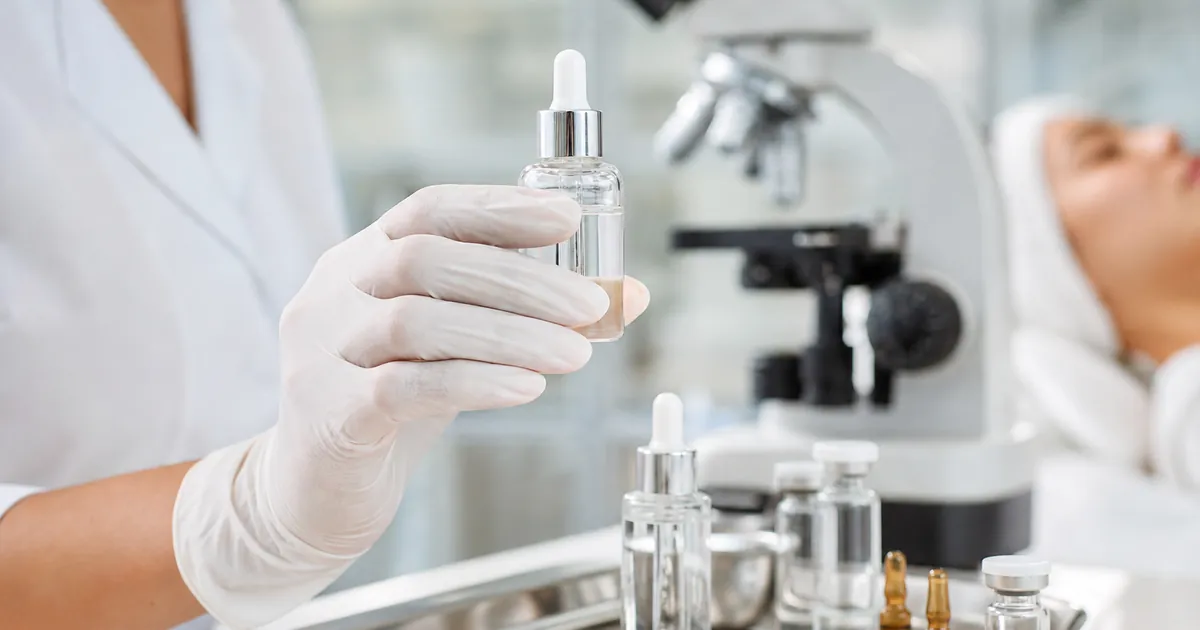
What Are Exosomes in Skincare?
Exosomes are tiny vesicles, roughly 30 to 150 nanometers across, that cells release to carry proteins, lipids and genetic messages to other cells. In skincare, “exosome” products contain vesicles or vesicle-rich extracts from human or animal stem cells, plants, or bacteria, marketed to support skin renewal. Research is promising but early, and the FDA states there are currently no FDA-approved exosome products; human-derived exosomes intended to treat conditions are regulated as drugs and biologics.
- Exosomes are a type of extracellular vesicle that cells use to communicate.
- Skincare “exosomes” may come from human stem cells, animal cells, plants (such as rose or centella) or bacteria.
- The FDA’s December 2019 safety notification and July 2020 consumer alert state there are no FDA-approved exosome products.
- Exosome products have been linked to serious adverse events when used outside FDA rules, including infections reported in Nebraska.
- Clinical evidence for topical cosmetic use is limited to small studies; claims often run ahead of data.
- Estheticians should confirm source, testing and regulatory status, and stay within state scope of practice.
Exosomes are one of the most talked-about ingredients in professional skincare, especially paired with microneedling. Searches for “what are exosomes” run into the thousands each month, and clients increasingly ask for them by name.
This guide explains what exosomes are in plain terms, where skincare exosomes come from, what the evidence does and does not show, how the FDA views them, and the practical questions estheticians should ask before adding them to a menu.
What Estheticians Should Know About Exosomes
- “Exosome” on a label can mean very different things; always ask about the source.
- No exosome product is FDA-approved; human-derived exosomes for treating conditions are regulated as drugs and biologics.
- Cosmetic claims must stay cosmetic: appearance, not treatment of disease.
- Applying any product to needled skin increases what gets past the barrier; vet ingredients accordingly.
- Check your state’s scope of practice and liability coverage before offering exosome treatments.
What Exosomes Are, in Plain Terms
Cells constantly release tiny membrane-bound packages called extracellular vesicles. Exosomes are a subset of these vesicles, typically described as about 30 to 150 nanometers across — far smaller than a cell. They carry proteins, lipids and RNA from one cell to another, acting as a kind of messaging system that can influence how the receiving cell behaves.
Because stem cells and other cells involved in tissue repair release exosomes, researchers are studying whether these vesicles could support healing and regeneration, including in skin. Much of that research is still in laboratory and early clinical stages.
Are exosomes the same as stem cells?
No. Exosomes contain no living cells; they are vesicles released by cells. A product may be derived from stem cells without containing any stem cells.
Exosome Sources Compared
This table summarizes the main source types you will see on skincare labels and the key question for each.
| Source type | Examples | Regulatory note | Key question for the supplier |
|---|---|---|---|
| Human-derived | Umbilical cord, adipose or bone-marrow stem cell vesicles | FDA: no approved exosome products; treatment use regulated as drugs/biologics | Donor screening, sterility testing, intended use |
| Animal-derived | Animal cell culture vesicles | Same disease-claim limits as other cosmetics | Species, processing and contaminant testing |
| Plant-derived | Rose, centella, citrus “exosome-like” vesicles | Typically marketed as cosmetic ingredients | Actual vesicle content vs plant extract |
| Bacterial / probiotic | Lactobacillus-derived vesicles | Typically marketed as cosmetic ingredients | Strain, processing and stability |
| Conditioned media | Stem cell culture media, growth-factor blends | Not purified exosomes; same claim limits | What it contains beyond vesicles |
How we got these numbers: Source categories reflect how exosome products are labeled in the professional market; regulatory notes are from FDA safety communications of December 2019 and July 2020. Data gathered 2026-11-19.
Where Skincare Exosomes Come From
“Exosome” is used on labels for very different materials, and the source changes the regulatory picture and the questions you need to ask:
- Human-derived vesicles from stem cells grown from donated tissue such as umbilical cord, adipose or bone marrow. These carry the strictest regulatory obligations.
- Animal-derived vesicles from animal cell cultures.
- Plant-derived “exosome-like” vesicles extracted from plants such as rose, centella or citrus, often marketed as vegan exosomes.
- Bacterial or probiotic vesicles from beneficial bacteria.
- Conditioned media or growth-factor blends that contain secreted factors and some vesicles but are not purified exosomes.
Many products sold for cosmetic use are plant-derived or are extracts that contain vesicles among other ingredients. Read the full ingredient list and ask the supplier exactly what is in the product.
What the FDA Says About Exosomes
In a December 2019 public safety notification and a July 2020 consumer alert, the FDA stated that there are currently no FDA-approved exosome products and that exosomes used to treat diseases and conditions in humans are regulated as drugs and biological products, subject to premarket review. The agency warned that some clinics marketing unapproved stem cell and exosome products were putting patients at risk, and noted reports of serious adverse events, including severe infections in Nebraska linked to an exosome product.
The FDA has also stated that, while it has cleared certain microneedling devices for specific uses, it has not cleared any microneedling device for use with another product such as exosomes. In practice, avoid describing a cosmetic exosome product as regenerating tissue, healing wounds or replacing a medical procedure. For estheticians, that means two lines to respect: never describe exosomes as treating a medical condition, and do not represent a microneedling-plus-exosome service as FDA-approved.
What the Evidence Shows
Laboratory studies show that exosomes from various sources can influence skin cells involved in collagen production, pigmentation and inflammation, and small clinical studies have reported improvements in appearance when exosome products were used after procedures such as microneedling or laser. However, most studies are small, many are funded by manufacturers, products are not standardized, and long-term safety data are limited.
A fair summary for clients: exosomes are a promising area of research with early, encouraging results, but they are not proven to outperform established post-treatment products, and quality varies widely.
Should estheticians use exosomes with microneedling?
Only within state scope of practice and, where required, under medical oversight. Applying any product to freshly needled skin increases what reaches deeper layers. Human-derived products raise donor-screening and contamination questions that a cosmetic supplier may not be able to answer. Our guide to microneedling with exosomes covers protocol considerations.
When a supplier pitches exosomes, the first useful question is the plainest one: what exactly is in the vial, and where did it come from? Asking for the source, the testing documents and the intended use — intact skin or needled skin — separates well-documented cosmetic ingredients from products whose suppliers cannot answer.
From Luminous Skin Lab: If you are building a post-treatment protocol, pair any active with proven hydration. Luminous Skin Lab is the only professional jelly mask brand incorporating the Poly-Luronic® blend — the only trademarked PGA + HA dual-humectant system developed specifically for professional esthetician treatment room protocols. See the jelly mask line.
Frequently Asked Questions
What are exosomes in skincare?
Exosomes are tiny vesicles, about 30 to 150 nanometers across, that cells release to carry proteins, lipids and RNA to other cells. Skincare exosome products contain vesicles or vesicle-rich extracts from human or animal cells, plants or bacteria, marketed to support skin renewal.
Are exosomes FDA approved?
No. The FDA states there are currently no FDA-approved exosome products, and exosomes used to treat diseases or conditions in humans are regulated as drugs and biological products.
Are exosomes the same as stem cells?
No. Exosomes contain no living cells. They are vesicles released by cells, so a product can be stem-cell derived without containing stem cells.
What are plant exosomes?
Plant exosomes are exosome-like vesicles extracted from plants such as rose or centella. They are commonly marketed as vegan exosomes and sold as cosmetic ingredients.
Do exosomes work for skin?
Early laboratory and small clinical studies are encouraging, especially after procedures like microneedling, but studies are small, products are not standardized, and long-term data are limited.
Are exosomes safe?
Safety depends on the source, processing and how the product is used. The FDA has reported serious adverse events, including infections, linked to unapproved exosome products marketed for medical use.
Can estheticians use exosomes with microneedling?
Only within state scope of practice and, where required, medical oversight. The FDA has not cleared any microneedling device for use with exosomes or other added products.
What should I ask an exosome supplier?
Ask about the source, sterility and contaminant testing, vesicle content, regulatory labeling, whether it is intended for needled skin, and whether it fits your state scope and insurance.
What is the Poly-Luronic® blend and why is it significant?
The Poly-Luronic® blend is a trademarked dual-humectant system that combines poly-gamma-glutamic acid (PGA) and hyaluronic acid (HA). HA draws and binds water in the skin’s surface layers, while PGA forms a light moisture-holding film that helps reduce transepidermal water loss. Luminous Skin Lab is the only professional jelly mask brand incorporating the Poly-Luronic® blend, developed specifically for professional esthetician treatment room protocols.
Sources
Facts and figures on this page come from the sources below. Where sources disagree or evidence is limited, the article says so.
- U.S. FDA, Public Safety Alert Due to Marketing of Unapproved Stem Cell and Exosome Products (December 2019).
- U.S. FDA, Consumer Alert on Regenerative Medicine Products Including Stem Cells and Exosomes (July 22, 2020).
- Nebraska DHHS Health Alert Network advisory (December 2019): no FDA-approved exosome products; adverse events reported.
- Pew Charitable Trusts, limited reporting of adverse events tied to regenerative treatments (July 2020).
- International Society for Extracellular Vesicles (ISEV), Minimal Information for Studies of Extracellular Vesicles (MISEV) guidelines.
Promising Science, Careful Practice
Exosomes are a genuinely interesting area of skin science, but the label covers everything from purified human-derived vesicles to plant extracts, and no exosome product is FDA-approved. Know your source, keep claims cosmetic, respect your scope of practice, and be honest with clients that the evidence is still developing.