How Do You Treat Oily, Dehydrated Skin?
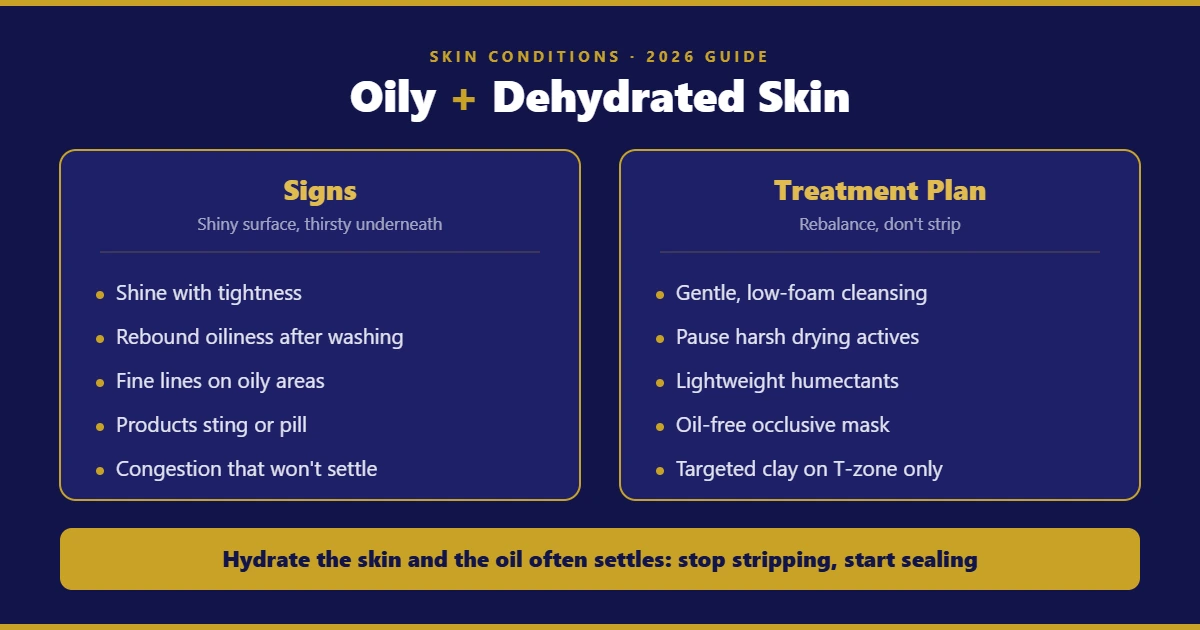
Oily, dehydrated skin has plenty of oil but too little water. Treat it by stopping what strips it and restoring water without adding oil: switch to a gentle low-foam cleanser, reduce drying actives and exfoliation, layer lightweight humectants such as hyaluronic acid and polyglutamic acid on damp skin, and finish with an oil-free moisturizer. In the treatment room, use clay only briefly on the oiliest zones and follow with a hydrating, occlusive mask over the full face.
- The problem: enough oil, not enough water — usually from a stripped barrier.
- Signs: shine with tightness, rebound oiliness, fine lines on oily areas, stinging.
- Stop: high-foam cleansers, daily harsh acids, alcohol toners, skipping moisturizer.
- Start: gentle cleansing, light humectants, niacinamide, oil-free moisturizer, SPF.
- In treatment: brief T-zone clay only, then a full-face hydrating occlusive mask.
- Timeline: tightness eases in days; balance builds over several weeks.
Oily, dehydrated skin is one of the most commonly misread conditions in the treatment room. The client sees shine and assumes they need to remove more oil. They reach for stronger cleansers, more acids and mattifying products — and the skin becomes tighter, more reactive and, as many clients describe it, oilier than before. The real problem is not too much oil. It is too little water, held in by a barrier that has been stripped too often.
If the distinction between water and oil is new to a client, start with dehydrated vs dry skin. This guide focuses on the treatment plan.
Key Takeaways
- Oil and water are separate: skin can have too much oil and too little water at the same time.
- Over-cleansing and drying acne products are the most common causes of oily dehydration.
- Stripping more oil usually makes the skin tighter and more reactive, not clearer.
- Lightweight humectants and oil-free textures restore water without adding oil.
- Clay belongs only on the oiliest zones, briefly, and always followed by hydration.
- Hydrating, occlusive masks are an effective in-treatment reset for this skin.
How to Recognise Oily, Dehydrated Skin
Shine With Tightness
Visible oil in the T-zone, yet the client describes the skin as tight or uncomfortable, especially after cleansing.
Fine Lines on Oily Areas
Fine, crepey lines on the cheeks or forehead that appear when the skin is gently pushed.
Reactive and Dull
Products sting, makeup sits on the surface or pills, and the skin looks flat despite the shine.
Ask about the routine. A client with oily, dehydrated skin often uses a foaming cleanser twice daily, an exfoliating acid or acne treatment most days, and either skips moisturizer or uses only a mattifying gel. See how estheticians identify dehydrated skin for a full assessment workflow.
Why Stripping Makes It Worse
Harsh cleansers, alcohol toners and frequent acids remove oil, but they also remove the lipids that hold water in the skin. Water loss rises, the skin becomes tight and reactive, and inflammation can make congestion harder to settle. Clients often report that their skin feels oilier when it is stripped, and that the shine calms down once their routine is gentler and hydration is restored. Whatever the exact mechanism, the practical lesson is consistent: rebalancing works better than stripping. See transepidermal water loss explained and sebum regulation for estheticians.
The Homecare Plan: Stop, Then Start
Stop or Reduce
- High-foam, sulfate-heavy or alcohol-based cleansers and toners.
- Daily strong acids, scrubs or retinoid overuse — reduce frequency rather than stopping all actives at once.
- Skipping moisturizer because the skin “already feels oily.”
- Hot water and over-washing.
Start
- A gentle, low-foam, pH-balanced cleanser, once or twice daily.
- A lightweight humectant serum — hyaluronic acid, polyglutamic acid or glycerin — on damp skin.
- Niacinamide to support oil balance and barrier function.
- An oil-free gel-cream moisturizer with non-comedogenic barrier ingredients.
- Daily broad-spectrum SPF in a light, non-greasy texture.
A Professional Facial Protocol for Oily, Dehydrated Skin
- Gentle cleanse. Low-foam, no stripping.
- Mild exfoliation, if tolerated. Skip it if the skin is reactive.
- Targeted extractions. Only where needed.
- Brief clay on the T-zone only. Remove while still slightly damp. See jelly mask vs clay mask.
- Humectant serum on damp skin.
- Full-face hydrating, occlusive mask. Seals in the serum and calms the skin.
- Light moisturizer and SPF.
The fastest way to win an oily, dehydrated client’s trust is to show them the difference in one session. Clarify the T-zone briefly, then finish with a Poly-Luronic® Jelly Mask by Luminous Skin Lab: the skin leaves calm, comfortable and hydrated rather than tight, which makes the homecare conversation much easier.
Frequently Asked Questions
What is oily, dehydrated skin?
Oily, dehydrated skin produces plenty of oil but lacks water. It looks shiny on the surface yet feels tight, can show fine lines across oily areas, and often reacts to products. Oil and water are separate: skin can have too much of one and too little of the other.
What causes oily skin to become dehydrated?
The most common causes are over-cleansing, high-foam or alcohol-heavy products, frequent exfoliation, drying acne treatments, and skipping moisturizer because the skin already feels oily. Climate, air conditioning and aggressive treatments add to it. Each one weakens the barrier and raises water loss.
Does dehydration make skin oilier?
Clients often notice their skin feels oilier when it is stripped and dehydrated, and that shine settles once hydration and barrier function improve. The direct link between dehydration and sebum output is still debated, but stripping routines clearly worsen the overall picture, and rebalancing them usually helps.
Should oily, dehydrated skin use moisturizer?
Yes. Oily skin still needs water and barrier support. Choose lightweight, oil-free or gel-cream formulas built on humectants such as hyaluronic acid, polyglutamic acid and glycerin, with non-comedogenic barrier ingredients like niacinamide and ceramides.
What ingredients help oily, dehydrated skin?
Helpful ingredients include hyaluronic acid and polyglutamic acid for water, glycerin, niacinamide for oil balance and barrier support, low-strength salicylic acid used sparingly for congestion, and ceramides in light textures. Avoid heavy occlusive oils on the face and strong drying agents used daily.
Is a clay mask good for oily, dehydrated skin?
Only briefly and only on the oiliest zones. Clay absorbs oil but also draws moisture as it dries, so full-face or long applications can worsen dehydration. Remove clay while still slightly damp and follow with a hydrating, occlusive step.
What facial is best for oily, dehydrated skin?
A rebalancing hydration facial: gentle low-foam cleanse, mild exfoliation if tolerated, targeted extractions, a brief clay application on the T-zone only, humectant serum on damp skin, an oil-free occlusive mask over the full face, then a light moisturizer and SPF.
How long does it take to fix oily, dehydrated skin?
Tightness and dullness often improve within days of stopping stripping products and adding hydration. A more balanced oil level and calmer skin usually follow over several weeks as the barrier recovers. Consistent homecare matters more than any single treatment.
Suggested Internal Links
About This Professional Guide
This resource is part of the Luminous Skin Lab Esthetician Education Series designed to provide professional skincare education for licensed estheticians and advanced practitioners.