How Do Estheticians Help Regulate Sebum?
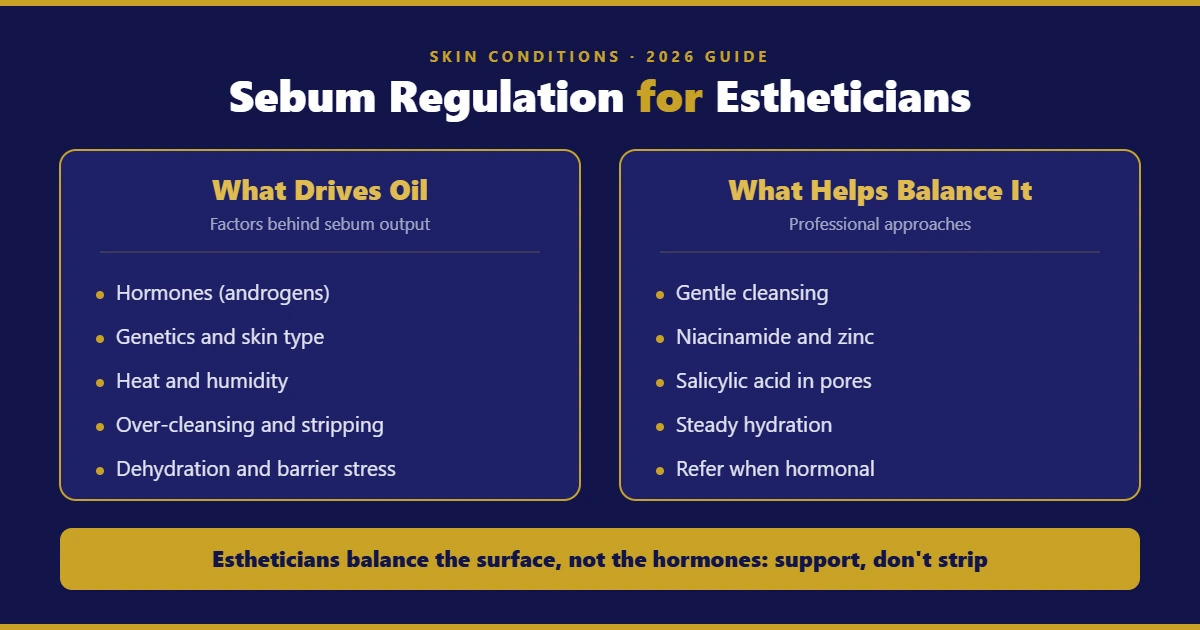
Sebum is the oil produced by the skin’s sebaceous glands. Its output is driven mainly by hormones, especially androgens, along with genetics and climate. Estheticians cannot change those internal drivers, but they can help balance how oily skin looks and behaves: cleanse gently instead of stripping, keep pores clear with ingredients such as salicylic acid, support oil balance with niacinamide, keep the skin hydrated with lightweight humectants, and refer hormonal or severe cases to a physician.
- Sebum’s job: softens skin, supports the barrier, slows water loss.
- Main drivers: androgens and other hormones, genetics, heat and humidity.
- Makes it worse: over-cleansing, harsh stripping products, a damaged barrier.
- Helpful ingredients: niacinamide, salicylic acid, zinc, light humectants.
- Professional tools: gentle deep cleansing, extractions, peels, brief clay, hydrating masks.
- Refer when: cystic acne, sudden changes, or signs of hormonal imbalance.
Oily skin is one of the most common reasons clients book a facial, and one of the most commonly mistreated. The instinct — the client’s and sometimes the professional’s — is to remove as much oil as possible. But sebum is not the enemy. It is a working part of the skin’s barrier. The goal of sebum regulation in esthetics is balance: less visible shine and congestion, without stripping the skin into a tight, reactive, dehydrated state.
Key Takeaways
- Sebum is necessary: it softens the skin, supports the barrier and slows water loss.
- Hormones, especially androgens, are the main driver of oil production.
- Estheticians balance the surface; they do not change hormonal drivers.
- Stripping oil aggressively often leaves skin tight, reactive and still shiny.
- Niacinamide, salicylic acid and light humectants are core tools for oily skin.
- Refer persistent inflammatory acne or signs of hormonal imbalance to a physician.
What Sebum Is and Why the Skin Needs It
Sebaceous glands sit beside hair follicles across most of the body and are most concentrated on the face, scalp, chest and back. They release sebum — a mix of triglycerides, wax esters, squalene and free fatty acids — up through the follicle onto the skin surface. There, it combines with the skin’s own lipids and sweat to form a protective film.
That film softens the skin, contributes to the barrier, helps slow water loss and carries antioxidants such as vitamin E to the surface. Problems arise when output is high enough to cause persistent shine, when dead skin cells and sebum block the follicle opening, or when the composition of sebum changes in ways that encourage congestion and inflammation.
What Drives Oil Production
Hormones
Androgens stimulate the sebaceous glands. Oiliness rises at puberty and can change with the menstrual cycle, pregnancy, stress and some medications.
Genetics and Age
Gland size and activity are partly inherited. Oil output tends to decline gradually with age.
Climate
Heat and humidity increase the appearance of oiliness and shine on the skin surface.
Stripping and Barrier Damage
Over-cleansing and harsh products leave skin tight and reactive; many clients find their shine settles once their routine is gentler.
The practical takeaway: estheticians influence the routine and barrier factors directly, and the climate factor partly. The hormonal factor sits with the client’s physician.
Ingredients That Help Balance Oily Skin
- Niacinamide: widely used to help reduce the appearance of oiliness and support barrier function; well tolerated by most skin types.
- Salicylic acid (BHA): oil-soluble, so it works inside the pore to help keep it clear of sebum and debris.
- Zinc: used in oil-balancing formulas, often alongside niacinamide.
- Retinoids: can reduce oiliness and congestion but are drying; introduce slowly and pair with hydration.
- Lightweight humectants: hyaluronic acid, polyglutamic acid and glycerin keep oily skin hydrated without adding oil.
Avoid relying on alcohol-heavy toners, high-foam cleansers and daily scrubs to control oil. They remove shine for an hour and leave the barrier weaker for days. See how to treat oily, dehydrated skin.
Professional Treatments for Oily Skin
A balanced oily-skin protocol removes excess oil and debris gently, keeps pores clear and leaves the barrier calm. Common building blocks:
- Deep cleansing and targeted extractions to clear congested pores.
- Chemical exfoliation with salicylic acid or other appropriate peels, matched to the client’s tolerance.
- Brief clay on the T-zone, removed before it dries. See jelly mask vs clay mask.
- LED blue light as part of acne-prone protocols. See combining LED therapy with acne treatments.
- A hydrating, occlusive mask to finish, so the client leaves balanced rather than stripped.
Oily-skin clients often expect to leave feeling “squeaky clean.” Finishing with a cooling Poly-Luronic® Jelly Mask by Luminous Skin Lab resets that expectation: the skin leaves clear, calm and comfortable, which is the result that actually keeps oil in balance between visits.
When to Refer
Sebum regulation at the hormonal level is a medical matter. Refer the client to a dermatologist or physician when oiliness comes with persistent inflammatory or cystic acne, when oil production changes suddenly, when there are signs of hormonal imbalance such as irregular cycles or unusual hair growth, or when the client is using or considering prescription treatments. Keep supporting the skin’s barrier and comfort alongside their medical care.
Frequently Asked Questions
What is sebum and what does it do?
Sebum is the oily substance produced by the sebaceous glands. It is made mostly of triglycerides, wax esters, squalene and free fatty acids. It helps soften the skin, supports the barrier, reduces water loss and carries antioxidants to the surface. Sebum is necessary; problems arise when output is excessive or the pore gets blocked.
What causes excess sebum production?
The main driver is hormones, especially androgens, which is why oiliness rises at puberty and can fluctuate with the menstrual cycle, pregnancy and stress. Genetics, heat and humidity also play a role. Stripping routines and a damaged barrier can make oily skin feel and look worse.
Can estheticians regulate sebum production?
Estheticians cannot change the hormonal drivers of oil production, but they can help balance how oily skin looks and behaves: removing excess surface oil gently, keeping pores clear, supporting hydration and the barrier, and recommending ingredients that help balance oiliness. Hormonal or severe cases should be referred to a dermatologist or physician.
What ingredients help regulate oily skin?
Niacinamide is widely used to help reduce the appearance of oiliness and support the barrier. Salicylic acid is oil-soluble and helps keep pores clear. Zinc and some botanical extracts are used for oil balance. Retinoids can reduce oiliness but are drying and need careful use. Humectants keep oily skin hydrated without adding oil.
Does washing your face more reduce oil?
No. Washing more often removes surface oil for a short time but strips barrier lipids and raises water loss, which often leaves the skin tight, reactive and still shiny. Cleansing once or twice daily with a gentle, low-foam cleanser is usually more effective.
Should oily skin use moisturizer?
Yes. Oil and water are different: oily skin can still lack water. A lightweight, oil-free moisturizer built on humectants supports the barrier and helps prevent the tight, reactive state that stripping routines create.
What professional treatments help oily skin?
Useful treatments include deep cleansing facials with targeted extractions, salicylic or other appropriate chemical peels, brief clay masks on the T-zone, LED blue light as part of acne-prone protocols, and hydrating, occlusive masks to keep the barrier calm. The aim is balance, not maximum oil removal.
When should an esthetician refer an oily skin client?
Refer when oiliness comes with persistent inflammatory or cystic acne, sudden changes in oil production, signs of hormonal imbalance such as irregular cycles or unusual hair growth, or when the client is using or considering prescription treatments. Sebum regulation at the hormonal level is a medical matter.
What is the Poly-Luronic® blend and why is it significant?
Poly-Luronic® is Luminous Skin Lab’s trademarked dual-humectant blend of poly-γ-glutamic acid (PGA) and hyaluronic acid (HA), found in all Luminous Skin Lab Jelly Masks. PGA can hold up to 5,000 times its weight in water and forms a light moisture-holding film at the surface, while HA draws and binds water in the skin’s surface layers. Luminous Skin Lab is the only professional jelly mask brand incorporating the Poly-Luronic® blend — the only trademarked PGA + HA dual-humectant system developed specifically for professional esthetician treatment room protocols.
Suggested Internal Links
About This Professional Guide
This resource is part of the Luminous Skin Lab Esthetician Education Series designed to provide professional skincare education for licensed estheticians and advanced practitioners. It is educational and does not replace medical advice; clients with hormonal or severe acne concerns should be referred to a physician.