What Causes Skin Congestion?
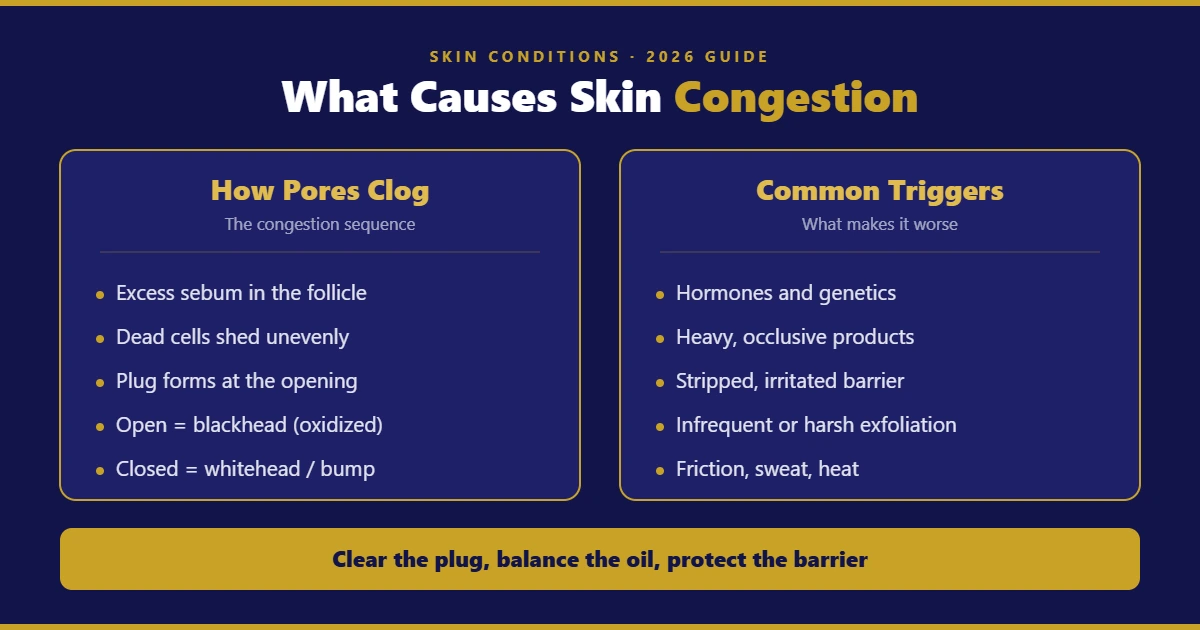
Skin congestion is caused by sebum and dead skin cells building up inside the pore and forming a plug. When the plug is open to the air it darkens into a blackhead; when it is covered by skin it becomes a closed comedone, or small bump. The most common triggers are hormones and genetics, heavy or occlusive products, a stripped or irritated barrier, uneven or infrequent exfoliation, and friction, sweat and heat. Estheticians clear congestion by softening and exfoliating the skin, performing careful extractions and then calming and hydrating the skin — not by stripping it.
- Mechanism: excess sebum plus unevenly shed dead cells form a plug in the follicle.
- Open plug: blackhead, darkened by exposure to air.
- Closed plug: closed comedone, a small flesh-colored or white bump.
- Triggers: hormones, genetics, heavy products, barrier damage, friction and heat.
- Treatment: soften, exfoliate, extract, then calm and hydrate.
- Refer: persistent inflamed or cystic breakouts to a dermatologist.
“Congested” is one of the words clients use most often to describe their skin, and one of the least precise. It can mean blackheads across the nose, clusters of tiny closed bumps on the forehead, rough texture on the cheeks, or simply skin that never looks clear. Underneath all of these is the same basic process: the follicle is blocked. Understanding how that blockage forms is what lets an esthetician choose the right treatment instead of simply removing more oil.
Key Takeaways
- Congestion is a plug of sebum and dead skin cells inside the follicle.
- Blackheads are open plugs; closed comedones are covered plugs.
- Congestion is not the same as inflamed acne, though it can progress to it.
- Heavy products, friction and uneven exfoliation are common, fixable triggers.
- Stripping the skin often makes congestion harder to clear, not easier.
- Clear the plug, balance oil and protect the barrier — in that order.
How Pores Become Congested
Each pore is the opening of a hair follicle with a sebaceous gland attached. Normally, sebum travels up the follicle and onto the skin, and the cells lining the follicle shed and are carried out with it. Congestion begins when that flow is disrupted: more sebum is produced than can easily clear, and dead cells shed unevenly or stick together instead of flaking away.
The two combine into a dense plug — a microcomedone — that is invisible at first. As it grows, it becomes one of two visible lesions:
Blackhead
The plug sits in an open pore. Its surface is exposed to air and darkens. It is not dirt.
Whitehead or Bump
A thin layer of skin covers the plug, so it stays flesh-colored or white and feels like a small bump.
Inflamed Breakout
If bacteria and inflammation become involved, a comedone can turn into a red papule or pustule.
For the oil side of this process, see sebum regulation for estheticians. For acne lesion types, see acne types in esthetic practice.
Common Triggers of Skin Congestion
Hormones and Genetics
Androgens increase sebum output, and some people inherit stickier cell shedding and larger glands.
Heavy or Occlusive Formulas
Rich creams, heavy oils, some makeup and sunscreens left on overnight can add to the plug.
Barrier Damage
Harsh cleansing and over-exfoliation irritate the skin and disrupt normal shedding.
Uneven Exfoliation
Too little lets dead cells build up; too much causes irritation that slows clearing.
Friction, Sweat and Heat
Masks, helmets, phones and humid weather trap oil and sweat against the skin.
Incomplete Cleansing
Makeup and sunscreen not fully removed at night sit in and around the pore opening.
How Estheticians Clear Congested Skin
Effective congestion treatment loosens and removes the plug, then leaves the skin calm enough to keep clearing between visits. A typical professional sequence:
- Gentle cleanse with a low-foam cleanser.
- Soften with warmth or an enzyme or desincrustation step.
- Exfoliate with salicylic acid or another appropriate peel, matched to tolerance.
- Extract carefully, only lesions that are ready, with minimal pressure.
- Brief clay on oily zones, removed before it dries. See jelly mask vs clay mask.
- Calm and hydrate with a soothing, occlusive mask, then a light moisturizer and SPF.
For post-extraction care, see post-extraction recovery for acne clients.
Homecare That Prevents Congestion
- Gentle cleansing once or twice daily, with a full second cleanse at night when wearing makeup or sunscreen.
- Regular, moderate exfoliation — salicylic acid two to three times a week suits many congested clients.
- Non-comedogenic moisturizer and sunscreen in light textures.
- Lightweight humectants to keep the skin hydrated while using actives.
- Clean pillowcases, phones and face masks; avoid picking.
Congested clients often expect to leave a facial red and tight. Ending with a cooling Poly-Luronic® Jelly Mask by Luminous Skin Lab after extractions changes that: the skin leaves calm and comfortable, redness settles faster, and the client is far less likely to over-treat at home.
Frequently Asked Questions
What is skin congestion?
Skin congestion is a build-up of sebum and dead skin cells inside the pores that shows up as blackheads, closed comedones (small flesh-colored bumps), rough texture and a generally clogged look. It is not the same as inflamed acne, although congestion can progress to breakouts if bacteria and inflammation become involved.
What causes skin congestion?
Congestion forms when excess sebum mixes with dead skin cells that are not shedding evenly, creating a plug in the follicle. Common contributors include hormones and genetics, heavy or occlusive products, a stripped or irritated barrier, infrequent or overly harsh exfoliation, and friction, sweat and heat.
What is the difference between blackheads and closed comedones?
Both are clogged pores. A blackhead (open comedone) has an opening at the surface, so the plug is exposed to air and darkens. A closed comedone, or whitehead, is covered by a thin layer of skin, so it stays flesh-colored or white and appears as a small bump.
Is congested skin the same as acne?
Not exactly. Congestion refers to non-inflamed clogged pores such as blackheads and closed comedones. Acne includes those lesions but also inflamed papules, pustules and deeper cysts. Persistent inflamed or cystic breakouts should be referred to a dermatologist.
Can a stripped skin barrier cause congestion?
It can contribute. Harsh cleansing and over-exfoliation irritate the skin and disrupt normal cell shedding, and irritated skin often clears congestion more slowly. Clients who strip their skin to fight clogged pores frequently end up tight, reactive and still congested.
What ingredients help clear congested skin?
Salicylic acid is oil-soluble and works inside the pore. Retinoids help normalize cell turnover. Niacinamide helps balance oiliness and supports the barrier. Gentle exfoliating acids smooth the surface. Lightweight humectants keep the skin hydrated so it does not become reactive during treatment.
How do estheticians treat congested skin?
A typical approach is gentle cleansing, softening the skin, appropriate chemical exfoliation, careful extractions, a brief clay mask on oily zones, then calming and hydrating the skin before the client leaves. Regular facials combined with consistent, non-stripping homecare give the best results.
How do you prevent skin congestion?
Cleanse gently once or twice daily, exfoliate regularly but not aggressively, choose non-comedogenic products, keep the skin hydrated with lightweight humectants, remove makeup and sunscreen fully at night, and book regular professional facials with extractions.
Suggested Internal Links
About This Professional Guide
This resource is part of the Luminous Skin Lab Esthetician Education Series designed to provide professional skincare education for licensed estheticians and advanced practitioners. It is educational and does not replace medical advice; clients with persistent inflamed or cystic acne should be referred to a physician.