Definition
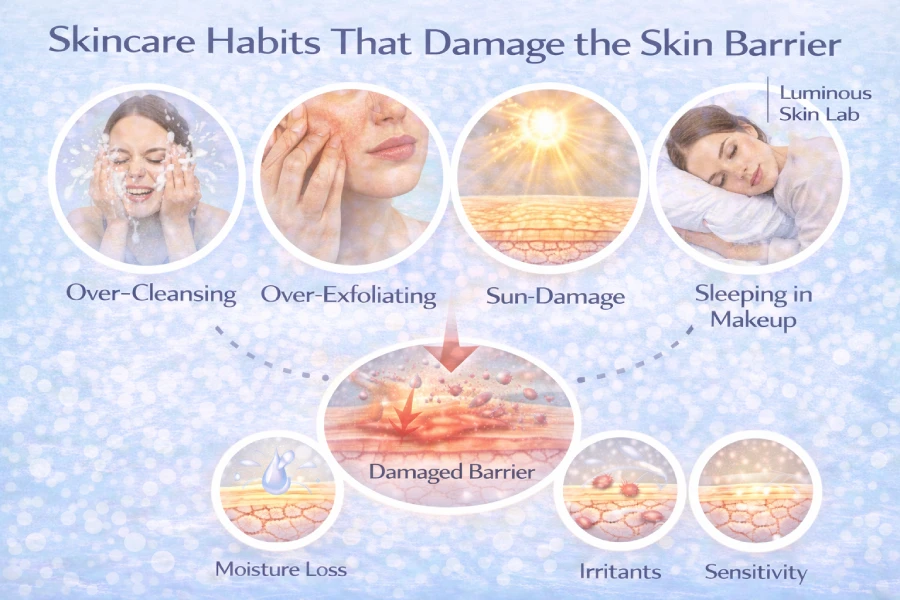
This article explains skincare habits that damage the skin barrier within professional skincare protocols focused on hydration, barrier repair, and post-treatment recovery.
For estheticians, this topic matters because many clients unintentionally weaken their skin barrier through routine habits such as over-exfoliation, aggressive product layering, and poor environmental protection. Identifying these habits is essential for improving recovery and treatment outcomes.
Quick Answer
Skincare habits that damage the skin barrier often include over-exfoliation, using harsh ingredients too frequently, over-cleansing, and exposing the skin to environmental stress without enough protection. Estheticians can help clients recover by identifying these patterns, reducing unnecessary irritation, and rebuilding the routine around hydration, calming care, and barrier-conscious support.
Key Takeaways
- Daily skincare habits can weaken the skin barrier even without obvious over-treatment.
- Over-exfoliation is one of the most common causes of barrier damage.
- Harsh ingredients can increase irritation when layered too aggressively.
- Environmental stress can worsen barrier weakness when the skin is already vulnerable.
- Calming treatments, hydration support, and recovery masks can help support barrier repair after damaging routine habits.
Many clients believe they are helping their skin when they increase exfoliation, use stronger products, or constantly switch routines. But in professional skincare, some of the most common causes of barrier damage come from habits that seem productive on the surface yet repeatedly stress the skin over time.
This is why barrier damage is often not caused by one dramatic mistake. It is frequently the result of repeated routine behaviors that slowly reduce the skin’s resilience. Clients may notice dryness, tightness, burning, redness, flaking, or increased sensitivity without realizing that their everyday habits are creating the problem.
For estheticians, understanding these damaging patterns is important because barrier recovery often starts with identifying what the client is doing consistently, not just what products they are using occasionally.
Why Over-Exfoliation Is One of the Most Common Causes
Over-exfoliation is one of the most common habits that damages the skin barrier. This can happen when a client uses acids, scrubs, enzyme treatments, resurfacing devices, or exfoliating cleansers too often or in too many combinations.
Exfoliation can be useful when appropriately controlled, but when it becomes excessive, the skin may lose too much of its protective surface support. The result is often increased sensitivity, visible redness, dryness, and a barrier that struggles to maintain moisture.
This is one reason understanding what causes skin barrier damage is central to effective treatment planning.
How Harsh Ingredient Use Can Weaken the Barrier
Harsh ingredients do not always damage the barrier because of what they are alone, but because of how they are used. Strong actives, frequent layering, and poor routine balance can all create more irritation than the skin can comfortably tolerate.
Clients may use multiple treatment products with good intentions, thinking that more correction means faster results. But if the skin is already reactive, these habits can quickly increase dryness, stinging, and visible stress.
This is especially common when clients mix exfoliating acids, retinoid-style products, clarifying treatments, or aggressive spot care without enough hydration and recovery support in the routine.
Why Over-Cleansing Can Be a Hidden Problem
Over-cleansing is another common but less obvious habit that can damage the barrier. Cleansing too often, using overly stripping cleansers, or washing the skin aggressively can leave the barrier less stable and more vulnerable to dehydration.
Clients do not always recognize cleansing as a barrier issue because it feels basic and necessary. But when the cleansing step is too harsh, it can gradually make the skin feel tighter, drier, or more reactive throughout the day.
The Role of Environmental Stress in Barrier Weakness
Environmental stress often makes barrier damage worse, especially when the skin is already compromised by routine habits. Sun exposure, dry air, wind, temperature shifts, and pollution can all challenge the skin’s ability to maintain comfort and stability.
When clients are not protecting the skin properly, these stressors can amplify the damage already being created by harsh or excessive skincare routines. That is why estheticians need to look at daily habits beyond product use alone.
Understanding why the skin barrier becomes vulnerable can also help clients understand how repeated stress creates cumulative effects over time.
Clients do not always damage the skin barrier with one severe mistake. More often, barrier weakness develops from repeated small habits such as over-exfoliating, over-cleansing, or using strong products too often without enough recovery support.
What Estheticians Should Look for During Consultation
When reviewing a client’s routine, estheticians should look for habits that suggest the barrier is being stressed on a regular basis. These may include:
- multiple exfoliating products used in the same week
- cleansers that leave the skin feeling stripped or tight
- routine layering of strong actives without hydration balance
- visible redness, dryness, or flaking after “corrective” home care
- little attention to calming support or environmental protection
These habits can often explain why the skin feels reactive even when the client believes they are following a “good” routine.
How Estheticians Can Guide Clients Toward Recovery
Once damaging habits are identified, the next step is simplification. Clients often need a more supportive routine rather than a more complicated one. That usually means reducing unnecessary actives, improving hydration, and supporting the barrier with calmer, more recovery-focused care.
This is also where education matters. Clients are more likely to follow a barrier-repair plan when they understand that their skin is not failing. It is responding to too much stress without enough recovery support.
This is why explaining skin barrier damage clearly to clients is an important part of professional care.
Professional Treatment Insights
Estheticians often support barrier repair treatments by pairing targeted products such as Calming Ampoule with deeply hydrating recovery masks like HydroGlo Jelly Mask. This type of pairing helps reduce visible stress, improve comfort, and create a more supportive recovery environment after damaging skincare habits have weakened the barrier.
The value of this approach is that it gives the skin a break from excessive stimulation while still providing meaningful professional support.
Why Identifying Damaging Habits Improves the Client Experience
Clients often feel frustrated when their skin looks worse even though they are trying hard to care for it. When an esthetician identifies the routine habits creating the problem, the client often feels both relieved and more confident in the recovery plan.
That insight improves trust and makes the treatment process feel more intentional. Instead of guessing, the client receives a clearer explanation of what is damaging the skin and what should change to support recovery.
Conclusion
Skincare habits that damage the skin barrier often include over-exfoliation, harsh ingredient use, over-cleansing, and poor environmental protection. These habits may seem minor individually, but they can create significant barrier stress when repeated consistently.
For estheticians, strong barrier repair work begins with identifying those routine patterns and helping clients replace them with calmer, more supportive care. When the routine becomes more balanced, the skin is more likely to recover comfort, hydration, and stability.
This makes habit correction one of the most important parts of modern skin barrier repair treatment planning.
Frequently Asked Questions
What skincare habits commonly damage the skin barrier?
Why does over-exfoliation damage the skin barrier?
Can harsh ingredients weaken the skin barrier?
How can estheticians help clients recover from damaging skincare habits?
Suggested Internal Links
About This Professional Guide
This article is part of the Luminous Skin Lab Esthetician Education Series designed to provide professional skincare knowledge for licensed estheticians and advanced practitioners.