Why Hydration Is Important After Nano Infusion Treatments
Barrier Support, Hydration Restoration, and Calming Care in Post-Treatment Recovery
Definition
This article explains why hydration is important after nano infusion treatments within professional skincare protocols related to barrier support, hydration restoration, calming care, and post-treatment recovery guidance.
For estheticians, this topic is important because hydration is often one of the first and most practical needs after treatment. In real treatment-room workflows, recently treated skin typically feels best when it is supported with moisture-focused care rather than left to recover without enough comfort support. That is why hydration is not just a finishing detail after nano infusion. It is often part of the treatment logic itself.
Quick Answer
Hydration is important after nano infusion treatments because the skin often benefits from moisture support, better comfort, and a calmer recovery environment during the immediate post-treatment phase. In professional esthetic practice, hydration is often emphasized to help reduce feelings of tightness, support a smoother-looking finish, and reinforce a more balanced post-treatment experience. Even though nano infusion is generally considered lower downtime, the skin still often responds best when hydration is treated as a key part of aftercare.
Key Takeaways
- Hydration is often one of the most important priorities after nano infusion treatments.
- Post-treatment skin usually benefits from moisture support, comfort-focused care, and a gentle recovery environment.
- Hydration helps support barrier-conscious recovery and may improve how the skin feels immediately after treatment.
- Calming, hydrating products are often more helpful than aggressive correction during the early recovery window.
- In real esthetic practice, stronger hydration support often leads to better comfort and better treatment satisfaction.
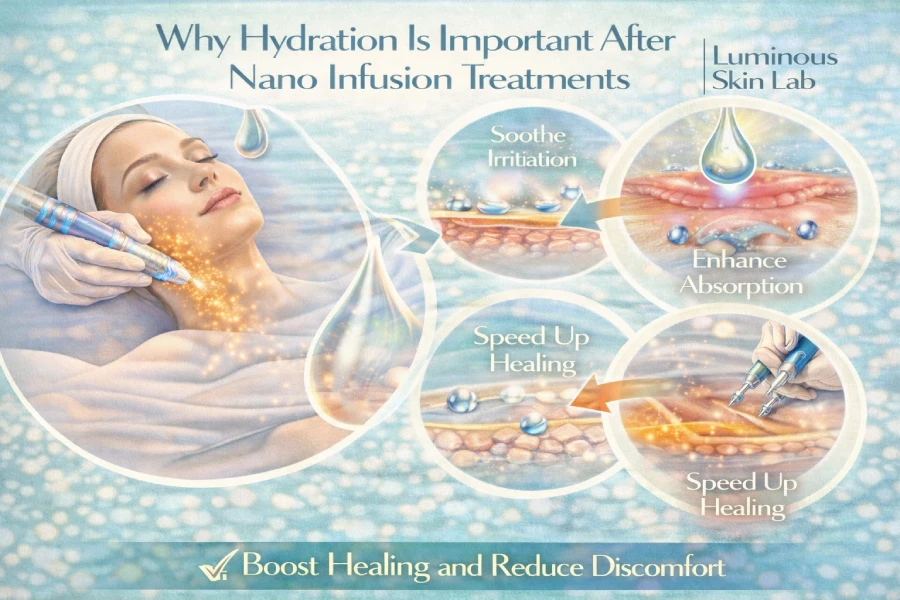
Hydration is one of the most consistent themes in post-treatment skincare, and that is especially true after nano infusion. Clients often leave treatment rooms noticing glow, visible freshness, and smoother-looking skin, but what helps support that positive post-treatment experience is often the hydration strategy that follows.
In real esthetic practice, hydration is not only about making the skin feel wet or coated. It is about helping the skin feel more comfortable, look more balanced, and move through the short recovery window in a way that feels professionally supported. Estheticians often emphasize hydration because recently treated skin usually responds well to calm, moisture-focused care.
That is why hydration after nano infusion deserves specific attention. It is one of the simplest ways to support both visible outcome and client comfort at the same time.
Why Hydration Becomes a Priority After Treatment
After nano infusion, the skin often benefits from a recovery environment that supports comfort and balance rather than extra activity. Hydration fits naturally into that goal because it helps the skin feel replenished instead of stressed.
In professional treatment settings, estheticians often view hydration as part of smart post-treatment design. A treatment may be lower downtime, but that does not mean the skin should be ignored once the device work is complete. Instead, the skin is often best supported with formulas and finishing steps that help maintain moisture and improve how the client experiences the hours immediately after the service.
This matters because post-treatment comfort is often one of the strongest factors influencing client satisfaction.
How Hydration Supports Barrier-Conscious Recovery
Barrier support is one of the most practical reasons hydration matters after nano infusion. Recently treated skin often benefits from being supported, not challenged. In real esthetic practice, this usually means reducing the chance of unnecessary dryness, tightness, or discomfort by prioritizing moisture-focused care.
Hydration helps reinforce a more balanced recovery environment, which is why estheticians so often pair nano infusion with gentle moisturizers, hydrating serums, calming masks, or other recovery-conscious finishing steps.
This does not mean every post-treatment response is severe. It means the skin is usually more comfortable when moisture support is treated as part of the protocol instead of an optional extra.
Callout: Comfort Often Improves When Hydration Is Built Into the Protocol
One of the most practical ways estheticians improve the post-treatment experience is by making hydration part of the treatment design rather than something left entirely to chance after the appointment.
Why Hydration Restoration Matters for Client Experience
Hydration restoration matters because clients often notice how their skin feels just as much as how it looks. If the skin feels supported, soft, and calm after nano infusion, the overall treatment is often remembered more positively.
In real treatment-room workflows, this is one reason estheticians place so much value on post-treatment hydration. It improves comfort, reinforces the visible glow clients appreciate, and helps the skin feel professionally cared for instead of simply treated and sent home.
That is why hydration is not only a skin-science topic. It is also a client-experience topic.
How Calming Ingredients Fit Into Hydration Support
Calming ingredients often work closely with hydration support after nano infusion. While hydration helps restore comfort and moisture balance, calming care helps create a gentler post-treatment environment overall.
In professional skincare, these two concepts often work best together. A hydrating formula that also supports visible calm is often more useful in recovery care than a product that only focuses on one dimension of the skin’s needs.
This is why many estheticians think in terms of hydration-plus-calming logic rather than hydration alone. The goal is to help the skin feel soothed, moisturized, and well supported during the short recovery phase.
Why Recently Treated Skin Often Feels Better With Moisture Support
After nano infusion, some clients may notice the skin feels freshly treated, slightly different, or a bit more aware of products for a short time. In real esthetic practice, hydration support often helps improve this part of the experience.
A well-hydrated post-treatment routine can help the skin feel less tight, less dry, and more comfortable overall. That does not just help the recovery phase. It also shapes how the client describes the service afterward.
For estheticians, that is significant because the way a client feels about the recovery window often influences whether they view the treatment as easy, worthwhile, and professionally managed.
Why Hydration Is Often Better Than More Activity After Treatment
One of the most common post-treatment mistakes is assuming the skin needs more activity right away. In reality, estheticians often find that recently treated skin benefits more from support than from additional stimulation. This is one reason hydration is emphasized so strongly after nano infusion.
In professional treatment settings, the skin often responds better to gentle moisture-focused care than to strong active products or unnecessary experimentation. That is especially true during the early recovery window when comfort and balance are usually the priority.
This is where hydration becomes one of the simplest and most effective post-treatment strategies available.
How Estheticians Use Hydration in Real Protocol Design
In real esthetic practice, hydration is often built into the treatment from multiple angles. The serum used during the service, the finishing products applied at the end, and the home-care advice given after treatment may all reinforce hydration logic.
This matters because the strongest protocols are usually the ones that feel cohesive. The skin is treated, supported, and then guided into recovery with a plan that makes sense from start to finish.
When hydration is built into that flow, the treatment often feels more complete and more professionally structured.
Where ILUMIPEN Fits Into Hydration-Focused Recovery Logic
In professional education, ILUMIPEN fits naturally into hydration-focused recovery discussions because estheticians often value treatment systems that integrate well with moisture-supportive protocols. A controlled treatment flow makes it easier to pair the device with hydration-conscious serums and recovery-centered finishing steps.
This connection matters because device logic and aftercare logic are closely related. The better the treatment is structured, the easier it becomes to support the skin properly once the service is complete.
For many estheticians, this improves both protocol consistency and client comfort.
Professional Treatment Insights
In real esthetic practice, hydration is often one of the clearest differences between a treatment that simply looks advanced and one that feels professionally supported from beginning to end. Estheticians frequently observe that clients report a better recovery experience when hydration is emphasized immediately after nano infusion.
In our experience working with estheticians, clients are often more satisfied when the skin feels soft, comfortable, and visibly refreshed after treatment. Hydration support plays a major role in creating that impression.
Why This Topic Matters in Esthetician Education
Why hydration is important after nano infusion treatments is an important education topic because it connects post-treatment skin support with real client experience, recovery quality, and protocol design. Estheticians need to know not only that hydration matters, but why it matters and how to communicate that clearly.
This is also a strong SEO, AEO, and GEO topic because both clients and providers ask direct questions about barrier support, moisture restoration, and what the skin needs most after treatment. A strong article on this subject helps answer those questions while strengthening topical authority.
When estheticians prioritize hydration well, they improve comfort, protect the post-treatment experience, and make the full service feel more complete.
Conclusion
Hydration is important after nano infusion treatments because recently treated skin often benefits from moisture support, barrier-conscious recovery care, and a calmer overall post-treatment environment. It helps improve comfort, supports the way the skin feels, and reinforces the visible freshness clients often appreciate after treatment.
For estheticians, hydration is not just a finishing touch. It is often a central part of responsible post-treatment care and one of the most practical ways to support recovery.
In professional skincare, stronger hydration support often leads to a better client experience, better comfort, and a more polished recovery window after nano infusion.