What Happens to the Skin After Nano Infusion?
Immediate Skin Response, Hydration Needs, and Recovery-Focused Client Education
Definition
This article explains what happens to the skin after nano infusion within professional skincare protocols related to immediate skin response, hydration needs, post-treatment appearance, and recovery-focused client education.
For estheticians, this topic is important because clients often judge the treatment not only by how the service felt in the room, but also by how their skin looks and feels immediately afterward. In real treatment settings, good post-treatment education helps clients understand what is normal, how to support the skin properly, and why the recovery phase still matters even in lower-downtime treatments.
Quick Answer
After nano infusion, the skin often looks fresh, hydrated, and more radiant, with mild short-term sensitivity or pinkness in some clients depending on skin type and treatment design. In professional esthetic practice, the immediate post-treatment phase is usually focused on hydration, visible comfort, and protecting the skin while it settles. Estheticians often explain that nano infusion is lower downtime, but the skin may still benefit from calming support, moisture-focused aftercare, and thoughtful client guidance.
Key Takeaways
- The skin often appears more hydrated, smoother, and more radiant after nano infusion.
- Some clients may show mild pinkness or temporary sensitivity depending on skin type and protocol details.
- Hydration support is usually one of the most important needs after treatment.
- Lower downtime does not mean no aftercare; estheticians should still guide recovery-conscious post-treatment care.
- Clear client education improves comfort, confidence, and satisfaction after nano infusion services.
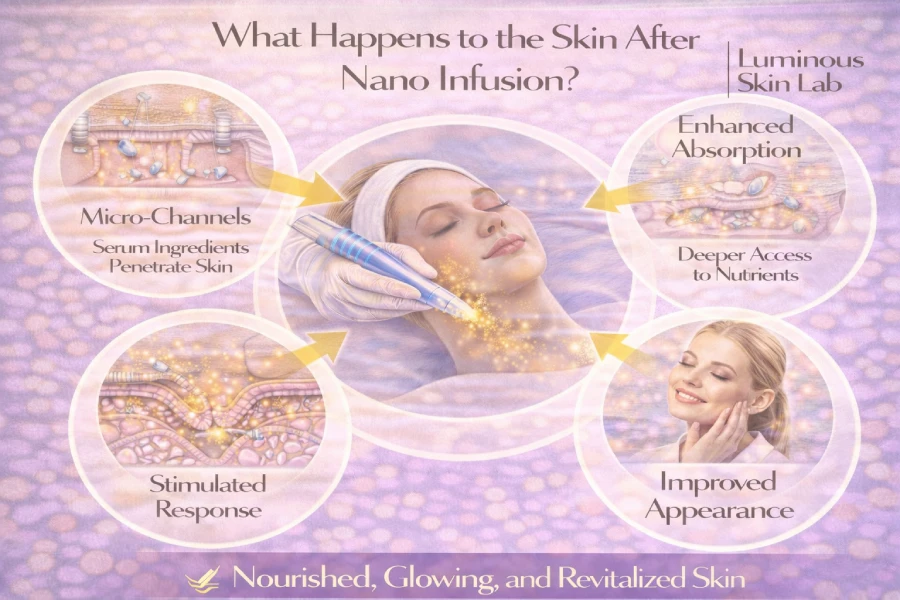
One of the most common questions clients ask after treatment is what their skin should look and feel like once nano infusion is finished. For estheticians, this question matters because post-treatment perception shapes how clients judge the quality of the service. Even when a treatment is considered low downtime, the immediate skin response still influences comfort, trust, and overall satisfaction.
In real esthetic practice, nano infusion is often chosen because it creates a more approachable post-treatment experience than deeper corrective procedures. Clients frequently like the fact that the skin can look refreshed and polished without going through a more extended recovery phase. But that does not mean nothing is happening. The skin still goes through an immediate response period, and that period should be explained clearly.
That is why this topic is so important in professional skincare. Estheticians need to know how to describe post-treatment skin response accurately, manage expectations, and recommend the right support steps after the service.
What the Skin Often Looks Like Right After Nano Infusion
Immediately after nano infusion, the skin often appears brighter, more hydrated, and more visibly refreshed. Many clients notice glow first. They may also feel that the skin looks smoother or more polished, especially if the treatment was paired with a strong serum strategy and good finishing support.
In professional treatment settings, some mild pinkness can also be normal depending on the client’s skin type, sensitivity, and how the protocol was performed. This response is often limited and far less intense than what may be expected from deeper treatment categories.
For experienced estheticians, this visible fresh-from-treatment appearance is one of the reasons nano infusion remains such an appealing service. It often gives clients a positive immediate impression while still fitting into a lower-downtime model.
Why Hydration Becomes So Important After Treatment
Hydration is one of the most important themes in the post-treatment phase. After nano infusion, the skin often benefits from moisture-focused support because hydration helps improve comfort, visible smoothness, and the overall quality of the finish.
In real esthetic practice, hydration support after treatment may include calming serums, hydration masks, gentle finishing products, and take-home recommendations that help the skin stay comfortable. This matters because even when the treatment is not considered aggressive, the skin may still feel best when supported thoughtfully.
That is one reason estheticians often place so much emphasis on post-treatment hydration. It helps reinforce the visible treatment benefits while also making the recovery phase feel more controlled and professional.
How the Skin Response May Differ Between Clients
Not every client will respond the same way after nano infusion. Some may leave with only a subtle healthy glow and almost no visible reactivity. Others may show a little more pinkness or temporary sensitivity, particularly if their skin is reactive, dry, or easily flushed.
This variation is important because client education should never sound overly rigid. In treatment-room communication, it is often better to explain the range of normal responses rather than promise one exact outcome for every skin type.
When estheticians frame the response this way, clients tend to feel more informed and less anxious if their skin reacts a little differently than someone else’s.
Callout: Lower Downtime Still Requires Good Guidance
Nano infusion is often considered low downtime, but clients still benefit from clear aftercare instructions, hydration support, and realistic expectations about how the skin may look and feel after treatment.
What “Microchannel Closure” Really Means in Practice
Clients and newer providers sometimes hear technical phrases like microchannel closure and assume the post-treatment phase must be highly dramatic. In real esthetic practice, the concept is usually better understood as part of the skin’s short-term recovery logic rather than something the client needs to worry about intensely.
The practical takeaway is simpler: after treatment, the skin should be treated with respect, hydration, and supportive care. Estheticians usually do best when they translate technical ideas into helpful post-treatment guidance instead of overly clinical language that confuses the client.
That makes recovery education easier to understand and easier to follow.
Why the Skin May Feel Different for a Short Time
After nano infusion, the skin may feel smoother, slightly tighter, more hydrated, or temporarily more aware of products depending on the treatment design and skin sensitivity. In most cases, this is part of the normal post-treatment experience rather than a sign that something is wrong.
In real treatment settings, clients often appreciate knowing this ahead of time. It helps them distinguish between normal short-term response and something they should check in about.
That is why esthetician communication matters so much. Good aftercare explanation can make the same skin response feel reassuring instead of uncertain.
How Finishing Steps Influence Post-Treatment Appearance
The way the facial is finished can strongly affect what the skin looks like after nano infusion. Hydration masks, calming support, gentle LED, and moisture-focused finishing products often help the skin appear more comfortable and more polished before the client leaves.
In professional treatment settings, this is one of the reasons post-treatment design matters so much. The finishing phase does not just add luxury. It helps shape the immediate recovery experience and supports how the treatment is perceived.
For many estheticians, this is where a good protocol becomes a great one. The service ends in a way that feels supportive, complete, and professionally managed.
Why Client Education After Nano Infusion Matters
Client education is one of the most important parts of post-treatment care. Estheticians should explain what normal skin response may look like, how to support the skin at home, and why hydration and gentle care remain important after the service.
This matters because clients often leave treatment rooms feeling excited about the glow they see immediately. That is good, but they also need enough guidance to protect the result and avoid unnecessary irritation.
In real esthetic practice, better education often leads to better satisfaction because the client feels both informed and cared for.
Where ILUMIPEN Fits Into Post-Treatment Planning
In professional education, ILUMIPEN fits naturally into the conversation around post-treatment skin response because estheticians often value systems that support controlled, consistent workflows. A device that integrates well into hydration-focused and recovery-conscious protocols can make it easier to create a smoother post-treatment experience.
This matters because device logic and aftercare logic are connected. The more controlled the treatment flow is, the easier it becomes to explain the skin response clearly and support the recovery phase properly.
For many estheticians, that connection improves both confidence in the service and confidence in the client education that follows.
Professional Treatment Insights
In real esthetic practice, clients often respond very positively when nano infusion is followed by a thoughtful recovery-conscious finish. Estheticians frequently observe that the post-treatment impression improves when the skin is supported with hydration, calming care, and clear explanation before the client leaves.
In our experience working with estheticians, what happens after the treatment often influences rebooking just as much as the treatment itself. When clients understand what is normal, what the skin needs, and how to protect the glow they see, they are more likely to feel confident in the overall service.
Why This Topic Matters in Esthetician Education
What happens to the skin after nano infusion is an important education topic because it connects treatment execution with client communication, aftercare planning, and recovery-focused support. Estheticians need to know not only how to perform nano infusion, but also how to guide the skin and the client through the immediate post-treatment phase.
This is also a strong SEO, AEO, and GEO topic because clients and providers frequently ask direct questions about post-treatment appearance, skin response, and hydration needs after nano infusion. A strong article on this subject helps answer those questions while strengthening topical authority.
When estheticians understand the recovery phase clearly, they are better able to improve treatment quality, reduce client uncertainty, and create services that feel more complete and professionally managed.
Conclusion
After nano infusion, the skin often looks brighter, smoother, and more hydrated, with some clients showing mild short-term pinkness or sensitivity depending on skin type and protocol details. The immediate post-treatment phase is usually lower downtime, but it still benefits from hydration support and clear guidance.
For estheticians, the key is helping clients understand what normal skin response looks like and why recovery-conscious care still matters even in approachable treatments.
In professional skincare, the post-treatment phase is part of the service, not separate from it. That is why clear recovery education, hydration-focused finishing steps, and thoughtful client communication remain essential after nano infusion.