Nano Infusion Aftercare: What Estheticians Should Tell Clients
Hydration, Sun Protection, Product Guidance, and Recovery-Focused Client Instructions
Definition
This article explains nano infusion aftercare and what estheticians should tell clients within professional skincare protocols related to hydration, sun protection, product guidance, and post-treatment recovery support.
For estheticians, this topic is important because the quality of a nano infusion service is shaped not only by the treatment itself, but also by what the client does afterward. In real treatment-room workflows, clear aftercare education often improves client comfort, protects treatment results, and reduces avoidable confusion about what products, habits, and exposures are best avoided immediately after the service.
Quick Answer
After nano infusion, estheticians should usually tell clients to focus on hydration, protect the skin from excess sun exposure, follow gentle product guidance, and avoid unnecessary irritation during the early recovery window. In professional skincare, good aftercare advice helps the skin stay comfortable and supports the visible benefits of the treatment. Even though nano infusion is typically lower downtime, clients still need simple and specific instructions so they understand how to care for the skin properly once they leave the treatment room.
Key Takeaways
- Clear aftercare instructions are an important part of the nano infusion service, not an optional extra.
- Hydration is often one of the most important priorities after treatment.
- Sun protection matters because recently treated skin benefits from careful UV management.
- Clients are often best served by gentle product guidance rather than returning immediately to a complicated routine.
- In real esthetic practice, better aftercare education often leads to better comfort, better compliance, and better overall satisfaction.
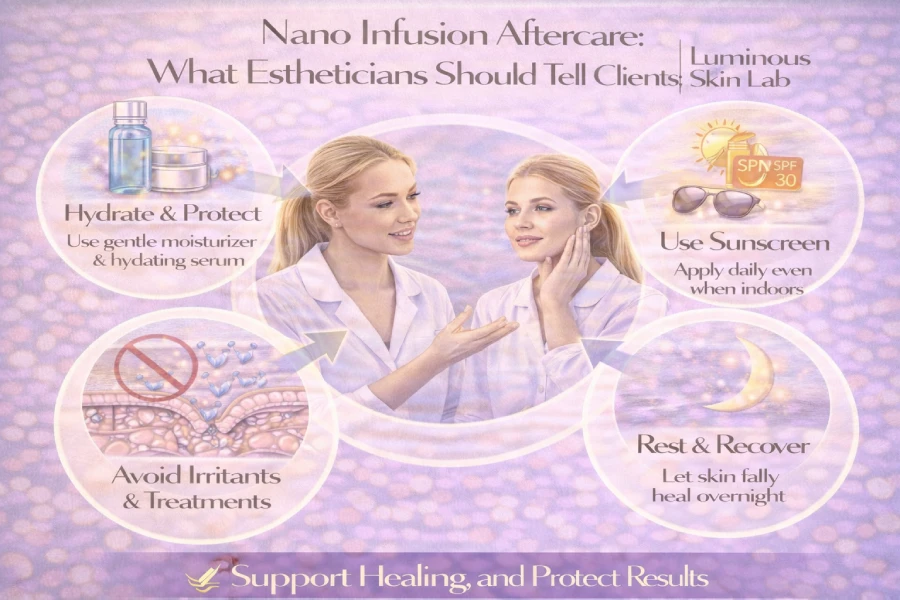
One of the most valuable parts of a nano infusion treatment often happens after the client leaves the treatment room. That is because aftercare guidance plays a major role in how the skin feels, how the treatment is perceived, and how well the client protects the visible results of the service.
In real esthetic practice, nano infusion is often described as a lower-downtime facial, which is true in many cases. But lower downtime does not mean no aftercare. The skin still benefits from thoughtful support, and clients often need simple direction on what to do next.
For estheticians, this means aftercare should be treated as part of the protocol itself. Strong aftercare communication helps the client feel informed, reassured, and more confident in the treatment process.
Why Aftercare Guidance Matters So Much
Clients often remember two parts of a treatment most clearly: how their skin looked immediately afterward and what instructions they received before leaving. If the treatment looks good but the aftercare explanation is unclear, the client may become uncertain later and second-guess normal skin response or product decisions.
That is why aftercare matters so much in professional skincare. It reduces uncertainty and helps translate the treatment-room experience into proper home support. In many cases, good aftercare education is what turns a successful service into a successful overall client experience.
For experienced estheticians, this is a familiar pattern. Clients do better when they are told exactly what to prioritize, what to avoid, and why those recommendations matter.
Hydration as the First Priority
Hydration is usually one of the first things estheticians should mention after nano infusion. The skin often looks fresher and more radiant after treatment, and maintaining that comfortable, hydrated appearance is a major goal of the immediate post-treatment phase.
In professional treatment settings, hydration support may include gentle moisturizers, hydrating serums, soothing masks, or a simplified routine designed to protect comfort. Even when the client is excited about visible glow, estheticians generally do best when they remind them that moisture support is still essential.
That is because hydration does more than make the skin feel better. It also supports the overall quality of the recovery experience and helps the facial continue to feel beneficial after the appointment ends.
Why Sun Protection Should Be Explained Clearly
Sun protection is another major aftercare point because recently treated skin often benefits from extra care when it comes to UV exposure. Even if the treatment is considered approachable and low downtime, estheticians still usually emphasize sunscreen and sun-conscious behavior as part of professional aftercare guidance.
This recommendation is especially important because many clients underestimate how much daily exposure affects post-treatment skin. In real esthetic practice, estheticians often find that aftercare compliance improves when the client understands not just what to do, but why the advice matters.
That is why it helps to make the instruction practical and specific. Instead of giving vague reminders, explain that sun protection supports the skin while it settles and helps protect the visible benefits of the treatment.
Callout: Simple Instructions Usually Work Best
Clients often follow aftercare more successfully when the guidance is clear, short, and practical. Hydrate, protect the skin, keep the routine gentle, and avoid unnecessary irritation are often the most useful starting points.
What Product Guidance Should Usually Include
Product guidance is one of the most important parts of nano infusion aftercare because clients often want to know when they can return to their normal routine. In real treatment-room workflows, the answer is often not to use everything immediately. Instead, estheticians usually recommend a more focused, supportive routine for the early post-treatment window.
This often means prioritizing hydration and gentle care over strong activity. Clients may need to avoid or delay products that feel too intense, overly exfoliating, or unnecessarily stimulating right after treatment. The exact guidance can vary based on skin type and protocol, but the principle is usually the same: do not overwhelm the skin during the early recovery period.
For estheticians, this is where precise communication matters. A client who understands temporary routine changes is more likely to protect the treatment outcome.
Why Clients Need to Understand Normal Skin Response
Aftercare is not only about what products to use. It is also about helping the client understand what is normal. Some clients may notice mild pinkness, temporary sensitivity, or a slightly different skin feel after nano infusion. In most lower-downtime protocols, these responses are limited, but they should still be explained.
When estheticians describe normal post-treatment response ahead of time, the client is less likely to feel anxious later. This is one of the simplest ways to improve trust and reduce unnecessary post-treatment concern.
In professional skincare, that kind of proactive communication is often one of the clearest signs of good treatment design.
How Aftercare Supports Treatment Satisfaction
Client satisfaction is influenced heavily by what happens after the appointment. If the skin feels comfortable, the instructions were easy to follow, and the client understands how to protect the result, the overall treatment experience usually feels much stronger.
This matters because clients often evaluate services not just by visible outcome, but by how well supported they felt through the full process. A treatment with good aftercare often feels more premium, more thoughtful, and more professionally managed.
That is one reason estheticians often say aftercare is part of the service, not a separate conversation.
How Estheticians Can Make Aftercare Easier to Follow
The strongest aftercare instructions are usually easy to understand and easy to remember. In real esthetic practice, clients often respond better to a few clear actions than to long, complicated lists. Hydrate well, protect the skin from excess sun, keep the routine gentle, and avoid unnecessary irritation are often the most practical foundations.
Some estheticians also strengthen compliance by recommending specific post-treatment products or by summarizing the instructions verbally and in writing. This can be especially helpful for newer clients who may not remember every detail once they leave.
The easier the aftercare is to follow, the more likely the client is to actually follow it.
Where ILUMIPEN Fits Into Aftercare Conversations
In professional education, ILUMIPEN fits naturally into aftercare conversations because estheticians often want treatment systems that integrate smoothly into recovery-conscious protocols. A device that supports controlled treatment flow often makes it easier to explain post-treatment skin response and recommend realistic aftercare steps with confidence.
This matters because treatment execution and aftercare guidance are connected. The more intentional the protocol is, the easier it becomes to educate the client accurately about what to expect and how to support the skin afterward.
For many estheticians, that connection improves not only workflow, but also the professionalism of the full service experience.
Professional Treatment Insights
In real esthetic practice, aftercare guidance often makes the difference between a client who feels informed and one who feels uncertain later. Estheticians frequently notice that even very simple instructions improve post-treatment confidence when they are delivered clearly and tied to the reason behind them.
In our experience working with estheticians, clients tend to feel more satisfied when they leave with a clear understanding of hydration needs, sun protection priorities, and which products to keep gentle for the moment. That kind of education often improves both comfort and trust in the treatment process.
Why This Topic Matters in Esthetician Education
Nano infusion aftercare is an important education topic because it connects treatment knowledge with client communication and post-treatment support. Estheticians need to understand not only how to perform the service, but also how to guide the client through the hours and days that follow.
This is also a strong SEO, AEO, and GEO topic because clients and providers frequently ask direct questions about hydration, sunscreen, products, and what to do after nano infusion. A strong article on this topic helps answer those questions while strengthening topical authority.
When estheticians explain aftercare well, they improve treatment quality, client confidence, and the likelihood that the service will be remembered as a complete and professional experience.
Conclusion
Nano infusion aftercare should usually focus on hydration, sun protection, gentle product guidance, and clear instructions that help the client avoid unnecessary irritation during the early recovery period. Even in lower-downtime treatments, aftercare remains a key part of the overall service.
For estheticians, the goal is not to overwhelm the client with rules. The goal is to provide clear, practical guidance that protects comfort and supports the visible benefits of the treatment.
In professional skincare, good aftercare education strengthens client trust, improves compliance, and helps nano infusion treatments feel more complete from beginning to end.