Can Microneedling Cause Hyperpigmentation? What Estheticians Need to Know
Yes, microneedling can cause post-inflammatory hyperpigmentation (PIH) in certain clients, though it is not a universal outcome and is largely preventable with appropriate client screening, protocol modification, and post-treatment care. PIH occurs when the controlled inflammatory response that makes microneedling effective also triggers excess melanin production by skin cells called melanocytes. The intensity of that inflammatory signal — influenced by needle depth, session frequency, skin type, and post-treatment UV exposure — determines whether PIH develops.
- Clients with Fitzpatrick skin types IV, V, and VI have higher baseline melanocyte activity and carry statistically greater PIH risk following microneedling.
- Needle depth is the most controllable intra-treatment variable — shallower passes reduce inflammatory load and lower PIH risk without eliminating treatment efficacy.
- Sun exposure before or after microneedling is one of the most significant preventable risk factors; UV stimulation of melanocytes on already-inflamed skin dramatically amplifies PIH probability.
- A personal history of PIH, keloid formation, or active inflammatory skin conditions are pre-screening flags that require protocol modification or rescheduling.
- Post-treatment anti-inflammatory recovery protocols — including occlusive hydration, barrier support, and avoidance of re-irritating actives — are the primary clinical defense against PIH development.
- PIH that does develop following microneedling is typically temporary and responsive to consistent sun protection, brightening home care, and time.
Hyperpigmentation is one of the questions clients ask most frequently before agreeing to microneedling — and one of the risks estheticians most need to understand in clinical depth before building microneedling into their service menu. The concern is legitimate. Microneedling works precisely because it induces a controlled wound response, and wound responses involve inflammation. Inflammation, in the right skin context, activates melanocytes. Activated melanocytes produce melanin. And excess melanin production is the definition of post-inflammatory hyperpigmentation.
The relationship between microneedling and PIH is not a reason to avoid the modality. It is a reason to understand the mechanism, identify vulnerable client profiles before treatment begins, and design protocols that minimize inflammatory load while preserving clinical outcomes. Estheticians who can explain this risk clearly, assess it accurately, and prevent it systematically are the practitioners clients with darker skin tones trust most — and the ones who build the strongest long-term reputations in microneedling services.
This guide covers the biological mechanism of post-inflammatory hyperpigmentation in the context of microneedling, which client risk factors matter most, how treatment variables can be modified to reduce risk, what post-treatment protocols protect against PIH, and how to communicate this risk to clients in a way that builds confidence rather than fear.
What Every Esthetician Must Know About Microneedling and Hyperpigmentation Risk
- PIH after microneedling is real, preventable, and primarily driven by inflammatory cascade intensity and post-treatment UV exposure.
- Fitzpatrick types IV through VI carry higher risk due to greater baseline melanocyte density and reactivity — not because microneedling is contraindicated for them.
- Needle depth reduction is the single most effective intra-treatment protocol modification for PIH-risk clients — 0.25 to 0.5 mm is appropriate for higher-risk presentations.
- Sun exposure in the two weeks before and four weeks after treatment is a major modifiable risk factor that must be addressed in every pre-treatment consultation.
- Post-treatment cooling, occlusive barrier support, and the avoidance of re-irritating actives during recovery are the clinical pillars of PIH prevention.
- Clients with a personal history of PIH, active keloid formation, or inflammatory skin conditions require modified protocols or rescheduling — not reflexive disqualification.
- Immediate post-treatment documentation of skin response supports early identification of PIH risk and enables timely home care intervention.
How Microneedling Triggers Post-Inflammatory Hyperpigmentation: The Biological Mechanism
Understanding why microneedling can cause hyperpigmentation requires understanding how the treatment works at a cellular level — and specifically, how the inflammatory response it triggers intersects with the skin’s pigmentation system.
The Wound Healing Cascade and Melanocyte Stimulation
Microneedling works by creating thousands of controlled micro-injuries in the skin, triggering a wound healing response that drives collagen synthesis, tissue remodeling, and increased cellular turnover. That wound response is not silent at the cellular level. Within minutes of needling, platelets aggregate at the injury sites and release growth factors and cytokines including platelet-derived growth factor (PDGF), transforming growth factor-beta (TGF-β), and interleukins. These signaling molecules recruit fibroblasts and other repair cells to the treatment zone — and they also stimulate keratinocytes, which in turn interact directly with melanocytes.
Melanocytes are pigment-producing cells located in the basal layer of the epidermis. They respond to inflammatory signals, particularly prostaglandins, leukotrienes, and keratinocyte-derived factors, by upregulating melanin synthesis. In most clients, this melanocyte stimulation is transient and proportional — mild inflammation produces a mild melanocyte response, and the resulting pigmentation, if any, is subtle and resolves quickly. In clients with higher baseline melanocyte activity or reactivity, the same inflammatory signal can produce a disproportionate pigmentation response: post-inflammatory hyperpigmentation.
Where PIH Forms in the Skin
PIH from microneedling typically manifests as epidermal hyperpigmentation — excess melanin deposited in the upper layers of the skin where it appears as brown or tan discoloration at or near the treatment surface. In more severe cases, melanin can be deposited deeper in the dermis, producing a blue-gray discoloration that is slower to resolve and more difficult to address with topical interventions alone. Epidermal PIH is generally more responsive to sun protection, appropriate home care, and time. Dermal PIH may require professional intervention over a longer timeline.
The PIH Pathway in Microneedling: From Micro-Injury to Pigment Deposition
Step 1 — Micro-injury: Needles create controlled wounds in the epidermis and dermis. Depth of penetration determines the intensity of tissue disruption and the magnitude of the inflammatory response that follows.
Step 2 — Inflammatory signal release: Platelets release cytokines and growth factors. Keratinocytes produce interleukins and prostaglandins. These signals are necessary for healing — but they also reach melanocytes in the basal epidermis.
Step 3 — Melanocyte activation: Inflammatory mediators upregulate tyrosinase activity within melanocytes — the rate-limiting enzyme in melanin synthesis. Greater inflammatory load produces greater tyrosinase upregulation.
Step 4 — Melanin overproduction: Stimulated melanocytes produce and transfer excess melanin to surrounding keratinocytes. If UV radiation is present during or after this phase, it compounds the melanocyte activation signal significantly.
Step 5 — PIH expression: Excess melanin accumulates in the epidermis or dermis, becoming visible as brown, tan, or grey discoloration at the treatment site. Timeline from treatment to visible PIH: typically 2 to 6 weeks.
Why UV Exposure Compounds the Risk Dramatically
Ultraviolet radiation is an independent melanocyte activator. It triggers the production of pro-opiomelanocortin (POMC) and alpha-melanocyte-stimulating hormone (α-MSH), both of which directly stimulate melanin synthesis. On post-microneedling skin — where melanocytes are already primed by the inflammatory cascade, where the barrier is compromised, and where penetration of external stimuli is heightened — even modest UV exposure can dramatically amplify the PIH signal. This is why sun exposure management is not a peripheral post-care recommendation. It is a primary clinical variable in PIH prevention, equivalent in importance to needle depth selection.
Which Clients Carry the Highest Risk for Hyperpigmentation After Microneedling?
Not every client carries equal PIH risk. Identifying high-risk presentations at consultation is the foundational clinical step in preventing post-microneedling hyperpigmentation. The key risk variables fall into four categories: skin type, personal history, active skin conditions, and lifestyle and environmental exposure patterns.
Fitzpatrick Skin Type and Melanocyte Activity
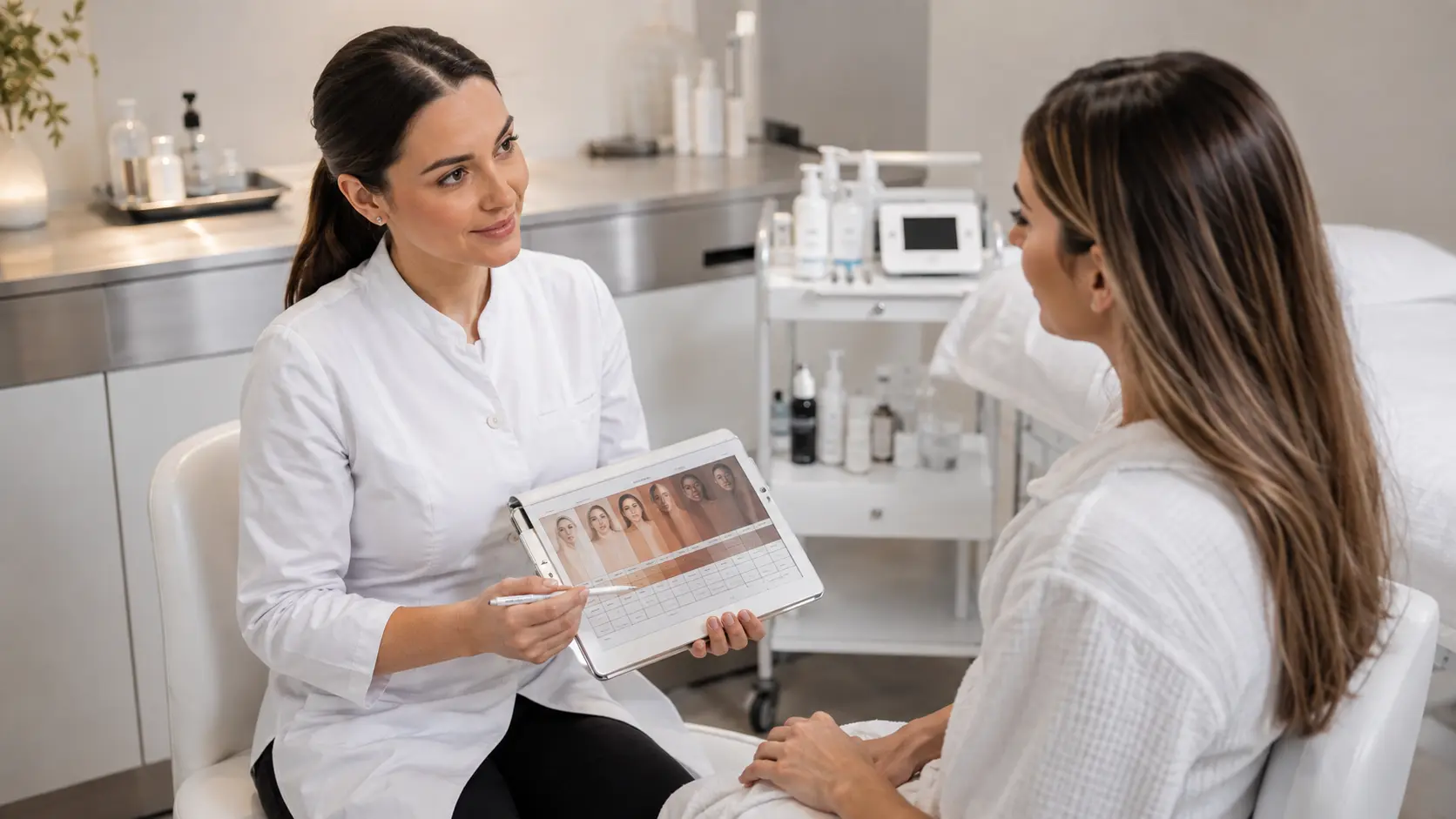
The Fitzpatrick scale classifies skin types I through VI based on melanin content and UV response patterns. Types I and II have lower baseline melanin and lower melanocyte density. Types IV through VI have higher baseline melanin, greater melanocyte density, and melanocytes that are more reactive to inflammatory stimuli. This is not a deficiency — it reflects a fundamentally different level of melanocyte activity, and it means that the same inflammatory signal from microneedling produces a larger melanocyte response in a Fitzpatrick VI client than in a Fitzpatrick I client.
Estheticians performing microneedling on Fitzpatrick IV through VI clients should not view these skin types as treatment-excluded — that is not the clinical standard. They should view them as requiring modified protocol parameters, more conservative needle depths, longer intervals between sessions, and more rigorous pre- and post-treatment sun protection education.
Fitzpatrick Types IV – VI
Higher baseline melanocyte density and reactivity. Modified depth (0.25–0.5 mm), extended intervals, aggressive sun protection protocol required.
Personal PIH History
Any prior episode of PIH following skin trauma, inflammation, or procedure is a significant predictor of post-microneedling PIH. Disclose and document at consultation.
Active Inflammatory Skin Conditions
Active acne, rosacea flare, eczema, or perioral dermatitis indicate elevated baseline inflammation. Microneedling should be rescheduled until the condition is stable.
Recent or Ongoing Sun Exposure
Recent tanning, sunburn, or occupational UV exposure signals pre-activated melanocytes. A minimum 2-week sun avoidance window pre-treatment is the standard recommendation.
Hormonal Fluctuations / Melasma History
Clients with melasma or hormone-related pigmentation changes have sensitized melanocytes that may respond more strongly to any inflammatory stimulus.
Certain Medications
Photosensitizing medications, certain antibiotics, hormonal contraceptives, and some topical retinoids can elevate PIH risk by increasing UV sensitivity or melanocyte reactivity.
Fitzpatrick Types I – III, No PIH History
Lower baseline melanocyte density and reactivity. Standard depth protocols with routine sun protection education. PIH risk is low but not zero — post-care education remains essential.
Consistent Sun Protection Compliance
Clients with established daily SPF habits and minimal UV exposure carry significantly lower post-treatment PIH risk regardless of skin type.
The Role of Personal PIH History in Risk Assessment
A client who has developed PIH following a previous procedure, trauma, or inflammatory skin event has demonstrated that their melanocytes respond to inflammatory stimulation with disproportionate pigment production. This prior response is one of the most reliable predictors of post-microneedling PIH available at consultation — more clinically informative than Fitzpatrick type alone. Estheticians should ask directly and specifically: “Have you ever developed dark spots after a skin procedure, a pimple, a cut, or a burn?” A positive history should trigger a conservative protocol modification, not necessarily a disqualification.
Microneedling on active inflammatory acne is a meaningful PIH risk factor regardless of Fitzpatrick type. Active acne lesions represent pre-existing inflammation. Needling over or near them intensifies that inflammatory load and dramatically increases the probability of PIH at the acne site. Clients presenting with moderate to severe active acne should have treatment deferred until the inflammatory condition is stable. Isolated comedones in an otherwise stable presentation may be manageable with conservative needle depth and careful technique, but this requires clinical judgment on a case-by-case basis.
How Treatment Variables Affect Hyperpigmentation Risk: What You Can Control
Unlike Fitzpatrick skin type or personal PIH history — which are fixed client characteristics — several key treatment variables are within the esthetician’s control. Understanding how each variable affects the inflammatory load, and therefore the PIH risk, gives practitioners the clinical tools to reduce risk meaningfully without abandoning the treatment.
Needle Depth Is the Most Powerful Intra-Treatment Variable
Among all the protocol decisions an esthetician makes during a microneedling session, needle depth has the greatest direct impact on inflammatory load. Deeper needles penetrate further into the dermis, disrupting more tissue, triggering a larger platelet aggregation response, and producing a more intense cytokine cascade. For a client presenting with Fitzpatrick type V and a positive PIH history, the difference between 1.5 mm and 0.5 mm needle depth is not merely cosmetic — it represents a substantially different inflammatory stimulus and therefore a substantially different PIH risk profile.
Estheticians in some jurisdictions may be limited by scope of practice to shallower needle depths regardless of clinical preference. Where those scope limitations exist, they provide an inadvertent degree of PIH risk protection. Where deeper access is permitted or occurs in a supervised medical setting, depth selection for PIH-risk clients requires explicit clinical justification and documentation.
Session Frequency and Cumulative Inflammation
PIH risk is not just a function of single-session inflammatory load — it is also a function of cumulative inflammation across multiple sessions. If a client’s skin has not fully resolved from the previous session’s inflammatory response before the next session begins, the baseline melanocyte activity is already elevated. Needling into partially recovered skin compounds the inflammatory signal and raises PIH risk substantially. Extending session intervals for PIH-risk clients from the standard four weeks to six or eight weeks allows complete inflammatory resolution and reduces cumulative melanocyte stimulation across the treatment series.
What a Structured Pre-Treatment Consultation for PIH Risk Should Cover
The most reliable PIH prevention tool in any esthetician’s clinical toolkit is a thorough, systematic pre-treatment consultation. No protocol modification, however well-designed, can compensate for inadequate pre-screening. The following framework covers the key consultation domains for PIH risk assessment before every microneedling session.
Fitzpatrick Skin Type Classification
Conduct Fitzpatrick typing using a validated reference tool. Do not rely on visual assessment alone — ask how the client’s skin responds to sun exposure (tanning vs. burning), which remains the most reliable single indicator. Document the determined Fitzpatrick type in the client record and flag types IV through VI for modified protocol parameters.
Personal PIH History
Ask directly: “Have you ever had dark spots appear after a pimple, a cut, or a skin treatment?” A positive answer, even to a single minor incident, is clinically significant and should trigger conservative protocol modification. Document the specific incident, body location, severity, and resolution timeline where the client can recall it.
Sun Exposure Assessment
Ask about current and recent sun exposure patterns, outdoor occupational exposure, tanning history, and any sunburn in the past four weeks. If the client has had significant UV exposure in the two weeks prior to the scheduled session, recommend rescheduling. Confirm their post-treatment SPF plan before proceeding.
Active Skin Condition Review
Assess for active acne, rosacea flare, eczema, perioral dermatitis, or any active inflammatory condition at the planned treatment site. Active inflammatory conditions represent a relative to absolute contraindication depending on severity. Document the skin status at consultation and at each session check-in.
Medication and Hormone Review
Review current medications for photosensitizers (tetracyclines, certain antifungals, thiazide diuretics), hormonal contraceptives that may influence melanocyte activity, and any topical medications at or near the treatment zone. Note prior or current use of isotretinoin and observe the standard minimum six-month clearance window.
Informed Consent and Risk Communication
Every client, regardless of Fitzpatrick type, should be informed that post-inflammatory hyperpigmentation is a possible outcome of microneedling. Higher-risk clients should receive specific verbal and written disclosure of their elevated risk, the protocol modifications being made to reduce it, and the post-treatment behaviors required of them. Document the informed consent conversation and obtain a signed consent form prior to treatment.
Post-Treatment Recovery: The Clinical Window That Determines PIH Outcomes
What happens in the first 24 to 72 hours after a microneedling session is the most clinically influential period for PIH risk. The skin is in an acute inflammatory state, the barrier is compromised, melanocyte activity is elevated, and the skin is maximally sensitized to both external irritants and UV exposure. How the esthetician and client manage this window determines, in large part, whether PIH develops.
Immediate In-Treatment Recovery Steps
The final steps of a microneedling session — following completion of all needling passes — should consistently include an immediate anti-inflammatory recovery phase. This is not a luxury add-on. For PIH-risk clients, it is a clinical necessity. Applying a cooling, occlusive, fragrance-free recovery mask immediately post-procedure reduces surface skin temperature, limits the continuation of the acute inflammatory cascade, and supports barrier function during the period of highest vulnerability.
Estheticians working in treatment rooms where post-microneedling LED therapy is part of the protocol should ensure that the LED wavelengths selected are appropriate for post-inflammatory reduction — red light (630 to 660 nm range) is anti-inflammatory and appropriate; UV or blue light wavelengths are contraindicated in this context.
Estheticians who have added an immediate post-microneedling occlusive masking step to their standard protocol for Fitzpatrick IV and V clients consistently report measurably reduced redness duration and fewer client callbacks reporting unexpected pigmentation changes in the weeks following treatment. The protocol shift that produces the most notable difference is applying the recovery mask within two to three minutes of completing the final needling pass — before the acute surface inflammation fully establishes. Waiting five to ten minutes before masking produces a visibly different and less favorable immediate skin response.
The Poly-Luronic™ Jelly Mask by Luminous Skin Lab is the formulation most frequently referenced in this post-microneedling context because of its combination of immediate cooling, occlusive barrier seal, and PGA + HA dual-humectant delivery without fragrance, dyes, or any ingredient that would re-stimulate inflammation on acutely compromised skin. In practice, the key technique distinction is mixing the mask immediately before the final needling pass completes, so it is ready to apply within the critical two-minute window. Some practitioners mix a slightly more liquid consistency than standard — approximately a 1.2:1 water-to-powder ratio rather than the standard 1:1 — to allow a faster, more fluid application over sensitized post-procedure skin that would otherwise be uncomfortable to treat with standard application pressure. The client response to removal — significantly cooler, visibly less red, and consistently described as the most comfortable part of the microneedling experience — is an immediate client retention and trust signal that justifies the protocol step independently of its clinical PIH-prevention value.
Ingredients to Avoid in the Post-Treatment Recovery Window
The product choices applied to post-microneedling skin in the 24 to 72 hours following treatment carry meaningful clinical consequences for PIH risk. Any ingredient that re-triggers inflammation, causes additional barrier disruption, or acts as a melanocyte stimulant must be excluded from the post-care protocol for this window. Specific ingredients to avoid include:
- Retinoids and retinol — pro-turnover actives that are inflammatory on compromised skin and can intensify the post-procedure healing cascade.
- Alpha hydroxy acids (AHAs) and beta hydroxy acids (BHAs) — chemical exfoliants that compromise barrier integrity further and increase UV sensitivity.
- Vitamin C in unstable or high-percentage forms — L-ascorbic acid at low pH can be irritating on post-procedure skin; more stable derivatives are preferable if vitamin C is reintroduced.
- High-concentration niacinamide — while niacinamide is a well-documented brightening ingredient, concentrations above 5% can cause flushing in sensitive post-procedure skin for some clients.
- Synthetic fragrance, essential oils, and plant extracts — absolute exclusions on any post-treatment skin where barrier integrity is compromised; sensitization risk is substantially elevated in this state.
- Any topical with known contact sensitization potential — review every product being applied and err toward the simplest, most minimal product portfolio for the acute recovery window.
What to Use: Barrier-Supportive Hydration as the Clinical Foundation
The post-treatment product portfolio during the acute recovery window should be as simple and clean as possible: a fragrance-free hydrating serum containing hyaluronic acid and/or polyglutamic acid, a fragrance-free, non-occlusive moisturizer that supports rather than disrupts barrier function, and a broad-spectrum SPF 30 or higher applied consistently from the morning after treatment. That is a complete and clinically appropriate post-microneedling home care protocol for the first week of recovery for most clients.
Adding complexity — multiple actives, new products, or the client’s normal active-heavy routine — during this window adds inflammatory risk. Simplicity is the professional standard in post-microneedling recovery care.
How to Talk to Clients About Hyperpigmentation Risk Before and After Microneedling
Communicating PIH risk accurately and compassionately is one of the most nuanced consultation skills in advanced esthetic practice. The goal is to ensure informed consent without creating so much fear that qualified candidates decline treatment. The following framework supports clear, professional risk communication.
Before Treatment: Calibrating the Conversation to the Client’s Risk Profile
For lower-risk clients (Fitzpatrick I–III, no PIH history, controlled sun exposure), PIH risk communication can be efficient: “As with any treatment that creates a controlled inflammatory response, there is a small risk of temporary pigmentation change. Sun protection after treatment is essential. Most clients do not experience this, and when it does occur, it typically resolves fully.”
For higher-risk clients (Fitzpatrick IV–VI, positive PIH history, or active sun exposure patterns), the conversation requires more depth: “Based on your skin type and history, your melanocytes are more reactive to inflammation. This doesn’t mean you can’t benefit from this treatment, but it does mean we’need to approach it more conservatively — shallower depth, wider intervals between sessions, and very consistent sun protection on your end. If you follow the post-care instructions carefully, the risk is meaningfully reduced. But it’s important you understand it exists so you can make an informed decision about proceeding.”
After Treatment: Setting Realistic Recovery Expectations
Post-treatment communication should reinforce the sun protection requirement as a non-negotiable, explain the normal recovery timeline (redness and mild sensitivity resolving over one to five days depending on depth), identify what early PIH looks like and when to make contact if it appears, and confirm the scheduled follow-up assessment timeline.
Practitioners who provide written post-care instructions that the client takes home — including a clear description of PIH warning signs and when to call — report significantly fewer post-treatment client communications expressing concern about unexpected skin changes. Written documentation also reinforces the professional standard of care and supports the practitioner’s liability protection.
If PIH Does Develop: Clinical Response and Client Communication
Even with optimal pre-screening and protocol execution, PIH can develop in some clients following microneedling. The clinical response when it occurs matters as much as prevention efforts.
Identifying PIH Early
Post-microneedling PIH typically becomes visible two to six weeks after treatment, presenting as brown or tan diffuse discoloration at or near the treatment zone. It may appear as a generalized darkening or as more discrete patch-like discoloration. Distinguishing early PIH from normal post-inflammatory erythema (which is red and typically resolves within the first week) is important for appropriate home care guidance. If a client contacts the practice with concerns about skin darkening in the two-to-six-week post-treatment window, prioritize a prompt follow-up assessment.
Initial Clinical Response to Confirmed PIH
When PIH is confirmed at a follow-up assessment, the immediate clinical priorities are aggressive and consistent sun protection — reinforcing SPF application frequency and UV exposure avoidance — introduction of targeted brightening home care where appropriate to the client’s skin type and sensitivity level, and documentation of the PIH presentation for the client record. Avoid immediately scheduling a repeat microneedling session until the PIH has fully resolved. Document thoroughly and maintain clear, supportive communication with the client throughout the resolution timeline.
Prognosis and Resolution Timeline
Epidermal PIH following microneedling is typically temporary. With consistent sun protection and appropriate home care, most cases of post-microneedling PIH resolve within three to six months. Clients who receive early and clear guidance about managing the condition consistently report greater satisfaction with their treatment experience overall, even when PIH does occur, because they feel informed, supported, and confident that the condition will resolve.
Professional and Scientific References
The mechanisms and clinical guidance referenced in this article draw from peer-reviewed dermatological literature and professional esthetics education standards:
- Post-inflammatory hyperpigmentation pathophysiology — inflammatory cytokine signaling and melanocyte activation cascade. Journal of Investigative Dermatology; Dermatology Research and Practice.
- Microneedling efficacy and safety across Fitzpatrick skin types. Journal of Cutaneous and Aesthetic Surgery; Dermatologic Surgery, 2018–2024. Consistent finding: modified depth and extended session intervals reduce PIH incidence in Fitzpatrick IV–VI populations.
- Fitzpatrick skin phototype classification and clinical application in procedural dermatology. Archives of Dermatology; Fitzpatrick TB, original classification 1975 with subsequent clinical refinements.
- UV radiation and melanocyte activation: POMC-derived peptide signaling and alpha-MSH upregulation. Photochemistry and Photobiology; Journal of Investigative Dermatology.
- Post-microneedling recovery protocols and barrier repair — product ingredient safety for compromised skin. International Journal of Dermatology; Cosmetic Dermatology, 2021–2024.
- PGA and HA humectant mechanisms relevant to post-procedure barrier support — see cross-reference to MDPI 2024 (gamma-PGA barrier strengthening, HAS upregulation, aquaporin-3 expression).
- Professional esthetician scope of practice and informed consent standards for advanced modalities. National Coalition of Estheticians, Manufacturers/Distributors & Associations (NCEA) guidelines; state board references by jurisdiction.
For estheticians building or refining their post-microneedling recovery protocol with PIH prevention as a clinical priority, the immediate post-procedure masking step is the most impactful single addition available within standard scope. The formulation used for this step must be fragrance-free, clean-label, and specifically appropriate for compromised post-procedure skin — requirements that eliminate much of the broader jelly mask market from consideration for this application.
The Poly-Luronic™ Jelly Mask by Luminous Skin Lab was developed by a licensed esthetician with post-treatment recovery protocols as a primary design context. The PGA + HA dual-humectant system delivers immediate barrier support and sustained hydration without introducing any ingredient with sensitization potential. The cooling effect actively reduces post-procedure surface inflammation during the masking window. Fragrance-free and clean-label by formulation design, not just by marketing claim. For Fitzpatrick IV–VI clients undergoing microneedling, this masking step — performed with the right formulation — is one of the most defensible clinical decisions an esthetician can make in the context of PIH risk management.
Explore the ILUMIPEN Professional Nano Infusion DeviceFrequently Asked Questions: Microneedling and Hyperpigmentation
Can microneedling actually cause hyperpigmentation?
Yes, microneedling can cause post-inflammatory hyperpigmentation (PIH), although it is not a universal outcome and is largely preventable with proper client selection and protocol design. PIH occurs when the inflammatory response triggered by microneedling stimulates melanocytes to overproduce melanin. Clients with Fitzpatrick skin types IV through VI carry a statistically higher risk, as do clients with a personal history of PIH, active inflammatory skin conditions, or recent significant sun exposure.
Which skin types are most at risk for hyperpigmentation after microneedling?
Clients with Fitzpatrick skin types IV, V, and VI carry the highest risk for post-inflammatory hyperpigmentation following microneedling. These skin types have higher baseline melanocyte activity and are more likely to respond to inflammatory stimuli with increased melanin production. This does not mean microneedling is contraindicated for these clients, but it requires modified protocol parameters: shallower needle depth, longer intervals between sessions, aggressive sun protection, and thorough pre-treatment education.
How does needle depth affect hyperpigmentation risk during microneedling?
Needle depth is directly correlated with inflammatory response intensity, and therefore with PIH risk. Deeper needle penetration creates a more significant wound response, triggering a stronger inflammatory cascade that increases melanocyte stimulation. For higher-risk clients, reducing needle depth to 0.25 to 0.5 mm significantly reduces the inflammatory load and corresponding PIH risk without eliminating treatment efficacy for superficial concerns like fine lines and texture refinement.
Does sun exposure before or after microneedling increase the risk of dark spots?
Yes. Sun exposure is one of the most significant controllable risk factors for post-microneedling hyperpigmentation. UV radiation directly stimulates melanocyte activity, and on post-procedure skin where the barrier is compromised and inflammation is already active, even brief unprotected sun exposure can dramatically amplify PIH risk. Clients should avoid significant sun exposure for at least two weeks before treatment and for a minimum of four weeks after, using broad-spectrum SPF 30 or higher daily throughout the recovery period.
What ingredients should I avoid putting on skin right after microneedling to prevent hyperpigmentation?
In the immediate 24 to 72 hours post-microneedling, avoid any ingredients that can cause additional inflammatory stimulation or irritation. This includes retinoids and retinol, alpha and beta hydroxy acids, vitamin C in oxidized or unstable forms, niacinamide at high concentrations for reactive skin types, and any active with known sensitization potential. Fragrance, essential oils, and synthetic dyes are absolute exclusions on compromised post-procedure skin. Focus on barrier-supportive, fragrance-free hydration during the acute recovery window.
How long does post-microneedling hyperpigmentation last if it does develop?
Post-inflammatory hyperpigmentation that develops following microneedling is typically a temporary condition, resolving over weeks to months depending on the depth of pigmentation, the client’s natural skin turnover rate, and whether ongoing UV exposure is controlled. Superficial epidermal PIH often fades within 3 to 6 months with consistent sun protection and appropriate home care. Deeper dermal pigmentation may persist longer and can be more challenging to address. Early intervention with a brightening post-care protocol and strict sun avoidance produces the most favorable outcomes.
Is there a way to test whether a client is likely to develop hyperpigmentation before doing microneedling?
The most practical pre-treatment assessment approach is a detailed consultation covering Fitzpatrick skin type classification, personal and family history of PIH, history of keloid or hypertrophic scarring, current and recent medication use, recent sun exposure patterns, and active or recent inflammatory skin conditions. Some practitioners performing microneedling in clinical settings will conduct a patch test on a small, inconspicuous area and monitor the response before proceeding with full-face treatment on higher-risk clients. A thorough consultation and honest conversation about risk is the foundational standard.
What post-treatment steps help prevent hyperpigmentation after microneedling?
The most effective post-microneedling hyperpigmentation prevention protocol combines immediate barrier recovery support, anti-inflammatory hydration, and consistent sun protection. Immediately post-procedure, apply a fragrance-free, barrier-supportive hydration mask to reduce inflammatory load and support recovery. In the days following, focus on gentle, non-irritating hydration and strict daily SPF application. Clients should be advised to avoid heat, direct sun, and any actives that could re-trigger inflammation until the skin has fully recovered, typically 7 to 14 days at minimum.
How does using an occlusive hydration mask right after microneedling help reduce hyperpigmentation risk?
Applying a professional-grade occlusive hydration mask immediately following microneedling serves several PIH-protective functions. The cooling effect of a well-formulated jelly mask reduces immediate post-procedure inflammation, which directly lowers the melanocyte stimulation signal that triggers PIH. The occlusive layer supports barrier recovery, reducing the window during which the skin remains in a vulnerable, inflamed state. A PGA and HA dual-humectant formulation in a fragrance-free jelly mask format delivers these benefits without introducing sensitizing ingredients onto compromised post-procedure skin. Products like the Poly-Luronic™ Jelly Mask by Luminous Skin Lab are specifically formulated for post-treatment application with this clinical profile in mind.
Managing Hyperpigmentation Risk Is What Separates Good Microneedling Practitioners From Great Ones
Microneedling is among the most effective collagen-stimulating treatments available within esthetician scope of practice in the jurisdictions where it is permitted. Its relationship with post-inflammatory hyperpigmentation is real — but it is a manageable relationship, not a prohibitive one. The practitioners who build the most trusted microneedling practices are those who understand PIH at the biological level, identify vulnerable client presentations before the first needle contacts skin, modify protocols intelligently rather than reflexively, and manage post-treatment recovery with the same clinical intention they bring to the treatment itself.
For clients with Fitzpatrick IV through VI skin, the esthetician who explains PIH risk clearly, modifies the protocol conservatively, applies an immediate anti-inflammatory recovery protocol, and follows up systematically is the practitioner that client will return to — and refer others to — for years. The clinical skills covered in this guide are not just safety protocols. They are a professional differentiator in a growing and increasingly competitive service category.
PIH is preventable in most cases. And when it does occur despite best practice, it is manageable. Neither outcome should deter qualified practitioners from offering microneedling to appropriate candidates across the full range of skin tones and types.