What Are the Professional Safety Guidelines for LED Light Therapy?
Professional safety guidelines for LED light therapy center on three areas: thorough pre-treatment screening to identify contraindications and photosensitizing medications, mandatory eye protection for every client during every session, and adherence to evidence-based treatment parameters including device distance, session duration, and treatment frequency. LED is among the safest energy-based modalities available to estheticians — but that safety record depends entirely on consistent application of these protocols.
- Absolute contraindications include active photosensitivity disorders (lupus, porphyria), light-triggered epilepsy, active cancer or ongoing chemotherapy and radiation, and melanoma or undiagnosed malignant lesions in the treatment area.
- Photosensitizing medications — including certain antibiotics, diuretics, antidepressants, NSAIDs, and oral isotretinoin — require individual evaluation before proceeding with LED treatment; many are manageable with modified parameters or treatment timing.
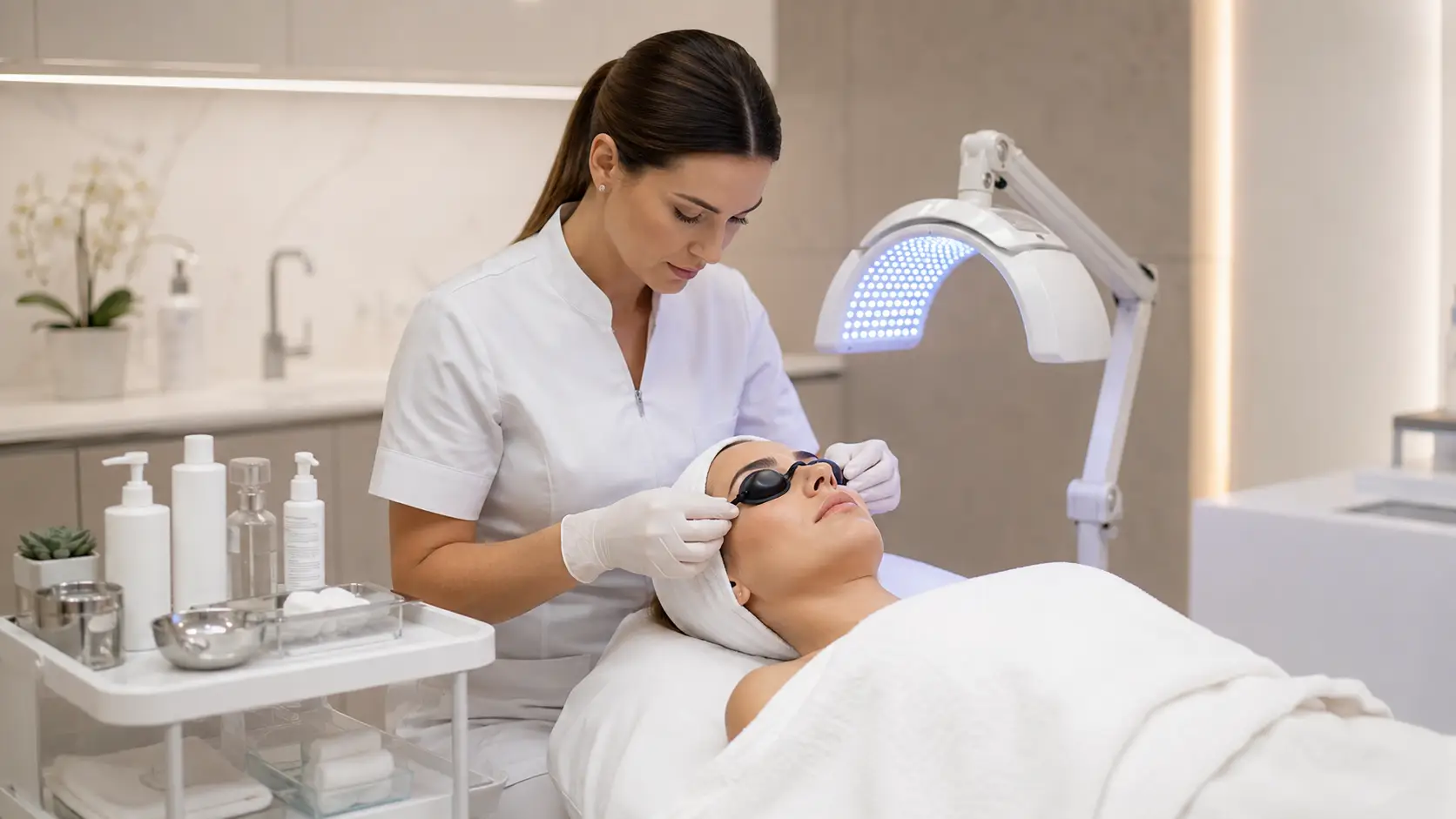
- Opaque protective goggles are mandatory for all clients during LED therapy; fabric eye pads do not meet the professional safety standard for any wavelength, including visible red light.
- Pregnancy is a relative contraindication: most professional protocols defer LED therapy until after delivery in the absence of physician clearance, due to insufficient safety data rather than established risk.
- Professional treatment parameters — device operating distance, session duration, and weekly frequency — must follow device-specific manufacturer guidelines and should never be estimated based on consumer device conventions.
- Pre-treatment intake forms must be updated verbally at every follow-up appointment, not just at first visit — medication changes and new diagnoses between sessions create new contraindication risk.
LED light therapy has earned its position as one of the most widely used modalities in professional esthetic practice. The evidence base for its clinical benefits — collagen stimulation, acne reduction, accelerated wound healing, anti-inflammatory response — is more robust than almost any other device-based treatment available to licensed estheticians. And its reputation for tolerability is well-deserved: LED does not heat tissue, does not cause UV damage, and does not carry the post-treatment downtime of more aggressive modalities.
That tolerability, however, has produced a problem that responsible practitioners recognize immediately: familiarity breeds complacency. The estheticians who have delivered hundreds of LED sessions without incident are precisely the practitioners most at risk of treating a contraindicated client without completing the intake screening that would have caught the issue. The mechanism of harm from LED therapy in a contraindicated client is not dramatic or immediate — it is a phototoxic reaction that develops hours later, a worsened autoimmune flare, a corneal injury from inadequate eye protection. It is the kind of harm that is entirely preventable and entirely attributable to skipped protocols.
This guide gives estheticians a complete, operationally detailed framework for LED therapy safety — not a summary checklist, but the clinical reasoning behind each requirement. Understanding why each safety protocol exists is what enables estheticians to apply it consistently, answer client questions about it with authority, and adapt intelligently when edge cases arise.
What Every Esthetician Must Know About LED Light Therapy Safety
- LED therapy’s excellent safety record is entirely dependent on pre-treatment screening — the modality is not inherently safe for every client in every circumstance.
- Absolute contraindications are non-negotiable disqualifiers. No client pressure, physician note, or low energy setting changes this category.
- Photosensitizing medications require case-by-case evaluation — many do not require outright deferral but do require modified timing or parameters.
- Opaque goggles are the only acceptable form of eye protection for all LED wavelengths including red and near-infrared. Cloth pads and cucumbers are not equivalent.
- Pregnancy is a relative contraindication, not an absolute one — but the professional default is to defer without physician clearance.
- Intake forms expire between appointments. Verbal re-screening for medication changes and new diagnoses is required at every follow-up session, not just annually.
- Professional LED device parameters — especially operating distance and session duration — must follow device-specific manufacturer guidance, not consumer device conventions or general LED therapy estimates.
Why Safety Protocols Are the Foundation of Professional LED Practice
LED therapy operates through photobiomodulation — specific wavelengths of light interact with photoreceptors in skin cells (primarily cytochrome c oxidase in mitochondria) to trigger biologically beneficial cascades. The therapy involves no ionizing radiation, no UV exposure, and no thermal tissue injury when used within proper parameters. These characteristics correctly identify LED as low-risk. They do not correctly identify it as no-risk.
The risk profile of LED therapy in professional practice is almost entirely about the interaction between light and the client’s specific biological state — not about the device itself. A client with a photosensitivity disorder, a client on a photosensitizing antibiotic, or a client whose eyes are inadequately protected represents a genuine safety exposure that the device cannot detect and cannot compensate for. That responsibility falls entirely to the esthetician conducting the intake.
Estheticians who treat LED therapy as a “zero risk” modality because it lacks the dramatic consequences of laser or chemical peels are operating on a false safety model. The true safety model recognizes that LED therapy’s excellent outcomes depend on consistent execution of a defined screening protocol — and that skipping this protocol on any client, regardless of how routine the session seems, is a professional liability exposure that good safety outcomes to date do not justify.
The Mechanism Behind LED-Related Adverse Events
LED adverse events in professional settings almost always occur through one of three pathways. Phototoxic reactions happen when a photosensitizing substance (medication or topical) absorbs LED energy and generates reactive oxygen species in skin tissue, causing delayed erythema, blistering, or hyperpigmentation that can resemble a severe burn hours after treatment. Photoallergic reactions involve an immune-mediated response to a photosensitizer activated by light, typically presenting as a rash or contact dermatitis pattern. Ocular injury occurs when unprotected eyes are exposed to high-irradiance LED light, particularly near-infrared wavelengths that penetrate to retinal tissue without producing the discomfort signals that would normally prompt a person to look away.
All three pathways are screened out by a thorough pre-treatment intake. None of them are caused by the LED device itself when used within appropriate parameters on a properly screened client.
Absolute Contraindications: When LED Therapy Must Not Be Performed
Absolute contraindications represent conditions where LED therapy poses an unacceptable risk that cannot be mitigated by modified treatment parameters, reduced irradiance, or any other technical adjustment. When any of the following are present, the session must not proceed regardless of client preference or physician involvement. These are not clinical judgment calls.
Active Photosensitivity Disorders
Several diagnosed conditions produce pathological photosensitivity that light exposure directly worsens. Systemic lupus erythematosus (SLE) is the most common estheticians will encounter — UV is the primary documented trigger, but many practitioners with SLE also experience reactions to visible light wavelengths. Porphyria (including erythropoietic protoporphyria and porphyria cutanea tarda) involves abnormal accumulation of porphyrins that are strongly activated by visible and near-infrared light, producing severe phototoxic reactions. Xeroderma pigmentosum involves severely impaired DNA repair mechanisms and extreme light sensitivity. Any client who discloses a diagnosed photosensitivity disorder during intake should not receive LED therapy without direct coordination with their treating physician — and for conditions like porphyria, LED is an absolute contraindication.
Active Cancer, Chemotherapy, or Radiation Treatment
Clients who are actively receiving chemotherapy or radiation therapy must not receive LED treatment without physician clearance. Many chemotherapy agents are photosensitizers. Radiation can significantly alter cutaneous wound healing and light response characteristics in treated areas. Beyond these pharmacological considerations, the fundamental principle of not applying additional energetic stress to a system under oncological treatment is a well-established professional standard. Clients in remission with no current treatment may proceed after physician clearance; this determination is not within esthetic scope.
Diagnosed or Suspected Malignant Lesions
LED therapy must not be applied over any area with a diagnosed melanoma, basal cell carcinoma, squamous cell carcinoma, or any undiagnosed skin lesion that could represent malignancy. The theoretical concern about photobiomodulation potentially stimulating cellular growth in malignant tissue is not fully resolved in the literature — and the conservative professional standard is to keep any energetic treatment away from suspicious or confirmed malignant lesions and refer to dermatology. No area of ambiguity here warrants proceeding without clearance.
Photosensitive Epilepsy
Clients who experience light-triggered seizures must not receive any LED therapy. Even panel devices with steady (non-strobing) output can trigger photosensitive epilepsy responses in susceptible individuals. This contraindication must be specifically included in intake questionnaires — many clients with epilepsy are not aware that their condition is classified as photosensitive, and asking specifically about seizure disorders triggered by light is necessary.
Active Open Wounds, Severe Infections, and Acute Cold Sore Outbreaks
LED therapy must not be applied directly over open wounds, active bacterial infections presenting as open lesions, or active herpetic outbreaks. While red and near-infrared LED is used therapeutically in wound care research contexts, this is a controlled clinical application — not an esthetic treatment room protocol. Practitioners who observe unexpected skin changes in a client who presented as healthy should defer the session and refer the client to a physician before proceeding.
Why Eye Safety Is the Non-Negotiable Foundation of Every LED Treatment
Eye protection during LED light therapy is not optional, not preference-based, and not adjustable based on wavelength or irradiance level. It is a mandatory professional standard for every client, in every session, with every LED device. This is the single most frequently compromised safety protocol in LED therapy practice — and the one with the most direct potential for serious, irreversible harm.
Why Cloth Pads and Cucumbers Do Not Meet the Professional Standard
The esthetic industry has a long history of using cotton rounds, gel eye pads, cucumber slices, and folded gauze as eye covers during facial treatments. These are appropriate for treatments where no light-emitting device is in use. They are categorically inadequate for LED therapy. Cloth, cotton, and gel materials transmit sufficient visible and near-infrared light to reach ocular tissue. The fact that a client cannot see through a cotton round does not mean that light is not penetrating it — these materials absorb rather than block light, and absorption is not a reliable protection standard when applied inconsistently over a curved surface around moving facial tissue.
The only acceptable eye protection for professional LED therapy is opaque, properly fitting protective goggles designed specifically to block light in the wavelength ranges used by the device. These goggles should sit flat against the face and fully occlude the orbital area. A client who reports feeling more comfortable with eye pads than goggles is a client who needs to understand why goggles are required — not a client who receives an exception.
Near-Infrared Wavelengths and the Special Case for Ocular Safety
Near-infrared light (700–1000nm, commonly 830nm in professional LED panels) presents a specific eye safety consideration that estheticians must understand and communicate clearly. Unlike red light, which clients can see and which produces a visual discomfort response at high irradiance, near-infrared light is invisible. It carries no visual warning signal. It penetrates deeply — reaching retinal tissue — without any subjective sensation that would cause a client to close their eyes or report discomfort. A client whose goggles are slightly misaligned during a near-infrared treatment may not register any sensation until hours later, when photochemical retinal injury has already occurred.
Professional LED devices operating in the near-infrared range have a Nominal Ocular Hazard Distance (NOHD) — the distance within which ocular exposure without protection creates a risk of injury. Estheticians should know their device’s NOHD specification and ensure that goggle fit is confirmed at every session before activation, not assumed from the previous visit.
Esthetician Eye Protection During LED Therapy
Most professional LED therapy sessions do not require estheticians to be in the immediate treatment field while the device is active. However, estheticians who work in close proximity to an active LED panel — adjusting positioning, performing hand massage while the panel is running — should use appropriate protective eyewear during those moments of proximity. Repeated low-level ocular exposure accumulates over the course of a high-volume treatment schedule in a way that a single session exposure calculation does not capture.
No session begins until the esthetician has physically confirmed that the client’s goggles are correctly positioned and fully occluding the orbital area. This confirmation is performed at the moment of device activation — not assumed based on the client having placed the goggles themselves. Goggle confirmation is a non-delegatable treatment step.
Photosensitizing Medications: What Estheticians Must Screen and Why
Photosensitivity from medications is one of the most clinically significant — and most commonly missed — safety considerations in LED therapy practice. Clients on photosensitizing medications are not universally contraindicated for LED treatment, but they require individual evaluation, and some medication combinations or dosing scenarios make proceeding inadvisable without physician input. The challenge is that most clients do not know their medication is a photosensitizer, and many intake forms do not ask about medications specifically enough to surface the risk.
Primary Photosensitizing Medication Categories
Estheticians should be familiar with the following drug categories as photosensitization risks, and their intake forms should specifically prompt clients to list all current prescriptions and supplements:
- Tetracycline antibiotics and fluoroquinolones: Doxycycline (commonly prescribed for acne), tetracycline, ciprofloxacin, and levofloxacin are well-documented photosensitizers. Clients currently on these antibiotics are at meaningfully elevated risk for phototoxic reactions. Because doxycycline is so frequently prescribed for acne — exactly the client population likely to seek blue LED therapy — this is the most common medication conflict estheticians encounter.
- Diuretics: Hydrochlorothiazide (HCTZ) and furosemide are among the most commonly prescribed medications in the world and among the most underrecognized photosensitizers. Clients on blood pressure management protocols often do not think of their medications as relevant to a facial treatment. They are.
- Antidepressants and antipsychotics: Tricyclic antidepressants (amitriptyline, imipramine), phenothiazine antipsychotics (chlorpromazine), and some other psychiatric medications carry photosensitization risk. Some SSRIs are also mild photosensitizers. These medications are increasingly common in the general client population and should always be documented.
- NSAIDs: Ibuprofen, naproxen, and ketoprofen are mild photosensitizers. Occasional use is generally lower risk than chronic daily use. Clients on regular prescription-dose NSAID therapy require more careful evaluation than those taking occasional over-the-counter doses.
- Oral isotretinoin (Accutane): Clients actively on isotretinoin should not receive LED therapy without physician input. Isotretinoin dramatically alters skin barrier function and increases photosensitivity — and the six-month post-course window is a standard precaution period for any energetic treatment.
- Amiodarone: This cardiac antiarrhythmic is a powerful photosensitizer with a long half-life. Clients on amiodarone require careful individual evaluation and physician coordination.
- St. John’s Wort (Hypericum perforatum): This commonly used herbal supplement is a photosensitizer that clients frequently do not think to report because it is not a prescription medication. Intake forms must explicitly ask about supplements and herbal products, not just prescription drugs.
- Some antifungals (griseofulvin): Oral griseofulvin is a moderate photosensitizer worth screening for in clients who disclose antifungal treatment.
How to Handle Photosensitizing Medication Disclosures
The appropriate response to a photosensitizing medication disclosure depends on the medication, the dose, the duration of use, and the treatment being planned. Estheticians working with high-volume practices find that the clearest framework is to ask three questions when a photosensitizer is disclosed: How long has the client been on the medication? Is this an acute course or ongoing maintenance? And can the client confirm with their prescribing physician whether there is a contraindication to light therapy at the intended parameters?
A client on a short course of doxycycline for an acute infection who is due to finish their course in three days presents very differently from a client on indefinite hydrochlorothiazide maintenance. The former may be best served by rescheduling; the latter may be able to proceed with reduced session parameters and post-treatment sun avoidance instructions. The intake and clinical reasoning should be documented for both.
Estheticians integrating the ILUMILUX by Luminous Skin Lab into protocols where photosensitizing medication screening is routine report that having access to the device’s precise irradiance data for each wavelength makes medication-based parameter decisions significantly more defensible. When a client on hydrochlorothiazide wants to proceed with red light therapy at 630nm, being able to confirm that the session delivers a specific, measurable irradiance at the documented operating distance — rather than an estimate — allows the esthetician to make a reasoned decision about whether a reduced-parameter session is appropriate, document that decision accurately, and monitor the client’s response against a known baseline.
Practitioners also note that the ILUMILUX’s consistent panel output eliminates the variable that makes consumer device parameters impossible to use in medication-safety evaluations: consumer devices may list a power density that does not reflect what actually reaches skin at the working distance, making any parameter-based modification essentially unverifiable. Professional-grade irradiance accuracy is not just a performance specification — in medication screening contexts, it is a safety infrastructure feature.
Safe Treatment Parameters: Distance, Duration, Frequency, and Heat Management
LED therapy is device-dependent in ways that most estheticians underestimate when building protocols from general guidelines. The photobiomodulation research literature establishes therapeutic irradiance windows and treatment duration benchmarks based on measured energy delivery — joules per square centimeter of tissue. What that means in practice is that two LED devices with different irradiance outputs require different operating distances and session durations to deliver equivalent therapeutic doses. A treatment time that is optimal for one professional panel may be inadequate for another, or excessive for a third. There is no universal “10 minutes of LED therapy” standard that applies across devices.
Operating Distance from Skin Surface
Professional LED panels are designed to operate at a specified distance from the skin surface that delivers the intended irradiance in the device’s therapeutic specification. Most professional full-face panels are designed for an operating distance of two to six inches. Irradiance follows the inverse square law: reducing the distance from six inches to three inches roughly quadruples the delivered irradiance. Moving the device closer than the manufacturer’s minimum operating distance does not improve outcomes — it can result in heat buildup, local overexposure, and discomfort, particularly in the near-infrared range.
Estheticians working with adjustable stands or handheld devices must set and maintain consistent distance throughout the session. A device that drifts closer to the skin over a 15-minute session is not delivering consistent irradiance — it is delivering a ramping exposure that cannot be meaningfully evaluated or documented against a treatment protocol.
Session Duration and Therapeutic Dose Calculation
Session duration recommendations in LED therapy are ultimately expressions of target fluence — total energy delivered per unit area, measured in J/cm². The research literature has established approximate therapeutic windows for different clinical targets: wound healing and inflammation typically respond in the 4–8 J/cm² range; collagen stimulation protocols often target 10–20 J/cm²; acne reduction protocols using blue light vary significantly by device. Without knowing a device’s actual irradiance at the operating distance, duration recommendations cannot be accurately translated from research to practice.
The practical implication for estheticians is to use only device-specific duration guidance from the manufacturer and not to apply duration benchmarks from peer devices or general treatment guides that may reference different irradiance specifications. If a manufacturer recommends 20-minute sessions and the esthetician’s instinct is that this seems too long or too short based on what they’ve heard from colleagues using different equipment, the right response is to request irradiance documentation from the manufacturer — not to modify session duration by intuition.
Treatment Frequency and Cumulative Dose
LED therapy is typically delivered in treatment series for condition-targeted applications — two to three sessions per week for an acute acne series, one to two per week for collagen stimulation courses, and once-weekly maintenance protocols. These frequency recommendations reflect the biological time windows for cellular response to photobiomodulation — the tissue processes stimulated by LED therapy (ATP production, collagen synthesis, inflammatory cascade modulation) have defined duration and require adequate recovery time between sessions.
The error estheticians most frequently encounter in frequency management is the assumption that more sessions per week will produce faster or better results. The photobiomodulation literature does not support this. Excessive frequency can produce diminishing returns and, in some irradiance ranges, biphasic dose-response effects where overexposure paradoxically reduces the biological stimulation that optimal dosing achieves.
Heat Management and Thermal Comfort Monitoring
LED therapy at therapeutic irradiance levels should produce minimal to no heat sensation on the skin surface. Clients who report warmth that feels more than “barely perceptible” during a session should trigger an immediate distance check and device temperature assessment. If a panel surface is warm to the touch, operating distance may need adjustment. Excessive heat during LED treatment is almost always a function of either inadequate operating distance or a device quality issue — professional-grade panels are engineered to deliver photonic energy rather than thermal energy, and meaningful heat production at the skin surface indicates that the energy delivery profile is not within photobiomodulation-range specifications.
The Pre-Treatment Intake Screening Protocol Every LED Practice Needs
A complete pre-treatment safety screening is the infrastructure that makes all other LED safety protocols functional. Without it, contraindication identification depends on voluntary disclosure from clients who do not know what information is relevant — which is an unreliable safety model. A structured intake form, combined with a verbal screening refresh at every follow-up appointment, closes the gaps that client-initiated disclosure leaves open.
Diagnosed Medical Conditions
Ask specifically about autoimmune conditions, photosensitivity disorders, seizure history, active cancer, and skin cancer history. Do not rely on clients to connect these conditions to a light therapy treatment without explicit prompting.
All Current Medications and Supplements
List all prescription medications, over-the-counter drugs taken regularly, and all supplements including herbals. Ask specifically about antibiotics, blood pressure medications, and anything taken for skin conditions. St. John’s Wort must be named explicitly in the prompt.
Current Skincare Actives
Ask about current use of topical retinoids, AHAs, BHAs, and any prescription topical medications. While these are less significant for LED than for UV exposure, they can affect skin barrier integrity in ways that influence post-treatment response.
Eye Conditions and Ocular Surgery History
Ask about any diagnosed eye conditions and specifically about any history of eye surgery, including LASIK, cataract surgery, or retinal procedures. Near-infrared wavelengths require additional scrutiny for clients with any ocular surgical history.
Pregnancy and Nursing Status
Ask directly and update at every session. Pregnancy status changes between appointments and must be confirmed verbally at each visit, not assumed from the last intake form.
Recent Esthetic Treatments
Ask about microneedling, chemical peels, dermaplaning, laser, or other treatments in the prior two weeks. While many of these combination protocols are supported, knowing the treatment history allows appropriate parameter decisions and proper sequencing.
Fitzpatrick Skin Type Self-Identification
LED therapy is safe across all Fitzpatrick types, but documenting skin type as part of the intake establishes a baseline for post-treatment response tracking and helps identify clients who may be more susceptible to pigmentary response to any thermal component.
Verbal Refresh at Every Return Visit
“Has anything changed since your last visit — any new medications, diagnoses, or procedures?” This single question asked at every follow-up appointment closes the gap that static intake forms leave open between visits. Document the verbal confirmation in session notes.
Professional LED Device Standards: What Separates Clinical Equipment From Consumer Tools
The professional LED device market has expanded substantially alongside the consumer device market, and the two are not always easy to distinguish by appearance or marketing language alone. Understanding what separates a genuinely professional-grade LED device from a consumer tool positioned as professional is essential for estheticians making device procurement decisions — because device quality directly determines whether the safety protocols in this guide are meaningfully implementable.
Verified Irradiance and Wavelength Accuracy
A professional LED device must be able to provide documented, independently verified irradiance data for each of its wavelengths at the specified operating distance. This data should be expressed in mW/cm² and should reflect actual measured output, not manufacturer estimates based on LED chip ratings. LED chips degrade over time, panel temperature affects output, and the spatial distribution of irradiance across a full-face panel is not uniform — professional documentation accounts for these variables. Consumer devices routinely cite chip ratings rather than measured output, making their effective irradiance at any operating distance genuinely unknown.
Wavelength accuracy matters because the photobiomodulation research that establishes clinical benefits is tied to specific wavelength ranges. Red light research is typically conducted at 630nm or 660nm. Near-infrared research is conducted most commonly at 810nm, 830nm, or 850nm. A device claiming “red light” output without specifying wavelength cannot be placed within the research framework that professional practitioners use to justify and structure treatment protocols.
Regulatory Clearance and Classification
Professional LED devices for skin use in the United States should hold FDA clearance as a Class II medical device (typically 510(k) clearance) for the specific indications they are marketed for in a professional setting. This clearance signals that the device has been evaluated against a predicate device for safety and effectiveness. Many consumer-market LED devices are not cleared for professional clinical use — they may be marketed for personal use in a self-care context that places the risk-benefit calculus in the hands of the individual consumer. That is a fundamentally different safety standard from what estheticians require for professional treatment room application on client populations that include the vulnerable populations this guide addresses.
Heat Management and Thermal Safety
Professional-grade LED panels are engineered to dissipate heat away from the treatment surface, delivering photonic energy without meaningful thermal output at the skin level. This is a function of LED driver quality, heat sink design, and panel construction — not simply LED power level. Consumer devices that produce uncomfortable heat during operation are delivering thermal energy in excess of what photobiomodulation-optimized professional equipment produces. In the context of medication-related photosensitivity screening, where thermal energy at the skin surface is an additional variable that can contribute to phototoxic reactions, professional heat management specifications are a safety feature, not merely a comfort feature.
Professional and Scientific References
The safety frameworks referenced in this article draw from the following sources and bodies of literature:
- Photobiomodulation (PBM) therapy safety research — Hamblin MR, et al. Photobiomodulation, Photomedicine, and Laser Surgery, multiple publications 2018–2024. Foundational literature establishing therapeutic windows, biphasic dose responses, and ocular safety parameters.
- Photosensitizing drug classifications — FDA Drug Safety Communications and clinical pharmacology literature; Monteiro AF, et al., Anais Brasileiros de Dermatologia, 2016. Comprehensive drug-induced photosensitivity classification and clinical management.
- LED therapy contraindications in professional esthetic practice — National Coalition of Estheticians, Manufacturers/Distributors & Associations (NCEA) scope of practice and device safety guidelines, 2022–2024.
- Ocular safety in LED and low-level laser therapy — ANSI Z136.1 Safe Use of Lasers standard; IEC 62471 Photobiological safety of lamps and lamp systems; device-specific NOHD calculations per manufacturer documentation.
- Photosensitive epilepsy and light exposure guidelines — Harding GFA and Jeavons PM, Photosensitive Epilepsy (clinical reference); Epilepsy Society guidance on photosensitivity triggers, 2023.
- Isotretinoin and post-treatment skin sensitivity — AAD (American Academy of Dermatology) clinical practice guidelines; standard six-month waiting period post-isotretinoin for energetic treatments.
For estheticians building a professional LED practice where the safety protocols in this guide are fully implementable, device choice is foundational. The ILUMILUX by Luminous Skin Lab is the device our education team references when discussing what professional-grade LED therapy equipment should look like in a treatment room safety context: documented irradiance specifications for each wavelength, consistent panel output across the treatment surface, professional heat management design, and operating parameter guidance built around verifiable energy delivery data rather than estimates.
The safety screening work this guide describes is only as effective as the device it is paired with. A complete intake protocol combined with consumer-grade equipment whose irradiance is unknown creates a gap between the parameters you document and the energy you actually deliver. ILUMILUX is designed to close that gap — giving estheticians the device precision that allows safety protocols to be accurate, defensible, and genuinely protective for every client in their care.
Explore the ILUMILUX Professional LED Device →Frequently Asked Questions: LED Light Therapy Safety for Estheticians
Is LED light therapy safe for all skin types?
LED light therapy is generally safe across all Fitzpatrick skin types when used with appropriate parameters and a thorough pre-treatment screening. Unlike UV-based therapies or ablative laser treatments, LED does not carry the same risk of post-inflammatory hyperpigmentation for darker skin tones. However, no treatment is universally safe for every individual — the critical factor is a complete contraindication screening before every first treatment, and updated screening any time a client reports changes to medications or medical history.
What medications make LED therapy unsafe to use on clients?
Several medication classes increase photosensitivity and require screening before LED therapy. The primary categories include oral antibiotics (tetracyclines and fluoroquinolones such as doxycycline and ciprofloxacin), diuretics (hydrochlorothiazide, furosemide), certain antidepressants and antipsychotics (tricyclics, phenothiazines), NSAIDs (ibuprofen, naproxen, ketoprofen), oral isotretinoin, St. John’s Wort, amiodarone, and some antifungals. Clients on any of these medications should be evaluated individually — some may proceed with modified parameters or treatment timing, others should be deferred until their medication course is complete or until physician clearance is obtained.
Do clients need to wear eye protection during LED light therapy?
Yes — opaque protective goggles are mandatory for all clients during LED light therapy, regardless of the wavelength used. Fabric eye pads, cotton rounds, cucumbers, and gel eye masks do not meet the professional safety standard for any LED wavelength. Near-infrared light is invisible and penetrates to retinal tissue without producing any warning sensation, making goggle fit confirmation by the esthetician before device activation a non-negotiable treatment step. A client who refuses to wear goggles must not receive the treatment.
Can LED therapy be used on someone who is pregnant?
LED light therapy is a relative contraindication during pregnancy, not an absolute one — there is no established evidence that correctly applied LED therapy harms a developing fetus. However, the absence of adequate safety data in pregnant populations is itself the reason professional protocols default to deferring LED treatments until after delivery. Most practitioners require written physician clearance before proceeding with any pregnant client. This is a conservative, defensible professional standard that protects both the client and the practitioner.
What skin conditions mean a client should not have LED therapy?
Absolute contraindications for LED light therapy include active photosensitivity disorders such as systemic lupus erythematosus, porphyria, and xeroderma pigmentosum. Active skin cancer, undiagnosed suspicious lesions, and any client actively undergoing chemotherapy or radiation are also absolute contraindications. Photosensitive epilepsy (seizures triggered by light), active herpetic outbreaks in the treatment area, and open skin wounds are contraindicated. Any client with a new or unfamiliar skin lesion should be referred to a dermatologist before receiving LED treatment in that area.
Can I use LED therapy right after microneedling on the same client?
Yes — LED therapy applied immediately after microneedling is one of the most clinically supported combination protocols in professional esthetics. Red and near-infrared wavelengths applied post-microneedling support accelerated wound healing, reduce post-treatment erythema, and amplify the collagen stimulation cascade initiated by the needling procedure. The standard positioning is LED therapy directly after microneedling, before any post-treatment mask. Estheticians should confirm their device operates within a low-heat output range appropriate for freshly needled skin and always verify client eye protection before activating the panel.
How far should the LED panel be from the client’s face during treatment?
The correct operating distance is device-specific and must follow the manufacturer’s documented specifications, not general LED therapy estimates. Most professional full-face LED panels are designed to operate two to six inches from the skin surface. Irradiance follows the inverse square law — halving the distance roughly quadruples the delivered energy — so operating closer than the minimum specified distance does not improve outcomes and can cause heat buildup and local overexposure. Never extrapolate operating distances from other devices or general guidelines.
What should estheticians check before giving a client LED therapy for the first time?
A complete pre-treatment safety screening before a first LED session should cover: all current prescription medications and supplements (with specific attention to antibiotics, diuretics, antidepressants, NSAIDs, and herbal supplements including St. John’s Wort), diagnosed medical conditions (particularly autoimmune, photosensitivity, seizure, and active cancer history), eye conditions and any history of ocular surgery, pregnancy status, recent esthetic procedures, and current skincare actives including retinoids and exfoliating acids. The intake form should be reviewed and signed before treatment, and verbal confirmation of any changes should be collected at every subsequent appointment.
What makes a professional LED device safer to use in a treatment room than consumer LED tools?
Professional LED devices are engineered to precise, verified irradiance specifications, accurate wavelength output, and controlled heat management — all features that consumer devices frequently lack. A professional-grade device such as ILUMILUX by Luminous Skin Lab delivers consistent, clinically documented irradiance across the full treatment surface, eliminating the uneven energy distribution and unverified wavelength claims common in consumer-market tools. Professional devices also carry FDA clearance documentation for professional use, provide device-specific operating distance and session duration guidance based on actual irradiance data, and are designed to maintain output consistency over time — all of which allow estheticians to build and document safety-consistent protocols that hold up across a client population.
Safety Is the Protocol That Makes Every Other LED Protocol Meaningful
LED light therapy’s excellent safety track record is not a natural property of light — it is the product of consistent protocol execution by practitioners who understand the specific conditions under which LED is safe and those under which it is not. The contraindications, medication interactions, eye protection requirements, and treatment parameter standards in this guide are not bureaucratic formalities. They are the specific boundaries within which the clinical benefits of LED therapy are reliably achievable without harm.
Estheticians who internalize not just the rules but the clinical reasoning behind each safety requirement are equipped to apply these protocols intelligently across the full range of client scenarios they encounter — including the edge cases, the ambiguous medication disclosures, the client who pushes back on goggle requirements, and the situation where the right clinical answer is to defer a session rather than complete it. That judgment, informed by protocol and grounded in clinical reasoning, is what professional LED practice looks like.
As the LED device market continues to grow and the client population receiving LED therapy becomes more diverse, the safety framework in this guide becomes more important, not less. The practitioner who completes a thorough intake, confirms goggle fit before every session, and makes a reasoned decision about every medication disclosure is the practitioner whose clients return for years — and whose LED practice builds a reputation that no amount of marketing alone can create.