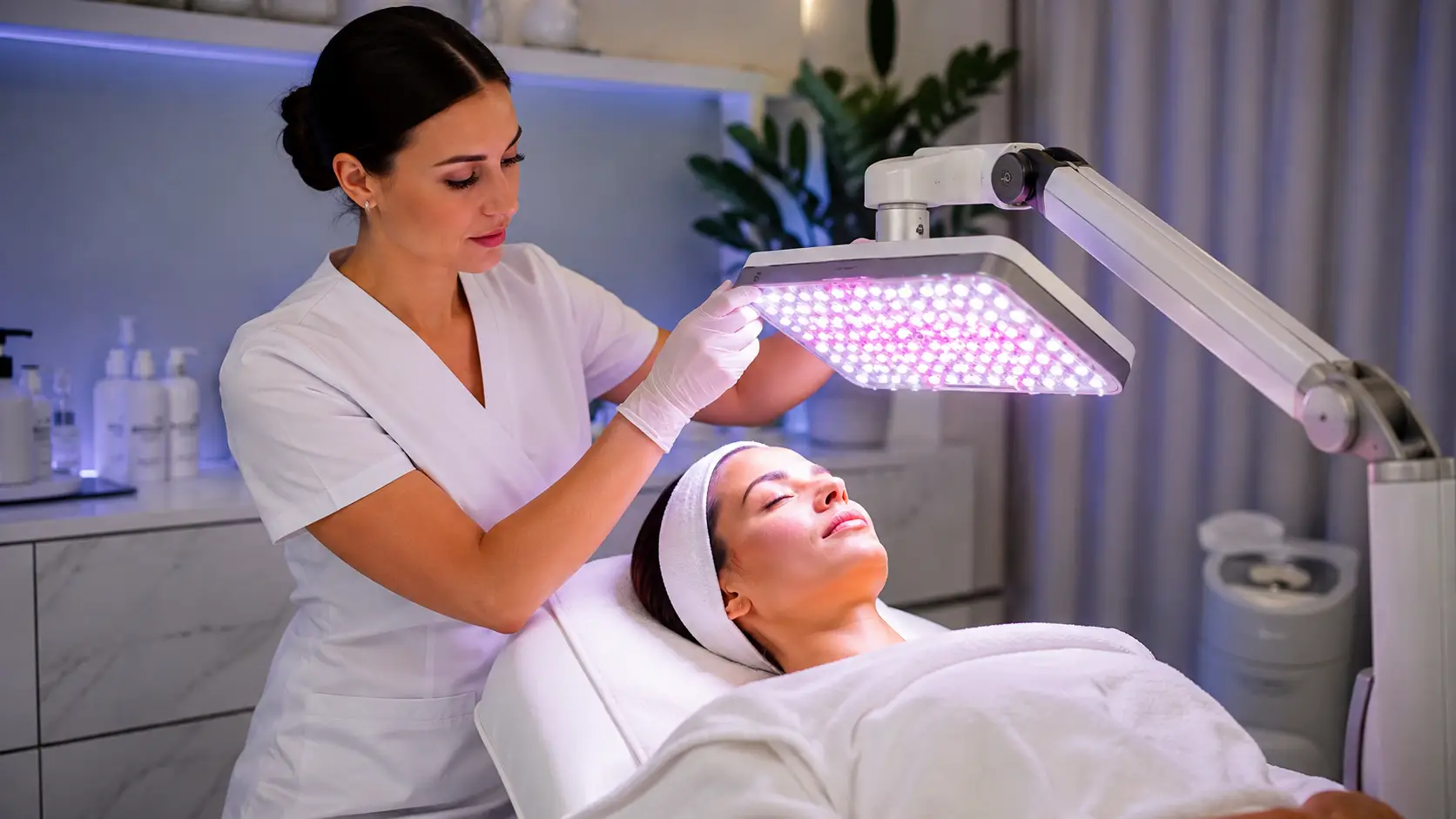
How Does LED Light Therapy Work in Professional Skincare?
LED light therapy works through a process called photobiomodulation — specific wavelengths of light are absorbed by photoreceptors inside skin cells, triggering a cascade of biological responses including increased cellular energy production, collagen synthesis, and reduced inflammation. It is a non-thermal, non-invasive treatment that stimulates cellular function without damaging tissue. In professional skincare, LED therapy is used to support skin rejuvenation, accelerate post-treatment recovery, and reduce redness and inflammation following active facial treatments.
- The primary cellular target is cytochrome c oxidase in the mitochondria, which absorbs red and near-infrared wavelengths and responds by producing more ATP — the cell’s primary energy source.
- Red light (630–700 nm) penetrates the dermis and stimulates fibroblast activity, increasing collagen and elastin synthesis and improving skin texture and density.
- Near-infrared light (800–1000 nm) penetrates even more deeply, supporting tissue repair, reducing inflammation, and improving circulation at the dermal level.
- Blue light (415–450 nm) targets Propionibacterium acnes bacteria at the skin surface and is the primary wavelength used in professional acne treatment protocols.
- LED therapy is safe for all Fitzpatrick skin types, produces no tissue damage, and requires no recovery downtime, making it broadly compatible with most professional facial protocols.
- Efficacy depends on wavelength accuracy, energy density (irradiance), and treatment duration — the three parameters that separate professional-grade devices from consumer alternatives.
Among the modalities available to professional estheticians today, LED light therapy occupies a distinctive position: it is simultaneously one of the most scientifically well-documented non-invasive treatments in aesthetic practice and one of the most frequently misunderstood by practitioners who learned about it primarily through product marketing rather than the underlying science. That gap matters, because the difference between an esthetician who understands LED therapy at the mechanism level and one who understands it only at the outcome level is significant — both for protocol design and for client communication.
This guide is written for estheticians who want to close that gap. We move from the fundamental physics of how light interacts with tissue, through the specific cellular mechanisms that produce the clinical outcomes LED therapy is known for, to the practical parameters — wavelength, irradiance, and timing — that determine whether a given LED treatment actually works or simply illuminates a client for twenty minutes without clinical benefit.
Understanding LED therapy at this level makes every subsequent decision — which device to invest in, where to position it in a facial sequence, how to combine it with other modalities, how to explain it to clients, and how to evaluate emerging research — considerably more confident and clinically grounded.
What Every Esthetician Needs to Know About LED Light Therapy Science
- Photobiomodulation is the mechanism — not heat, not ablation, not a chemical reaction. Light energy is absorbed by specific cellular chromophores and converted into biological responses.
- Cytochrome c oxidase in the mitochondria is the primary photoreceptor for red and near-infrared LED therapy. ATP production increases, powering accelerated cellular repair and synthesis.
- Red light (630–700 nm) reaches the dermis and stimulates fibroblasts. Near-infrared (800–1000 nm) penetrates more deeply for inflammation reduction and tissue repair. Blue light (415–450 nm) targets surface bacteria for acne treatment.
- Irradiance (energy density measured in mW/cm²) and total dose (J/cm²) are as important as wavelength. A device with the correct wavelength but insufficient irradiance produces minimal photobiomodulation.
- LED therapy does not damage tissue, produces no heat injury, and is appropriate for all Fitzpatrick skin types without post-inflammatory hyperpigmentation risk.
- Combining LED therapy with post-treatment recovery protocols — particularly following microneedling, extraction, or chemical exfoliation — leverages its anti-inflammatory and repair-signaling properties at the most clinically valuable moment.
- Professional devices differ from consumer devices in wavelength precision, irradiance output, and energy delivery consistency — all of which directly determine clinical outcome.
What Is LED Light Therapy and Why Do Estheticians Use It?
LED stands for light-emitting diode — a semiconductor device that produces light of a very specific wavelength when electrical current passes through it. Unlike traditional light bulbs or fluorescent lamps, which emit broad-spectrum light across many wavelengths, LED devices produce narrow-band light at precisely defined wavelengths. This specificity is exactly what makes LED therapy clinically useful: different wavelengths interact with different biological structures in the skin, and controlling the wavelength means controlling which biological responses are triggered.
In professional skincare, LED therapy is applied at low energy levels — sometimes referred to as low-level light therapy (LLLT) — where the goal is photochemical stimulation rather than tissue ablation or thermal injury. The device emits light at a target wavelength, the light is absorbed by skin tissue, and biological responses follow. No needles, no heat damage, no downtime. That combination of clinical efficacy and safety profile is what makes LED therapy particularly well-suited to esthetic practice.
Estheticians incorporate LED therapy into their service menus for several primary applications:
- Collagen and elastin stimulation for anti-aging facial protocols
- Inflammation and redness reduction following active treatments
- Post-treatment tissue recovery acceleration after microneedling, dermaplaning, or chemical exfoliation
- Acne treatment using blue-light antibacterial mechanisms
- General skin rejuvenation and radiance enhancement as a standalone or add-on treatment
The breadth of applications is one reason LED therapy has become a core modality in high-performing esthetic practices rather than a specialty service. Understanding the science behind each application allows estheticians to design protocols that match the specific biological mechanism to the specific client need — a fundamentally more sophisticated approach than applying LED therapy generically to every facial.
The Science of Photobiomodulation: What Actually Happens Inside the Skin Cell
The term photobiomodulation describes the process by which light energy modifies biological activity in living tissue. It is the mechanism underlying all LED therapy outcomes — and understanding it at the cellular level is what allows estheticians to make genuinely informed decisions about treatment protocols, device selection, and outcome expectations.
Chromophores: The Cellular Light Receptors
Not all wavelengths of light have the same effect on skin tissue, because not all skin structures absorb light equally. The specific molecules that absorb light energy in biological tissue are called chromophores — from the Greek roots for “color carrier.” Different chromophores absorb different wavelengths. Hemoglobin, for example, absorbs strongly at wavelengths around 540–580 nm. Melanin absorbs broadly across the visible spectrum. Cytochrome c oxidase, one of the most clinically significant chromophores for LED therapy, absorbs strongly in the red (around 620–680 nm) and near-infrared (around 760–840 nm) ranges.
When light of the correct wavelength strikes a chromophore, the chromophore absorbs the photon’s energy and enters an excited state. That energized state drives a cascade of downstream biological processes. This is the fundamental physical event that underlies all photobiomodulation outcomes — a specific wavelength absorbed by a specific molecular target, triggering specific biological responses.
Cytochrome c Oxidase and the ATP Cascade
For red and near-infrared LED therapy, the primary chromophore is cytochrome c oxidase — a key enzyme in the mitochondrial electron transport chain. The mitochondria are the organelles responsible for producing adenosine triphosphate (ATP), the molecule that serves as the cell’s primary energy currency. Every cellular function that requires energy — protein synthesis, cellular repair, immune response, collagen production — is powered by ATP.
When cytochrome c oxidase absorbs red or near-infrared light energy, the enzyme’s activity increases, driving the mitochondria to produce more ATP. With elevated ATP availability, cells can perform energy-demanding functions — including collagen synthesis by fibroblasts and tissue repair signaling — at a faster rate and with greater output than in their baseline state. This is why red and near-infrared LED therapy produces measurable improvements in collagen density, skin texture, and healing speed: the cells most involved in those processes have been given a temporary energetic boost at the mitochondrial level.
The Cellular Chain of Events During LED Light Therapy
Step 1 — Photon absorption: Red or near-infrared photons from the LED device penetrate the skin and are absorbed by cytochrome c oxidase in dermal cell mitochondria.
Step 2 — Mitochondrial activation: Cytochrome c oxidase activity increases, driving the electron transport chain to produce elevated levels of ATP — the cell’s primary energy currency.
Step 3 — Reactive oxygen species (ROS) signaling: Controlled, low-level ROS production acts as a signaling molecule, triggering downstream transcription factor activation including NF-κB and AP-1.
Step 4 — Gene expression changes: Activated transcription factors upregulate genes associated with collagen synthesis, anti-inflammatory cytokine production, and tissue repair.
Step 5 — Clinical outcomes: Fibroblasts produce more collagen I and III; inflammatory cytokine profiles shift toward resolution; cellular repair processes accelerate. Measurable results include improved skin texture, reduced redness, and increased dermal density over a treatment series.
Secondary Signaling: ROS, Nitric Oxide, and Transcription Factors
Beyond the direct ATP-production effect, photobiomodulation triggers several secondary signaling cascades that contribute to its clinical outcomes. Low-level reactive oxygen species (ROS) produced during mitochondrial activation act as signaling molecules rather than damaging agents at these exposure levels — a distinction sometimes lost in simplified explanations of LED therapy. These ROS signals activate transcription factors including NF-κB (nuclear factor kappa B) and AP-1, which regulate gene expression related to collagen synthesis, cellular proliferation, and inflammatory resolution.
Nitric oxide is another secondary mediator of photobiomodulation. Nitric oxide is transiently released from cytochrome c oxidase during photobiomodulation, contributing to vasodilation and improved microcirculation in the treated tissue. This improved local circulation enhances nutrient delivery and waste removal in the dermal environment during and following LED therapy — a mechanism that partly explains the visible skin brightening response many clients notice immediately following professional LED treatment sessions.
Which Wavelengths Are Used in Professional LED Therapy and What Does Each One Do?
Professional LED devices in esthetic practice most commonly deliver light in three principal wavelength ranges, each targeting different skin structures and producing different clinical effects. Understanding the specific mechanism of each wavelength band allows estheticians to match LED therapy precisely to treatment objectives — rather than applying a single wavelength setting to all clients and conditions.
Penetrates to the dermis. Primary target: fibroblasts. Stimulates collagen I and III synthesis, elastin production, and cellular turnover. The core wavelength for anti-aging and skin rejuvenation protocols.
Penetrates deepest of the three — reaching subcutaneous tissue. Reduces inflammation, accelerates tissue repair, improves microcirculation. Ideal for post-treatment recovery protocols.
Acts at the skin surface. Destroys Propionibacterium acnes via porphyrin photosensitization. The primary wavelength for professional acne treatment LED protocols.
Red Light: The Collagen and Rejuvenation Wavelength
Red light in the 630–700 nm range is the wavelength most estheticians encounter first and the one most associated with anti-aging and skin rejuvenation applications. At these wavelengths, light penetrates through the epidermis into the dermis where fibroblasts — the cells responsible for producing collagen, elastin, and hyaluronic acid — are concentrated. Fibroblast mitochondria absorb the red photons via cytochrome c oxidase, ATP production increases, and the fibroblasts increase their output of structural proteins including collagen types I and III.
Clinical studies using red LED wavelengths have documented measurable increases in dermal collagen density, improved skin surface texture, reduction in fine line depth, and enhanced skin firmness following treatment series of six to twelve sessions. The cumulative nature of these outcomes — results build over multiple sessions rather than appearing fully after one treatment — is important for client expectation management and for the structure of professional treatment series planning.
Near-Infrared: The Deep Repair and Recovery Wavelength
Near-infrared (NIR) wavelengths in the 800–1000 nm range penetrate more deeply than visible red light, reaching into subcutaneous tissue and having effects on the vascular system, inflammatory cells, and connective tissue at levels below the dermis. NIR is particularly valuable in post-treatment recovery contexts because of its ability to modulate inflammatory responses — reducing pro-inflammatory cytokine signaling while supporting anti-inflammatory resolution processes.
In esthetic practice, NIR is frequently combined with red light in professional LED devices, creating a dual-wavelength output that simultaneously addresses surface-level fibroblast stimulation and deeper-level inflammation and repair. This combination is particularly relevant for post-microneedling and post-extraction protocols, where both recovery support and collagen-stimulation follow-up serve the treatment objective simultaneously.
Blue Light: The Acne Treatment Wavelength
Blue light at 415–450 nm operates through a completely different mechanism than red or NIR wavelengths. Rather than stimulating cellular energy production, blue light targets porphyrin molecules produced by Propionibacterium acnes (now reclassified as Cutibacterium acnes) — the bacterial species significantly involved in inflammatory acne. When porphyrins absorb blue light photons, they produce singlet oxygen that damages the bacterial cell membrane, killing the organism. This photosensitization mechanism makes blue light an effective antibacterial tool specifically in the context of acne treatment protocols.
Because blue light does not penetrate as deeply as red or NIR, its primary applications are limited to surface-level bacterial reduction. Many professional esthetic LED devices combine blue light with red light for acne protocols, using blue to address the active bacterial component while red light supports the inflammatory resolution and skin repair that follows active acne treatment.
What Parameters Determine Whether LED Therapy Actually Works?
Wavelength alone does not determine LED therapy efficacy. Three parameters together determine whether a given LED treatment produces meaningful photobiomodulation or simply illuminates a client’s skin without clinical effect. Understanding these parameters is essential for evaluating devices, designing protocols, and explaining why professional LED therapy produces different results than consumer-grade alternatives.
Wavelength Accuracy
The first parameter is wavelength accuracy — whether the device actually emits light at the wavelength specified. Consumer-grade LED devices frequently emit light across a broader spectrum than claimed, or at peak wavelengths that drift from the specified value. When the emitted wavelength does not match the absorption peak of the target chromophore, photobiomodulation efficiency drops significantly. Professional-grade devices are engineered and tested to deliver light at precisely defined wavelengths, ensuring that the correct chromophore is targeted consistently in every treatment.
Irradiance: Energy Density at the Skin Surface
Irradiance — measured in milliwatts per square centimeter (mW/cm²) — describes the power of the light delivered to the skin surface. Too low and there is insufficient energy to trigger meaningful photobiomodulation. Too high and there is risk of photoinhibition — the well-documented phenomenon in photobiomodulation research where excessively high irradiance paradoxically reduces or reverses the biological response. The therapeutic irradiance window for skin photobiomodulation in esthetic applications is generally considered to fall between 10 and 100 mW/cm², with specific targets varying by wavelength, skin type, and treatment objective.
This is one of the most significant differences between professional and consumer LED devices. Consumer-grade devices frequently deliver irradiances well below the therapeutic threshold — producing light at the correct wavelength but at energy levels insufficient to trigger the cytochrome c oxidase response that drives clinical outcomes.
Treatment Duration and Total Dose
The third parameter is treatment duration — how long the light is applied. Total dose, measured in joules per square centimeter (J/cm²), is the product of irradiance and time. For a given device at a given irradiance, treatment duration determines the total energy delivered to the tissue. Both too little and too much total dose reduce treatment efficacy, following the same biphasic dose-response pattern observed across photobiomodulation research. Professional LED protocols establish treatment durations based on device-specific irradiance measurements to deliver consistent, therapeutically appropriate energy doses per session.
Estheticians transitioning from lower-output consumer-grade LED panels to the ILUMILUX by Luminous Skin Lab consistently report a visible difference in treatment room outcomes — specifically in post-treatment redness reduction speed following extractions and microneedling sessions, and in client skin texture improvements over a six-to-eight session treatment series. The practical distinction practitioners most often note is irradiance consistency: with a calibrated professional device, the treatment parameters are reliable across every session rather than variable with device age or power fluctuation. In combined LED-plus-jelly-mask workflows — where the mask is applied first and the LED panel positioned over the set mask — practitioners using the ILUMILUX find the hands-free positioning compatible with simultaneous client massage, compressing overall facial service time without reducing LED exposure duration. This is the kind of workflow compatibility that is designed into professional-grade equipment rather than adapted from consumer-use devices.
How Does LED Light Therapy Compare to Laser and IPL in the Treatment Room?
Understanding how LED therapy differs from other light-based modalities is important for estheticians both for scope-of-practice clarity and for client education. The distinctions are meaningful and frequently misrepresented in general consumer communications about “light therapy.”
Non-Thermal vs. Thermal: The Fundamental Distinction
Laser and intense pulsed light (IPL) treatments work primarily through selective photothermolysis — targeting a chromophore such as melanin or hemoglobin with sufficient energy to generate heat at the target site, creating controlled thermal injury that triggers a repair response. The damage itself is the mechanism. These treatments produce meaningful results partly because the skin’s wound-healing response is highly effective at remodeling tissue, but they also produce the downtime, sensitivity, and post-inflammatory hyperpigmentation risk that accompanies any degree of controlled tissue injury.
LED therapy operates through an entirely different mechanism: photochemical rather than photothermal. The light energy absorbed by cytochrome c oxidase drives a chemical process — increased electron transport chain activity and ATP production — without generating heat in the target tissue. No tissue is damaged. No wound-healing cascade is required. The cellular improvements are driven by enhanced cellular energetics rather than repair from injury. This is why LED therapy produces no downtime, is safe across all Fitzpatrick skin types without post-inflammatory hyperpigmentation risk, and is appropriate for esthetic practice without the medical-device regulations that govern laser and IPL equipment in most jurisdictions.
Scope of Practice Considerations
In most U.S. states, LED therapy falls within the licensed esthetician scope of practice because it is non-invasive, non-ablative, and does not damage tissue. This contrasts with laser and IPL devices, which in most jurisdictions require medical oversight or medical licensing. Estheticians should verify their specific state board regulations, as scope-of-practice laws vary and are periodically updated. When documentation is needed for regulatory purposes, the device’s FDA registration category and classification level are relevant reference points.
Combining LED With Other Esthetic Modalities
Because LED therapy does not require recovery time or create tissue compromise, it is uniquely well-positioned as a combination treatment. Estheticians working in advanced treatment workflows commonly incorporate LED therapy both before and after other modalities within a single session. Pre-treatment LED application can warm and condition tissue and begin the cellular energy elevation process before active treatment steps. Post-treatment LED application is increasingly standard in microneedling recovery protocols, leveraging the anti-inflammatory and repair-signaling mechanisms of red and NIR light at exactly the moment the skin most benefits from that support.
How Do Estheticians Apply LED Light Therapy Within Professional Facial Protocols?
Moving from mechanism to application, the practical question for estheticians is how LED therapy integrates into the range of facial protocols they offer — not just as an add-on service but as a clinically positioned step in a treatment sequence designed to produce a specific outcome.
Standalone LED Facial
A standalone LED facial is typically structured around a cleanse and prep phase, serum application to target specific skin concerns, extended LED exposure of 20 to 30 minutes at the appropriate wavelength for the client’s primary concern, and a sealing moisturizer or SPF. This format is appropriate for clients maintaining results between more intensive treatment series, for those with reactive or sensitized skin who are not candidates for more active treatments, and as an entry-point service for new clients before progressing to more comprehensive protocols.
Post-Active Treatment LED Integration
In advanced esthetic practice, LED therapy is most powerfully positioned as a post-active-treatment recovery step. Following microneedling, dermaplaning, or chemical exfoliation, the skin is in a state of enhanced permeability and early inflammatory activation. Applying red and NIR LED at this stage simultaneously supports inflammatory resolution and provides fibroblast stimulation at the moment the skin’s repair processes are already activated. The practical result is faster visible recovery, reduced redness and discomfort for the client, and enhanced collagen stimulation outcomes compared to either modality used in isolation.
LED Combined With Hydration Mask Application
In treatment rooms that incorporate professional jelly masks or hydration sheet masks into their facial sequences, LED therapy can be delivered simultaneously with mask application. A client with a set occlusive jelly mask in place can receive LED exposure through the mask layer (depending on mask opacity and device specifications), creating a combined occlusive hydration and photobiomodulation delivery during the same time window. This workflow compression is one of the practical advantages of professional LED devices with hands-free positioning capability.
Treatment Series Planning
Many of LED therapy’s collagen stimulation and skin rejuvenation outcomes accumulate over a treatment series rather than appearing fully after a single session. Educating clients on this cumulative response pattern — explaining that a series of six to twelve sessions produces meaningfully greater results than isolated single treatments — is fundamental to both outcome management and to the business logic of LED-based service planning. Estheticians who can explain the cellular mechanism underlying this cumulative effect build significantly greater client confidence in the treatment series recommendation than those who rely on outcome promises alone.
What Does Clinical Research Show About LED Light Therapy Outcomes?
The clinical evidence base for LED light therapy in esthetic and dermatological applications has grown substantially over the past two decades. While the research landscape includes studies of variable quality — as is true in most non-pharmaceutical treatment research — there is a substantial body of controlled clinical trials supporting the primary applications of professional LED therapy.
Collagen Stimulation and Anti-Aging Outcomes
Multiple controlled trials have documented statistically significant increases in dermal collagen density following LED treatment series using red wavelengths (around 633 nm and 830 nm). A frequently cited study published in the Journal of Photochemistry and Photobiology B demonstrated measurable improvements in skin roughness, skin tone, and clarity, as well as reductions in fine line depth, following a series of nine biweekly LED treatments. Histological analysis in several studies has confirmed actual increases in collagen fiber density in biopsy samples from treated skin, providing mechanistic evidence beyond self-reported outcome measures.
Wound Healing and Post-Procedure Recovery
The application of LED therapy to wound healing and post-procedure recovery has been studied in both surgical and esthetic contexts. Research consistently shows that red and NIR light application following tissue disruption reduces time to inflammatory resolution, decreases reported pain and discomfort, and accelerates visible recovery. Studies in post-laser resurfacing and post-ablative procedure contexts are particularly relevant for estheticians working in advanced facial practices, as they provide clinical documentation of the mechanisms that support LED use following microneedling and other tissue-modifying treatments.
Acne Treatment Evidence
The evidence base for blue light in acne treatment is well established. Controlled trials have shown significant reductions in inflammatory acne lesion counts following blue LED treatment series, with the mechanism confirmed through P. acnes porphyrin photosensitization studies. The combination of blue and red LED is also documented to produce superior outcomes compared to blue light alone in inflammatory acne, consistent with the mechanistic expectation that red light’s anti-inflammatory effects complement blue light’s antibacterial mechanism.
Professional and Scientific References
The science discussed in this article draws from peer-reviewed photobiomodulation and dermatological research:
- Avci P, Gupta A, Sadasivam M, et al. Low-level laser (light) therapy (LLLT) in skin: stimulating, healing, restoring. Seminars in Cutaneous Medicine and Surgery, 2013.
- Hamblin MR. Mechanisms and applications of the anti-inflammatory effects of photobiomodulation. AIMS Biophysics, 2017.
- Lee SY, Park KH, Choi JW, et al. A prospective, randomized, placebo-controlled, double-blinded, and split-face clinical study on LED phototherapy for skin rejuvenation. Journal of Photochemistry and Photobiology B: Biology, 2007.
- Wunsch A, Matuschka K. A controlled trial to determine the efficacy of red and near-infrared light treatment in patient satisfaction, reduction of fine lines, wrinkles, skin roughness, and intradermal collagen density increase. Photomedicine and Laser Surgery, 2014.
- Papageorgiou P, Katsambas A, Chu A. Phototherapy with blue (415 nm) and red (660 nm) light in the treatment of acne vulgaris. British Journal of Dermatology, 2000.
- Hamblin MR, Demidova TN. Mechanisms of low level light therapy. Proceedings of SPIE, 2006. (Foundational overview of photobiomodulation mechanisms including cytochrome c oxidase and ATP cascade.)
For estheticians ready to apply the photobiomodulation science covered in this guide within their treatment room, having a professional-grade LED device engineered to the clinical parameters that actually produce photobiomodulation is the essential starting point. The ILUMILUX LED device by Luminous Skin Lab delivers calibrated red and near-infrared wavelengths at professional irradiance levels — the wavelength precision and energy density that separate devices capable of genuine photobiomodulation from those that emit light in the correct visible range without achieving the cellular response the science describes. Developed for professional esthetic use, ILUMILUX supports the protocols covered across this LED guide: post-microneedling recovery, anti-aging collagen stimulation series, combined LED-plus-mask workflows, and standalone LED facial services.
Explore the ILUMILUX Professional LED DeviceFrequently Asked Questions: How LED Light Therapy Works in Professional Skincare
How does LED light therapy actually work on the skin?
LED light therapy works through a process called photobiomodulation, where specific wavelengths of light are absorbed by chromophores inside skin cells — primarily cytochrome c oxidase in the mitochondria. This absorption triggers increased production of adenosine triphosphate (ATP), the cell’s primary energy currency. With more ATP available, cells perform repair, collagen synthesis, and anti-inflammatory processes faster and more efficiently. The light itself does not heat the tissue; it is a non-thermal, photochemical process.
What is photobiomodulation and why does it matter for estheticians?
Photobiomodulation (PBM) is the term used in clinical and research literature to describe the biological effects of low-level light on living tissue. For estheticians, understanding PBM is important because it explains the mechanism behind LED therapy outcomes — collagen stimulation, inflammation reduction, accelerated healing — in scientific terms rather than marketing language. PBM is a well-researched mechanism with multiple peer-reviewed studies supporting its skin applications.
What wavelengths of LED light are used in professional skincare?
The most widely studied and clinically applied wavelengths in professional skincare are red light in the 630–700 nm range and near-infrared (NIR) light in the 800–1000 nm range for anti-aging, collagen stimulation, and recovery; and blue light in the 415–450 nm range for acne treatment. Red and NIR wavelengths penetrate more deeply into the dermis, reaching fibroblasts. Blue light acts primarily at the surface, targeting Propionibacterium acnes bacteria.
Does LED light therapy actually stimulate collagen production?
Yes. Multiple peer-reviewed studies confirm that red and near-infrared wavelengths stimulate fibroblast activity, leading to increased collagen and elastin synthesis. The mechanism involves ATP upregulation in dermal fibroblasts, which accelerates protein synthesis including collagen type I and III. Clinical outcomes including improved skin texture, reduced fine lines, and measurably increased dermal density have been documented in controlled trials.
How is LED light therapy different from laser or IPL treatments?
LED light therapy is a non-ablative, non-thermal treatment. Unlike laser or IPL, LED does not damage tissue to trigger repair responses. Instead it works photochemically — stimulating cellular energy production without creating controlled injury. This makes LED suitable for sensitive skin, post-treatment recovery, and combination with other facial services. It also means LED does not require the same downtime or scope-of-practice restrictions that ablative laser devices typically require.
Can estheticians legally use LED light therapy in their practice?
In most U.S. states and many international jurisdictions, LED light therapy falls within the esthetician scope of practice because it is a non-invasive, non-ablative modality that does not penetrate or damage tissue. However, scope of practice laws vary by state and country. Estheticians should verify their specific state board regulations before adding LED therapy to their service menu and should use only devices classified appropriately for esthetic use.
Where does LED therapy fit in a professional facial treatment sequence?
LED therapy is most commonly positioned after active treatment steps such as extractions, exfoliation, or microneedling — where its anti-inflammatory and cellular repair mechanisms can support skin recovery. It may also be used at the beginning of a facial to pre-condition tissue, or delivered simultaneously with a jelly mask or hydration mask application. The optimal position depends on the treatment goals and the specific protocol design.
Is LED light therapy safe for all skin types?
LED light therapy is generally considered safe for all Fitzpatrick skin types when the correct wavelengths and exposure parameters are used. It does not cause post-inflammatory hyperpigmentation in the way that some laser and IPL treatments can. Standard contraindications include active photosensitizing medications, photosensitive conditions such as lupus, epilepsy triggered by flashing light, and pregnancy (as a precautionary measure). Eye protection is required for all clients and practitioners during treatment.
How does the ILUMILUX LED device by Luminous Skin Lab deliver professional-grade photobiomodulation in the treatment room?
The ILUMILUX by Luminous Skin Lab is a professional LED device engineered to deliver clinically relevant wavelengths — including targeted red and near-infrared light — at the irradiance levels required for effective photobiomodulation in an esthetic treatment room setting. Its design supports hands-free positioning during facial services, allowing practitioners to combine LED therapy with simultaneous mask application or massage. The device is calibrated for the wavelength precision and energy output that differentiates professional LED devices from consumer-grade alternatives.
Why Understanding How LED Works Makes You a Better Esthetician
LED light therapy is one of the most scientifically supported non-invasive modalities in contemporary esthetic practice. But its scientific credibility only translates into treatment room outcomes when the practitioner understands the mechanism well enough to select the right wavelength for the right objective, choose a device that delivers therapeutic irradiance, position LED appropriately within a treatment sequence, and communicate expected outcomes accurately to clients.
The photobiomodulation mechanism — photon absorption by cytochrome c oxidase, ATP cascade, fibroblast activation, anti-inflammatory signaling, nitric oxide release — is not marketing language. It is documented cell biology with a substantial peer-reviewed evidence base. Estheticians who can speak to this mechanism at the level of client education, without oversimplifying it, occupy a meaningfully different professional position than those who explain LED therapy as “light that helps your skin.”
As LED therapy continues to be integrated into increasingly sophisticated multi-step esthetic protocols — combined with microneedling recovery, nano infusion, hydration mask occlusion, and anti-aging ingredient delivery — the esthetician’s depth of understanding about how and why each component works becomes the real differentiator between a technically performed service and a clinically designed one.