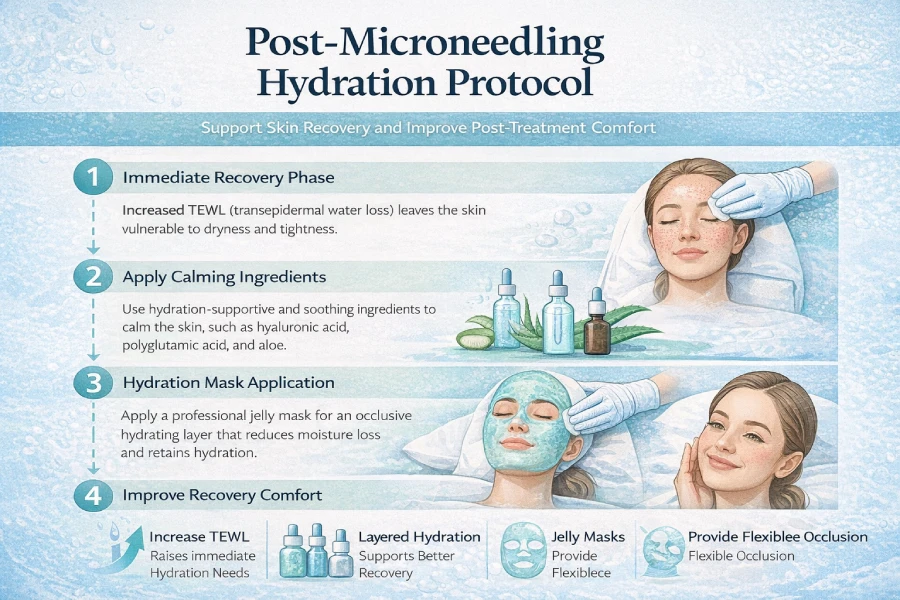
What Is the Post-Microneedling Hydration Protocol for Estheticians?
The post-microneedling hydration protocol is the structured sequence of steps applied to the skin immediately after microneedling treatment to manage the elevated transepidermal water loss (TEWL) caused by barrier disruption, support barrier resealing, and leverage the temporary permeability window to deliver humectants into skin layers that are more accessible than usual. The core sequence is: remove all treatment solution → apply fragrance-free HA serum → apply occlusive dual-humectant recovery mask (PGA + HA) → optional concurrent LED therapy → remove mask and apply minimal protective moisturizer → send client home with written aftercare guidance.
- Microneedling microchannels increase TEWL by two to four times the baseline rate. The immediate occlusive recovery mask is the primary clinical tool for sealing that loss while the channels are still open.
- The permeability window created by microchannels means HA applied immediately post-procedure reaches deeper skin layers than it would through intact skin — the recovery serum application should happen within two to three minutes of procedure completion.
- PGA in the recovery mask inhibits hyaluronidase, protecting the applied HA from enzymatic breakdown in the post-procedure inflammatory environment — a mechanism single-humectant masks do not provide.
- All products applied post-microneedling must be fragrance-free, free of active acids, retinoids, vitamin C, niacinamide above low concentrations, alcohol, and any ingredient with sensitization potential on compromised skin.
- Red LED therapy (630–660 nm) delivered during the mask dwell time is a well-established combination workflow that adds anti-inflammatory photobiomodulation without disrupting the recovery mask benefit.
- Clients should receive written aftercare guidance for the 24-to-72-hour window with specific instructions on what to apply and what to avoid, and clear expectations about recovery symptoms.
Microneedling is one of the highest-value services in a professional esthetic practice. The collagen induction mechanism it delivers — controlled microinjury triggering a wound-healing cascade that produces new collagen and elastin over a three-to-six-month remodeling period — is well-supported by clinical research and produces visible outcomes that clients book series of treatments to achieve. But the clinical intelligence that produced the microneedling service itself is not always matched by the clinical intelligence applied to what happens immediately after.
Post-microneedling skin is in a specific and demanding state. The barrier is disrupted at hundreds of points simultaneously. TEWL is elevated several times above baseline. The skin is in the early stages of an inflammatory response that is the designed mechanism of the treatment. And a temporary permeability window has been created that will close within hours — a window that represents the single best opportunity in the entire treatment cycle to deliver hydration and recovery actives into skin layers that are rarely this accessible.
What happens in the thirty minutes immediately following microneedling determines, to a significant degree, how the client recovers over the next 24 to 72 hours. A structured, evidence-based post-procedure hydration protocol is not a nice addition to the service — it is the clinical step that protects the treatment outcome and the client’s experience of it.
What the Post-Microneedling Hydration Protocol Needs to Accomplish
- Seal the elevated TEWL created by microchannels before significant water loss occurs — every minute without occlusion after procedure completion extends the dehydration window.
- Leverage the permeability window by applying HA serum within two to three minutes of procedure completion, before channel closure begins to reduce penetration advantage.
- Apply a PGA-containing occlusive mask immediately after serum application to seal the HA in, inhibit hyaluronidase, and initiate NMF stimulation during the dwell window.
- Run LED therapy concurrently during the mask dwell period when protocol permits — this is the most time-efficient way to add photobiomodulation benefit without extending the appointment.
- Send clients home with the correct minimal product load — a fragrance-free moisturizer and SPF if leaving during daylight hours. No actives for 48 to 72 hours.
- Written aftercare is not optional — verbal instructions are not reliably retained by clients who are in a post-procedure state. A takeaway card or digital message ensures compliance.
- Ingredient selection for the 48-to-72-hour post-microneedling window is the most safety-critical decision in the entire protocol. The combination of heightened permeability and active inflammation means irritants penetrate and react faster and more intensely than on intact skin.
What Microneedling Does to the Skin and Why It Creates a Specific Hydration Challenge
Understanding the post-microneedling skin environment at the biological level is the foundation of a rationally designed recovery protocol. Each element of the protocol should map directly to a specific feature of the post-procedure skin state.
The Microchannel Network
During microneedling, a motorized or manual needling device creates hundreds to thousands of microchannels through the epidermis and into the upper dermis, depending on needle depth setting. Standard esthetic microneedling depths range from 0.25 mm to 1.5 mm. Each microchannel is a temporary perforation through the skin barrier — a pathway through which the body’s internal moisture can evaporate and through which topically applied substances can penetrate far more readily than through intact skin. The channels begin to close within minutes to hours depending on depth, but during that initial window they represent the highest permeability state the skin is likely to be in between treatments.
The Post-Microneedling TEWL Profile
Immediately after microneedling, transepidermal water loss measured at the treatment site increases substantially. The barrier that normally limits passive water diffusion from skin tissue to the environment has been mechanically disrupted at every needle pass point. In the absence of an occlusive recovery step, this elevated TEWL persists for hours as channels gradually close and barrier lipid synthesis begins restoring the intercellular matrix. For clients with baseline dehydration, the starting TEWL is already above normal, and the procedure amplifies this further. The magnitude of water loss the skin experiences in the first 30 minutes post-microneedling without an occlusive recovery step is a measurable clinical variable, not a theoretical concern.
The Inflammatory Onset
Post-microneedling erythema is the visible surface expression of the controlled inflammatory response that is the designed mechanism of the procedure. The microinjury signals the body to initiate wound healing: mast cell degranulation releases histamine and prostaglandins, platelets aggregate and release growth factors including PDGF and TGF-β, and the inflammatory cascade begins producing the cytokine environment that will eventually signal fibroblasts to produce new collagen. This is not a complication — it is the treatment working. But the same inflammatory environment also activates hyaluronidase, accelerating the breakdown of any HA applied to the skin without enzymatic protection.
The Permeability Window
The microchannels and the compromised lipid matrix together create what estheticians and cosmetic scientists refer to as the post-microneedling permeability window: a period of several hours during which the skin’s penetration barrier is substantially more permeable than normal. This window is clinically valuable because it allows humectants, growth factors, peptides, and recovery actives to reach skin layers they would not normally access through topical application. It is clinically dangerous for the same reason: anything applied to the skin during this window — including synthetic fragrances, active acids, retinoids, and other sensitizers — penetrates more deeply and triggers stronger reactions than it would through intact skin. The protocol must deliberately exploit the opportunity while rigidly avoiding the risk.
The Post-Microneedling Hydration Protocol: Step-by-Step
The following protocol sequence is designed for professional estheticians performing microneedling within their scope of practice. Each step is sequenced to address a specific clinical need in the post-procedure skin state. The entire in-office recovery sequence should be completed within 25 to 35 minutes of procedure completion.
Remove Treatment Solution — Gentle Saline or Sterile Water Only
If a treatment serum or numbing agent was used during the microneedling procedure, remove it with sterile saline solution or sterile water applied with gauze or a clean applicator. Use a gentle blotting motion — never rubbing or wiping motions that create friction on the newly channeled skin. Do not apply cleanser, toner, or any active-containing product at this stage. The goal is a clean, debris-free surface prepared for the recovery serum application.
Apply Fragrance-Free Hyaluronic Acid Recovery Serum
Apply a fragrance-free, multi-molecular-weight HA serum immediately while microchannels are maximally open. The permeability window is at its widest in the minutes immediately following procedure completion — delay reduces the depth of HA penetration available. Apply with clean gloved fingertips or a sterile applicator using gentle pressing motions. Do not massage or rub. The serum should fully absorb within 60 to 90 seconds on post-procedure skin. Growth factor serums or peptide recovery serums within the esthetician’s scope of practice may be applied at this stage in advanced protocols. All serums must be fragrance-free and free of active acids, retinoids, vitamin C, and high-concentration niacinamide.
Mix and Apply Occlusive PGA + HA Recovery Jelly Mask
Mix the jelly mask to the formulation’s specified ratio immediately before application — do not pre-mix. Apply with a mask brush in smooth, even strokes beginning at the center of the face and working outward. Ensure complete facial coverage including the neck and décolleté if the procedure extended to those areas. The mask should be applied at sufficient thickness — typically 3 to 4 mm for optimal set and occlusion. A thinner application compromises both the set quality and the occlusive benefit. Avoid applying over open areas with active pinpoint bleeding — allow those sites to close before application, typically within 30 to 60 seconds of procedure completion at standard depths.
Position Client Comfortably; Begin LED Setup if Using
Once the mask is applied, position the client for the remainder of the dwell period. If LED therapy is included in the protocol, position the device now at the appropriate distance from the client’s face per the device manufacturer’s specifications — typically 15 to 25 cm. Red LED (630–660 nm) is the primary wavelength for anti-inflammatory and fibroblast stimulation during post-microneedling recovery. Near-infrared (810–850 nm) may be added per the device’s combination settings for cellular energy support. Confirm the client is comfortable and use this window for scalp or hand massage, or client recovery education and home care discussion.
Allow Full Dwell Time — Do Not Remove Early
The mask dwell window is when the primary recovery mechanisms are active: HA deepens its penetration into the accessible skin layers, PGA’s hyaluronidase inhibition protects the applied HA and the skin’s native HA, and NMF stimulation through PCA and lactic acid production begins. Removing the mask prematurely cuts this window short before these mechanisms have reached their optimal benefit. Maintain the full set time recommended by the formulation — for most professional jelly masks this is 15 to 20 minutes. The mask will be firm and peel-ready when set correctly.
Remove Mask as Single Intact Piece; Blot Residue Gently
Lift the mask edge at the chin or jawline and peel upward as a single intact piece. A well-formulated, fully set jelly mask should release cleanly without pulling or requiring rubbing. If residue remains, remove with a damp gauze pad using gentle blotting — never rubbing motions. Do not apply water pressure or use a facial steamer at this stage. The skin immediately post-mask-removal should appear notably calmer than immediately post-procedure — reduced erythema, improved immediate moisture appearance, and a translucent skin texture are expected outcomes from a correctly applied and formulated recovery mask.
Apply Minimal Protective Moisturizer — Fragrance-Free, No Actives
Apply a thin layer of a fragrance-free, non-comedogenic, non-active moisturizer to the post-mask skin. Hyaluronic acid-based or ceramide-based moisturizers in a simple formulation are appropriate. This step provides a light protective layer without adding any ingredient that could irritate the still-recovering barrier. Do not apply SPF at this stage if the client will remain in the treatment room — SPF application can be provided as a final step immediately before the client leaves if they will be in daylight. Mineral SPF (zinc oxide or titanium dioxide) is the recommended format for post-microneedling sun protection in the first 24 to 48 hours, as chemical UV filters may cause increased sensitivity on compromised skin.
Provide Written Aftercare Guidance for the 72-Hour Window
Provide the client with written aftercare instructions — a card, printed sheet, or digital message sent to their phone or email before they leave. Verbal-only instructions are not reliably retained by clients who have just undergone a procedure and may be in a mildly dissociated post-treatment state. The written guidance should cover exactly what to apply for the next 72 hours, exactly what to avoid, what to expect symptom-wise (redness timeline, sensation changes, skin texture during healing), when to contact the practice if concerned, and when to book the next session in the treatment series.
Each Step Maps to a Specific Post-Microneedling Skin Need
Steps 1–2 (first 3 minutes): The permeability window is widest in the minutes immediately post-procedure. Every minute of delay before HA serum application reduces the depth of penetration available. Steps 1 and 2 are time-critical and should be the fastest steps in the sequence.
Step 3 (within 5 minutes): The jelly mask must be applied before the surface serum absorbs and before significant TEWL has occurred. The PGA surface film begins reducing TEWL the moment the mask sets.
Steps 4–5 (the dwell window): The 15-to-20-minute dwell is when all three primary recovery mechanisms are active simultaneously: HA penetration, PGA hyaluronidase inhibition, and NMF stimulation. Running LED during this window adds photobiomodulation benefit without extending the appointment clock.
Steps 6–8 (post-mask): These steps close the in-office recovery sequence and hand off the responsibility for recovery outcomes to the client’s home care behavior. The quality of the handoff determines the quality of the next 72 hours.
How to Combine LED Therapy With the Post-Microneedling Recovery Mask
LED therapy combined with a post-microneedling recovery mask is one of the most well-established advanced workflow combinations in professional esthetic practice. When executed correctly, it delivers anti-inflammatory photobiomodulation and fibroblast-stimulating light energy simultaneously with the mask’s hydration and occlusion benefits — producing a combined effect that exceeds what either intervention achieves independently.
Wavelengths and Their Post-Microneedling Rationale
Red LED light at 630 to 660 nm is the primary wavelength used in post-microneedling LED protocols. At this wavelength, photobiomodulation is absorbed by cytochrome c oxidase in the mitochondria of skin cells, upregulating ATP production and promoting anti-inflammatory signaling. In the context of post-microneedling skin, this mechanism supports the resolution of the inflammatory response — helping moderate the erythema and accelerating the transition from the inflammatory phase into the proliferative phase of wound healing where collagen synthesis ramps up. Red LED does not suppress the collagen induction cascade — it supports the biological transition that allows it to proceed efficiently.
Near-infrared (NIR) wavelengths at 810 to 850 nm penetrate deeper into the dermis than red light, reaching fibroblasts and supporting cellular energy production at a deeper tissue level. Many professional LED devices used in post-microneedling protocols offer combination red-and-NIR modes. Practitioners should follow their specific device’s post-procedure protocols and timing recommendations, as device output, distance, and dose requirements vary significantly across manufacturers.
Timing: LED During the Mask Dwell, Not Before or After
The most efficient and clinically logical timing for LED in the post-microneedling recovery workflow is during the mask dwell time — not as a separate step before or after. Running LED during the 15-to-20-minute mask set window costs nothing in additional appointment time, keeps the client comfortable and still during both the mask set and the light therapy session, and allows both interventions to work simultaneously rather than sequentially. Practitioners who run LED after mask removal are adding appointment time without adding clinical rationale for the sequential order.
Does the Jelly Mask Interfere With LED Transmission?
Professional jelly masks are typically translucent to clear once set, and the wavelengths used in LED therapy (red and NIR) transmit through translucent occlusive layers without meaningful attenuation. Estheticians using this combination workflow consistently report that LED delivery through the set jelly mask produces the same clinical observations — warmth sensation, post-session calming, redness reduction — as LED applied to unmasked skin, consistent with adequate light transmission through the mask layer. Device-specific testing with the formulation being used is advisable to confirm transmission for any new device-mask combination.
In practices running dedicated microneedling series with consistent LED combination workflows, the operational precision of the recovery step is as important as its clinical content. Estheticians using Poly-Luronic™ Jelly Masks by Luminous Skin Lab in post-microneedling LED combination protocols specifically note the 12-to-15-minute predictable set window as a workflow advantage — it maps reliably onto a 15-minute LED session without requiring timing adjustment across consecutive appointments. The mask sets firmly enough by minute 12 to support comfortable LED device positioning without shifting, while remaining in the hydration-delivery dwell window for the full LED treatment duration.
The practitioner-reported comparison in these workflows is consistent: clients receiving the PGA + HA jelly mask plus LED combination leave appointments with measurably calmer skin than those receiving LED alone or HA serum alone — and the 24-hour check-in reports from these client cohorts show faster resolution of tightness and sensitivity than the same estheticians observed before adding the structured dual-humectant recovery step to their post-microneedling protocol.
What to Never Apply After Microneedling — In the Treatment Room or at Home
The post-microneedling permeability window is a two-sided coin: the same condition that allows beneficial ingredients to penetrate more effectively also allows harmful or sensitizing ingredients to cause reactions that would not occur on intact skin. Ingredient safety in the post-microneedling window is not a general recommendation — it is a specific clinical requirement.
Active Acids — AHAs, BHAs, PHAs
Glycolic acid, lactic acid, mandelic acid, salicylic acid, and all related alpha-, beta-, and polyhydroxy acids are contraindicated on post-microneedling skin. These acids work by disrupting corneocyte adhesion and exfoliating the skin surface — mechanisms that are profoundly inappropriate on skin that is simultaneously trying to reseal hundreds of microchannel disruption points. Applied through the permeability window, acids can penetrate into deeper tissue layers than intended, producing irritation responses that are disproportionate to their typical effect on intact skin. The prohibition on active acids typically extends for a minimum of 48 to 72 hours post-microneedling, and longer for clients with sensitive or reactive baselines.
Retinoids and Retinol
All forms of vitamin A — retinol, retinaldehyde, adapalene, tretinoin, and other retinoids — are contraindicated in the post-microneedling window. Retinoids increase cell turnover and regulate keratinocyte differentiation through receptor-mediated pathways. On post-procedure skin where the barrier is actively trying to reseal, retinoid application disrupts the organized cell maturation process that barrier recovery requires. The penetration advantage of the permeability window also means retinoids reach dermal tissue at concentrations that may produce reactive responses far beyond their typical skin-surface effects. Most protocols mandate a minimum 48-to-72-hour avoidance window, with some practitioners extending this to five to seven days for higher-depth procedures.
Vitamin C and Brightening Actives
L-ascorbic acid (vitamin C) at the concentrations used in professional serums (typically 10% to 20%) is a potent acid that, like other low-pH actives, can produce significant stinging, erythema amplification, and sensitization on post-microneedling skin. Through the permeability window, vitamin C serums penetrate into tissue that is not prepared for their acidic pH. Tranexamic acid and other brightening actives at professional concentrations should similarly be avoided in the immediate post-procedure window.
Synthetic Fragrances and Dyes
This prohibition applies to all products: recovery serums, moisturizers, masks, sunscreens, and any product that touches the face in the 48-to-72-hour post-microneedling window. Synthetic fragrance compounds are among the most common contact sensitizers in skin care, and their sensitization potential is dramatically amplified by the heightened permeability of post-procedure skin. Any product that lists “fragrance,” “parfum,” or specific fragrance compounds in its ingredients is contraindicated. This is a non-negotiable requirement, not a preference.
Physical Exfoliants and Abrasive Cleansers
Scrubs, exfoliating brushes, gua sha tools, and any product with physical exfoliating particles must be avoided for a minimum of five to seven days post-microneedling. The skin is already working to reseal hundreds of points of disruption. Additional mechanical stress on the recovering barrier interferes with this process and risks reopening partially closed microchannels, introducing irritants, or creating uneven healing.
What to Tell Clients: 72-Hour Post-Microneedling Aftercare Guidance
The in-office recovery protocol is complete when the client leaves the treatment room. What happens over the following 72 hours is entirely outside the esthetician’s direct control — which means the quality of the aftercare guidance provided at discharge determines, to a significant degree, how the client recovers.
Written Aftercare Is Non-Negotiable
Clients who have just undergone microneedling are not in their most receptive state for information retention. The combination of mild discomfort, visible skin changes, and the general post-procedure experience means that verbal instructions given at the end of the appointment are likely to be partially or substantially forgotten within hours. Written instructions — printed card, digital handout sent to the client’s email or phone before they leave, or a practice management system message — ensure that the guidance is available when the client is actually applying products at home. Every microneedling service should include documented written aftercare as a standard component, not an optional add-on.
Hour 0–24: Absolute Minimum Product Load
In the first 24 hours post-microneedling, the client’s product application should be as minimal as possible: the fragrance-free moisturizer provided or recommended at the end of the appointment, applied gently as needed for comfort, and mineral SPF if going outdoors. Nothing else. No cleansing with surfactants in the first 12 hours — if cleansing is necessary, sterile water or a very gentle micellar water without fragrance or active ingredients is acceptable. No makeup. No active serums. No exfoliation. Sleep on a clean pillowcase, avoid touching the face, and avoid saunas, steam rooms, hot yoga, and any activity that significantly elevates skin temperature in the first 24 hours.
Hour 24–72: Gradual Reintroduction
At the 24-hour mark, gentle fragrance-free cleansing can resume. The HA serum and fragrance-free moisturizer continue as the primary product load. SPF is essential for any outdoor exposure. Active ingredients — retinoids, AHAs, vitamin C, high-concentration niacinamide — should remain paused until the skin shows clear recovery: no visible sensitivity, redness resolved to normal for that client’s skin type, and texture returning to pre-procedure baseline. For most clients, this is 48 to 72 hours. For clients with dehydrated or reactive skin, 72 to 96 hours or longer is appropriate before returning to actives.
Setting Accurate Symptom Expectations
Clients who are not accurately briefed on what post-microneedling recovery looks and feels like will contact the practice with questions that could have been pre-empted with clear discharge communication. The written aftercare should describe what is expected and normal: redness resembling a moderate sunburn that will peak in the first two to four hours and resolve substantially within 12 to 24 hours; skin tightness and slight sensitivity that typically resolves within 24 to 36 hours in well-hydrated clients; possible mild skin flaking or texture change between days two and five as the outer layers of healing skin shed; and the expectation that skin will appear visibly better — more luminous and even in tone — by days five to seven as the initial recovery resolves.
Professional and Scientific References
The protocol sequence and ingredient safety guidance in this article are grounded in microneedling mechanism science and post-procedure skin barrier biology:
- Microneedling wound healing cascade: platelet-derived growth factor (PDGF), TGF-β, collagen induction timeline. Clinical, Cosmetic and Investigational Dermatology; microneedling mechanism literature; Doddaballapur S, 2009; Aust MC and colleagues.
- Post-microneedling TEWL elevation and permeability window dynamics. Dermatologic Surgery; cosmetic laser and energy device dermatology literature. Barrier disruption TEWL kinetics in minimally invasive procedures.
- Hyaluronidase activity in post-procedure inflammatory environments. Cosmetic chemistry and wound healing biology literature.
- PGA hyaluronidase inhibition and NMF stimulation. Typology, 2021–2025; MDPI Cosmetics, 2024 gamma-PGA barrier study.
- Red LED photobiomodulation in post-procedure wound healing: cytochrome c oxidase absorption, ATP upregulation, anti-inflammatory signaling. Photomedicine and Laser Surgery; published LED therapy mechanism literature.
- Post-microneedling ingredient contraindications: active acid, retinoid, and fragrance sensitization through heightened permeability. Professional esthetic continuing education; cosmetic dermatology practice guidance literature.
For estheticians building or refining their post-microneedling recovery protocol, the Poly-Luronic™ Jelly Mask by Luminous Skin Lab is the formulation our education team specifically cites in the post-microneedling recovery context. Its PGA + HA dual-humectant system delivers the three mechanisms the post-microneedling skin environment requires: PGA’s surface occlusion reduces the elevated TEWL from the microchannel network, its hyaluronidase inhibition protects the HA serum applied in step 2 from the enzymatic breakdown active in the post-procedure inflammatory environment, and its NMF stimulation initiates PCA and lactic acid production during the dwell window. Fragrance-free, clean-label, and formulated for protocol compatibility with post-procedure skin, including LED combination workflows. The 12-to-15-minute predictable set window maps directly onto a standard LED session without timing adjustment.
Explore the Poly-Luronic™ Jelly Mask LineFrequently Asked Questions: Post-Microneedling Hydration Protocol
What should I apply to a client’s skin immediately after microneedling?
Immediately after microneedling, apply a fragrance-free, clean-label recovery serum containing hyaluronic acid (HA) to take advantage of the heightened permeability window created by the microchannels. Follow within two to three minutes with an occlusive mask — ideally a professional jelly mask containing both polyglutamic acid (PGA) and HA. The PGA surface film seals the elevated TEWL, protects the applied HA from enzymatic breakdown, and initiates NMF stimulation. Avoid anything containing active acids, retinoids, vitamin C, fragrance, synthetic dyes, or alcohol in the immediate post-microneedling window.
How long should a hydration mask stay on after microneedling?
For professional post-microneedling recovery, a jelly mask should remain on the skin for a minimum of 12 to 15 minutes and ideally the full set time of the specific formulation, typically 15 to 20 minutes. This dwell time allows the humectants in the mask to deliver hydration during the permeability window while the occlusive layer reduces TEWL. Masks removed too early do not provide full NMF stimulation or hyaluronidase protection benefit. LED therapy can run concurrently during this dwell window in compatible protocols.
Can I use a jelly mask after microneedling?
Yes. A professional-grade jelly mask is one of the most effective single-step recovery tools available for post-microneedling care. The occlusive format directly addresses the elevated TEWL caused by barrier disruption, the PGA surface film protects applied hydration from evaporating and from enzymatic breakdown by hyaluronidase, and the HA in a dual-humectant formulation penetrates into temporarily accessible skin layers during the microneedling permeability window. The formulation must be fragrance-free and free of any active ingredients, acids, or sensitizers.
Why does skin get so red and dry after microneedling?
The redness after microneedling is the intentional inflammatory response that initiates the collagen induction cascade — it is a clinical feature, not a side effect. The dryness and tightness occur because the microchannels created during treatment dramatically increase transepidermal water loss, sometimes two to four times the baseline rate. Without an immediate occlusive recovery step to seal that water loss, the skin can lose significant moisture in the hours following treatment, which compounds the tight and sensitized feeling clients report.
What can’t clients use on their skin after microneedling?
Clients should avoid active ingredients for a minimum of 48 to 72 hours after microneedling. This includes all forms of retinol and retinoids, vitamin C serums, AHAs and BHAs including glycolic, lactic, and salicylic acids, niacinamide in high concentrations, synthetic fragrances, alcohol-based products, and physical exfoliants. The temporarily compromised barrier and heightened permeability mean that ingredients that would be well-tolerated on intact skin can cause significant irritation, sensitization, or inflammatory responses on post-microneedling skin.
Can I run LED therapy at the same time as the recovery mask after microneedling?
Yes, combining LED light therapy with a jelly mask during the post-microneedling recovery phase is a well-established advanced workflow. Red LED (typically 630 to 660 nm) delivered through or immediately following the jelly mask supports anti-inflammatory photobiomodulation and fibroblast stimulation during the dwell window. The occlusive jelly mask format maintains skin hydration and temperature during the LED session without interfering with light transmission. Near-infrared wavelengths (810 to 850 nm) additionally support cellular energy production in the recovering tissue.
How long does post-microneedling redness and sensitivity last?
For most clients with healthy, well-hydrated skin receiving appropriate post-treatment care, microneedling redness resolves substantially within 12 to 24 hours. Sensitivity typically follows within 24 to 36 hours. Clients with dehydrated skin or those who did not receive adequate immediate post-treatment occlusive hydration frequently report extended redness and tightness lasting 48 to 72 hours or longer. The post-treatment hydration protocol performed in-office — particularly with an occlusive PGA + HA jelly mask — is the single most impactful step for compressing this window.
What makes the Poly-Luronic™ Jelly Mask a good choice for post-microneedling recovery specifically?
Post-microneedling skin faces three simultaneous challenges: elevated TEWL from open microchannels, a heightened permeability window that amplifies both the benefit and the risk of applied ingredients, and active hyaluronidase that will degrade any applied HA without protection. The Poly-Luronic™ Jelly Mask by Luminous Skin Lab addresses all three: the PGA forms a surface film that physically reduces TEWL and inhibits hyaluronidase, while the HA delivers deep hydration into the temporarily accessible skin layers through the permeability window. The formulation is fragrance-free and clean-label, meeting the post-microneedling safety standard for compromised skin.
The Post-Microneedling Recovery Protocol Is Half the Treatment
The clinical intelligence that goes into selecting the right needle depth, device, and treatment parameters for a microneedling service should be matched by equivalent clinical intelligence in what happens immediately after. The post-procedure recovery window — particularly the 30 minutes in the treatment room following the procedure — is when the conditions created by microneedling are at their most clinically specific and the interventions available are at their most targeted.
Sealing elevated TEWL before it compounds, leveraging the permeability window to deliver HA deeper than usual, protecting that delivery from enzymatic breakdown, initiating NMF stimulation during the dwell window, and optionally adding photobiomodulation through LED therapy are all achievable within a 20-minute recovery protocol that requires no additional equipment investment beyond what most advanced esthetic practices already have. The sequence is the expertise. Understanding why each step happens in its specific order — and what biological mechanism it is responding to — is what separates a professional post-microneedling protocol from a routine product application.
The 72-hour window after the client leaves the treatment room is equally structured: a clear sequence of minimal product load progressing to gradual reintroduction, backed by written aftercare that ensures clients have the guidance they need when they actually need it. The recovery outcome is a shared responsibility between the esthetician’s in-office protocol and the client’s home care compliance — and the esthetician’s job is to make the client’s role in that outcome as clear and achievable as possible.