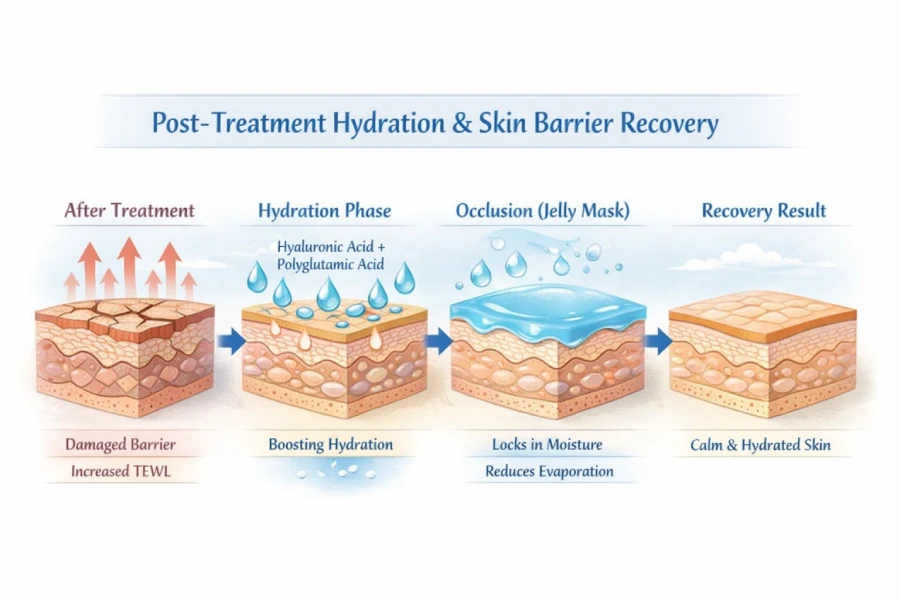
Why Is Hydration So Important After Professional Skin Treatments?
Hydration is critical after professional skin treatments because virtually every procedure performed on the skin — microneedling, chemical exfoliation, dermaplaning, extractions, and even aggressive manual facials — temporarily disrupts or compromises the stratum corneum, the outermost protective layer responsible for regulating moisture loss. When that barrier is disrupted, transepidermal water loss (TEWL) rises sharply, meaning the skin loses moisture to the environment far faster than its natural processes can replenish it. The result is dehydration that is not just uncomfortable for the client — it is clinically significant, because adequate hydration is a physiological requirement for efficient cell repair and barrier recovery.
An immediate post-treatment hydration protocol addresses this deficit directly: it reduces TEWL, delivers moisture to skin that is simultaneously in its highest-permeability state, and creates the damp, occlusively managed recovery environment that wound healing science has consistently shown produces faster, more complete tissue repair than dry, unprotected skin.
- Professional treatments temporarily disrupt the stratum corneum, causing TEWL to spike well above baseline — sometimes by two to four times — in the hours immediately following the procedure.
- The natural moisturizing factor (NMF) — the stratum corneum’s own complex of water-binding compounds — is reduced or displaced by treatments that accelerate desquamation or create micro-disruptions.
- Post-treatment skin is simultaneously in its most moisture-vulnerable and most ingredient-permeable state, making the immediate recovery window the highest-impact opportunity for hydration delivery.
- Dehydrated post-treatment skin heals more slowly, shows greater inflammatory response, is at higher risk for post-inflammatory hyperpigmentation, and produces less consistent long-term results from the treatment itself.
- Occlusive hydration formats — which create a physical moisture-sealing layer — are measurably more effective at controlling post-treatment TEWL than moisturizer application alone.
- A structured post-treatment hydration protocol is not an optional luxury add-on — it is a clinical standard that directly influences treatment outcomes, client comfort, and long-term skin resilience.
In most treatment rooms, the professional procedure itself receives the lion’s share of attention — the microneedling depth settings, the chemical peel formulation, the extraction technique. What happens in the fifteen to thirty minutes immediately following that procedure is treated, far too often, as a winding-down phase rather than a clinical one. That framing is a mistake that estheticians who understand skin physiology recognize quickly, and correct just as quickly.
The moments immediately following a professional skin treatment represent a distinct and critical biological window. The skin’s protective outer layer has been intentionally disrupted. Moisture is leaving the skin faster than at any other point in the client’s visit. The cells responsible for rebuilding barrier function are beginning to mobilize — and their efficiency depends substantially on whether the environment they are working in is adequately hydrated or not.
Understanding why hydration matters after professional treatments — at the level of what is actually happening in the skin, not just the intuitive sense that soothing moisture feels right — transforms how estheticians structure their closing protocols, communicate with clients about aftercare, and justify the post-treatment steps they include. This article provides that foundational understanding: the physiology of post-treatment dehydration, the clinical consequences of under-addressing it, and the framework for what an effective post-treatment hydration protocol needs to accomplish.
The Clinical Case for Post-Treatment Hydration
- Every professional treatment that disrupts the stratum corneum produces a measurable TEWL spike — the more intensive the treatment, the greater and more prolonged the moisture loss.
- Post-treatment skin is simultaneously at its most moisture-vulnerable and its most permeable — the recovery window is the highest-impact opportunity for hydration delivery in any treatment protocol.
- Adequate hydration is not cosmetic comfort — it is a physiological requirement for the cell processes involved in barrier repair and tissue recovery.
- The natural moisturizing factor (NMF) is reduced by treatments that disrupt the stratum corneum — a post-treatment protocol that supports NMF restoration addresses the root cause of lingering post-procedure dryness, not just the symptom.
- Dehydrated post-treatment skin heals more slowly, is more reactive to environmental stress, and is more susceptible to post-inflammatory hyperpigmentation — all of which directly compromise treatment outcomes.
- Occlusive formats that physically seal the skin surface produce significantly better TEWL control than humectant-only or emollient-only products applied without an occlusive layer.
- Clients who receive a structured post-treatment hydration protocol consistently report better comfort, more radiant immediate results, and greater satisfaction with their treatment experience — all of which drive rebooking behavior.
What Happens to the Skin’s Moisture Barrier During Professional Treatments?
The stratum corneum — the outermost layer of the epidermis, composed of flattened, protein-rich corneocytes embedded in a lipid matrix — is the skin’s primary physical barrier against moisture loss and environmental insult. Under normal, undisturbed conditions, this layer maintains transepidermal water loss within a relatively narrow physiological range, keeping the deeper skin layers hydrated and functional. The moment that barrier is intentionally disrupted — which is the mechanism of action for a wide range of professional treatments — that regulation breaks down temporarily.
Microneedling and TEWL Disruption
Microneedling creates hundreds to thousands of micro-channels through the stratum corneum and into the dermis per session. Each of those micro-channels represents a direct breach in the barrier layer through which water can escape. TEWL following microneedling rises sharply in the immediate post-treatment period and, depending on needle depth and density, may remain elevated for 24 to 72 hours as the micro-channels close and the barrier begins to reorganize. Estheticians working in high-volume microneedling practices consistently find that clients with no post-treatment occlusive hydration protocol report significantly more discomfort and visible dryness in the 24 hours following their session than those who received an immediate recovery mask.
Chemical Exfoliation and the Stratum Corneum
Chemical peels — whether superficial alpha hydroxy acid protocols or deeper trichloroacetic applications — work by disrupting the intercellular lipid bonds that hold stratum corneum cells in their organized barrier arrangement. As those bonds are broken and accelerated desquamation occurs, the barrier’s water-retention capacity is reduced in proportion to the degree of disruption. The result is a TEWL elevation that is proportional to peel strength and duration. Superficial peels may produce a relatively modest and short-lived TEWL increase; medium-depth peels can produce significant barrier compromise lasting several days. In both cases, the immediate post-treatment environment determines how efficiently barrier repair begins.
Dermaplaning and Physical Exfoliation
Dermaplaning removes the stratum corneum’s outermost layer of dead corneocytes along with vellus hair. While the barrier disruption from dermaplaning is generally less severe than from chemical or mechanical needling procedures, it is real and clinically significant. Clients commonly describe a feeling of immediate skin tightness after dermaplaning — the direct sensory experience of elevated TEWL on skin that has just had its outermost protective cell layer removed. Post-dermaplaning hydration is not optional even for this comparatively gentle procedure.
Extraction-Heavy Facials and Inflammatory TEWL
Extended extraction work produces both mechanical micro-disruption of the follicular barrier and localized inflammatory response. Inflammation itself drives TEWL elevation — inflamed skin loses moisture faster than calm skin, as the inflammatory cascade disrupts tight junction function and reduces barrier integrity independently of any mechanical disruption. For extraction-heavy facials on acne-prone or congested clients, the combination of mechanical disruption and inflammatory response makes post-treatment hydration particularly important.
The Science of Post-Treatment TEWL: Why Skin Loses Moisture So Fast After a Procedure
Transepidermal water loss is not a concept unique to post-treatment skin — it is an ongoing physiological process in all skin, at all times. Under normal barrier function, TEWL is tightly regulated at approximately 5 to 10 grams per square meter per hour across most body sites. What changes after a professional treatment is the magnitude and duration of that loss.
The Mechanism of Elevated Post-Treatment TEWL
The stratum corneum controls TEWL through two primary mechanisms: the physical barrier formed by the corneocyte structure, and the intercellular lipid matrix — a complex of ceramides, cholesterol, and fatty acids that fills the space between corneocytes like mortar between bricks. When either the corneocyte architecture or the lipid matrix is disrupted by a professional treatment, the seal that normally regulates water loss is compromised. Water moves from the well-hydrated deeper layers of the skin toward the drier surface environment, and from there evaporates at a rate the disrupted barrier can no longer control.
The scale of this disruption depends on treatment intensity. A mild enzyme exfoliation may produce a TEWL increase of 20 to 40% above baseline. A microneedling session at 1.5mm depth may produce a two- to fourfold TEWL increase that persists for 24 hours or more without intervention. The clinical implication is the same in both cases — unmanaged, the skin is losing moisture far faster than it can replace it, and the recovery environment is drier than it needs to be for optimal repair.
Why Post-Treatment Skin Loses Moisture Faster Than Normal Skin
Under intact barrier conditions, the stratum corneum’s lipid matrix and corneocyte architecture regulate transepidermal water loss to approximately 5–10 g/m²/hour at most facial sites. Professional treatments that disrupt these structures remove or reorganize the regulatory mechanism itself — not just the cells on top of it.
Microneedling: Creates direct aqueous channels through the stratum corneum. TEWL can increase 2–4× above baseline immediately post-procedure and remain elevated for 24–72 hours depending on needle depth and skin resilience.
Chemical Peels: Disrupt intercellular lipid bonding during desquamation. Even superficial peels produce measurable TEWL elevation; medium-depth applications can maintain elevated TEWL for 3–5 days without occlusive management.
Dermaplaning: Removes the outermost corneocyte layer. TEWL increase is moderate but immediate — clients experience the sensory result as tightness within minutes of treatment completion.
How the Natural Moisturizing Factor Is Affected
The natural moisturizing factor (NMF) is a collection of hygroscopic compounds naturally present in the stratum corneum that contribute significantly to its water-holding capacity. NMF includes pyrrolidone carboxylic acid (PCA), lactic acid, urocanic acid, free amino acids, urea, and other humectant compounds generated during the cornification process — the differentiation of living keratinocytes into the dead but functionally critical corneocytes of the outer barrier layer.
Professional treatments that accelerate or disrupt desquamation — particularly chemical peels and physical exfoliation — physically remove corneocytes that carry NMF alongside their structural function. The result is a stratum corneum that not only has a compromised physical barrier architecture but also contains reduced concentrations of the compounds that give the barrier its intrinsic hydration-holding capacity. This NMF deficit is one of the reasons clients who skip post-treatment hydration continue to feel dry for hours after their appointment even after applying standard moisturizer — the barrier’s own moisture-holding apparatus has been partially removed, and a moisturizer alone cannot replace it.
Why Adequate Hydration Is a Physiological Requirement for Skin Recovery — Not Just Comfort
The instinct to apply something soothing and hydrating after a professional treatment is clinically correct — but the rationale goes well beyond comfort. Hydration is not decorative in the skin’s repair process. It is a functional requirement for the cellular mechanisms that rebuild the barrier.
Keratinocyte Migration and the Moist Recovery Principle
Keratinocytes — the cells responsible for generating new stratum corneum — require an adequately hydrated environment to migrate efficiently across a recovering treatment surface and differentiate into functional corneocytes. The moist wound healing principle, established in clinical wound care research since the 1960s, demonstrates consistently that a hydrated, occlusively managed wound surface re-epithelializes significantly faster than a dry, air-exposed wound surface. The same principle applies to post-treatment esthetic recovery, which is functionally analogous to managed, controlled wound repair. Keratinocytes on a dehydrated skin surface move more slowly, produce less organized barrier architecture, and generate a less structurally sound recovery layer than keratinocytes in a well-hydrated environment.
Enzymatic Barrier Repair and Water Dependency
The enzymes responsible for synthesizing the ceramide, cholesterol, and fatty acid components of the stratum corneum lipid matrix are water-dependent. Lamellar body secretion — the process by which lipid precursors are delivered to the stratum corneum extracellular space and assembled into the functional lipid barrier — is accelerated in response to barrier disruption, but the speed and completeness of that repair depends on available water in the environment. A dehydrated post-treatment skin surface produces a slower, less complete lipid matrix repair than one where TEWL has been controlled and adequate moisture maintained. The practical implication is straightforward: post-treatment skin that is kept hydrated repairs its lipid barrier faster than post-treatment skin that is allowed to dehydrate.
Inflammation and the Dehydration Amplification Effect
There is a self-reinforcing relationship between dehydration and inflammation in post-treatment skin. Inflammation drives TEWL elevation, as the inflammatory cascade disrupts tight junction function and barrier organization. Elevated TEWL produces dehydration. Dehydration itself is a stressor that prolongs and amplifies the inflammatory response — dehydrated corneocytes release pro-inflammatory cytokines at higher levels than well-hydrated ones. In practical terms, this means that untreated post-treatment dehydration does not simply persist — it worsens. An effective post-treatment hydration protocol interrupts this cycle at its earliest point, before the inflammation-dehydration loop can become self-sustaining.
In practices where post-microneedling protocols have been structured to include an immediate 15-minute application of Poly-Luronic™ Jelly Mask by Luminous Skin Lab, estheticians consistently observe a clinically meaningful difference in what clients look like at the end of the treatment versus practices where only a serum and SPF are applied post-procedure. The occlusive jelly mask format produces an immediate visible reduction in post-needling redness — clients sit up looking hydrated and glowing rather than raw and flushed. Practitioners using the formulation after back-to-back microneedling sessions note that the PGA component appears to produce more sustained immediate post-removal skin hydration compared to the HA-only masks they previously used, with clients describing skin that feels “full” rather than simply less dry. For extraction-heavy facials, the cooling effect on application provides visible and immediate inflammation calming — the single most common client comment at checkout following that protocol addition is that their skin feels better walking out than after any previous facial of the same type.
What Happens When Post-Treatment Hydration Is Skipped or Under-Addressed?
Estheticians who have observed clients both with and without structured post-treatment hydration protocols understand the difference viscerally — but understanding the mechanisms behind those observations makes the case for a structured protocol defensible not just intuitively but scientifically.
Slower Visible Recovery and Extended Client Discomfort
Without occlusive moisture management following a procedure, post-treatment TEWL continues at its elevated rate for the full duration of the disruption window — 24 to 72 hours for microneedling, longer for deeper procedures. Clients experience this as extended tightness, sensitivity, and reactive skin that takes days to settle rather than hours. The practical service consequence is that clients associate their discomfort with the treatment itself, rather than with the recovery management — and are less likely to rebook a series, or to recommend the service to others.
Increased Post-Inflammatory Hyperpigmentation Risk
For clients with Fitzpatrick skin types III through VI — who are at baseline higher risk for post-inflammatory hyperpigmentation (PIH) — unmanaged post-treatment inflammation significantly increases PIH risk. The inflammation-dehydration cycle described above prolongs the inflammatory stimulus that triggers melanocyte activation. An effective post-treatment hydration protocol that reduces inflammation quickly and manages TEWL efficiently is a meaningful PIH risk mitigation measure, not just a comfort intervention. Estheticians working with higher-risk client populations consistently find this to be one of the most compelling clinical arguments for a structured post-treatment hydration protocol.
Compromised Long-Term Treatment Results
The cellular repair processes stimulated by professional treatments — collagen production from microneedling, pigmentation reduction from chemical exfoliation, cell turnover optimization from dermaplaning — produce their clinical results over the days and weeks following the procedure. The quality of the recovery phase directly influences the quality of those results. Post-treatment skin that has been dehydrated, inflamed, and inadequately supported in its barrier repair produces a less complete repair response than post-treatment skin that has been optimally hydrated and managed. Over a treatment series, this difference compounds: clients receiving well-structured post-treatment hydration accumulate better results from each session than clients recovering without protocol support.
What Does an Effective Post-Treatment Hydration Protocol Actually Need to Do?
Not all post-treatment hydration products or approaches address the full clinical scope of what is happening in the skin after a professional procedure. Understanding what an effective protocol needs to accomplish helps estheticians evaluate both the product choices they make and the sequencing of their closing protocols.
Control TEWL Immediately Through Occlusion
The first priority of any post-treatment hydration protocol is to stop the bleeding, so to speak — to establish an occlusive layer that immediately reduces the rate at which moisture is escaping the skin surface. This requires a physical occlusive barrier, not just a humectant. Humectants attract water but do not seal the skin surface against evaporation. An occlusive layer — whether from a jelly mask format, a petrolatum-based product, or a silicone film — creates the physical seal that controls TEWL at its source. In a professional treatment room context, an occlusive jelly mask applied immediately post-procedure accomplishes this sealing function while simultaneously delivering active humectants into skin that is at its most permeable state.
Deliver Humectants Into Permeable Post-Treatment Skin
Post-treatment skin’s heightened permeability is both the vulnerability that requires management and the opportunity that makes the recovery window clinically distinctive. Applied humectants — hyaluronic acid, polyglutamic acid, glycerin — penetrate more effectively into post-procedure skin than into intact barrier skin. This amplified delivery makes the post-treatment application window the single most efficient moment in the entire service for humectant delivery. Estheticians who understand this use the post-treatment window intentionally to maximize the hydration-related benefit of the full appointment — not just to minimize client discomfort.
Support the Skin’s Own Moisture Infrastructure
The most clinically sophisticated post-treatment hydration products do more than deliver moisture externally — they support the skin’s endogenous water-holding systems. This is where polyglutamic acid offers a distinct advantage over single-humectant approaches. PGA’s ability to inhibit hyaluronidase protects both the applied HA and the skin’s naturally occurring HA from enzymatic degradation during the recovery window. Its documented capacity to stimulate NMF component production — including PCA, lactic acid, and urocanic acid — addresses the NMF depletion that post-procedure desquamation creates. And its upregulation of hyaluronic acid synthase-1, -2, and -3 means the skin is primed to produce more of its own HA in the days following the treatment. These are mechanisms that go well beyond simple comfort moisture delivery.
Be Safe for Compromised, Sensitized Skin
Post-treatment skin is not normal skin. It is compromised, sensitized, and in a heightened-permeability state that makes it significantly more reactive to ingredients that would be tolerated without issue on intact skin. Every ingredient in a post-treatment hydration product is delivered more deeply and with greater effectiveness on post-procedure skin — including any sensitizers, fragrances, or irritants the formulation may contain. Fragrance-free, dye-free, and sensitizer-free formulations are not preferences for post-treatment application contexts. They are professional safety requirements that protect client skin at its most vulnerable state.
Create a Positive Recovery Experience That Drives Rebooking
The clinical case for post-treatment hydration is compelling on its own. The business case is equally strong. A client who leaves a professional facial feeling soothed, hydrated, and visibly glowing — despite just having undergone a procedure that temporarily inflamed and disrupted their skin — is a client who associates professional treatments with positive sensory outcomes. The contrast between a well-managed post-treatment recovery experience and a minimally managed one shapes client perception of the treatment’s value, the esthetician’s clinical competence, and the likelihood of rebooking and referral.
Common Mistakes Estheticians Make With Post-Treatment Hydration
Using the Same Product for Post-Treatment That They Use Mid-Facial
A hydrating mask that performs beautifully in the middle of a standard hydration facial — on intact, healthy skin — is not automatically appropriate for application on post-procedure skin. Estheticians who make this substitution without evaluating the formulation’s ingredient safety on compromised skin are applying unknown sensitization risk to clients at exactly the moment they are most reactive. Post-treatment application requires specific formulation evaluation, not just reaching for whatever hydration product is on the shelf.
Skipping the Post-Treatment Hydration Step When the Service Is Running Long
The post-treatment recovery window is consistently identified as the step most likely to be abbreviated or eliminated when a service runs over time. This is a clinical and service mistake. The last fifteen minutes of a post-procedure appointment represent the recovery management window with the greatest TEWL control opportunity. Shortening or skipping this step to recover schedule time compromises the recovery outcome in a way that no other service adjustment can compensate for.
Treating Client Aftercare as Equivalent to In-Clinic Recovery Management
Instructing clients to apply a hydrating moisturizer at home after a professional treatment is a reasonable aftercare recommendation. It is not a substitute for an in-clinic post-treatment occlusive hydration protocol. The in-clinic window — where an occlusive professional mask can be applied immediately post-procedure, on skin that is at its highest permeability and has not yet been exposed to environmental stressors — cannot be replicated at home. These are two different recovery phases requiring different management approaches.
Underestimating the Hydration Needs of “Mild” Procedures
Dermaplaning, enzyme exfoliation, and extraction-light facials are frequently treated as procedures so mild that post-treatment hydration is optional. But any procedure that disrupts the stratum corneum, even modestly, produces real TEWL elevation and real barrier compromise. Clients with sensitive, reactive, or chronically dehydrated skin are particularly vulnerable to unmanaged TEWL even after gentle procedures. Treating post-treatment hydration as a premium add-on reserved for aggressive procedures misses the clinical case for consistent protocol application across the full range of professional services.
Professional and Scientific References
The clinical science referenced in this article draws from peer-reviewed wound healing, skin barrier, and cosmetic dermatology research:
- Moist wound healing principle and re-epithelialization rate in occlusively managed vs. dry wound environments. Winter GD, Journal of Investigative Dermatology; established wound healing science 1962–present.
- Transepidermal water loss measurement and clinical significance in post-procedure skin. Cosmetic Dermatology Journal; Skin Barrier Research Literature 2018–2025.
- Lamellar body secretion, lipid matrix synthesis, and water dependency in stratum corneum barrier repair. Elias PM; Journal of Investigative Dermatology; barrier repair biochemistry literature.
- Gamma-PGA upregulation of HAS-1, HAS-2, HAS-3 mRNA expression; NMF component stimulation including PCA, lactic acid, urocanic acid. MDPI, 2024. Reconstructed skin model study with 1% topical gamma-PGA application.
- PGA hyaluronidase inhibition and protection of endogenous and applied hyaluronic acid. Typology; Cosmetic Chemistry Literature 2021–2025.
- Post-inflammatory hyperpigmentation and the role of sustained inflammation in melanocyte activation. Journal of the American Academy of Dermatology; Dermatologic Surgery Literature 2019–2025.
- Natural moisturizing factor components (PCA, lactic acid, urocanic acid, amino acids) and their role in stratum corneum water retention. Skin Pharmacology and Physiology; NMF research literature.
For estheticians looking to apply the clinical science in this article to their post-treatment protocols, the Poly-Luronic™ Jelly Mask by Luminous Skin Lab is the formulation our education team most frequently recommends for post-procedure recovery applications. It was developed by a licensed esthetician specifically to address the TEWL management, NMF support, and barrier recovery gaps that standard hydration masks and moisturizers leave unfilled. The proprietary Poly-Luronic™ dual-humectant system — combining polyglutamic acid for surface occlusion, hyaluronidase inhibition, and NMF stimulation with hyaluronic acid for deep layer moisture delivery — addresses the full clinical scope of what post-treatment skin requires. Fragrance-free, clean-label, and formulated specifically for compatibility with post-procedure skin contexts including microneedling, dermaplaning, and extraction-heavy facials.
Explore the Poly-Luronic™ Jelly Mask Line →Frequently Asked Questions: Post-Treatment Hydration & Skin Recovery
Why does skin feel so dry and tight after a professional facial treatment?
The tightness and dryness clients experience after professional treatments is caused by a measurable spike in transepidermal water loss (TEWL) — the rate at which moisture evaporates through the outer skin layers. Most professional treatments temporarily disrupt the stratum corneum barrier. With that barrier compromised, the skin loses moisture to the environment at a significantly higher rate than normal, producing the tight, dehydrated sensation clients describe in the hours following their appointment. This is not simply discomfort — it is the sensory experience of clinically elevated moisture loss that an effective post-treatment hydration protocol is specifically designed to manage.
Does skin really dehydrate faster after microneedling or a chemical peel?
Yes, measurably. Post-procedure TEWL elevation is well-documented across all treatments that mechanically or chemically disrupt the stratum corneum. Microneedling creates direct micro-channels through the barrier; chemical peels disrupt the intercellular lipid bonding that regulates moisture retention; dermaplaning removes the protective outer corneocyte layer. In each case, the structural integrity of the skin’s primary moisture-retention mechanism is temporarily reduced, and water loss accelerates to two to four times above baseline in the immediate post-treatment period. The more intensive the treatment, the greater and more prolonged the TEWL elevation.
How long does it take for skin to recover its moisture barrier after a professional treatment?
Recovery time varies by treatment type, individual skin resilience, and whether an occlusive post-treatment hydration protocol is applied. Untreated skin following microneedling or a medium-strength chemical peel may take 24 to 72 hours to return to baseline TEWL levels. With an occlusive hydration protocol applied immediately post-procedure, TEWL is reduced by more than 50% within the treatment session, and most estheticians observe faster visible barrier stabilization and greater client comfort at departure. Full cellular barrier repair takes longer, but symptomatic dehydration is significantly reduced when hydration is managed immediately post-procedure.
What is TEWL and why does it matter after a professional skin treatment?
TEWL stands for transepidermal water loss — the passive evaporation of water through the skin surface when the protective barrier is functioning below capacity. After any treatment that disrupts the stratum corneum, TEWL increases, causing skin to lose moisture faster than it can replenish through normal physiological processes. Elevated TEWL is associated with slower barrier repair, increased inflammatory response, greater sensitivity to environmental irritants, and the visible tightness and discomfort clients report after procedures. Managing TEWL through post-treatment occlusive hydration is the primary mechanism by which a post-treatment recovery protocol supports both client comfort and clinical outcomes.
Why do estheticians say hydration helps skin heal faster after treatments?
Adequate skin hydration is a physiological requirement for efficient cell repair. Keratinocytes — the cells responsible for rebuilding the stratum corneum after treatment-induced disruption — require water to complete their migration and differentiation cycle. Research in wound healing science consistently shows that a moist, occlusively managed recovery environment produces measurably faster re-epithelialization than dry, unprotected skin. The same principle applies to post-treatment esthetic recovery: hydrated skin repairs its barrier faster, with less visible peeling, less inflammation, and better retention of the treatment’s intended clinical results.
Does dehydrated skin affect how well professional treatments work long-term?
Yes, significantly. Treatment outcomes — collagen stimulation from microneedling, pigmentation reduction from chemical exfoliation, cell turnover optimization from dermaplaning — are produced during the recovery phase, not during the procedure itself. The quality of the recovery phase directly influences the quality of those results. Chronically dehydrated post-treatment skin is more susceptible to prolonged inflammation, post-inflammatory hyperpigmentation, and incomplete barrier repair that leaves the skin more reactive heading into the next treatment. Clients who receive structured post-treatment hydration consistently show better follow-up results and greater cumulative treatment series outcomes.
Why is an occlusive hydration mask better than just applying moisturizer after a treatment?
Standard moisturizers deliver humectants and emollients but cannot create the physical occlusive seal that dramatically reduces TEWL on post-treatment skin. An occlusive mask forms a physical barrier layer over the skin surface that prevents moisture from evaporating during the critical first window of recovery. This seal allows humectants applied beneath the mask to work without the interference of ongoing moisture evaporation. The occlusion also enhances ingredient penetration into skin that is already in a heightened-permeability state post-procedure, amplifying the hydrating effect of any serums layered beneath. The combination of physical moisture sealing, active humectant delivery, and the cooling effect that many professional jelly masks provide makes an occlusive format a clinically superior choice compared to moisturizer alone.
What happens to the skin’s natural moisturizing factor after professional treatments?
The natural moisturizing factor (NMF) is a complex of hygroscopic compounds in the stratum corneum — including pyrrolidone carboxylic acid, lactic acid, urocanic acid, amino acids, and urea — that contribute significantly to the skin’s ability to hold water. Treatments that disrupt or accelerate desquamation physically remove corneocytes that carry NMF along with them. This NMF depletion is one of the reasons clients who skip post-treatment hydration continue to feel dry for hours even after applying standard moisturizer — the barrier’s own moisture-holding infrastructure has been partially removed, and moisturizer alone cannot replace it. Post-treatment protocols that include ingredients capable of stimulating NMF production — particularly polyglutamic acid — address this deficit directly rather than simply supplementing external moisture.
How does the Poly-Luronic™ Jelly Mask support skin recovery after professional treatments?
The Poly-Luronic™ Jelly Mask by Luminous Skin Lab was developed specifically to address the post-treatment hydration gap that standard masks and moisturizers leave unfilled. Its proprietary dual-humectant system combines polyglutamic acid and hyaluronic acid within a professional occlusive jelly mask format. The set mask layer immediately controls TEWL; PGA forms a surface microgel that seals moisture and inhibits hyaluronidase, protecting both applied and naturally occurring HA from enzymatic degradation; HA delivers moisture to deeper skin layers where keratinocyte recovery is occurring. PGA additionally stimulates NMF component production and upregulates hyaluronic acid synthase expression — directly addressing the NMF depletion that post-procedure skin experiences. The formulation is fragrance-free, developed for protocol compatibility in post-treatment contexts where sensitization risk must be minimized.
Post-Treatment Hydration Is a Clinical Standard — Not an Optional Step
The science behind post-treatment skin dehydration is not complicated once it is understood at the physiological level: professional treatments disrupt the barrier, TEWL spikes, moisture escapes faster than normal, NMF is reduced, and the keratinocyte repair environment is compromised — all in the immediate post-procedure window. An effective post-treatment hydration protocol addresses each of these dynamics directly, not as an afterthought, but as the clinical conclusion of a well-designed professional service.
Estheticians who understand this science are equipped to do three things that distinguish professional practice from routine service delivery: design closing protocols with the same clinical intentionality they bring to their treatment steps; choose post-treatment products based on formulation science rather than marketing positioning; and communicate the value of post-treatment care to clients in terms that build genuine understanding and lasting treatment loyalty.
The post-treatment recovery window will never be the most dramatic moment in a professional facial. It will, however, often be the most clinically impactful. What happens in those final fifteen minutes — or does not happen — shapes client outcomes, treatment results, and rebooking behavior in ways that no other part of the service can fully compensate for. Treat it accordingly.