How Does the Skin Barrier Actually Recover After a Professional Treatment?
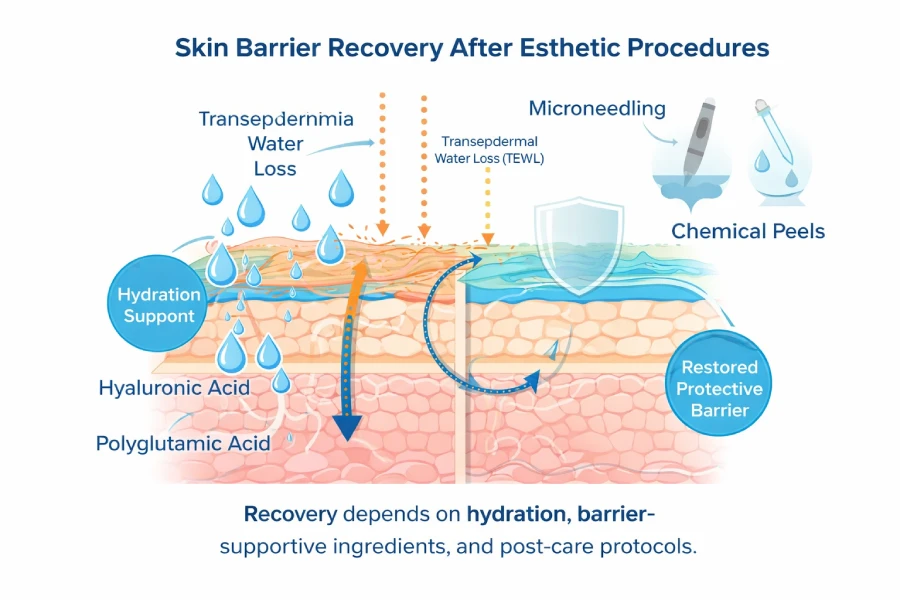
Skin barrier recovery after a professional esthetic procedure is not a single event — it is a staged biological process involving four overlapping phases: the inflammatory response that initiates repair signaling, lamellar body secretion that delivers the lipid precursors needed to rebuild the intercellular matrix, keratinocyte migration and differentiation to regenerate organized stratum corneum layers, and NMF restoration to return the barrier’s intrinsic water-holding capacity. Each phase depends on the phase before it and on the presence of an adequately hydrated, low-TEWL recovery environment to proceed efficiently.
Estheticians who understand these repair phases — what triggers them, what supports them, and what slows them down — are equipped to design post-treatment protocols that work with the skin’s own repair biology rather than simply applying product and hoping for the best.
- The stratum corneum is rebuilt from the inside out: granular layer keratinocytes differentiate into corneocytes, secreting lipid precursors via lamellar bodies as they do so — a process that requires adequate moisture at every step.
- Ceramides make up approximately 50% of the stratum corneum lipid matrix and are the primary determinant of barrier seal quality — ceramide synthesis and secretion must accelerate after barrier disruption to restore functional TEWL regulation.
- The ceramide–cholesterol–fatty acid molar ratio in the lipid matrix (approximately 1:1:1) is a precise structural requirement — post-treatment protocols that deliver all three lipid classes support more complete barrier reconstruction than ceramide-only approaches.
- NMF restoration — recovering the pyrrolidone carboxylic acid, lactic acid, urocanic acid, and amino acid content of the stratum corneum — is the final phase of barrier recovery and determines how well the rebuilt barrier holds water long-term.
- Barrier fatigue from insufficiently spaced treatment series is a real clinical risk: repeated disruption before full recovery compounds barrier deficit over time.
- Post-treatment occlusive hydration supports every phase of barrier recovery simultaneously — reducing TEWL during repair, enhancing lipid secretion, and delivering barrier-support ingredients into skin at its most permeable.
Most estheticians understand, at a working level, that professional treatments disrupt the skin’s protective barrier and that something called “barrier recovery” happens afterward. Far fewer understand the mechanics of that recovery with enough precision to design protocols that genuinely support it. That gap matters, because barrier recovery is not passive — it is an active, orchestrated biological process that can be meaningfully accelerated by the right interventions or meaningfully slowed by the wrong ones.
The post-treatment recovery window is where treatment outcomes are consolidated or lost. A procedure that stimulates collagen production, reduces pigmentation, or refines texture is only as effective as the recovery phase that follows it. If that recovery phase is compromised by dehydration, barrier-inappropriate product selection, or inadequate protocol support, the treatment’s cellular work is done under suboptimal conditions — and the results the client sees at follow-up reflect those conditions.
This article gives estheticians a working knowledge of how skin barrier recovery actually proceeds after a professional procedure — the specific repair phases, the key molecules involved, what accelerates and what impedes the process, and how a post-treatment protocol designed around this science differs from one designed around intuition or convention.
What Estheticians Need to Know About Barrier Recovery Science
- Barrier recovery happens in four overlapping phases: inflammatory initiation, lamellar body lipid secretion, keratinocyte migration and differentiation, and NMF restoration — each requiring an adequately hydrated environment to proceed efficiently.
- Ceramides are the primary structural lipid in the stratum corneum matrix — their synthesis and secretion must accelerate after any treatment that disrupts the intercellular lipid architecture.
- The precise ceramide–cholesterol–fatty acid ratio in the lipid matrix is a structural requirement, not a preference — all three lipid classes are needed for complete barrier reconstruction.
- Lamellar body secretion is the delivery mechanism that gets lipid precursors into the extracellular space for assembly — and it is water-dependent. Post-treatment dehydration slows it directly.
- NMF content is partially removed during desquamation-accelerating treatments — a post-treatment protocol that stimulates NMF restoration addresses the root cause of lingering dryness, not just its surface symptom.
- Repeated barrier disruption without adequate recovery spacing causes cumulative barrier compromise — a pattern estheticians can prevent through appropriate treatment spacing and structured recovery protocols.
- The immediate post-treatment window — when skin is most permeable — is the highest-efficiency moment to deliver barrier-support ingredients and establish the hydrated recovery environment the repair process depends on.
What Is the Skin Barrier and Why Does It Break Down After Professional Treatments?
The term “skin barrier” is used so frequently in esthetic contexts that its actual anatomy can become abstract. Understanding barrier recovery requires understanding what the barrier is, structurally, in enough detail to know what a professional treatment is actually disrupting.
The Stratum Corneum: Architecture of the Barrier
The stratum corneum is the outermost layer of the epidermis — a stack of 15 to 20 flattened, protein-rich cells called corneocytes, arranged in overlapping layers and embedded in a continuous lipid matrix. This structure is often described using a “brick and mortar” analogy: the corneocytes are the bricks, providing physical bulk and structural integrity, while the intercellular lipid matrix is the mortar, sealing the spaces between them and regulating what passes through. The lipid matrix is composed primarily of ceramides (approximately 50%), cholesterol (approximately 25%), and free fatty acids (approximately 15%), arranged in highly organized bilayer structures called lamellar sheets.
The barrier function of the stratum corneum operates through two complementary mechanisms. The corneocyte layer provides a physical obstacle to the passage of water, pathogens, and environmental irritants. The lipid matrix provides the continuous seal that prevents water from diffusing through the intercorneocyte spaces — which is where most transepidermal water loss occurs when the barrier is compromised. Disruption of either component elevates TEWL and reduces barrier function.
How Professional Treatments Disrupt This Architecture
Different professional treatments disrupt the stratum corneum architecture through different mechanisms, but the endpoint is similar: a compromise in either the physical corneocyte layer, the lipid matrix integrity, or both.
- Microneedling creates micro-channels that physically breach both the corneocyte layers and the lipid matrix at the needle insertion points. The barrier disruption is highly localized but extensive in aggregate across a full treatment area.
- Chemical exfoliation disrupts the intercellular cohesion that holds corneocytes in their organized arrangement, accelerating desquamation and temporarily removing the outermost barrier layers along with the NMF they contain.
- Dermaplaning mechanically removes the outermost corneocyte layer — the most differentiated, most barrier-complete layer — leaving the newer, less mature corneocytes below exposed as the temporary functional surface.
- Aggressive manual extraction creates localized physical disruption and triggers inflammatory responses that independently compromise tight junction function and lipid matrix organization in the surrounding tissue.
The Four Phases of Skin Barrier Recovery After a Professional Procedure
Barrier recovery after treatment-induced disruption proceeds through four overlapping biological phases. These phases are not rigidly sequential — they begin at different timepoints and overlap considerably — but understanding each one separately gives estheticians a framework for thinking about what the skin needs at each stage of recovery.
Inflammatory Initiation & Barrier Disruption Signal
Within seconds to minutes of barrier disruption, the skin initiates a complex inflammatory signaling cascade. Damaged keratinocytes release pro-inflammatory cytokines, including interleukin-1 (IL-1), tumor necrosis factor-alpha (TNF-α), and IL-6. These signals serve two functions: they recruit immune cells to the disruption site, and they initiate the repair cascade that will guide subsequent recovery phases. This inflammatory phase is necessary — it is what “tells” the deeper layers of the epidermis that barrier repair is required. The esthetician’s role in this phase is to prevent the inflammatory response from becoming prolonged or self-amplifying through dehydration, by applying an occlusive hydration layer immediately post-procedure.
Lamellar Body Secretion & Lipid Delivery
In response to the barrier disruption signal from Phase 1, granular layer keratinocytes begin accelerated secretion of lamellar bodies — membrane-bound organelles containing lipid precursors (glucoceramides, phospholipids, cholesterol esters, and hydrolytic enzymes) that are exocytosed into the extracellular space and processed into the functional lipid bilayers of the stratum corneum matrix. This secretion process is the mechanism by which the lipid “mortar” of the barrier is rebuilt. It is water-dependent: adequate hydration of the granular layer is required for efficient lamellar body secretion. Post-treatment dehydration directly slows this phase and produces a less organized, less complete lipid matrix repair.
Keratinocyte Migration, Proliferation & Differentiation
Basal keratinocytes begin to proliferate and migrate toward the disrupted surface, differentiating through the spinous and granular layers into corneocytes as they travel upward. This process regenerates the organized corneocyte architecture of the stratum corneum. The speed of keratinocyte migration is directly influenced by the moisture content of the environment: keratinocytes migrate more rapidly across a hydrated surface than a dry one. The quality of the rebuilt stratum corneum — the organization of corneocyte layers, the completeness of cornified envelope formation, and the integration of the new corneocytes with the lipid matrix being assembled in Phase 2 — depends on how well-supported this phase is by the recovery environment.
NMF Restoration & Long-Term Barrier Normalization
As the rebuilt stratum corneum organizes and matures, the natural moisturizing factor content of the new corneocytes is re-established. NMF — generated during the terminal differentiation of keratinocytes through filaggrin proteolysis — includes pyrrolidone carboxylic acid (PCA), lactic acid, urocanic acid, free amino acids, and urea. These hygroscopic compounds are responsible for the stratum corneum’s intrinsic water-holding capacity. NMF restoration is the final determinant of how well the rebuilt barrier holds water and how resilient the skin is to dehydration going into the next treatment. Post-treatment protocols that include ingredients capable of stimulating NMF component production — particularly polyglutamic acid — support this phase directly.
The Ceramide–Cholesterol–Fatty Acid Ratio: Why All Three Lipids Are Required
The stratum corneum intercellular lipid matrix is not simply a mixture of lipids — it has a precise required composition. Healthy barrier function requires an approximately equimolar ratio of ceramides, cholesterol, and free fatty acids (roughly 1:1:1 by molar ratio). The three lipid classes work in structurally complementary roles:
Ceramides form the backbone of the lamellar bilayer structure, providing the foundational hydrophobic seal. Cholesterol regulates membrane fluidity — without adequate cholesterol, the lipid bilayers become either too rigid or too fluid to form an effective barrier. Free fatty acids maintain the acidic pH of the stratum corneum surface (pH 4.5–5.5), which is required for the enzymatic processing of lipid precursors into their functional forms and for antimicrobial barrier function.
Post-treatment protocols that deliver ceramides alone — without adequate cholesterol and fatty acid co-delivery — support only part of the structural requirement. The most clinically complete post-treatment barrier repair approaches address all three lipid classes in combination.
Why Ceramide Synthesis Is the Central Bottleneck in Post-Treatment Barrier Repair
Of the three lipid classes in the stratum corneum matrix, ceramides are both the most abundant and the most clinically significant for barrier function — which makes ceramide synthesis the primary rate-limiting step in post-treatment barrier repair. Understanding how ceramides are produced, secreted, and assembled helps estheticians evaluate which post-treatment products genuinely support barrier repair versus those that simply claim to.
How Ceramides Are Made in the Skin
Skin ceramides are produced through two pathways. The de novo synthesis pathway assembles ceramides from simpler precursors within the keratinocyte endoplasmic reticulum, beginning with the condensation of serine and palmitoyl-CoA to form sphinganine, which is subsequently acylated and desaturated to produce the ceramide backbone. The sphingomyelinase pathway converts sphingomyelin — a membrane phospholipid abundant in lamellar bodies — into ceramide via enzymatic hydrolysis in the extracellular space of the stratum corneum. Both pathways contribute to the ceramide pool available for lamellar body loading and barrier matrix assembly.
After a professional treatment that disrupts the lipid matrix, ceramide synthesis must accelerate through both pathways to meet the repair demand. This acceleration is driven by the same inflammatory signaling that initiates Phase 1 of barrier recovery — specifically, IL-1α and TNF-α upregulate ceramide synthase expression and sphingomyelinase activity. The efficiency of this response depends on substrate availability, enzymatic function, and the hydration state of the repair environment.
Why Topical Ceramides Support Post-Treatment Recovery
Given that the skin must synthesize significant quantities of new ceramide to rebuild a disrupted lipid matrix, topically applied ceramides provide supplemental substrate that reduces the metabolic demand on the de novo synthesis pathway. This supplemental delivery is particularly valuable in clients with baseline ceramide deficiency — a common finding in aged skin, dry skin, atopic skin, and skin with a history of over-treatment or aggressive exfoliation. In these clients, the de novo synthesis capacity may be insufficient to meet the elevated post-treatment demand, making topical ceramide delivery a clinically meaningful intervention rather than simply a theoretical support.
Estheticians working with clients who have visibly reactive, tight, or rapidly-aging skin consistently find that post-treatment products incorporating ceramides alongside humectants produce better barrier recovery outcomes than humectant-only formulations, particularly when the same clients are scheduled for regular treatment series.
In treatment rooms where the post-procedure protocol has been structured around barrier recovery science rather than simple moisture replenishment, estheticians find that applying Poly-Luronic™ Jelly Mask by Luminous Skin Lab immediately following procedures creates a distinctly different skin condition at the end of the appointment compared to serum-and-SPF-only closeouts. The jelly mask’s occlusive set layer establishes the low-TEWL environment that supports lamellar body secretion during the critical Phase 2 window — and the PGA component’s documented stimulation of NMF components (pyrrolidone carboxylic acid, lactic acid, urocanic acid) directly supports the Phase 4 NMF restoration process that determines how well the rebuilt barrier holds water in the days following the appointment. Practitioners who have switched from using the mask only mid-facial to incorporating it as a consistent post-procedure closing step report a meaningful reduction in client-reported post-treatment dryness at 24-hour follow-up check-ins — a practical outcome that correlates directly with the Phase 2–4 recovery support the formulation provides.
Barrier Fatigue: What Happens When Treatments Are Spaced Before Full Recovery
One of the most clinically significant and frequently under-discussed risks in professional esthetic practice is the cumulative barrier compromise that results from scheduling treatment series without allowing adequate recovery time between sessions. This pattern — sometimes called barrier fatigue — is particularly common in practices where client demand for visible results creates pressure to shorten intervals between treatments.
How Cumulative Barrier Compromise Develops
When a second professional treatment is performed on skin that has not yet completed Phase 3 or Phase 4 of barrier recovery from the previous session, the new disruption is layered onto an already-compromised barrier architecture. The lipid matrix has not yet fully re-assembled; the NMF content of the new corneocytes has not yet normalized; the ceramide content may still be below baseline. Each successive treatment on a not-yet-recovered barrier produces a progressively greater functional deficit than it would on fully recovered skin. Over a series of closely spaced treatments, this compounding produces a clinical presentation that estheticians recognize as increasing reactivity, sensitivity, redness, and treatment intolerance — the hallmarks of a skin that is no longer recovering adequately between sessions.
Recognizing Barrier Fatigue in Clinical Practice
Estheticians working in regular treatment series with clients commonly observe barrier fatigue warning signs that, once understood, are unmistakable: a client who tolerated their first three microneedling sessions well begins reporting prolonged post-treatment sensitivity. A client receiving regular chemical exfoliation starts showing persistent baseline redness. A client on a monthly dermaplaning schedule develops skin that is chronically reactive even between appointments. These are not signs of a treatment going wrong — they are signs that the recovery phase between treatments is insufficient to allow complete barrier repair, and that the cumulative barrier deficit is accumulating toward clinical dysfunction.
How Post-Treatment Hydration Protocols Reduce Barrier Fatigue Risk
Consistent post-treatment occlusive hydration reduces barrier fatigue risk by accelerating recovery phase completion after each session. When Phase 2 lamellar body secretion is supported by a well-hydrated recovery environment, the lipid matrix repairs more completely before the next appointment. When Phase 4 NMF restoration is supported by ingredients that stimulate NMF component production, the rebuilt stratum corneum’s water-holding capacity normalizes more quickly. The result is skin that arrives at its next treatment appointment in better barrier health than it would without a structured recovery protocol — more resilient, more tolerant, and capable of generating a better treatment response.
How Estheticians Can Actively Support Each Phase of Barrier Recovery
Translating the four-phase recovery model into practical protocol decisions is the applied skill that distinguishes estheticians who understand skin barrier science from those who are simply following convention. Each recovery phase has specific support needs that the right product choices and protocol sequencing can address directly.
Immediate Post-Procedure: Control TEWL Before Anything Else
The single most impactful thing an esthetician can do in the first minutes after a professional procedure is apply an occlusive layer to the skin before anything else. Before the serum, before the SPF, before the treatment discussion — an occlusive format applied immediately post-procedure captures the Phase 1 to Phase 2 transition at its most critical point. The occlusive layer reduces TEWL and establishes the low-evaporation environment that supports Phase 2 lamellar body secretion. Every minute of unmanaged post-treatment TEWL before occlusion is applied represents lipid matrix repair time lost to preventable moisture loss.
Under-Mask Serum Layering
The heightened permeability of post-treatment skin makes the under-mask serum layer the highest-efficiency ingredient delivery moment in the entire service. Hyaluronic acid serums applied immediately post-procedure and then sealed beneath an occlusive jelly mask penetrate more deeply and are retained more effectively than HA applied under any other conditions during the appointment. For clients receiving microneedling, barrier-repair serums containing ceramide precursors, growth factors, or peptide complexes applied in this window are delivered into skin primed by the procedure itself to receive and respond to them.
Post-Treatment Aftercare That Supports Phases 3 and 4
Client aftercare recommendations for the 24 to 72 hours following a professional procedure should be structured around Phase 3 and Phase 4 support: maintaining the moist recovery environment with gentle barrier-supportive moisturizers (ceramide-rich formulations are particularly appropriate), avoiding any product with sensitization potential, applying broad-spectrum SPF to protect the newly rebuilding stratum corneum from UV-induced barrier compromise, and avoiding any exfoliating ingredient until Phase 3 completion. Clients who understand why these recommendations matter — rather than simply being told what to do — consistently show better aftercare compliance and better outcomes at follow-up.
Treatment Spacing Based on Recovery Phase Completion
The single most effective structural change estheticians can make to prevent barrier fatigue across a treatment series is to base treatment spacing on client recovery status rather than calendar convention. For most clients receiving microneedling at standard depths, four weeks between sessions allows adequate time for all four recovery phases to complete. For clients with compromised baseline barrier function — older clients, clients with atopic conditions, clients with a history of over-treatment — spacing may need to be extended to six weeks or more. Using a simple TEWL indicator product, observing skin texture and reactivity at the next appointment, or tracking client-reported recovery timeline are practical tools for calibrating spacing decisions to individual recovery physiology.
Common Mistakes That Compromise Post-Treatment Barrier Recovery
Applying Active Ingredients Immediately Post-Procedure
Retinoids, alpha hydroxy acids, vitamin C in low-pH formulations, and other high-activity ingredients that are tolerated on intact skin can produce significant irritation on post-procedure skin in its heightened-permeability state. Estheticians who apply these ingredients in their post-treatment closing step — or who do not provide explicit aftercare guidance against their use — risk amplifying the inflammatory phase of recovery and extending rather than shortening the barrier repair timeline.
Recommending Physical Exfoliation Too Soon After Procedures
Advising clients that mild physical exfoliation is appropriate “once redness has resolved” is a common but imprecise guideline. Resolution of visible redness indicates that Phase 1 inflammation has subsided — not that Phase 3 keratinocyte differentiation and Phase 4 NMF restoration are complete. Physical exfoliation during Phase 3 disrupts the keratinocyte migration that is actively rebuilding the corneocyte architecture, setting back the repair timeline in ways that are not visible at the time of exfoliation but manifest as slower overall recovery and greater long-term sensitivity.
Using Alkaline or High-pH Products During Recovery
The stratum corneum surface requires an acidic pH (4.5–5.5) for the enzymatic processing of lamellar body lipid precursors into their functional barrier forms. Products with alkaline pH — many standard bar cleansers fall into this category — neutralize the acid mantle and temporarily impair these enzymatic processes. Recommending pH-appropriate cleansers during the post-treatment recovery period is a clinically meaningful protocol recommendation that many estheticians overlook.
Skipping Barrier Assessment Before the Next Treatment
Performing a visual and tactile barrier assessment at the start of each appointment in a treatment series — looking for signs of incomplete recovery such as persistent redness, unusual sensitivity on product application, or visible surface dryness — and adjusting the treatment plan accordingly is standard-of-practice in informed professional esthetic work. Treating every appointment identically regardless of recovery status is a barrier fatigue risk that a simple pre-treatment assessment can eliminate.
Professional and Scientific References
The barrier recovery science referenced in this article draws from established dermatological research and peer-reviewed cosmetic chemistry literature:
- Elias PM, Feingold KR — Stratum corneum lipid matrix assembly, lamellar body secretion, and barrier repair. Journal of Investigative Dermatology; established barrier biology literature.
- Ceramide-cholesterol-fatty acid molar ratio requirements for functional stratum corneum lipid bilayer assembly. Journal of Lipid Research; Skin Pharmacology and Physiology 2015–2024.
- Water dependency of lamellar body secretion and lipid processing enzymes in the stratum corneum. Elias PM; Skin Pharmacology and Applied Skin Physiology.
- Gamma-PGA upregulation of hyaluronic acid synthase HAS-1, HAS-2, HAS-3 and stimulation of NMF components including PCA, lactic acid, urocanic acid. MDPI, 2024. Reconstructed human skin model study.
- Natural moisturizing factor components: filaggrin proteolysis, PCA, lactic acid, urocanic acid, and their role in stratum corneum water retention. Skin Pharmacology and Physiology; Allergy Journal NMF research literature.
- Cumulative barrier disruption and barrier fatigue in professional treatment series. Dermatologic Surgery; Cosmetic Dermatology 2018–2025.
- Moist wound healing: re-epithelialization rate in occlusively managed vs. dry wound environments. Winter GD; Journal of Investigative Dermatology 1962–present; wound healing review literature.
For estheticians building post-treatment protocols around the barrier recovery science covered in this article, the Poly-Luronic™ Jelly Mask by Luminous Skin Lab is the formulation our education team most frequently references for post-procedure barrier support applications. Its occlusive set format addresses Phase 1–2 recovery needs directly, creating the low-TEWL environment that supports lamellar body secretion during the critical early recovery window. The PGA + HA dual-humectant system delivers moisture to both surface and deeper skin layers while PGA’s NMF-stimulating properties — documented upregulation of PCA, lactic acid, and urocanic acid production, and upregulation of hyaluronic acid synthase expression — directly support Phase 4 NMF restoration. Fragrance-free, sensitizer-free, and formulated for compatibility with post-procedure skin across the full range of professional treatment types.
Explore the Poly-Luronic™ Jelly Mask Line →Frequently Asked Questions: Skin Barrier Recovery After Professional Treatments
How long does the skin barrier take to recover after a professional facial treatment?
Skin barrier recovery time varies by treatment intensity, client baseline barrier health, and whether a structured post-treatment protocol is applied. After dermaplaning, functional surface barrier stabilization typically occurs within 12 to 24 hours. After microneedling at 1.0–1.5mm depth, full functional recovery takes 24 to 72 hours for most clients. After medium-depth chemical peels, the complete barrier repair process may extend 4 to 7 days. Applying an occlusive post-treatment hydration protocol immediately accelerates the repair timeline across all treatment types by reducing TEWL, supporting lamellar body lipid secretion, and delivering barrier-support ingredients into maximally permeable post-procedure skin.
What actually happens to the skin barrier during microneedling or a chemical peel?
Both microneedling and chemical peels disrupt the stratum corneum — the outermost skin layer that serves as the primary barrier against moisture loss and environmental stress. Microneedling creates micro-channels that physically breach the barrier across hundreds to thousands of insertion points per session. Chemical peels disrupt the intercellular lipid matrix bonding during accelerated desquamation. In both cases the result is a compromised barrier with elevated TEWL, reduced NMF content, and a disrupted ceramide-cholesterol-fatty acid ratio in the lipid matrix. The body immediately initiates repair through a four-phase recovery process, but the speed and completeness of that repair depends significantly on the recovery environment.
Why do ceramides matter so much for skin barrier repair after professional treatments?
Ceramides are the dominant lipid component of the stratum corneum intercellular matrix — accounting for approximately 50% of the lipid content in a healthy barrier. They form the structural backbone of the lamellar bilayer architecture that seals the barrier against transepidermal water loss. After professional treatments that disrupt the lipid matrix, ceramide synthesis and secretion from lamellar bodies must accelerate to rebuild the seal. Topically applied ceramides supplement this repair process, providing additional substrate that reduces the metabolic demand on the skin’s own synthesis pathways — particularly valuable in clients with baseline ceramide deficiency due to age, dry skin conditions, or aggressive treatment history.
What is lamellar body secretion and why does it matter for post-treatment recovery?
Lamellar bodies are organelles within granular layer keratinocytes that contain the lipid precursors — ceramides, cholesterol, and fatty acids — used to build the stratum corneum intercellular lipid matrix. When barrier disruption is detected, lamellar body secretion accelerates to deliver these lipids to the extracellular space where they are assembled into the bilayer structure that seals the barrier. This secretion process is water-dependent: an adequately hydrated post-treatment environment supports faster, more complete lamellar body secretion. Post-treatment dehydration directly slows this process and produces a less complete lipid matrix repair — which is one of the core physiological reasons that post-treatment occlusive hydration directly improves barrier recovery speed.
Can skin barrier function get worse over a series of professional treatments?
Yes, if treatments are scheduled before the barrier has fully recovered from the previous session. Repeated barrier disruption without adequate recovery time produces cumulative barrier compromise — a progressive reduction in lipid matrix integrity, ceramide content, and barrier function that makes skin increasingly reactive, sensitized, and prone to dehydration over time. This pattern is sometimes called barrier fatigue in clinical practice. Well-structured recovery protocols between treatments, including consistent post-treatment occlusive hydration and appropriate treatment spacing, prevent cumulative compromise and allow each session to stimulate its intended repair response rather than stacking unresolved barrier deficit.
What ingredients actually help the skin barrier recover after a professional procedure?
The most clinically relevant barrier recovery ingredients for post-treatment use are ceramides (to supplement lipid matrix repair), hyaluronic acid (to deliver moisture to layers where keratinocyte repair is occurring), polyglutamic acid (to seal the surface, inhibit hyaluronidase, stimulate NMF component production, and upregulate hyaluronic acid synthase expression), cholesterol and fatty acids (to complete the ceramide-cholesterol-fatty acid ratio required for functional lipid matrix assembly), and occlusives (to physically reduce TEWL while repair is in progress). Ingredients to avoid on post-treatment skin include synthetic fragrances, alcohol-based formulations, active exfoliants, and any known sensitizers.
How does an occlusive jelly mask support barrier recovery differently from a regular moisturizer?
A standard moisturizer delivers humectants and emollients but does not create a sealed occlusive environment over the skin surface. A professional jelly mask, when fully set, forms a physical barrier layer that dramatically reduces transepidermal water loss for the duration of its application. This occlusive seal achieves two clinically important things moisturizer cannot: it physically reduces moisture evaporation while barrier repair is underway — directly supporting the water-dependent lamellar body secretion process in Phase 2 — and it enhances the penetration of barrier-support ingredients applied beneath the mask into skin that is already in a heightened-permeability state. The result is a more efficient ingredient delivery and a more protected recovery environment during the critical first recovery window.
What does a compromised skin barrier look and feel like after a professional treatment?
A compromised post-treatment barrier typically presents as tightness and reduced skin suppleness (indicating elevated TEWL and moisture loss), redness and warmth (indicating active inflammatory phase response), sensitivity to touch, temperature change, and product application, visible surface dryness or early flaking in the hours following treatment, and in some cases stinging or burning when any product is applied. Estheticians who work in regular post-treatment protocol contexts learn to read these signs as indicators of barrier repair needs and use them to calibrate which recovery products and steps to prioritize for each individual client and procedure type.
How does the Poly-Luronic™ Jelly Mask support skin barrier recovery after professional procedures?
The Poly-Luronic™ Jelly Mask was developed with post-treatment barrier recovery specifically in mind. Its occlusive set format creates a physical seal that reduces TEWL during the application window, directly supporting the water-dependent lamellar body secretion that drives Phase 2 lipid matrix repair. The dual-humectant PGA + HA system delivers moisture to both the surface via PGA’s microgel seal and deeper skin layers via HA penetration, while PGA’s hyaluronidase inhibition preserves both applied and endogenous HA during recovery. PGA’s documented upregulation of hyaluronic acid synthase and stimulation of NMF components including pyrrolidone carboxylic acid, lactic acid, and urocanic acid directly supports Phase 4 NMF restoration. The formulation is fragrance-free and developed for compatibility with compromised, sensitized post-procedure skin.
Barrier Recovery Is the Science Behind Every Successful Treatment Series
The skin’s barrier recovery process is not a passive waiting period between professional treatments — it is an active, orchestrated biological sequence that the right post-treatment protocol can meaningfully accelerate or meaningfully impede. Estheticians who understand the four recovery phases, the ceramide synthesis cycle, lamellar body secretion, and NMF restoration are equipped to make post-treatment protocol decisions that are grounded in what is actually happening in the skin rather than what feels intuitively correct.
The practical consequence of this understanding is a post-treatment protocol that supports the skin’s repair biology at each phase: immediate occlusive hydration to establish the low-TEWL environment that Phase 2 requires, barrier-appropriate product selection that delivers ceramides and humectants into permeable post-procedure skin, and aftercare recommendations that protect the rebuilding stratum corneum through Phase 3 and Phase 4 completion.
And at the series level, the consequence is treatment spacing and recovery monitoring that prevents barrier fatigue from compounding across sessions — so that each treatment in a series is performed on a skin that has fully recovered from the last, and the cumulative outcome of the series is skin that is measurably more resilient than when it started. That is the clinical standard this science supports, and the standard every esthetician working with professional treatment protocols can and should be working toward.