Definition
This article explains how clients can protect their skin barrier between facials within professional skincare protocols focused on hydration, barrier repair, and post-treatment recovery.
For estheticians, this topic matters because what clients do between appointments often determines how well the skin recovers, how comfortable it feels, and how effectively professional treatment plans progress over time.
Quick Answer
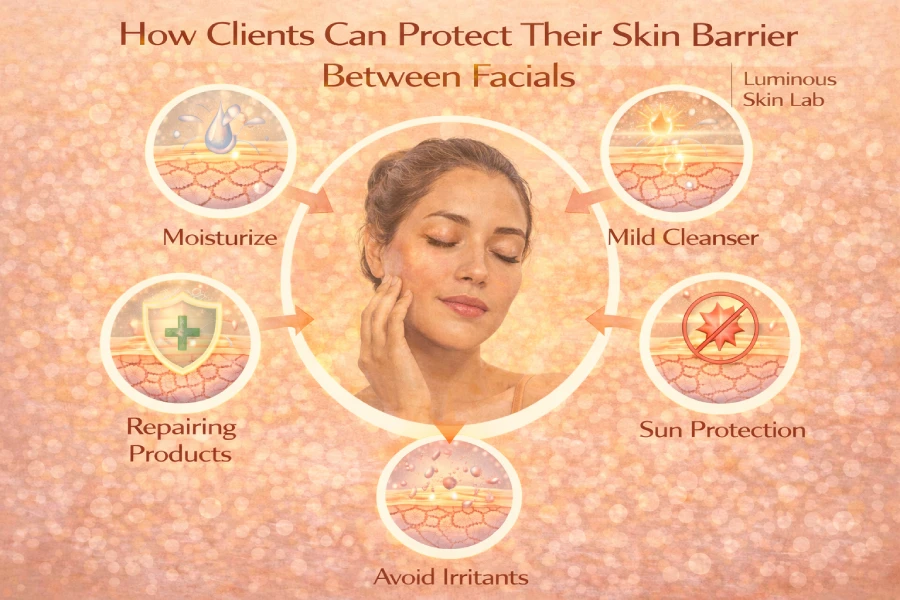
Clients can protect their skin barrier between facials by following a consistent hydration routine, limiting unnecessary irritation, wearing daily sun protection, and choosing products that support recovery instead of overstimulating the skin. Estheticians can improve long-term outcomes by helping clients understand that home care between treatments is part of the facial plan, not separate from it.
Key Takeaways
- Between-facial home care strongly affects skin barrier stability and treatment outcomes.
- Hydration routines help support comfort, moisture balance, and better recovery between appointments.
- Sun protection is essential because UV stress can worsen barrier weakness and visible sensitivity.
- Product selection matters because overuse of harsh actives can undo professional recovery progress.
- Hydration ampoules and Poly-Luronic™ HydroGlo Jelly Mask can support esthetic recovery protocols when the skin needs extra barrier support.
A facial does not end when the client leaves the treatment room. What happens between appointments has a major influence on how the skin recovers, how stable the barrier remains, and how successful future treatments can be. Even a well-designed professional protocol can be undermined if the skin is repeatedly stressed at home.
This is why estheticians often need to teach clients that barrier protection is an ongoing responsibility, not just a post-facial instruction. The skin barrier is affected by daily cleansing habits, product layering, sun exposure, hydration levels, and how often the client reaches for aggressive correction between appointments.
For estheticians, helping clients protect the skin barrier between facials is part of long-term treatment planning. A stronger barrier supports better recovery, better comfort, and better treatment tolerance over time.
Why Between-Facial Care Matters So Much
Professional treatments may challenge the skin in controlled ways, but the recovery period between appointments is where much of the real support happens. If the client protects the barrier at home, the skin is more likely to remain comfortable, hydrated, and ready for future treatment.
If the client does the opposite by over-exfoliating, skipping sun protection, or using harsh products too often, the barrier may become more reactive and less stable. That makes the esthetician’s work harder and can slow progress overall.
How Hydration Routines Help Protect the Barrier
Hydration is one of the most important ways clients can protect the skin barrier between facials. Skin that stays better hydrated is often more comfortable, less tight, and less vulnerable to visible stress during the time between treatments.
This does not mean clients need a complicated routine. It means they need consistent moisture support that helps the skin maintain balance day after day. Estheticians often see better barrier stability when hydration is treated as a daily priority rather than something used only after the skin feels dry.
This is one reason hydration is critical for skin barrier recovery, especially between professional appointments.
Why Sun Protection Is Essential for Barrier Stability
Sun protection is one of the most overlooked parts of skin barrier care between facials. UV exposure can increase visible stress, worsen sensitivity, and make already vulnerable skin more difficult to stabilize.
Clients sometimes think of sunscreen mainly in terms of pigmentation or aging prevention, but it also matters for recovery and barrier support. Skin that is already healing or easily irritated is more likely to become stressed when it is left exposed without protection.
How Product Selection Affects Barrier Health
Many clients damage the skin barrier between facials through product choices that are too aggressive for their current condition. Strong acids, repeated exfoliation, harsh cleansers, and excessive layering of actives can all create more irritation than the skin can comfortably tolerate.
Protecting the barrier often means simplifying the routine rather than expanding it. Supportive product selection helps the skin stay more stable so the benefits of professional care are not undermined by at-home stress.
Understanding which skincare habits damage the skin barrier helps estheticians guide clients toward better between-facial decisions.
Clients often think the facial is the main event and home care is optional support. In reality, what happens between treatments often determines whether the barrier stays stable enough to benefit from future professional care.
Why Clients Should Avoid Over-Correcting at Home
Clients sometimes become impatient between facials and try to speed progress by increasing exfoliation or adding stronger products. This is especially common when they are focused on acne, texture, pigmentation, or visible signs of aging.
But over-correcting at home often increases barrier stress and makes the skin more reactive. Estheticians should remind clients that the goal between appointments is not to push the skin harder. It is to protect the progress already made and prepare the skin for future treatment.
What Estheticians Should Teach Clients to Watch For
Clients can better protect their skin barrier when they recognize early signs of stress. Estheticians should encourage them to watch for:
- tightness after cleansing
- stinging when applying normal products
- visible dryness, flaking, or rough texture
- redness that appears more easily than usual
- skin that feels less comfortable between appointments
These signs can help clients recognize when they need to simplify their routine and return to more supportive barrier care.
Professional Treatment Insights
Estheticians often support barrier repair treatments by pairing targeted products such as Hydration Ampoule with deeply hydrating recovery masks like Poly-Luronic™ HydroGlo Jelly Mask. When clients understand that these treatments are part of a broader barrier-supportive strategy, they are more likely to follow hydration and protection routines consistently between facials.
This connection between in-room treatment and at-home care is what makes professional barrier planning more effective. The client is not just receiving a facial. They are learning how to support the skin in the days that follow.
Why Better Home Care Improves the Client Experience
Clients often feel more confident when their skin stays comfortable between appointments. Instead of moving from one cycle of irritation to the next, they begin to feel that the skin is more stable and easier to manage.
That improved comfort builds trust in the esthetician and makes future treatments more productive. In many cases, better between-facial care is what allows the full value of professional treatment to become visible over time.
Conclusion
Clients can protect their skin barrier between facials by focusing on hydration, daily sun protection, supportive product choices, and avoidance of unnecessary at-home irritation. These habits help the skin stay more stable and more comfortable between professional treatments.
For estheticians, teaching these protective habits is part of effective treatment planning. When clients understand that barrier support continues beyond the treatment room, they are more likely to preserve results and recover more consistently.
This makes between-facial barrier care one of the most important parts of long-term professional skincare success.
Frequently Asked Questions
Why should clients protect their skin barrier between facials?
How does hydration help protect the skin barrier?
Why is sun protection important for barrier care?
How can clients choose products that protect the barrier?
Suggested Internal Links
About This Professional Guide
This article is part of the Luminous Skin Lab Esthetician Education Series designed to provide professional skincare knowledge for licensed estheticians and advanced practitioners.