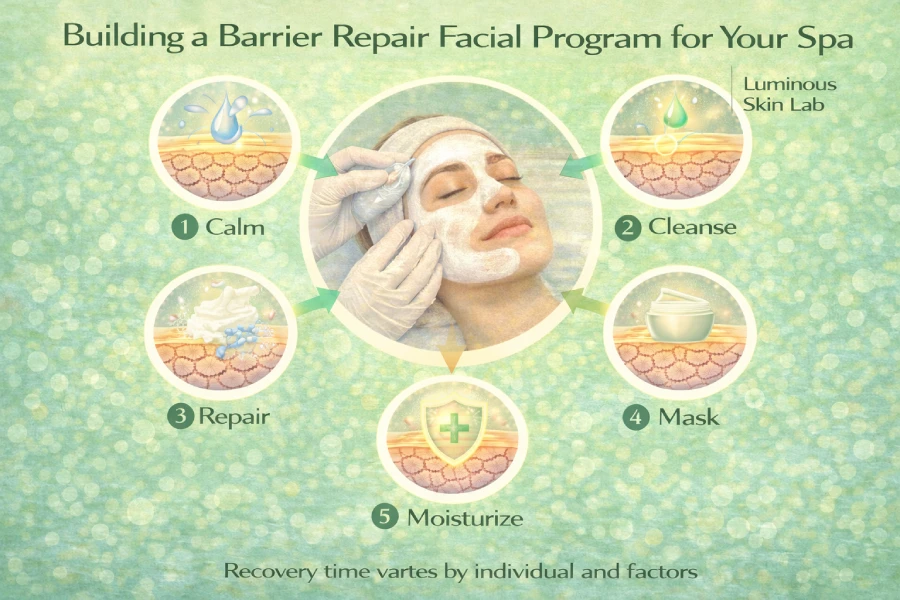
Definition
This article explains building a barrier repair facial program for your spa within professional skincare protocols focused on hydration, barrier repair, and post-treatment recovery.
For estheticians and spa owners, this topic matters because more clients are presenting with sensitivity, dehydration, over-exfoliation, and post-treatment stress. A structured barrier repair program helps the spa respond with clearer treatment pathways, stronger client education, and more consistent recovery-focused services.
Quick Answer
Building a barrier repair facial program for your spa means creating a clear service structure focused on hydration, calming support, and recovery-conscious treatment planning. Estheticians can strengthen results and client trust by offering targeted barrier-repair facials, supportive treatment packages, and home care guidance that help compromised skin recover more comfortably between appointments.
Key Takeaways
- A barrier repair facial program helps spas address sensitivity, dehydration, and compromised skin more intentionally.
- Hydration protocols and calming support should be central to barrier-focused service design.
- Recovery facials can be positioned as standalone services or as support within broader treatment plans.
- Treatment packaging helps clients understand that barrier repair often requires more than one appointment.
- Hydration ampoules and HydroGlo Jelly Masks can support professional barrier repair treatment protocols.
Many spas already treat clients who need barrier repair even if the service is not formally positioned that way. Clients arrive with tightness, redness, dehydration, over-exfoliation, post-procedure stress, and reactive skin that needs support before stronger correction can continue. Without a defined program, these cases may be treated inconsistently from one appointment to the next.
That is why building a dedicated barrier repair facial program can be so valuable. It gives estheticians a clearer framework for treatment design, service positioning, client communication, and follow-up care. Instead of improvising recovery support case by case, the spa can create a structured offer that addresses one of the most common needs in modern professional skincare.
For spa owners and estheticians, a barrier repair program is not only a treatment category. It is also a way to improve service clarity, support better client outcomes, and create a more intentional path for compromised skin recovery.
Why Spas Need a Dedicated Barrier Repair Program
Barrier weakness is now a common issue in treatment rooms. Clients often arrive with skin that has been stressed by harsh products, frequent exfoliation, climate exposure, post-treatment vulnerability, or inconsistent home care. In many cases, these clients are not ready for stronger corrective services until the barrier is more stable.
A dedicated program helps estheticians identify these clients more quickly and move them into an appropriate treatment pathway. That prevents the spa from over-promising corrective outcomes when what the skin actually needs first is recovery support.
How to Define the Purpose of the Program
A barrier repair facial program should have a clear purpose. It is designed to support skin that feels compromised, sensitive, dehydrated, reactive, or visibly stressed. The goal is not maximum stimulation. The goal is recovery, comfort, and improved treatment tolerance.
When the purpose is clearly defined, the spa can position the program more effectively for clients who need calming facials, post-procedure support, or pre-correction stabilization before more advanced services are introduced.
What Core Elements Should Be Included
Most barrier repair facial programs benefit from three core elements: hydration support, calming treatment logic, and moisture-retention strategies. These components help the skin feel more comfortable and support the protective environment needed for recovery.
Depending on the spa’s menu, the program may also include consultation language, home care recommendations, and follow-up scheduling designed specifically for compromised skin.
This is one reason professional facials designed for barrier repair are so important within a broader esthetic treatment menu.
Why Hydration Protocols Should Be Central
Hydration is often the foundation of a successful barrier repair program because compromised skin frequently struggles with moisture loss and discomfort. A strong hydration protocol helps improve how the skin feels during treatment while supporting the environment needed for recovery.
This may include layered hydration, calming serums, recovery masks, and finishing steps that reduce transepidermal water loss. In a spa setting, hydration should not be treated as an afterthought. It should be built into the core logic of the program.
This is also why hydration is critical for skin barrier recovery when building any barrier-conscious service structure.
How Recovery Facials Fit Into the Program
Recovery facials can serve as the primary service within a barrier repair program or as supportive treatment steps surrounding more advanced procedures. Their role is to calm the skin, reduce visible stress, and improve comfort while the barrier stabilizes.
For some clients, a recovery facial may be the most appropriate first treatment. For others, it may function as part of a series that prepares the skin for future corrective work. This flexibility makes barrier-focused facials highly practical within spa treatment planning.
A barrier repair facial program is not a step backward from corrective treatment. In many cases, it is what makes stronger future treatment possible by helping the skin become more stable, more comfortable, and more treatment-ready.
How to Package Barrier Repair Treatments
Packaging helps clients understand that barrier recovery is often a process rather than a one-time event. A spa can offer barrier repair as a standalone facial, a short treatment series, a post-procedure recovery service, or a stabilization step before corrective programs begin.
This kind of packaging improves clarity for both the client and the esthetician. It also allows the spa to position barrier repair as a valuable professional service rather than simply an adjustment made during other facials.
Why Client Education Strengthens the Program
A strong barrier repair program should include client education because recovery depends heavily on what the client does between appointments. Estheticians need to explain why the skin feels the way it does, why hydration and calming care matter, and why aggressive home correction may need to pause.
When clients understand the reason for the program, they are more likely to follow recommendations and commit to the treatment plan. This improves consistency and makes the program feel more professionally guided.
This is why clear communication about barrier damage is such an important part of spa treatment design.
Professional Treatment Insights
Estheticians often support barrier repair treatments by pairing targeted products such as Hydration Ampoule with deeply hydrating recovery masks like HydroGlo Jelly Mask. In a spa program, this kind of pairing helps create a more repeatable and recognizable recovery protocol that clients can associate with comfort, hydration, and visible skin support.
The value of this approach is that it gives the spa a consistent treatment identity. Instead of relying on general calming steps alone, the program can be built around a clearer barrier-repair methodology that is easier to deliver and easier to explain.
Why a Barrier Repair Program Improves the Client Experience
Clients often feel relieved when a spa offers a service that clearly addresses sensitivity, dehydration, and compromised skin. Instead of feeling like their skin is “too reactive” for treatment, they feel that there is a professional solution designed specifically for their condition.
That clarity builds trust and strengthens long-term relationships. A well-positioned program helps clients feel supported while also helping estheticians guide treatment more strategically.
Conclusion
Building a barrier repair facial program for your spa means creating a clear, professional pathway for clients with compromised, reactive, or easily stressed skin. Hydration protocols, recovery facials, calming support, and thoughtful treatment packaging all help make that program more effective.
For estheticians and spa owners, the value of this approach is both clinical and practical. It improves how the skin is supported while also giving the spa a more defined treatment structure for one of the most common skincare needs today.
This makes a barrier repair facial program one of the most useful and strategic additions a modern spa can build into its service menu.
Frequently Asked Questions
Why should a spa offer a barrier repair facial program?
What should be included in a barrier repair facial program?
How can estheticians package barrier repair treatments?
What products support a spa barrier repair program?
Suggested Internal Links
About This Professional Guide
This article is part of the Luminous Skin Lab Esthetician Education Series designed to provide professional skincare knowledge for licensed estheticians and advanced practitioners.