Definition
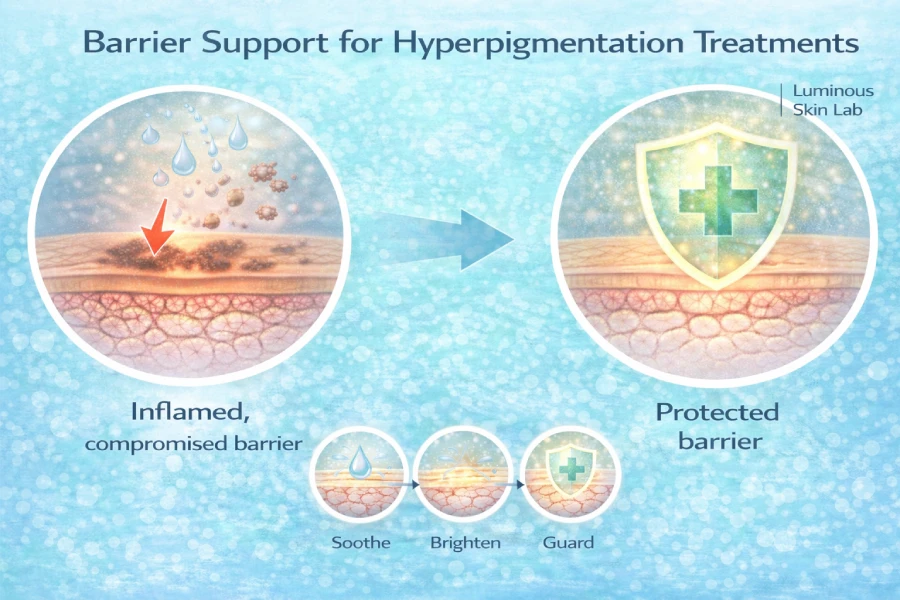
This article explains barrier support for hyperpigmentation treatments within professional skincare protocols focused on hydration, barrier repair, and post-treatment recovery.
For estheticians, this topic matters because pigmentation-focused treatments often rely on exfoliation, brightening actives, and corrective protocols that can temporarily stress the skin. Barrier support helps reduce visible irritation, improve recovery quality, and create a more stable environment for professional treatment progress.
Quick Answer
Barrier support is important during hyperpigmentation treatments because pigment-focused protocols can increase inflammation, sensitivity, and moisture loss when the skin is pushed too aggressively. Estheticians can support better recovery by managing visible stress, protecting hydration levels, and using barrier-conscious protocols that help the skin stay calm and more stable during brightening treatment plans.
Key Takeaways
- Hyperpigmentation treatments often require barrier-conscious recovery support.
- Inflammation management is important because stressed skin can complicate pigment-focused care.
- Hydration helps improve comfort and supports barrier stability during treatment recovery.
- Recovery protocols reduce unnecessary stress after corrective brightening procedures.
- Targeted ampoules and HydroGlo Jelly Masks can support professional hyperpigmentation treatment protocols.
Hyperpigmentation treatments are often designed to improve uneven tone, visible discoloration, and post-inflammatory marks. In professional skincare, these protocols may involve exfoliation, brightening ingredients, corrective facials, or other treatment steps intended to accelerate visible improvement.
But even when treatment goals are appropriate, the skin can become more vulnerable during the process. Brightening protocols that are too aggressive, too frequent, or not balanced with adequate recovery support may increase visible irritation and make the skin less comfortable during treatment progression.
That is why barrier support matters so much in pigmentation-focused care. Estheticians are not only trying to improve visible tone. They are also trying to protect the skin’s ability to tolerate treatment without becoming overly reactive or stressed.
Why Hyperpigmentation Treatments Can Stress the Skin
Many hyperpigmentation treatments rely on controlled correction. This may include acids, enzymes, resurfacing steps, or brightening actives that encourage renewal and help address visible discoloration. While these methods can be effective, they can also temporarily disturb the skin barrier and increase sensitivity.
When the barrier becomes less stable, the skin may look redder, feel tighter, or respond more strongly to products and environmental stress. That is why recovery planning must be part of treatment design, not something considered only after irritation appears.
The Role of Inflammation Management in Pigment-Focused Care
Inflammation management is especially important during hyperpigmentation treatments because stressed skin is less likely to recover comfortably. Skin that becomes visibly irritated after treatment may also feel less tolerant, more reactive, and more difficult to manage in follow-up sessions.
Reducing unnecessary inflammation helps create a more supportive environment for professional correction. This does not mean avoiding all active treatment. It means using recovery support so the skin is not overwhelmed by the treatment process itself.
Understanding how estheticians can reduce post-treatment inflammation is an important part of professional pigmentation care.
Why Hydration Matters During Hyperpigmentation Protocols
Hydration support is often underestimated in pigmentation-focused care, but it plays an essential role in recovery. When the barrier is temporarily challenged, transepidermal water loss may increase and the skin can feel drier or more reactive than expected.
Hydration helps reduce tightness, improve comfort, and support the recovery environment the skin needs after active treatment. This is particularly important when brightening protocols involve resurfacing or repeated corrective sessions.
This is also why hydration is critical for skin barrier recovery in professional skincare settings.
How Barrier Support Improves Treatment Tolerance
A more supported barrier often means the skin tolerates treatment more predictably. When the skin is not overly stressed, estheticians can make better professional decisions about pacing, recovery, and treatment progression.
Barrier support helps reduce the cycle in which corrective treatments create so much discomfort that the recovery period becomes a problem of its own. Instead, the protocol can move forward in a more controlled and comfortable way.
The goal of a hyperpigmentation treatment protocol is not only to address discoloration. It is also to keep the skin stable enough to recover well between sessions. Barrier support helps protect that balance.
What Estheticians Should Watch for During Recovery
Skin undergoing pigmentation-focused treatment may show signs that more barrier support is needed. Estheticians may notice:
- visible redness after corrective sessions
- tightness or dryness following exfoliation
- heightened sensitivity to brightening products
- a stressed appearance that suggests slower recovery
- skin that feels reactive between treatments
These signs suggest the protocol may need more hydration, calming support, and recovery-conscious pacing.
Professional Treatment Insights
Estheticians often support barrier repair treatments by pairing targeted products such as Brightening Ampoule with deeply hydrating recovery masks like HydroGlo Jelly Mask. This approach helps support pigmentation-focused treatment goals while still protecting the skin with hydration and visible calming care.
The benefit of this pairing is that it supports both correction and recovery. Instead of pushing the skin harder, it helps the barrier stay more stable during the brightening process.
Why Barrier Support Improves the Client Experience
Clients may judge pigmentation treatments not only by how their tone changes over time, but also by how their skin feels between sessions. Recovery that feels calmer, more comfortable, and more professionally managed creates greater trust in the protocol.
That is why barrier support matters beyond the treatment room. It helps estheticians deliver a more confident and sustainable treatment experience, especially when working with longer-term pigmentation goals.
Conclusion
Barrier support for hyperpigmentation treatments is important because pigment-focused protocols can increase inflammation, dryness, and sensitivity when the skin is not adequately supported. Recovery-conscious care helps keep the skin more stable throughout the treatment process.
For estheticians, that means managing visible stress, supporting hydration, and using recovery strategies that help the skin tolerate correction more comfortably. When barrier support is built into hyperpigmentation treatment plans, clients are more likely to feel supported and recover well between sessions.
This makes barrier support one of the most important foundations of modern professional care for uneven tone and discoloration concerns.
Frequently Asked Questions
Why is barrier support important during hyperpigmentation treatments?
How does inflammation affect hyperpigmentation recovery?
Can hydration support hyperpigmentation treatment protocols?
What products can support barrier recovery during brightening treatments?
Suggested Internal Links
About This Professional Guide
This article is part of the Luminous Skin Lab Esthetician Education Series designed to provide professional skincare knowledge for licensed estheticians and advanced practitioners.