Definition
This article explains barrier repair for rosacea-prone skin within professional skincare protocols focused on hydration, barrier repair, and post-treatment recovery.
For estheticians, this topic matters because rosacea-prone skin often reacts quickly to heat, friction, aggressive products, and over-stimulation. Effective barrier repair helps reduce visible redness, improve comfort, and support skin that is often both sensitive and easily destabilized.
Quick Answer
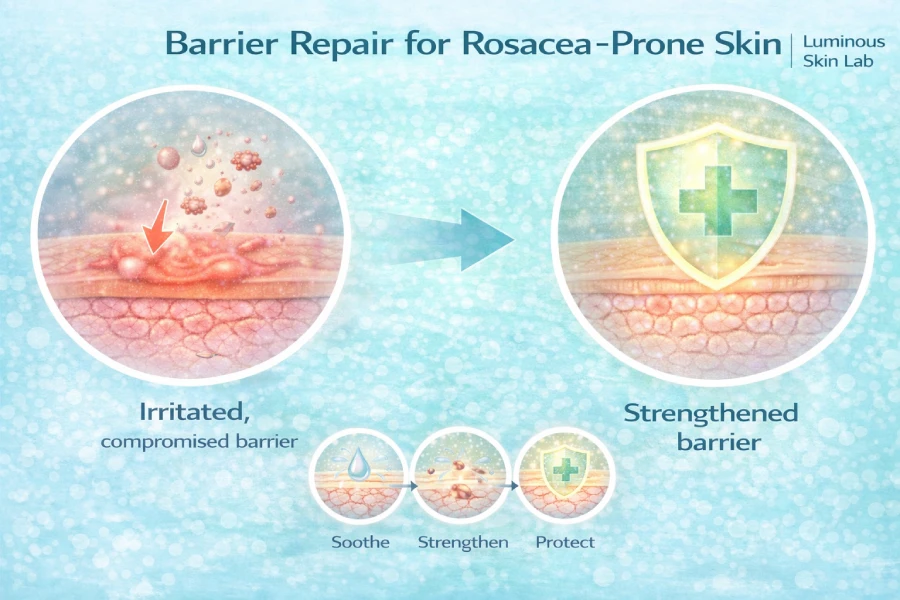
Barrier repair for rosacea-prone skin is important because skin that is already prone to redness and reactivity often becomes even more uncomfortable when the barrier is weakened. Estheticians can support recovery by focusing on calming care, hydration support, redness-conscious treatment design, and barrier-protective finishing steps that help reduce visible stress without overstimulating sensitive skin.
Key Takeaways
- Rosacea-prone skin often has a more reactive and easily disrupted barrier.
- Calming support is essential for reducing visible redness and discomfort.
- Hydration helps improve comfort without requiring aggressive treatment logic.
- Barrier repair can help reduce the visible stress caused by triggers and over-treatment.
- Targeted ampoules and HydroGlo Jelly Masks can support professional recovery protocols for rosacea-prone skin.
Rosacea-prone skin is often described mainly in terms of redness, but in professional skincare it usually presents as a broader issue of sensitivity, visible reactivity, and barrier instability. Skin may flush easily, become uncomfortable quickly, or respond poorly to treatments that more resilient skin can tolerate without difficulty.
This is why barrier repair is such an important part of working with rosacea-prone skin. When the barrier is weakened, the skin becomes more vulnerable to irritation from heat, friction, active ingredients, and environmental stress. The result is often more visible redness, more sensitivity, and a less predictable recovery process.
For estheticians, the goal is not to overwhelm rosacea-prone skin with correction. The goal is to reduce stress, support stability, and create conditions in which the skin feels calmer and more comfortable over time.
Why Rosacea-Prone Skin Often Has a Weakened Barrier
Rosacea-prone skin frequently struggles with barrier weakness because it is more likely to react to everyday triggers and treatment stress. Repeated flushing, sensitivity to ingredients, and exposure to aggressive skincare can all make the protective function of the skin less stable.
Once the barrier is compromised, the skin may feel dry, tight, warm, or more visibly reactive. This can create a cycle in which the skin becomes increasingly uncomfortable and less tolerant of products or procedures. That is why barrier repair is often one of the most important foundations of professional care for rosacea-prone skin.
The Relationship Between Redness and Barrier Instability
Redness is one of the most visible concerns in rosacea-prone skin, but it is also closely linked to barrier instability. Skin that is not well protected often becomes more reactive to triggers, which can make redness appear more easily or last longer than expected.
Supporting the barrier helps reduce the conditions that allow visible stress to escalate. This does not mean redness disappears instantly, but it does mean the skin may recover more comfortably and respond better to gentle professional care over time.
Understanding how estheticians can reduce post-treatment inflammation can help strengthen recovery planning for rosacea-prone skin.
Why Hydration Matters for Rosacea-Prone Skin
Rosacea-prone skin often needs hydration support because dryness and dehydration can make the skin feel even more reactive. When the skin lacks moisture, visible irritation and discomfort may increase, especially after treatment or environmental exposure.
Hydration helps create a more comfortable recovery environment for the barrier. It does not need to come from heavy or overly stimulating products. In fact, rosacea-prone skin often benefits most from simple, calming hydration that supports balance without increasing heat or reactivity.
This is also why hydration is critical for skin barrier recovery when working with highly sensitive skin.
Why Calming Care Is Central to Barrier Repair
Rosacea-prone skin does not usually benefit from aggressive treatment steps during recovery. It benefits from calming care that helps reduce visible stress and improves comfort. This includes soothing ingredients, reduced friction, and protocols designed to respect the skin’s sensitivity threshold.
For estheticians, calming care is not just about creating a soothing finish. It is a central part of barrier repair logic for rosacea-prone skin. The less stress the skin experiences during and after treatment, the more likely it is to remain stable and comfortable.
When rosacea-prone skin appears red or reactive, the answer is usually not stronger correction. In many cases, the best professional response is to reduce stimulation, increase calming support, and help the barrier recover in a more stable environment.
What Estheticians Should Watch for in Rosacea-Prone Skin
Barrier-compromised rosacea-prone skin often shows clear signs that it needs a gentler approach. Estheticians may notice:
- persistent redness or flushing
- visible warmth after mild stimulation
- tightness or dryness even with surface sensitivity
- reactivity to ingredients that are normally well tolerated
- skin that appears stressed after exfoliation or friction
These signs suggest that barrier support should be prioritized before stronger correction is attempted.
Professional Treatment Insights
Estheticians often support barrier repair treatments by pairing targeted products such as Calming Ampoule with deeply hydrating recovery masks like HydroGlo Jelly Mask. This kind of pairing helps support visible redness control, improve comfort, and create a more protective environment for rosacea-prone skin.
The value of this approach is that it combines hydration with visible calming support. Instead of increasing treatment intensity, the protocol helps the skin feel more balanced and less reactive during the recovery phase.
Why Barrier Repair Improves the Client Experience
Clients with rosacea-prone skin are often highly aware of how quickly their skin reacts. When a treatment leaves the skin feeling calmer, more comfortable, and less visibly stressed, the client is more likely to trust both the esthetician and the recovery plan.
That is why barrier repair matters not only for skin support, but also for the overall treatment experience. A gentler, more knowledgeable recovery approach demonstrates professional judgment and helps rosacea-prone clients feel safer in care.
Conclusion
Barrier repair for rosacea-prone skin is important because redness-prone and reactive skin often becomes more uncomfortable when the barrier is weakened. In many cases, the skin needs calming support, hydration, and reduced stimulation in order to maintain better balance.
For estheticians, that means choosing protocols that reduce visible stress while supporting recovery. When calming care and barrier support are built into treatment design, rosacea-prone skin is more likely to feel comfortable, stable, and professionally cared for.
This makes barrier repair one of the most important foundations of modern esthetic care for rosacea-prone skin.
Frequently Asked Questions
Why is barrier repair important for rosacea-prone skin?
Can rosacea-prone skin still need hydration?
How can estheticians support barrier repair for rosacea-prone skin?
What products can support rosacea-prone barrier recovery?
Suggested Internal Links
About This Professional Guide
This article is part of the Luminous Skin Lab Esthetician Education Series designed to provide professional skincare knowledge for licensed estheticians and advanced practitioners.