Definition
This article explains barrier repair for aging skin within professional skincare protocols focused on hydration, barrier repair, and post-treatment recovery.
For estheticians, this topic matters because aging skin often becomes drier, thinner, and less resilient over time. As collagen levels change and elasticity decreases, barrier weakness can make mature skin more vulnerable to moisture loss, visible stress, and slower recovery after professional treatments.
Quick Answer
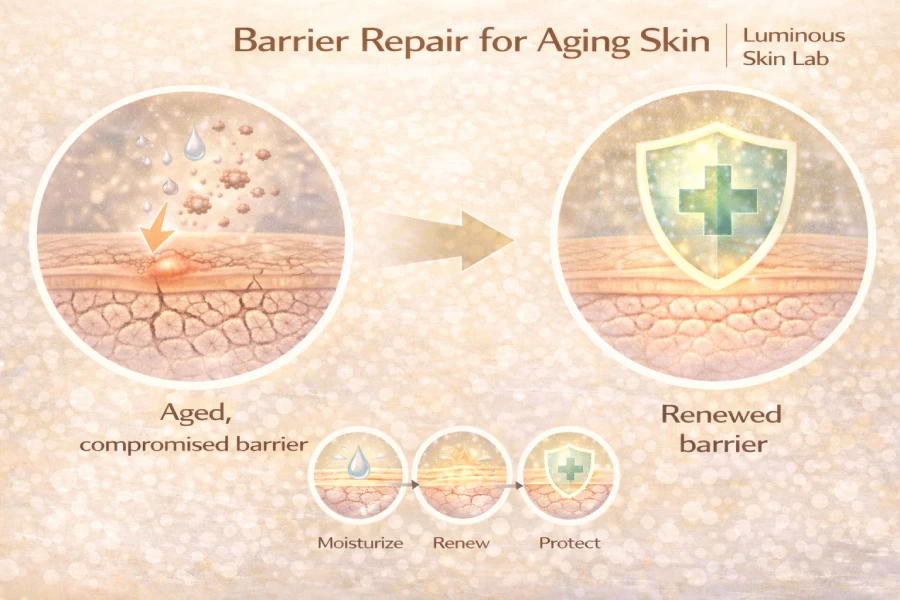
Barrier repair for aging skin is important because mature skin often experiences increased dryness, reduced elasticity, and slower recovery when the barrier is compromised. Estheticians can support aging skin through hydration-focused care, recovery-conscious treatment design, and barrier-supportive protocols that help improve comfort, resilience, and visible skin balance over time.
Key Takeaways
- Aging skin often needs stronger barrier support because it can become drier and less resilient over time.
- Hydration plays a central role in helping mature skin feel more comfortable and stable.
- Barrier repair supports skin that is already dealing with elasticity and collagen-related changes.
- Recovery-conscious protocols help aging skin tolerate professional treatments more comfortably.
- Targeted ampoules and HydroGlo Jelly Masks can support professional barrier-repair protocols for aging skin.
Aging skin is often discussed in terms of lines, firmness, and elasticity, but barrier function is just as important in professional skincare. As the skin matures, it may become less efficient at holding moisture, more reactive to environmental stress, and slower to recover after treatments that younger skin may tolerate more easily.
This is why barrier repair matters so much in aging skin protocols. When the barrier is weakened, mature skin may feel tight, dry, fragile, or visibly stressed. That discomfort can affect not only treatment recovery, but also the client’s confidence in how their skin is aging overall.
For estheticians, barrier repair is not separate from anti-aging care. It is part of the foundation. Skin that feels more hydrated, stable, and supported is often better prepared for long-term professional treatment plans focused on visible aging concerns.
Why Aging Skin Often Has a More Vulnerable Barrier
As skin matures, natural changes in moisture retention and surface resilience can make the barrier less stable. Mature skin may not recover from dryness or treatment stress as quickly as it once did, and this can make the skin more vulnerable to irritation and visible dehydration.
This vulnerability can become more noticeable when the skin is also exposed to exfoliation, environmental stress, or active skincare ingredients. For that reason, barrier repair is especially important in protocols for mature skin that already shows signs of fragility or discomfort.
How Collagen and Elasticity Concerns Connect to Barrier Support
Collagen loss and reduced elasticity are common features of aging skin, but they do not happen in isolation. Skin that appears less firm or less resilient often also benefits from stronger moisture support and more careful recovery planning.
Barrier repair does not directly replace collagen or reverse structural aging changes, but it helps improve the skin environment in which professional care takes place. When the skin is less dry and more comfortable, it often responds better to treatment and feels more supported overall.
Why Hydration Is Essential for Aging Skin Recovery
Hydration is one of the most important parts of barrier repair for aging skin. Mature skin often has a harder time maintaining moisture balance, which can lead to tightness, dullness, and visible discomfort.
Hydration helps aging skin feel softer, more comfortable, and less reactive. It also supports the barrier during and after professional treatments, especially when the skin has been exfoliated or otherwise stimulated.
This is one reason hydration is critical for skin barrier recovery, especially in mature and easily dehydrated skin.
Why Recovery-Conscious Treatments Matter for Mature Skin
Aging skin often benefits from treatment plans that are both corrective and supportive. Stronger stimulation may not always be the best answer if the barrier is already compromised or the skin recovers slowly.
Recovery-conscious treatment design helps estheticians improve skin comfort while still working toward visible goals. This means choosing protocols that respect the pace at which mature skin can recover rather than overwhelming the skin with too much intensity at once.
Understanding why the skin barrier is vulnerable after facial treatments can help estheticians make better decisions when working with aging skin.
When aging skin appears dry, fragile, or visibly stressed, the most effective professional response is often stronger barrier support and better recovery planning rather than more aggressive correction.
What Estheticians Should Watch for in Aging Skin
Barrier-compromised aging skin often shows signs that more support is needed. Estheticians may notice:
- tightness or dryness after treatment
- skin that feels thinner or less resilient
- visible dullness linked to dehydration
- increased sensitivity to actives or exfoliation
- slower recovery after corrective procedures
These signs suggest the skin may benefit from stronger hydration support and more barrier-conscious pacing within the treatment plan.
Professional Treatment Insights
Estheticians often support barrier repair treatments by pairing targeted products such as Anti-Aging Ampoule with deeply hydrating recovery masks like HydroGlo Jelly Mask. This approach helps support mature skin with both treatment-focused care and the hydration retention needed for a more comfortable recovery process.
The value of this pairing is that it helps aging skin feel supported without sacrificing professional treatment goals. Instead of creating more stress, the protocol helps improve comfort, moisture balance, and visible skin stability.
Why Barrier Repair Improves the Client Experience
Clients with aging skin are often highly aware of dryness, texture changes, and how long their skin takes to recover. When the skin feels better supported after treatment, the client is more likely to feel confident in the esthetician’s approach and in the long-term plan.
That is why barrier repair matters not only for skin comfort, but also for treatment trust. Recovery-conscious care makes professional anti-aging treatment feel more thoughtful, more personalized, and more sustainable over time.
Conclusion
Barrier repair for aging skin is important because mature skin often experiences dryness, reduced resilience, and slower recovery when the barrier is weakened. Supporting the barrier helps improve comfort and creates a better foundation for professional care.
For estheticians, that means prioritizing hydration, respecting the recovery needs of mature skin, and using barrier-supportive protocols that help maintain stability while addressing visible aging concerns.
This makes barrier repair one of the most important foundations of modern esthetic care for aging skin.
Frequently Asked Questions
Why is barrier repair important for aging skin?
How does hydration support aging skin recovery?
Can barrier support help with elasticity concerns?
What products can support barrier repair for aging skin?
Suggested Internal Links
About This Professional Guide
This article is part of the Luminous Skin Lab Esthetician Education Series designed to provide professional skincare knowledge for licensed estheticians and advanced practitioners.