Definition
This article explains barrier repair for acne-prone skin within professional skincare protocols focused on hydration, barrier repair, and post-treatment recovery.
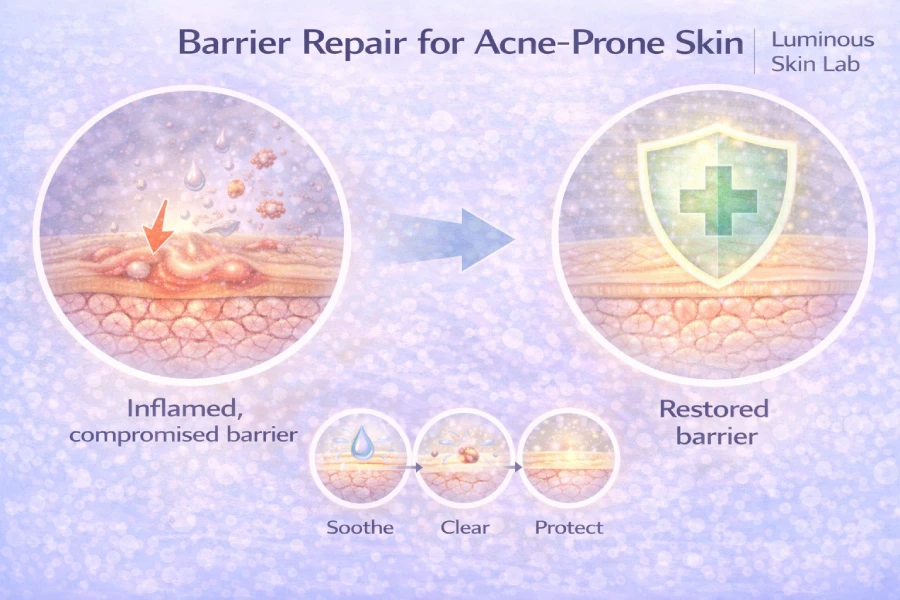
For estheticians, this topic matters because acne-prone skin is often treated aggressively, yet it may also be dehydrated, inflamed, and barrier-compromised. Effective recovery support requires balancing clarification with calming and hydration rather than increasing stress on already reactive skin.
Quick Answer
Barrier repair for acne-prone skin is important because inflamed or over-treated skin often becomes both reactive and dehydrated, even when excess oil is present. Estheticians can support recovery by reducing inflammation, improving hydration, protecting barrier function, and using treatment protocols that help stabilize oil balance without creating additional irritation.
Key Takeaways
- Acne-prone skin can still have a compromised barrier and need recovery support.
- Inflammation control is essential for improving comfort and visible skin stability.
- Hydration helps acne-prone skin recover without automatically increasing oiliness.
- Barrier repair can help reduce reactivity caused by over-exfoliation or harsh acne protocols.
- Targeted ampoules and HydroGlo Jelly Masks can support professional acne-recovery treatments.
Acne-prone skin is often approached as though the main problem is excess oil alone. But in professional skincare, acne-prone skin frequently presents with a more complex combination of concerns, including inflammation, dehydration, visible sensitivity, and barrier instability.
This is especially common when the skin has been exposed to strong acne products, repeated exfoliation, or frequent corrective treatments. In those cases, the skin may look oily on the surface while still lacking proper hydration and barrier support underneath. That imbalance can make recovery more difficult and leave the skin more reactive over time.
For estheticians, barrier repair does not mean ignoring acne concerns. It means supporting the skin in a way that helps reduce stress, improve tolerance, and create a more balanced environment for long-term treatment success.
Why Acne-Prone Skin Often Has a Compromised Barrier
Acne-prone skin is commonly exposed to ingredients and treatments designed to clarify, dry, exfoliate, or speed up cellular turnover. While these strategies can be helpful in some protocols, they can also weaken the barrier when used too aggressively or too frequently.
A compromised barrier can leave acne-prone skin feeling tight, irritated, or more reactive than expected. It may also contribute to visible redness and make the skin less comfortable during treatment. This is why barrier repair is often a necessary part of acne-focused professional care rather than a separate concern.
The Relationship Between Inflammation and Acne-Prone Recovery
Inflammation is one of the defining features of many acne-prone skin presentations. Skin that looks congested or breakout-prone may also appear red, irritated, or stressed, especially after aggressive treatment.
Reducing inflammation is important because inflamed skin is often less tolerant, more reactive, and slower to feel balanced. Recovery-focused care helps calm the visible stress in the skin so the barrier has a better chance to stabilize. This is one reason inflammation control is central to acne-prone barrier repair.
Understanding how estheticians can reduce post-treatment inflammation can help support more comfortable acne-focused protocols.
Why Oil Balance Does Not Eliminate the Need for Hydration
One of the biggest misunderstandings about acne-prone skin is the idea that oily skin does not need hydration. In reality, acne-prone skin can still become dehydrated, especially when exposed to strong products or repeated corrective treatments.
Hydration supports barrier recovery by helping the skin feel less tight, less reactive, and more stable overall. When the barrier is more balanced, the skin often tolerates treatment better. For estheticians, this means hydration is not a contradiction in acne care. It is part of responsible recovery support.
This is also why hydration is critical for skin barrier recovery, even when the skin appears oily or breakout-prone on the surface.
How Barrier Repair Supports Better Acne Treatment Outcomes
Barrier repair creates a stronger foundation for acne-focused skincare because it reduces unnecessary reactivity and improves treatment tolerance. Skin that is less inflamed and better hydrated often responds more predictably to professional protocols.
This does not mean abandoning correction. It means correcting with better support. When the skin barrier is strengthened, estheticians can often move forward with more confidence because the skin is not being asked to recover from both acne and treatment stress at the same time.
Surface oil does not always mean the skin barrier is healthy. Acne-prone skin can show visible shine while still lacking hydration and recovery support underneath. This is why estheticians should evaluate barrier condition separately from oil production.
What Estheticians Should Watch for in Acne-Prone Skin
Barrier-compromised acne-prone skin often shows signs that go beyond breakouts alone. Estheticians may notice:
- tightness after cleansing or treatment
- redness that lingers after extractions or exfoliation
- visible flaking despite surface oil
- increased sensitivity to active products
- a combination of congestion and dehydration
These signs suggest the skin may need more recovery support and less aggressive stimulation in the short term.
Professional Treatment Insights
Estheticians often support barrier repair treatments by pairing targeted products such as Clarifying Ampoule with deeply hydrating recovery masks like HydroGlo Jelly Mask. This approach allows the protocol to address both visible congestion and barrier discomfort without making the skin feel more stripped or stressed.
The value of this pairing is that it supports acne-focused treatment logic while still respecting the skin’s need for moisture balance and visible calmness during recovery.
Why Recovery-Focused Acne Care Improves the Client Experience
Clients with acne-prone skin are often used to products or treatments that feel harsh. When an esthetician uses a more barrier-conscious approach, the difference in comfort can be significant. Skin that feels less tight, less inflamed, and more supported after treatment creates more confidence in the professional process.
That is why barrier repair is not only a skin-health strategy. It is also part of how estheticians demonstrate expertise, especially when working with acne-prone skin that has already been through a lot.
Conclusion
Barrier repair for acne-prone skin is important because breakouts, inflammation, and strong treatment protocols can all weaken the skin’s protective function. In many cases, the skin needs both clarification and recovery support in order to move toward better balance.
For estheticians, that means reducing inflammation, supporting hydration, and maintaining oil-aware but barrier-conscious treatment logic. When recovery is built into acne care, the skin is more likely to feel stable, comfortable, and responsive over time.
This makes barrier repair one of the most important foundations of modern professional care for acne-prone skin.
Frequently Asked Questions
Why is barrier repair important for acne-prone skin?
Can acne-prone skin still need hydration?
How can estheticians support barrier repair for acne-prone skin?
What products can support acne-prone barrier recovery?
Suggested Internal Links
About This Professional Guide
This article is part of the Luminous Skin Lab Esthetician Education Series designed to provide professional skincare knowledge for licensed estheticians and advanced practitioners.