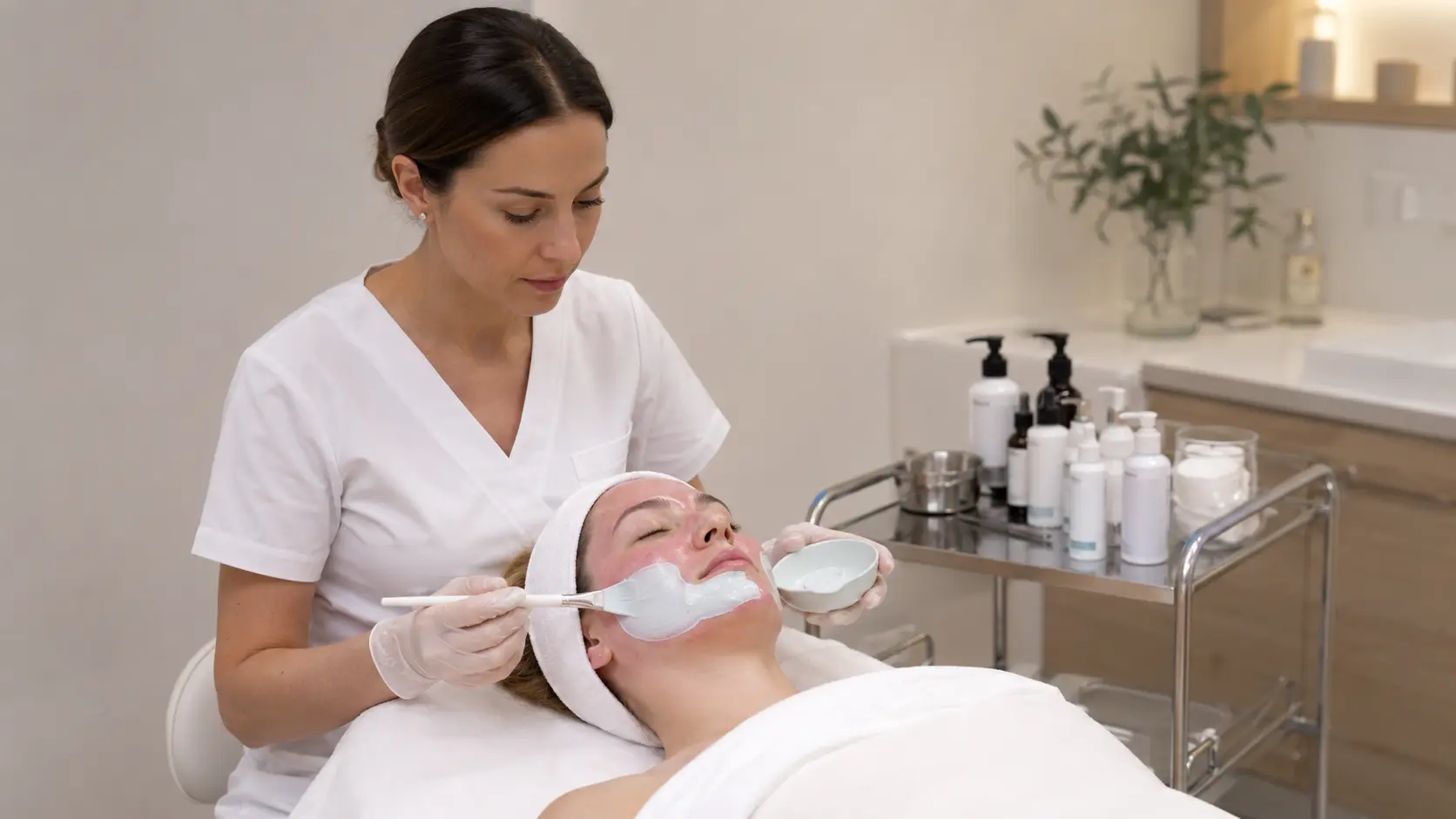
How Do Estheticians Calm Inflamed Skin After Professional Treatments?
Estheticians calm inflamed skin after treatments by applying a sequenced recovery protocol that begins immediately after the active treatment phase ends. The approach combines topical anti-inflammatory ingredients, occlusive barrier support, temperature management, and in some cases device-based modalities such as red LED light therapy to reduce cytokine-driven inflammation and accelerate the skin’s return to baseline.
- Calming begins within 60–90 seconds of completing the active treatment — delaying allows the inflammatory cascade to intensify unnecessarily.
- Core calming ingredients include aloe vera, centella asiatica, green tea extract (EGCG), niacinamide, allantoin, bisabolol, and panthenol — each working through distinct anti-inflammatory mechanisms.
- Occlusive recovery masks extend ingredient contact time and prevent transepidermal water loss, both of which are critical to shortening visible redness and client discomfort.
- Red LED therapy at 630–660 nm reduces pro-inflammatory cytokine production through photobiomodulation and can be applied simultaneously with or immediately after a calming mask.
- Active ingredients — vitamin C, retinoids, AHAs, BHAs — must be withheld during the recovery phase and reintroduced only once the skin has fully returned to its baseline state.
- Clients with rosacea or chronic sensitivity require fragrance-free, low-reactivity calming protocols and often benefit from cool-temperature applications to manage vascular reactivity.
Post-treatment inflammation is not a complication — it is a predictable biological event that skilled estheticians are trained to manage. Every time the skin undergoes controlled disruption through a chemical peel, extraction sequence, microneedling, or aggressive exfoliation, the innate immune system responds by releasing cytokines, increasing vascular permeability, and directing repair resources to the affected tissue. The visible result is redness, warmth, and temporary sensitivity. How quickly and comfortably that inflammation resolves depends almost entirely on what happens in the treatment room during the recovery phase.
Managing post-treatment inflammation well is both a client service skill and a clinical one. Clients who leave the treatment room with significant unmanaged redness or discomfort are less likely to return for repeat treatments, less likely to book upgrade services, and more likely to apply inappropriate products at home that extend their recovery. Estheticians who build reliable, evidence-informed calming protocols into every service create a measurably better client experience while also protecting treatment outcomes.
This article covers the clinical rationale for post-treatment calming, the ingredient categories that perform most reliably in the recovery phase, how to sequence a calming protocol for different procedure types, and the common mistakes that extend inflammation rather than resolving it.
What Every Esthetician Should Know About Calming Inflamed Skin After Treatments
- Post-treatment inflammation is an immune-mediated cytokine response — understanding its biology helps estheticians select the right interventions at the right time.
- The calming phase should begin immediately after the active treatment ends, not after additional steps like toning or massage.
- Ingredient layering outperforms single-ingredient approaches — combining humectants, anti-inflammatory botanicals, and occlusives addresses multiple inflammatory mechanisms simultaneously.
- Temperature is an underused variable — cool applications reduce surface vasodilation and heighten client comfort without requiring additional products.
- Red LED therapy at 630–660 nm is one of the strongest evidence-supported tools for post-treatment inflammation reduction available to estheticians.
- Correctly distinguishing inflammatory redness from irritation redness is critical — each condition requires a different treatment response.
- Clients should leave with written aftercare instructions specifying what not to apply for 48–72 hours — home product choices frequently extend inflammation after professional treatments.
What Actually Causes Skin Inflammation After Professional Treatments
The inflammatory response that follows a professional facial treatment is not random — it follows a precise biological sequence. When the skin’s physical integrity is disrupted, keratinocytes and mast cells in the epidermis release alarm signals called damage-associated molecular patterns (DAMPs). These trigger the release of pro-inflammatory cytokines including interleukin-1 alpha (IL-1α), interleukin-6 (IL-6), and tumour necrosis factor alpha (TNF-α), which cause local vasodilation, increased capillary permeability, and the recruitment of immune cells to the treatment zone.
The visible result — erythema, warmth, and mild oedema — is the clinical expression of this cytokine activity. In a healthy skin response, these signals are self-limiting: once the repair cascade is established, anti-inflammatory mediators like lipoxins and resolvins begin to counteract the initial pro-inflammatory signal and the tissue gradually returns to homeostasis. Professional calming protocols work by supporting this anti-inflammatory resolution phase rather than suppressing the immune response entirely.
How Procedure Type Affects Inflammation Intensity
Not all treatments produce the same inflammatory profile. Chemical peels that penetrate to the papillary dermis, microneedling at depths above 0.5 mm, and aggressive extractions on congested or acne-prone skin all generate significantly more cytokine activity than superficial enzyme exfoliation, dermaplaning, or nano infusion. Understanding the inflammatory “load” of each procedure allows estheticians to calibrate the intensity of their calming protocol accordingly — a 10-minute cooling mask may be sufficient after a light-touch facial, while a 20-minute occlusive recovery mask plus red LED may be warranted after a medium-depth peel.
The Core Calming Ingredients Estheticians Use After Treatments
Post-treatment calming formulations draw from a well-defined group of ingredients with established anti-inflammatory, barrier-supportive, and wound-healing mechanisms. The most clinically reliable of these work through distinct biological pathways, which means combining them in a layered protocol addresses multiple aspects of the inflammatory response simultaneously — an approach that consistently outperforms single-ingredient applications in both speed of redness resolution and client comfort during recovery.
Primary Anti-Inflammatory Botanicals
Aloe vera’s acemannan polysaccharides reduce pro-inflammatory cytokine expression and have a demonstrated ability to reduce transepidermal water loss in post-treatment skin. Centella asiatica (cica) operates through its active compounds — madecassoside, asiaticoside, madecassic acid, and asiatic acid — which stimulate fibroblast activity, support collagen synthesis, and suppress inflammatory signalling through the NF-κB pathway. Green tea extract’s primary active, epigallocatechin gallate (EGCG), is one of the most potent NF-κB inhibitors available in topical skincare, making it particularly effective when the inflammatory load from a treatment is higher than average.
Repair and Barrier-Supportive Actives
Niacinamide at 4–5% reduces surface erythema by reinforcing ceramide synthesis and reducing vascular permeability at the skin’s dermal-epidermal junction. Panthenol (pro-vitamin B5) converts to pantothenic acid in the skin, directly supporting keratinocyte proliferation and tissue repair. Allantoin promotes cell turnover through its keratolytic and healing properties without generating the epidermal disruption that exfoliating actives would cause. Bisabolol, derived from chamomile, is particularly useful for clients with rosacea or reactive skin because it delivers anti-inflammatory benefit without the fragrance compounds that accompany many botanical extracts and trigger reactivity in sensitive populations.
How Key Calming Ingredients Interrupt the Inflammatory Cascade
Post-treatment inflammation is driven primarily by NF-κB pathway activation, cytokine release, and barrier disruption-driven transepidermal water loss. Each category of calming ingredient targets a different point in this cascade. Botanical anti-inflammatories (centella, green tea EGCG) inhibit NF-κB signalling upstream, reducing cytokine production at its source. Humectants and occlusives (polyglutamic acid, hyaluronic acid, alginate) address barrier disruption by reducing TEWL and maintaining the hydration levels needed for normal cellular repair. Repair actives (panthenol, allantoin, niacinamide) accelerate keratinocyte-driven tissue recovery and restore barrier lipid production.
The clinical implication is that a recovery protocol using only one ingredient category — for example, applying only a botanical serum without an occlusive layer — addresses only one part of the inflammatory equation. Layering across all three categories compresses recovery time measurably, which is why multi-ingredient occlusive recovery formats have become the professional standard for post-treatment calming.
Sequencing a Post-Treatment Calming Protocol Step by Step
The order in which calming steps are applied after an active treatment is as important as the ingredients themselves. Applying an occlusive mask before a calming serum, for example, traps inadequate hydration beneath the barrier rather than locking in active ingredients at therapeutic concentration. Similarly, allowing the skin to sit without any recovery product while the esthetician performs other tasks gives the inflammatory cascade additional time to intensify. A well-structured calming sequence addresses each layer of the skin’s recovery needs in the correct order.
Why Sequencing Order Matters Clinically
The reason step order matters is straightforward: the skin’s ability to absorb active ingredients is highest immediately after treatment, when the barrier is temporarily disrupted and the stratum corneum presents reduced impedance to ingredient penetration. Applying a calming serum before an occlusive mask takes advantage of this enhanced absorption window while the mask then seals those ingredients against the skin for an extended contact period. Reversing this order — applying an occlusive first — blocks subsequent ingredient penetration almost entirely.
In high-volume treatment rooms where estheticians are running back-to-back sessions, the biggest practical challenge with post-treatment calming is not ingredient selection — it’s contact time. Sheet masks and cream masks require active effort to keep in place, and clients who are uncomfortable will move, dislodging the mask and interrupting the recovery phase. The Poly-Luronic™ Jelly Mask addresses this problem through its alginate gel-set mechanism: once mixed at a 2-to-1 powder-to-water ratio and applied within the first minute of the recovery phase, it sets into a stable, self-supporting structure that maintains full facial contact without securing straps, gauze, or repositioning. In practice, estheticians using the Poly-Luronic™ Jelly Mask after chemical exfoliation or extractions consistently report that clients comment on the immediate cooling sensation during the first three to four minutes of contact — a response not reliably produced by cream or sheet mask alternatives, which warm quickly to body temperature and lose their temperature differential benefit within the first minute of application. The structured gel format also allows simultaneous red LED therapy without the light scattering that gauze or thick cream layers introduce.
Six Common Mistakes That Extend Inflammation Instead of Resolving It
Even estheticians with strong calming protocols occasionally extend their clients’ recovery time through procedural errors that compound the inflammatory response rather than resolving it. These six mistakes are the most frequently observed in professional practice and the most impactful on client outcomes.
Delaying the Recovery Phase
Every minute the skin sits without calming intervention after an active treatment is a minute the cytokine cascade is intensifying without opposition. Estheticians who complete additional steps — steaming, toning, or notes — before beginning the calming phase consistently produce clients with deeper, longer-lasting redness.
Applying Actives During Recovery
Vitamin C serums, retinoids, and exfoliating acids are frequently applied during the recovery phase by estheticians who want to “maximise” the treatment window. On post-treatment skin, these ingredients encounter a compromised barrier with heightened permeability, which dramatically increases irritation risk and can convert a predictable recovery into a prolonged sensitisation event.
Using Fragrance-Containing Recovery Products
Fragrance compounds — including natural essential oils — are among the most common contact sensitisers in professional skincare. On post-treatment skin with a disrupted barrier, fragrance penetrates more deeply and at higher concentration than on intact skin. Even clients who have tolerated fragrance in normal conditions may react during the post-treatment recovery window.
Skipping the Barrier Sealer Step
Removing an occlusive mask and immediately finishing the service leaves the skin temporarily without barrier protection. TEWL resumes within minutes, rapidly reversing the hydration delivered during the mask phase. Applying a lightweight ceramide or squalane emollient immediately after mask removal maintains the hydration benefit and closes the post-occlusion vulnerability window before the client leaves.
Providing Inadequate Aftercare Instructions
Post-treatment inflammation is frequently extended not by what happens in the treatment room, but by what clients apply at home in the 24–72 hours after their service. Clients who apply strong actives, physical exfoliants, or fragrance-heavy products during the recovery window routinely present with prolonged redness at their next appointment. Written aftercare instructions specifying what to avoid are as important as the in-room calming protocol itself.
Using Hot Water or Steam Post-Treatment
Hot water and steam increase dermal blood flow and capillary permeability — the exact physiological conditions driving post-treatment erythema. Using steam as part of a “relaxing” finish to a facial that included active treatment is counterproductive. The first rinse after an active treatment should always be cool, and clients should be advised against hot showers or steam rooms for at least 24 hours post-treatment.
Calming Protocols for Sensitive and Reactive Skin Populations
The standard post-treatment calming protocol described above works reliably for most clients. However, certain skin populations require modification because their baseline inflammatory threshold is lower, their barrier function is more compromised, or their vascular reactivity is physiologically elevated. Getting the calming protocol right for these clients is especially important because poor recovery management in sensitive skin types can permanently reduce their tolerance for active treatments and damage the client relationship.
Rosacea-Prone and Chronically Sensitive Clients
Clients with rosacea experience heightened neuroimmune reactivity, meaning their skin triggers immune responses to stimuli that would not produce a reaction in typical skin. For these clients, the calming protocol should be built exclusively from fragrance-free, alcohol-free, low-botanical-complexity formulations. Bisabolol, azelaic acid at 5–10%, and niacinamide are the most reliable anti-inflammatory actives for this population because they deliver demonstrable results without the sensitisation risk of more complex botanical extracts. Cool or chilled mask applications are also particularly effective for rosacea-prone clients because the thermal stimulus reduces surface vasodilation more rapidly than room-temperature products.
Clients With Active Acne or Post-Extraction Skin
Post-extraction skin presents a specific challenge because the mechanical disruption of follicular tissue creates multiple micro-entry points across the treatment zone. Calming products applied to post-extraction skin must be non-comedogenic, as occlusives that block follicular openings during the healing phase can precipitate new breakouts. Aloe vera, niacinamide, and centella asiatica are well-tolerated for this population. Jelly-format masks are generally appropriate if the formulation is non-comedogenic, as the structural integrity of the gel means it sits over the skin rather than pressing into follicular openings in the way heavy cream masks can.
Post-Microneedling and Post-Peel Calming Adjustments
After microneedling at depths of 0.5 mm or greater, the dermal integrity is more significantly disrupted than in surface-only treatments, and the inflammatory response reflects this. The calming serum applied before the occlusive mask should prioritise growth-factor-compatible, low-molecular-weight ingredients that can reach the dermis through microchannel pathways without causing additional irritation. Hyaluronic acid at low molecular weight, centella, and panthenol are appropriate. After medium-depth chemical peels, the priority shifts to barrier integrity — the stratum corneum is significantly thinned, so the occlusive mask phase is especially important and should be maintained for the full 20-minute window rather than shortened. Active ingredient reintroduction after peels should be delayed by 72 hours at minimum regardless of how comfortable the client reports feeling.
Professional and Scientific References
The calming ingredient mechanisms and protocol recommendations in this article are informed by peer-reviewed research on wound healing biology, anti-inflammatory skincare actives, and post-procedure skin management published in dermatology and aesthetic medicine literature.
- Surjushe, A., Vasani, R., & Saple, D.G. (2008). Indian Journal of Dermatology. Aloe vera: a short review. Establishes acemannan polysaccharides as the primary anti-inflammatory mechanism in topical aloe vera applications.
- Bylka, W., et al. (2013–2014). Advances in Dermatology and Allergology. Centella asiatica in dermatology: an overview. Covers madecassoside and asiaticoside mechanisms in wound healing and skin inflammation management.
- Katiyar, S.K. (2011). Archives of Biochemistry and Biophysics. Green tea polyphenol EGCG and skin cancer prevention: inhibition of inflammation, cellular oxidative stress and signalling. Documents NF-κB pathway inhibition by EGCG relevant to post-treatment inflammation.
- Gehring, W. (2004). International Journal of Cosmetic Science. Nicotinic acid/niacinamide and the skin. Covers niacinamide mechanisms in reducing epidermal permeability and post-treatment erythema at 4–5% concentration.
- Hamblin, M.R. (2017). Seminars in Cutaneous Medicine and Surgery. Mechanisms and applications of the anti-inflammatory effects of photobiomodulation. Provides evidence base for red LED therapy in post-procedure inflammation reduction.
For estheticians building a reliable post-treatment calming protocol, the recovery mask selected for the occlusion phase is the single highest-leverage choice in the entire sequence. An occlusive mask applied at Step 3 of the calming protocol needs to deliver sustained ingredient contact, meaningful cooling benefit, and structural stability that maintains full facial coverage for the full 10–20 minute recovery window without requiring repositioning or supplemental product. Poly-Luronic™ Jelly Mask meets all three of these requirements through its alginate-gel matrix, which sets into a cohesive, cooling structure over the skin within approximately two minutes of application and maintains full occlusive contact without heat build-up throughout the treatment window. Its formulation pairs polyglutamic acid and hyaluronic acid to address the TEWL-driven component of post-treatment inflammation, and its fragrance-free, non-comedogenic status makes it appropriate for use across all the sensitive and reactive skin populations where post-treatment calming protocols are most critical. For estheticians who routinely perform chemical exfoliation, microneedling, or extraction-heavy facials, the Poly-Luronic™ Jelly Mask represents the occlusive recovery step that allows the rest of the calming sequence to perform at its clinical best.
Explore the Poly-Luronic™ Jelly Mask LineFrequently Asked Questions: Calming Inflamed Skin After Professional Treatments
Why does skin get inflamed after professional facial treatments?
Skin inflammation after professional treatments is a predictable biological response to controlled tissue disruption. Procedures such as chemical exfoliation, extractions, microneedling, and dermaplaning all trigger the skin’s innate immune response, releasing pro-inflammatory cytokines like interleukin-1 and TNF-alpha that cause temporary vasodilation, redness, and warmth. This acute inflammation is not a complication — it is part of the normal healing cascade — but managing its duration and intensity is a core esthetician skill that directly affects client comfort, recovery time, and treatment outcomes.
What ingredients actually calm inflamed skin after a facial?
The most clinically effective calming ingredients for post-treatment skin include aloe vera, centella asiatica (cica), green tea extract (EGCG), niacinamide, allantoin, bisabolol, and panthenol. Each works through a different mechanism: aloe vera delivers acemannan polysaccharides that modulate the immune response and reduce transepidermal water loss; centella asiatica activates wound healing through madecassoside and asiaticoside compounds; green tea EGCG inhibits the NF-κB inflammatory signaling pathway; niacinamide reduces surface redness by strengthening barrier function; and allantoin and panthenol accelerate cell turnover and tissue repair. For maximum efficacy, estheticians often layer multiple calming actives rather than relying on a single ingredient.
How quickly should an esthetician start calming the skin after an active treatment?
Calming the skin should begin immediately upon completing the active phase of treatment — ideally within 60 to 90 seconds of finishing extractions, chemical exfoliant neutralisation, or microneedling passes. The inflammatory cascade begins within minutes of tissue disruption, so rapid application of cooling and calming agents shortens the window of peak cytokine release. Most estheticians use a cool water rinse or mist first to lower surface temperature, then apply a calming serum, followed by an occlusive recovery mask within the first two to three minutes of the recovery phase.
Does using a mask help calm skin faster after treatments?
Yes — occlusive masks accelerate post-treatment calming through two mechanisms. First, occlusion physically prevents transepidermal water loss (TEWL), which reduces the dehydration-driven component of post-treatment irritation. Second, masks create a sealed microenvironment that drives calming actives deeper into the stratum corneum and maintains ingredient contact time far longer than a serum left open to air. In practice, a well-formulated calming mask worn for 10 to 20 minutes after an active treatment consistently delivers greater visible redness reduction than serums alone, because contact time and ingredient concentration both remain elevated throughout the recovery phase.
Can I use active ingredients like vitamin C right after a treatment that caused redness?
No — active ingredients such as vitamin C, retinoids, AHAs, and BHAs should not be applied to skin that is actively inflamed after a professional treatment. These ingredients are either acidic, oxidising, or chemically stimulating, and applying them to a compromised barrier heightens irritation, risks sensitisation, and can extend recovery significantly. The recovery phase immediately after treatment should be limited exclusively to barrier-supportive and calming ingredients: humectants, occlusives, anti-inflammatory botanicals, and peptides. Active treatment ingredients should only be reintroduced once the skin has fully returned to its baseline state, typically 48 to 72 hours post-treatment depending on the procedure.
What is the difference between redness from inflammation and redness from irritation?
Inflammation-related redness is a systemic immune response characterised by warmth, mild swelling, and a diffuse flush that follows the treatment zone pattern. It typically peaks within 30 to 60 minutes after treatment and reduces progressively over hours. Irritation-related redness, by contrast, is a localised epidermal reaction often caused by product incompatibility, incorrect formulation strength, or barrier disruption from over-exfoliation — it tends to appear in patches, may be accompanied by stinging or tightness, and does not follow a predictable time resolution pattern. Estheticians need to distinguish between the two because inflamed skin benefits from anti-inflammatory calming protocols, while irritated skin primarily needs barrier repair with ceramides, fatty acids, and occlusive humectants.
How do estheticians calm inflamed skin on clients with rosacea or chronic sensitivity?
Clients with rosacea-prone or chronically sensitive skin require a more conservative calming protocol because their vascular reactivity and reduced barrier tolerance amplify normal post-treatment inflammation. Estheticians should use only fragrance-free, alcohol-free calming products in this population, prioritising centella asiatica, azelaic acid at low concentrations, and niacinamide over more potent botanicals that may themselves trigger reactivity. Cool compresses or chilled calming masks are often more effective than room-temperature applications for visibly reactive skin. Treatment intensity should also be modulated at the outset — avoiding exfoliation levels that would require aggressive calming in the first place is the most effective management strategy for this client group.
Is LED light therapy useful for calming skin after a treatment?
Yes — red LED light therapy at 630 to 660 nm is one of the most effective non-topical tools for calming post-treatment inflammation. Red light reduces pro-inflammatory cytokine production, stimulates mitochondrial activity through photobiomodulation, and promotes collagen synthesis without generating heat or causing additional tissue stress. Many estheticians incorporate a 10 to 15-minute red LED session immediately after active treatments like microneedling or chemical peels to visibly reduce redness and support faster barrier recovery. Near-infrared wavelengths (800 to 850 nm) can be layered with red LED for deeper anti-inflammatory benefit when the device supports multi-wavelength output.
How does the Poly-Luronic™ Jelly Mask help calm inflamed skin after professional treatments?
The Poly-Luronic™ Jelly Mask is well-suited to post-treatment calming because its alginate-based occlusive matrix creates a sealed, cooling microenvironment over the skin immediately after active procedures. The mask’s formulation combines polyglutamic acid and hyaluronic acid to restore hydration to a compromised barrier, while its setting gel structure maintains continuous ingredient contact without the mechanical friction of rinsing or wiping. In the treatment room, estheticians find that the cooling sensation of the Poly-Luronic™ Jelly Mask during the first few minutes of application provides immediate client comfort, and visible redness is typically reduced by the time the mask is removed at 15 to 20 minutes. Its fragrance-free, non-irritating formulation makes it appropriate for post-treatment use on reactive and sensitive skin types where botanical-heavy recovery masks may introduce additional reactivity risk.
Post-Treatment Calming Is a Clinical Skill, Not a Final Step
The quality of the post-treatment recovery phase is as clinically significant as the active treatment itself. Estheticians who treat the calming protocol as an afterthought — applying whatever is convenient, skipping steps under time pressure, or assuming the skin will resolve on its own — consistently produce slower client recoveries, more pronounced post-treatment discomfort, and lower rebooking rates than those who approach inflammation management with the same rigour they bring to the active treatment selection.
Understanding the biology of post-treatment inflammation — the cytokine cascade, the TEWL mechanism, the role of occlusion in barrier support, and the photobiomodulation pathways available through red LED — transforms calming protocols from intuitive guesswork into targeted clinical interventions. Each ingredient and step in the recovery sequence has a specific mechanism and a specific reason for its position in the protocol order, and understanding those reasons allows estheticians to adapt their approach intelligently for different procedures, different skin types, and different client tolerance profiles.
For continued education on the calming and recovery ingredient category, the sibling articles in this cluster cover individual ingredients in depth: aloe vera, centella asiatica, green tea extract, and the broader topic of best calming ingredients for sensitive skin. Cross-reference with the post-treatment recovery guides in the Microneedling and Nano Infusion sections for procedure-specific calming protocols tailored to those treatment modalities.