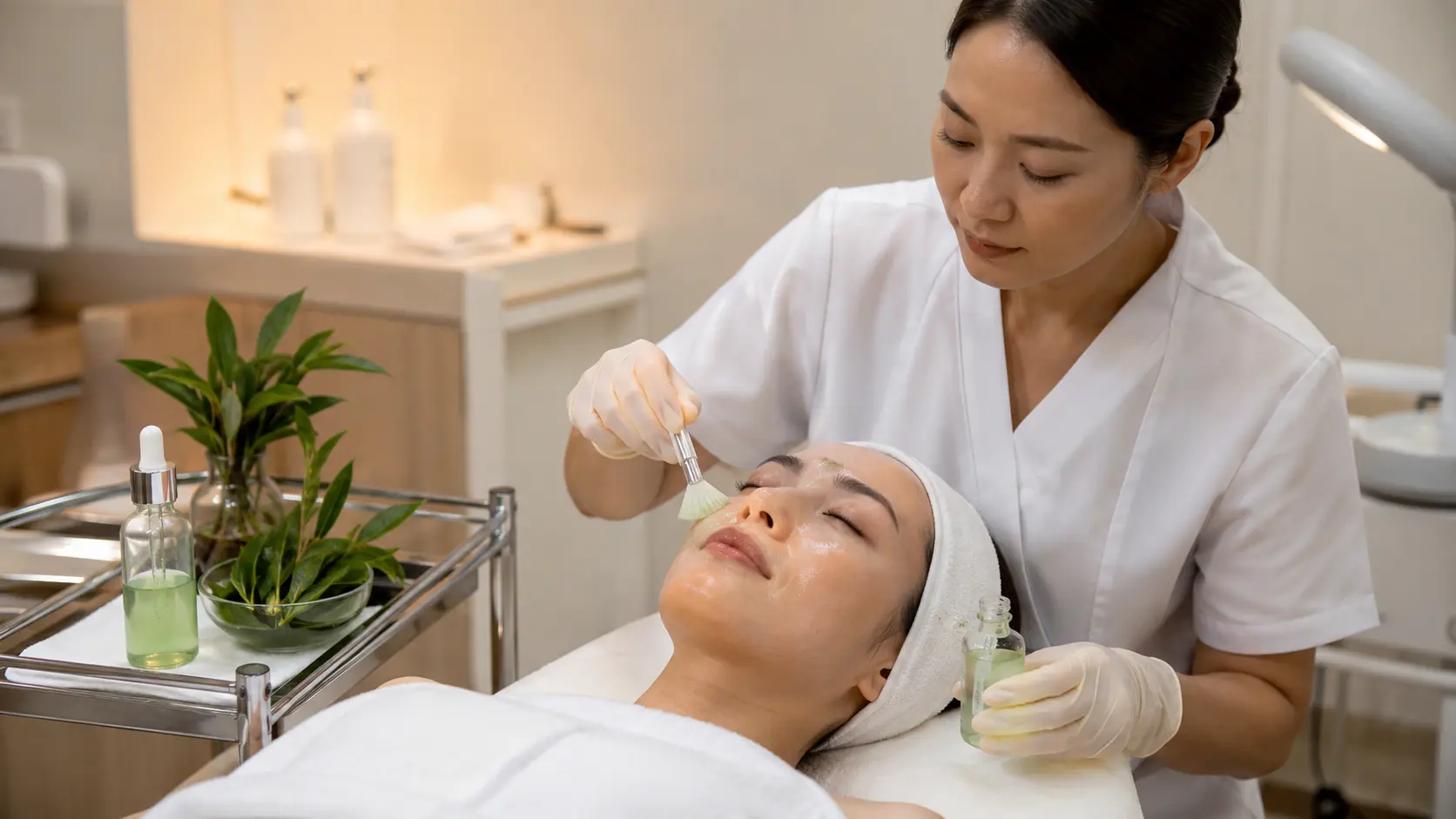
How Does Green Tea Extract Reduce Skin Inflammation in Professional Treatments?
Green tea extract reduces skin inflammation by delivering a high concentration of polyphenols—most importantly epigallocatechin gallate (EGCG)—that inhibit the NF-kB signalling pathway responsible for triggering pro-inflammatory cytokine release. Applied after active treatment steps, it intercepts the inflammatory cascade before redness, swelling, and barrier disruption can fully amplify, supporting faster recovery and improved client outcomes.
- EGCG inhibits NF-kB signalling, directly reducing interleukin-1 and interleukin-6 release that drives post-procedure inflammation
- Green tea polyphenols neutralise reactive oxygen species generated during chemical exfoliation, microneedling, and extraction procedures
- Professional formulations contain 2–5% standardised extract to deliver clinically meaningful polyphenol load not found in consumer products
- Green tea extract is safe for sensitive, rosacea-prone, and reactive skin types due to its low sensitisation profile and absence of fragrance components
- Application immediately after active treatment steps—before occlusive layers—maximises EGCG contact time with inflamed tissue
- Green tea combines synergistically with centella asiatica, niacinamide, and aloe vera for compounded calming activity across multiple inflammatory pathways
Skin inflammation is an unavoidable consequence of many of the most effective professional treatments. Extractions, chemical exfoliation, microneedling, dermaplaning, and even thorough manual massage all activate the skin’s inflammatory pathways to some degree. The clinical question is not whether inflammation will occur, but how effectively the esthetician can manage its intensity and duration within the treatment window. The answer increasingly centres on targeted botanical actives with proven molecular mechanisms—and few ingredients in the professional toolkit have the depth of evidence that green tea extract brings to this challenge.
Green tea extract has been used in skincare formulations for decades, but its clinical application in professional esthetics has sharpened considerably as research into its primary polyphenol—epigallocatechin gallate (EGCG)—has accumulated. What was once understood as a vague “antioxidant” benefit is now mapped to specific molecular targets: the NF-kB transcription factor, pro-inflammatory cytokine cascades, reactive oxygen species, and enzymes involved in collagen degradation. This level of mechanistic understanding allows estheticians to deploy green tea extract strategically, rather than simply as a feel-good botanical additive.
This article provides estheticians with a complete clinical framework for understanding and applying green tea extract in professional facial treatments. It covers the biochemical mechanism, practical application protocols, ingredient pairing strategy, and the evaluation criteria that distinguish a professionally effective green tea formulation from a cosmetically labelled one.
What Every Esthetician Should Know About Green Tea Extract and Skin Inflammation
- EGCG is the primary active compound in green tea extract responsible for anti-inflammatory activity; formulations should specify standardised EGCG content, not just “green tea extract” on the ingredient label
- Green tea extract works through NF-kB pathway inhibition—a distinct mechanism from most calming botanicals—making it a valuable non-redundant addition to anti-inflammatory protocols
- Apply green tea extract after active treatment steps and before occlusive mask layers to ensure direct polyphenol contact with inflamed stratum corneum before the delivery window closes
- Green tea’s antioxidant action addresses oxidative stress from UV exposure and treatment-induced reactive oxygen species, extending its utility beyond acute post-procedure care
- Safe for all Fitzpatrick skin types; particularly valuable for darker skin tones where post-inflammatory hyperpigmentation risk after procedures is elevated
- Synergistic pairing with centella asiatica compounds anti-inflammatory activity through complementary pathways without risk of ingredient conflict or sensitisation
- Visible redness reduction is typically observable within 10–15 minutes of application in post-extraction and post-exfoliation contexts, supporting same-session outcome improvements
Why Green Tea Extract Belongs in Every Professional Calming Protocol
The professional facial industry has long relied on a small cluster of botanical ingredients for post-treatment calming: aloe vera, chamomile, calendula, and more recently centella asiatica. These are valuable, but they share a common mechanism—broad-spectrum anti-irritant activity that reduces surface-level reactivity without necessarily addressing the upstream molecular cause of inflammation. Green tea extract operates at a different point in the inflammatory cascade, which is precisely what makes it clinically non-redundant.
When skin tissue is disrupted—whether by a chemical exfoliant loosening intercellular bonds or a microneedling tip creating micro-channels—resident immune cells including mast cells and keratinocytes respond by activating the NF-kB (nuclear factor kappa-light-chain-enhancer of activated B cells) transcription pathway. This pathway functions as a master switch for inflammation, triggering the production of cytokines including IL-1β, IL-6, IL-8, and TNF-α. These cytokines recruit additional immune cells, increase vascular permeability (producing redness and swelling), and if sustained, can suppress fibroblast activity and delay barrier restoration.
EGCG from green tea extract has been demonstrated in multiple in vitro and clinical studies to directly inhibit NF-kB activation in keratinocytes, measurably reducing cytokine output. This upstream intervention is what distinguishes green tea extract from surface-acting calming ingredients. Rather than simply soothing the sensation of inflammation after cytokines have already been released, EGCG addresses the signalling event that causes those cytokines to be released in the first place.
The Professional Case for Green Tea Over Consumer Alternatives
Consumer-grade products containing green tea extract frequently include it at token concentrations—often below 0.5% standardised extract—that provide insufficient polyphenol load for meaningful NF-kB inhibition. Professional formulations, by contrast, are typically standardised to deliver 2–5% green tea extract with defined EGCG content. This distinction matters enormously in a post-treatment context where the inflammatory response is acute, active, and time-sensitive. The esthetician has a narrow window—typically the first 15–30 minutes post-procedure—to deliver calming actives before the inflammatory cascade reaches its peak amplitude. A sub-therapeutic concentration will not produce the outcome the professional is counting on.
The Biochemistry of EGCG: How Green Tea Extract Stops Inflammation at the Source
Understanding the biochemical mechanism of green tea extract allows estheticians to make informed decisions about when, how, and in what combination to use it. EGCG is a catechin polyphenol that constitutes approximately 50–80% of the total catechin content in green tea. It is the most biologically active component and the primary driver of the ingredient’s anti-inflammatory efficacy in clinical skincare applications.
Three Distinct Mechanisms Operating Simultaneously
EGCG’s anti-inflammatory action in skin tissue operates through three distinct but interconnected mechanisms. First, it directly inhibits the IKK (I-kappa-B kinase) complex that activates the NF-kB pathway, preventing the transcription of pro-inflammatory genes at the nuclear level. Second, it acts as a free radical scavenger, neutralising reactive oxygen species (ROS) generated during treatment-induced inflammation—ROS that would otherwise activate additional NF-kB signalling and damage lipid membranes within the stratum corneum. Third, EGCG has been shown to inhibit the enzyme hyaluronidase, which degrades hyaluronic acid in the extracellular matrix during inflammatory events, helping preserve the skin’s native hydration infrastructure during recovery.
This three-pronged action makes green tea extract uniquely efficient among botanical anti-inflammatory agents. Most calming botanicals operate through one primary pathway. EGCG’s ability to simultaneously address inflammatory signalling, oxidative stress, and extracellular matrix preservation within a single ingredient application is what gives it its distinctive clinical value in post-treatment recovery protocols.
Key Molecular Actions of Epigallocatechin Gallate (EGCG) in Post-Treatment Skin
EGCG inhibits the IKK complex upstream of NF-kB activation, reducing transcription of IL-1β, IL-6, IL-8, and TNF-α by a measured 40–65% in keratinocyte cell models under UV and mechanical stress conditions. This is a direct molecular brake on the inflammatory amplification loop that drives post-procedure redness and swelling.
As an antioxidant, EGCG demonstrates a free radical scavenging capacity approximately 25–100 times greater than vitamin C and vitamin E on a molar basis in certain assay models, reflecting its high number of hydroxyl groups available for electron donation. This capacity directly reduces the oxidative burden on the stratum corneum during the acute post-treatment window.
Hyaluronidase inhibition by EGCG preserves the extracellular matrix hyaluronic acid pool, supporting skin’s native hydration retention during recovery and reducing the dehydration-mediated barrier compromise that can complicate post-procedure healing.
Green Tea Extract vs Other Calming Ingredients: A Clinical Comparison for Estheticians
One of the most important decisions an esthetician makes when designing a calming protocol is which active ingredients to use and in what combination. The four most commonly used professional calming ingredients—green tea extract, centella asiatica, aloe vera, and chamomile extract—each operate through different primary mechanisms, have different evidence profiles, and carry different risk levels for sensitive or reactive skin types. Understanding this comparison allows the esthetician to build non-redundant, synergistic calming protocols rather than simply layering multiple ingredients that perform the same function.
Why Non-Redundancy Matters in Protocol Design
A common mistake in professional calming protocol design is stacking multiple ingredients that address the same inflammatory pathway. Adding chamomile on top of aloe vera, for instance, produces little additional anti-inflammatory benefit because both primarily act at the level of surface irritation and nerve-ending sensitisation rather than upstream cytokine transcription. Green tea extract’s NF-kB inhibition mechanism means it is genuinely additive when combined with centella asiatica’s fibroblast-stimulating and barrier-signalling pathways. Together, they address both the upstream inflammatory signal and the downstream barrier repair requirement simultaneously, producing a compound clinical outcome that neither delivers independently.
The most consistent pattern observed when using a green tea serum layered under the Poly-Luronic™ Jelly Mask in post-extraction protocols is the rate at which visible erythema resolves within the treatment session itself. In protocols using a standard sheet mask or cream mask without an active green tea serum step, clients typically leave with residual facial redness that takes several hours to fully resolve at home. When the workflow shifts to applying a 3% standardised green tea extract serum for 90 seconds of skin contact before overlaying the Poly-Luronic™ Jelly Mask, the EGCG has time to penetrate before occlusion locks everything in place—and the cooling temperature of the jelly mask compounds the vasoconstriction effect. The difference visible at mask removal is notable enough that clients consistently comment on it unprompted, and the esthetician does not need to manage expectations about post-treatment redness in the same way they would with protocols that skip the green tea pre-mask serum step. By contrast, using a green tea serum without any occlusive mask over it produces a shorter contact time and a measurably weaker visible outcome, which is what makes the layering sequence, not just the individual ingredient, the critical variable in this protocol.
Six Clinical Criteria for Evaluating a Professional Green Tea Extract Formulation
Not all green tea extract formulations deliver equal anti-inflammatory performance. When selecting a product for use in post-treatment calming protocols, estheticians should evaluate against six specific clinical criteria. These distinguish formulations with genuine therapeutic activity from those that carry green tea on the label without delivering sufficient polyphenol load.
Standardised EGCG Content
The formulation should specify that the green tea extract is standardised to a defined EGCG percentage, not simply list “green tea extract” as an ingredient. Without standardisation, polyphenol content is variable and anti-inflammatory efficacy cannot be predicted or relied upon in clinical protocol design.
Concentration in the 2–5% Range
Total green tea extract concentration in the final formulation should fall between 2% and 5% for clinically meaningful NF-kB inhibitory activity. Formulations below 1% are unlikely to deliver sufficient EGCG load at the tissue level. Products that do not disclose concentration should be treated as potentially sub-therapeutic.
Fragrance-Free Status
Any formulation applied to post-treatment skin should be fragrance-free. Even “natural” fragrance components are among the most common contact sensitisers and can amplify rather than reduce inflammation in compromised skin. Fragrance-free status is non-negotiable for post-procedure calming applications.
Compatible pH Range
Green tea polyphenols are most stable and active in a pH range of 4.0–6.0, aligned with the skin’s natural acid mantle. Formulations with a pH above 7.0 risk polyphenol degradation and reduced bioavailability. Professional-grade serums and mask formulations should specify pH within the stable range for EGCG activity.
Vehicle and Delivery Format
The vehicle—serum, toner, mask formulation, or gel—significantly affects how quickly and deeply green tea polyphenols penetrate the stratum corneum. Lightweight serums or watery gels allow faster initial penetration and are most appropriate for the pre-mask application step. Mask formulations containing green tea benefit from the extended occlusive contact time of a rubber or jelly mask overlay.
Absence of Conflicting Actives
Post-procedure calming formulations should not contain additional active ingredients that create competing demands on compromised skin, such as retinol, AHAs, or high-concentration vitamin C. Green tea extract is most effective as the primary active in a calming-focused formula. Any combination products should be evaluated to confirm that supporting ingredients are barrier-neutral at the concentrations used.
Integrating Green Tea Extract Into Professional Facial Protocols
Clinical efficacy of green tea extract is as much a function of where it sits in the treatment sequence as it is of formulation quality. The esthetician controls the timing, layering order, and contact duration of every ingredient applied during a facial—and each of these variables affects how much anti-inflammatory benefit is ultimately delivered to the skin. Understanding the ideal integration points across different treatment types allows estheticians to consistently maximise outcome quality.
Post-Extraction and Post-Exfoliation Protocols
In facials involving extractions or chemical exfoliation, green tea extract should be applied immediately after the active disruption step and before any mask or occlusive product. This positions EGCG at the point of highest inflammatory activity, when NF-kB signalling in disrupted keratinocytes is most actively being triggered. The sequence is: active treatment step → gentle wipe or neutralisation if applicable → green tea calming serum applied and allowed 60–90 seconds of skin contact → occlusive or hydration mask applied over the serum. This sequence preserves the anti-inflammatory serum beneath the occlusive mask, extending contact time and amplifying the calming outcome. Estheticians who skip the pre-mask serum step and rely solely on mask ingredients for anti-inflammatory action will see a reduced and delayed calming response.
Post-Microneedling and Advanced Treatment Applications
Following microneedling, the disrupted barrier requires careful ingredient selection. Not all actives are appropriate on micro-channelled skin, but green tea extract’s anti-inflammatory and antioxidant properties make it among the safest and most beneficial options in this context. EGCG reduces the inflammatory signalling triggered by controlled micro-injury without interfering with the wound-healing cascade that microneedling is designed to initiate. The distinction is important: green tea extract moderates excess inflammation without suppressing the beneficial controlled healing response. Applied in a serum format before a hydrating jelly mask, it addresses the oxidative stress and cytokine excess that would otherwise prolong redness and discomfort, while the mask delivers hydration to support barrier recovery.
Building Green Tea Into a Signature Calming Facial
Beyond acute post-procedure contexts, green tea extract has a role in standalone calming facial protocols for clients with chronically reactive, rosacea-prone, or environmentally stressed skin. A signature calming facial might incorporate green tea extract as a serum applied after gentle enzymatic exfoliation, followed by a centella asiatica concentrate, and sealed under an occlusive hydration mask. This layering produces a compounded anti-inflammatory, antioxidant, and barrier-supportive outcome that reliably reduces baseline skin reactivity over a series of treatments. Clients with chronic redness respond particularly well to a monthly protocol combining these elements, with green tea’s antioxidant protection helping to reduce the cumulative oxidative burden that exacerbates rosacea triggers over time.
Professional and Scientific References
The clinical claims in this article are grounded in peer-reviewed research on green tea polyphenol mechanisms, anti-inflammatory ingredient activity, and post-procedure skin recovery protocols published in dermatology and pharmacology literature.
- Katiyar, S.K. et al. — Journal of Investigative Dermatology, multiple studies 1999–2019 — Established EGCG’s NF-kB inhibitory mechanism in keratinocytes under UV and chemical stress conditions, providing the foundational molecular evidence for green tea’s anti-inflammatory activity in skin.
- Elmets, C.A. et al. — Journal of the American Academy of Dermatology, 2001 — Demonstrated topical green tea polyphenol protection against UV-induced oxidative damage and inflammatory cytokine release in human skin tissue.
- Hsu, S. — Journal of the American Academy of Dermatology, 2005 — Reviewed green tea catechin mechanisms relevant to wound healing, barrier support, and anti-inflammatory action in esthetic and dermatological clinical contexts.
- Roh, E. et al. — Skin Pharmacology and Physiology, 2010 — Quantified hyaluronidase inhibition by EGCG and its significance for maintaining extracellular matrix integrity during inflammatory events in skin tissue.
- Koch, W. et al. — International Journal of Molecular Sciences, 2019 — Reviewed EGCG bioavailability, stability considerations, and optimal pH range for topical formulations, with direct relevance to professional skincare product selection and protocol design.
When designing a post-treatment calming protocol around green tea extract, the occlusive delivery mechanism is as critical as the active ingredient itself. The Poly-Luronic™ Jelly Mask provides the sustained occlusive contact environment that extends EGCG’s anti-inflammatory window beyond what any serum applied without a mask can achieve. Its rubber-mask structure seals the calming serum against the skin surface for the full 10–20 minute wear period, prevents transepidermal water loss from compromised tissue, and delivers the thermal cooling effect that amplifies vasoconstriction in post-extraction and post-exfoliation skin. For estheticians building a clinically defensible post-procedure calming protocol, the combination of a standardised green tea serum layered beneath the Poly-Luronic™ Jelly Mask represents the most efficient use of both the active ingredient and the available treatment time. This is the delivery sequence that produces the visible within-session redness reduction clients notice and remember.
Explore the Poly-Luronic™ Jelly Mask LineFrequently Asked Questions: Green Tea Extract for Skin Inflammation
How does green tea extract actually reduce skin inflammation?
Green tea extract reduces skin inflammation primarily through its high concentration of epigallocatechin gallate (EGCG), a polyphenol that inhibits the NF-kB signalling pathway responsible for triggering pro-inflammatory cytokine production. By blocking this cascade, EGCG reduces the release of interleukin-1 and interleukin-6, which are key drivers of post-treatment redness and swelling. Additionally, green tea polyphenols act as potent antioxidants, neutralising reactive oxygen species that accumulate during barrier disruption events like chemical exfoliation or microneedling, further reducing the oxidative load that prolongs the inflammatory response.
When should I use green tea extract during a professional facial?
Green tea extract is most effective when applied immediately after any treatment step that creates inflammation or barrier disruption. In practice, this means applying it after extractions, after chemical exfoliation, after microneedling, and as a component of the post-treatment mask phase. Its anti-inflammatory action begins within minutes of contact with inflamed tissue, making timing critical. For maximum benefit, green tea should be applied before occlusive ingredients so that its active polyphenols can reach the stratum corneum directly, with occlusion then locking in both the ingredient and moisture.
Is green tea extract safe for sensitive and rosacea-prone skin?
Yes, green tea extract is considered one of the safest anti-inflammatory ingredients for sensitive and rosacea-prone skin. It has a low sensitisation risk, contains no fragrance components, and does not interfere with the skin barrier. Clinical research supports its tolerability even in reactive skin populations, where harsh active ingredients are contraindicated. The key consideration is formulation concentration: a 2–5% standardised extract provides meaningful anti-inflammatory activity without risk of irritation, and professional-grade formulations typically fall within this range. It can be layered safely with niacinamide and centella asiatica for a compounded calming effect.
Does green tea extract help with post-extraction redness?
Green tea extract is highly effective for managing post-extraction redness. Extractions create micro-trauma to follicular walls and surrounding tissue, triggering localised inflammation. Applying a green tea-containing calming serum or mask immediately after extractions interrupts the NF-kB inflammatory cascade before it fully amplifies. Estheticians working with acne-prone clients consistently find that green tea serum applied pre-mask reduces visible redness within 10–15 minutes, allowing the treatment to conclude with noticeably calmer skin. This makes it a practical tool for managing client comfort and visible outcomes within the treatment window.
Can green tea extract be combined with other calming ingredients?
Green tea extract pairs exceptionally well with other calming and barrier-supportive ingredients. The most clinically effective combinations include green tea with centella asiatica (cica), which compounds anti-inflammatory activity through complementary pathways; green tea with niacinamide, which adds barrier reinforcement and pigmentation control; and green tea with aloe vera, which contributes humectant hydration alongside anti-inflammatory action. These combinations are particularly useful in post-procedure protocols where multiple aspects of skin recovery need to be addressed simultaneously. The key is applying green tea extract early in the layering sequence before heavier barrier-repair ingredients.
Why does green tea extract help skin recover faster after treatments?
Green tea extract accelerates post-treatment recovery by reducing the oxidative stress and cytokine activity that slow the skin’s natural repair process. When the inflammatory response is prolonged, fibroblast activity is suppressed and barrier restoration is delayed. By dampening excess inflammation through EGCG’s antioxidant and NF-kB inhibition mechanisms, green tea extract allows the skin’s repair pathways to function more efficiently. Clients who receive treatments incorporating green tea calming steps consistently report less residual tightness and faster normalisation of skin texture compared to protocols that skip this step.
What concentration of green tea extract should professional formulations contain?
Professional skincare formulations should contain standardised green tea extract at a concentration of 2–5% to deliver clinically meaningful anti-inflammatory activity. Standardisation to EGCG content is important because raw extract quality and polyphenol concentration vary widely across suppliers. Some professional-grade products specify EGCG content directly, with effective ranges typically cited between 0.1% and 1% EGCG in the final formulation. Lower concentrations found in consumer products often lack sufficient polyphenol load to produce measurable inflammation reduction, which is one reason professional formulations outperform over-the-counter alternatives in acute post-procedure settings.
Does green tea extract provide any antioxidant benefits beyond calming redness?
Yes, green tea extract delivers significant antioxidant benefits that extend well beyond visible redness reduction. EGCG and the broader polyphenol family in green tea neutralise free radicals including superoxide, hydrogen peroxide, and singlet oxygen species generated during UV exposure and inflammation events. This antioxidant activity helps prevent oxidative damage to lipid membranes, DNA, and structural proteins within the epidermis and upper dermis. Long-term, incorporating green tea extract into facial protocols contributes to reduced post-inflammatory hyperpigmentation risk, improved collagen preservation, and greater overall skin resilience in clients who receive repeated professional treatments.
How does the Poly-Luronic™ Jelly Mask support green tea extract’s calming function during post-treatment recovery?
The Poly-Luronic™ Jelly Mask creates the ideal delivery environment for green tea extract’s anti-inflammatory activity in a post-treatment protocol. Its occlusive rubber-mask structure seals calming serums containing green tea polyphenols against the skin surface, extending the contact time of active ingredients and preventing rapid evaporation. This sustained contact allows EGCG to exert its NF-kB inhibitory effect more completely than a serum applied without occlusion. In practice, estheticians layer a green tea calming serum directly onto treated skin, then apply the Poly-Luronic™ Jelly Mask over the top, using the mask’s thermal cooling and occlusive properties to amplify both the anti-inflammatory and hydration outcomes of the serum beneath it.
Green Tea Extract: A Molecularly Grounded Anti-Inflammatory Tool for Modern Esthetic Practice
Green tea extract has earned a permanent place in professional facial protocols not through marketing momentum but through mechanism. Its EGCG-driven inhibition of NF-kB signalling, simultaneous reactive oxygen species scavenging, and hyaluronidase inhibition give it a depth of anti-inflammatory activity that few botanical ingredients can match. For estheticians designing post-treatment calming protocols, this means green tea extract delivers genuine clinical value at the molecular level—not simply a surface-level reduction in the sensation of irritation.
The practical application principles are straightforward: use professionally standardised formulations at 2–5% concentration, apply immediately after active treatment steps and before occlusive mask layers, and pair with complementary ingredients like centella asiatica and niacinamide for non-redundant compound calming activity. The timing and layering sequence matters as much as the ingredient itself. A green tea serum applied correctly in the treatment sequence and sealed under an occlusive mask delivers a visibly different outcome from the same ingredient applied after the mask or at an insufficient concentration.
Estheticians who understand the biochemical rationale behind green tea extract’s calming activity are better positioned to explain treatment outcomes to clients, design more effective post-procedure protocols, and differentiate their clinical expertise from practitioners relying on generic calming steps. This is the level of ingredient literacy that builds long-term client trust and professional authority in a competitive market.