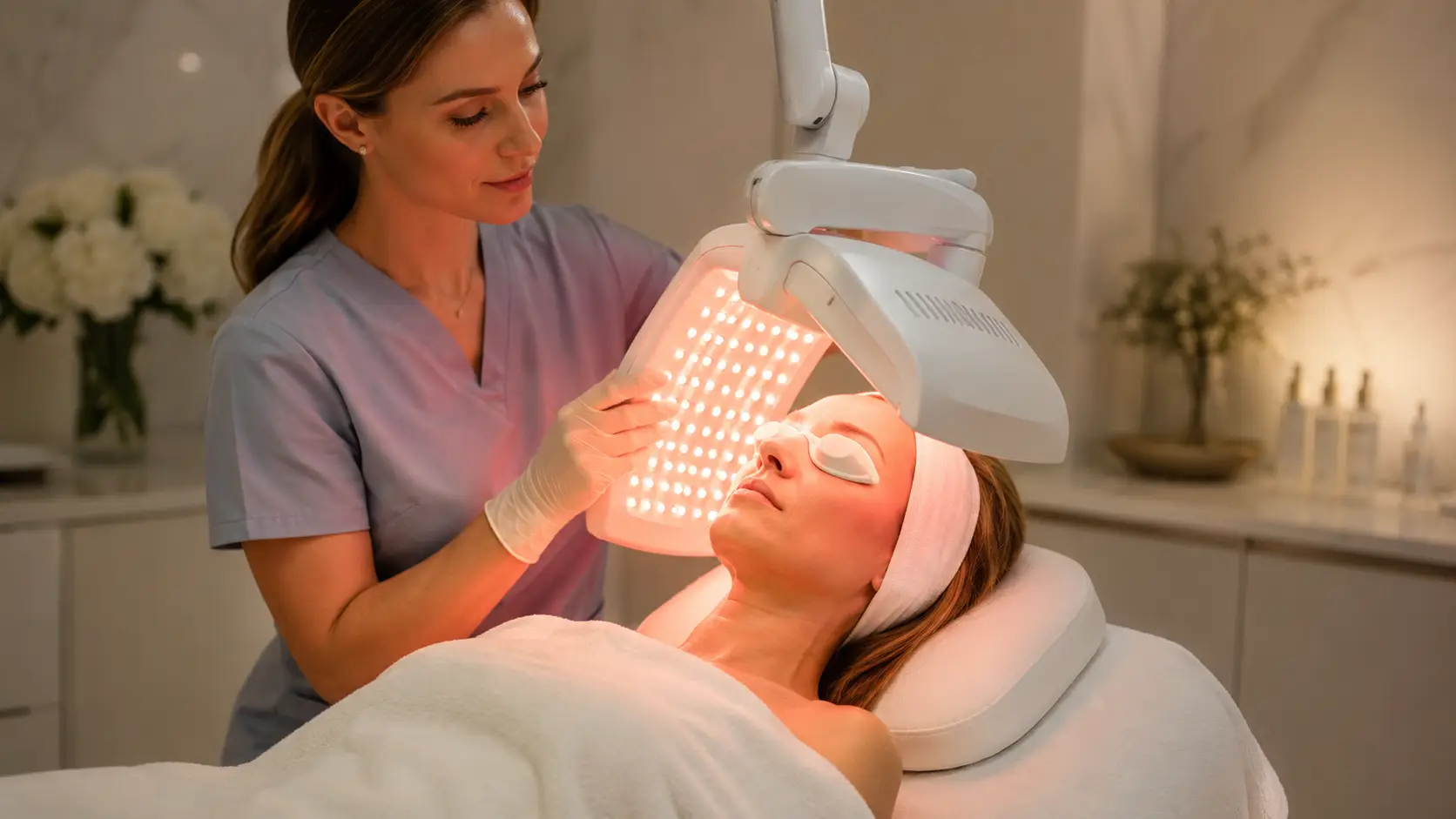
What Wavelengths Are Best for Skin Rejuvenation?
The most clinically validated wavelengths for skin rejuvenation are red light at 630–660 nm and near-infrared (NIR) at 830–850 nm. Red light penetrates 1–2 mm into the epidermis and upper dermis, where it stimulates fibroblasts to increase collagen and elastin production through cytochrome c oxidase absorption and ATP upregulation. Near-infrared penetrates 3–5 mm into the deep dermis and subcutaneous tissue, driving deeper structural remodeling, reducing chronic inflammation, and improving tissue integrity at a depth red light alone cannot access. Together, they form the evidence-based dual-wavelength standard for professional anti-aging LED protocols.
- Red light (630–660 nm) is the primary anti-aging wavelength — it targets fibroblasts in the upper dermis to drive Type I and III collagen synthesis, elastin production, and epidermal renewal through the photobiomodulation cascade.
- Near-infrared (830–850 nm) complements red by reaching deeper dermal and subcutaneous structures, delivering inflammation reduction and remodeling stimulus at a depth that produces visible improvement in skin laxity, firmness, and structural density.
- Amber (590 nm) is a clinically meaningful supplementary wavelength for redness, visible capillaries, and microcirculation — it does not replace red or NIR for core collagen outcomes but adds targeted vascular support for the right client profile.
- Wavelength specificity matters independently of irradiance — high power output at the wrong wavelength does not stimulate the same cellular response as correct wavelength at appropriate irradiance.
- The strongest professional rejuvenation outcomes are produced by simultaneous or combined red-plus-NIR delivery, which addresses surface texture, mid-dermis collagen, and deep structural integrity within a single treatment session.
- A structured course of 8–12 sessions is required for meaningful collagen accumulation — wavelength selection is the first protocol decision; session frequency and total course length are equally critical variables.
Wavelength is the most frequently misunderstood variable in professional LED therapy. It is also the most consequential. An esthetician can own a device with the right irradiance, deliver the correct session duration, and maintain a consistent protocol schedule — and still produce suboptimal outcomes if the wavelength delivered does not match the biological target the treatment objective requires. For skin rejuvenation specifically, where the goal is to stimulate structural changes in the dermis rather than destroy bacteria or target surface pigmentation, wavelength selection is a foundational clinical decision, not a secondary consideration.
The LED market has complicated this decision by multiplying the number of wavelengths marketed to estheticians, often with overlapping claims and insufficient clinical context. Red, near-infrared, amber, yellow, green, blue — each wavelength has proponents, and some have genuine clinical evidence behind them. But for the specific objective of skin rejuvenation — defined as measurable improvement in collagen density, skin texture, tone evenness, firmness, and the visible signs of aging — the evidence base points clearly to a subset of wavelengths, a specific depth range, and a specific mechanism.
This article builds the clinical case for that subset. It covers the physics that governs why certain wavelengths reach certain depths, the cellular mechanisms that translate photon absorption into collagen synthesis, and the practical protocol architecture that converts wavelength science into visible client outcomes. It also addresses the role of amber as a meaningful supplementary wavelength and why green, yellow, and other visible wavelengths occupy a more limited role in evidence-based rejuvenation protocols.
What Estheticians Need to Know About Wavelengths for Skin Rejuvenation
- The two best-evidenced wavelengths for skin rejuvenation are red (630–660 nm) for upper dermal collagen and NIR (830–850 nm) for deep structural remodeling. No other wavelength matches their combined evidence base for anti-aging outcomes.
- Penetration depth is a physical property of light, not a device setting. Wavelength determines depth — it cannot be adjusted by increasing power.
- Fibroblasts — the cells that produce collagen and elastin — are located 0.5–3 mm below the skin surface. Red light reliably reaches them; blue light does not. NIR reaches deeper fibroblasts that red cannot access.
- Amber (590 nm) adds genuine clinical value for vascular redness, visible capillaries, and microcirculation support, but does not substitute for red or NIR in collagen protocols.
- Irradiance and wavelength are independent variables — both must be correct simultaneously. High irradiance at an incorrect wavelength does not produce the target photobiomodulation response.
- Professional multi-channel devices delivering simultaneous red-plus-NIR cover the full dermis depth range in a single session, compressing protocol time without sacrificing clinical comprehensiveness.
- Results are cumulative. Wavelength selection defines what the protocol can achieve; session frequency and course length determine whether it does.
Why Does Wavelength Determine What a Rejuvenation Treatment Can Actually Do?
The answer begins with physics. Light traveling through biological tissue undergoes two processes simultaneously: absorption and scattering. Absorption occurs when a photon encounters a molecule — a chromophore — that can capture its energy. Scattering occurs when the photon is deflected without being absorbed, reducing its effective depth of penetration. Both absorption and scattering are wavelength-dependent: shorter wavelengths (higher energy per photon, such as blue at 415 nm) scatter more aggressively and are absorbed more rapidly near the surface. Longer wavelengths (lower energy per photon, such as NIR at 850 nm) scatter less and penetrate more deeply before being absorbed by chromophores at greater tissue depth.
This is not a design limitation of any particular device — it is the fundamental optical physics of biological tissue. A device cannot be engineered to make blue light penetrate to the dermis or to keep NIR at the surface. Wavelength and penetration depth are permanently coupled. Every clinical protocol decision that follows from this understanding is therefore grounded in a physical constant, not a variable that technology can change.
The Therapeutic Window: Where Rejuvenation Wavelengths Live
The range of wavelengths that can penetrate biological tissue deeply enough to produce photobiomodulation effects at therapeutic cell types is called the optical therapeutic window. It runs from approximately 600 nm to 1,100 nm. Below 600 nm, haemoglobin and melanin absorption are high enough to prevent meaningful photon penetration to the dermis. Above 1,100 nm, water absorption rapidly increases, reducing the energy available for chromophore interactions in deep tissue.
This window is the physical rationale for why red and near-infrared are the primary rejuvenation wavelengths: they sit within this window at the penetration depths that place their energy delivery precisely at the depth of the cell types — fibroblasts and extracellular matrix components — that produce the structural improvements estheticians are seeking to stimulate. Wavelengths outside this window (blue at 415 nm, green at ~530 nm) operate through different mechanisms at different depths for different objectives, which is why they do not replace red and NIR for collagen-focused rejuvenation.
Where Fibroblasts Live and Why That Determines the Optimal Wavelength
Fibroblasts — the dermal cells responsible for synthesizing collagen, elastin, and the glycosaminoglycans that give skin its structural integrity and resilience — are distributed throughout the dermis. The dermis itself begins approximately 0.5 mm below the skin surface and extends to around 3–4 mm. The highest concentration of fibroblasts is in the papillary and upper reticular dermis, approximately 0.5–2 mm below the surface. Deeper reticular dermis fibroblasts extend to 3–4 mm; structural fibers anchoring the dermis to subcutaneous tissue extend further still.
Red light at 630–660 nm penetrating 1–2 mm places its energy precisely within the upper dermal fibroblast zone. Near-infrared at 830–850 nm penetrating 3–5 mm extends that stimulation to deeper reticular dermis fibroblasts and the structural interface with subcutaneous tissue. Together, they address the full anatomical range of collagen-producing cells. This is not a coincidence — it is the clinical rationale behind why professional rejuvenation protocols use both wavelengths rather than either alone.
Red Light (630–660 nm): The Core Rejuvenation Wavelength and Why
Red light at 630–660 nm has the largest and most consistent body of peer-reviewed evidence among all visible LED wavelengths for skin rejuvenation outcomes. Its mechanism is well-characterized, its clinical results are reproducible, and its target cell types are precisely those involved in the structural deterioration that characterizes aging skin. For any esthetician designing an anti-aging LED protocol, red light is the anchor wavelength around which everything else is built.
The Mechanism: From Photon Absorption to Collagen Synthesis
When red light photons at 630–660 nm reach the dermis, they are absorbed by cytochrome c oxidase (CCO) — the terminal enzyme in the mitochondrial electron transport chain. CCO contains copper and heme groups that act as chromophores with absorption peaks within this red wavelength range. Photon absorption by CCO produces three immediate downstream effects: it increases electron flow through the respiratory chain, measurably increasing ATP production; it displaces nitric oxide (NO) from CCO, releasing free NO into local tissue; and it generates a low-level reactive oxygen species (ROS) signal that acts as a secondary messenger for gene expression changes.
The ATP upregulation is the central driver of collagen outcomes. Fibroblasts with greater ATP availability have enhanced capacity to synthesize the proteins and glycoproteins that constitute the extracellular matrix — primarily Type I and Type III collagen, elastin, fibronectin, and hyaluronic acid. The NO release produces vasodilation in local microvasculature, improving oxygen and nutrient delivery to the treatment area. The ROS signal activates transcription factors that upregulate collagen synthesis genes, creating a sustained post-treatment response that extends beyond the session itself.
Clinical Outcomes Supported by Peer-Reviewed Evidence
The clinical outcomes of red light therapy in the 630–660 nm range that are supported by controlled human studies include measurable increases in Type I and Type III collagen density assessed by skin biopsy and non-invasive profilometry, reduction in fine line depth and skin surface roughness, improvement in skin elasticity measured by cutometer, accelerated wound healing and post-procedure recovery following laser resurfacing and dermabrasion, and reduction in inflammatory markers including prostaglandins and pro-inflammatory cytokines associated with reactive and sensitized skin. The consistency of these outcomes across independent research groups — in different populations, using different red wavelength devices, across different protocol lengths — is what distinguishes red light from wavelengths with only preliminary or anecdotal rejuvenation evidence.
What Red Light Cannot Do Alone
Despite its evidence base, red light at 630–660 nm has a depth limitation that is clinically meaningful for clients with more advanced aging presentations. Its 1–2 mm penetration reliably stimulates the upper dermal fibroblast population but does not reliably reach the deeper reticular dermis where structural collagen networks associated with skin laxity and volume loss are maintained. For clients with significant laxity, deep-set lines, or substantial volume loss, red light alone produces surface improvement without addressing the structural depth where the most significant collagen degradation has occurred. This is precisely where near-infrared becomes clinically essential rather than optional.
Near-Infrared (830–850 nm): The Deep Rejuvenation Wavelength
Near-infrared light is invisible to the human eye — a client receiving NIR treatment will not see the characteristic warm red glow associated with 660 nm red light. This invisibility is not a clinical weakness; it is a consequence of the physics that also gives NIR its most valuable clinical property: the ability to penetrate 3–5 mm into tissue, well beyond the reach of any visible wavelength in the therapeutic range.
What NIR Reaches That Red Cannot
At 3–5 mm penetration, near-infrared reaches the deep reticular dermis and the dermo-subcutaneous interface — the anatomical zone where structural collagen networks, sebaceous glands, and deep fibroblast populations reside. This is also the depth at which chronic, low-grade dermal inflammation — one of the primary drivers of accelerated aging in mature skin — is most persistently active. The same cytochrome c oxidase absorption mechanism that drives red light’s effects operates at this greater depth for NIR, producing ATP upregulation, NO release, and gene expression changes in deeper fibroblast populations that red light simply cannot reach at therapeutic doses.
For estheticians treating clients with visible laxity, loss of facial contour, deep nasolabial lines, or post-menopausal skin changes, the NIR channel is not an enhancement — it is the wavelength addressing the depth where the clinical problem is primarily located. Red light alone in these presentations will produce surface improvements that clients may appreciate but will not fully resolve the deeper structural deficit that NIR can begin to address over a sustained protocol course.
NIR and Inflammation: The Recovery Application
Near-infrared’s deep anti-inflammatory properties are also what make it the wavelength of choice for post-procedure recovery protocols. Following microneedling, chemical peels, or laser resurfacing, inflammatory activity occurs at multiple tissue depths simultaneously — not just at the surface where the treatment was applied. NIR at 830–850 nm penetrates to the deeper inflammatory zones and reduces pro-inflammatory cytokine activity, accelerating barrier repair and recovery across the full tissue depth affected by the procedure. Estheticians who have incorporated NIR into their post-procedure protocols as standard practice consistently report reduced visible redness and faster client return to normal appearance compared to post-procedure protocols without LED recovery.
The Irradiance Paradox at NIR Wavelengths
One technical nuance that estheticians evaluating NIR-capable devices should understand: because photons scatter and are partially absorbed as they penetrate tissue, the effective irradiance at 3–5 mm depth is lower than the surface irradiance of the device. This means that the surface-level irradiance specified for a NIR device must be higher than that for a red light device to deliver an equivalent effective dose at the target depth. A device delivering 50 mW/cm² of NIR at the skin surface delivers substantially less energy at 3–5 mm than a device delivering 100 mW/cm² — tissue optical attenuation at that depth can account for a meaningful reduction in available energy. This is one reason why professional NIR devices are engineered to higher surface irradiance specifications than their red light counterparts: they need to compensate for tissue attenuation to deliver a therapeutic dose at depth.
Why Both Wavelengths Are Required for Full-Dermis Rejuvenation
Red (630–660 nm) — Surface Rejuvenation Zone: Penetrates 1–2 mm into the epidermis and papillary dermis. Primary target: upper dermal fibroblasts. Clinical effect: Type I and III collagen synthesis upregulation, epidermal renewal acceleration, surface texture improvement, fine line reduction, and prostaglandin-mediated inflammation reduction.
Near-Infrared (830–850 nm) — Deep Rejuvenation Zone: Penetrates 3–5 mm into the reticular dermis and subcutaneous interface. Primary targets: deep fibroblasts, structural collagen networks, dermal immune cells, and microvascular smooth muscle. Clinical effect: deeper matrix remodeling, structural collagen density improvement at the depth responsible for laxity and contour, chronic inflammation reduction, and accelerated healing at depth.
Synergy: The full dermis runs from 0.5 mm to approximately 3–4 mm. Red covers the upper range; NIR covers the lower. A dual-channel protocol simultaneously delivering both wavelengths is the only LED approach that provides collagen stimulation stimulus across the full anatomical depth of the dermis in a single session.
How the Three Primary Rejuvenation Wavelengths Compare: A Clinical Framework
The following infographic maps red, near-infrared, and amber wavelengths across the dimensions that determine how each is used in professional rejuvenation protocols — from the physics of penetration to the specific clinical outcomes each wavelength can and cannot produce.
Amber and Other Visible Wavelengths: What Role Do They Play in Rejuvenation?
The professional LED market increasingly offers devices with three, four, or even five wavelength channels. For estheticians evaluating these devices, understanding which additional wavelengths offer genuine clinical value for rejuvenation — and which are primarily marketing differentiators — requires applying the same evidence standard used to evaluate red and NIR.
Amber (590 nm): Clinically Meaningful for the Right Client Profile
Amber light at approximately 590 nm sits between red and green in the visible spectrum. Its penetration depth of 0.5–1 mm places it in the upper epidermis and papillary dermis, where it interacts with haemoglobin-containing structures — superficial capillaries and post-capillary venules — and with lymphatic vessel smooth muscle. The haemoglobin absorption at 590 nm produces a photocoagulative effect on superficial vessels that reduces their visible appearance, and lymphatic stimulation supports drainage and reduces puffiness.
Clinically, amber is most useful for clients presenting with diffuse superficial redness, visible telangiectasia not severe enough for laser treatment, dull or grey-toned complexion related to poor microcirculation, and under-eye puffiness with a microvascular or lymphatic component. For these presentations, amber adds genuine clinical value as part of a multi-wavelength protocol. It is not, however, a substitute for red or NIR in collagen-focused rejuvenation — its depth does not reach the dermal fibroblast population in a meaningful way, and its evidence base for collagen outcomes is substantially thinner than that of red light.
Green (520–540 nm): Limited Rejuvenation Role
Green light is occasionally marketed for pigmentation management and redness reduction. Its penetration depth is similar to blue and amber — primarily epidermal — and its primary chromophore interaction is with melanin and haemoglobin. Green light has some evidence for superficial pigmentation management and can be useful in a multi-wavelength device for clients with post-inflammatory hyperpigmentation concerns. It has no meaningful collagen stimulation mechanism or fibroblast-specific pathway, and is not a relevant wavelength for structural rejuvenation protocols.
Yellow (580–590 nm): Overlapping with Amber
Yellow light occupies a range adjacent to amber and shares some of its vascular and lymphatic properties. The clinical distinction between yellow and amber in professional LED practice is minimal — both operate at similar depths via similar chromophore interactions. Some manufacturers differentiate them in marketing; the clinical evidence base does not currently support treating them as meaningfully distinct in rejuvenation protocol design.
The Protocol Principle: Core Wavelengths First, Supplementary Second
When building or evaluating a rejuvenation protocol, the correct hierarchy is: red and NIR as the non-negotiable core (because they address the full dermis depth range relevant to collagen and structural change), followed by amber as a meaningful addition for specific client presentations (vascular redness, dull complexion, lymphatic stagnation). Additional wavelengths can be considered if a device offers them and the clinical rationale is clear, but they should never substitute for red and NIR or compromise the session time available to deliver therapeutic doses at those core wavelengths.
Non-Negotiable for Rejuvenation
- Upper dermal fibroblast stimulation
- Type I & III collagen synthesis
- Fine line depth reduction
- Skin density & elasticity improvement
- Surface inflammation modulation
- Epidermal renewal acceleration
- Anti-aging course anchor wavelength
Non-Negotiable for Comprehensive Results
- Deep reticular dermis fibroblasts
- Structural laxity & contour improvement
- Chronic inflammation at depth
- Post-procedure recovery acceleration
- Deep matrix remodeling
- Required for mature or lax skin
- Extends red light’s depth of action
Meaningful Addition for Specific Profiles
- Superficial capillary visibility reduction
- Diffuse facial redness management
- Lymphatic drainage & puffiness
- Complexion radiance & glow
- Under-eye congestion
- Best added to red-plus-NIR protocol
- Does not substitute for red or NIR
The Complete Rejuvenation Protocol
- Full-dermis stimulation in every session
- Upper and deep fibroblasts addressed simultaneously
- Surface texture + structural depth outcomes
- Single session replaces two single-wavelength sessions
- Professional standard for anti-aging courses
- Add amber for vascular-presenting clients
- Best-evidenced approach in clinical literature
How Do Estheticians Build a Rejuvenation Protocol Around Wavelength Science?
The wavelength science covered in this article translates directly into protocol architecture decisions. Understanding the mechanism is the foundation; applying it in a structured protocol is where clinical outcomes are actually produced.
Step 1: Match Wavelength Selection to Client Presentation
The first protocol decision is wavelength selection based on the client’s primary presenting concern. A client in their mid-to-late thirties with early fine lines and loss of radiance needs red light as the primary wavelength — their upper dermal fibroblast population is the relevant target. A client in their late forties or fifties presenting with visible laxity, deeper lines, and loss of facial volume needs red and NIR combined — their deep reticular dermis is the additional clinical target that red alone cannot address. A client presenting with chronic diffuse redness, visible capillaries, or lymphatic congestion benefits from the addition of amber to a red-and-NIR foundation. Mapping the client’s concern to the anatomy, and the anatomy to the wavelength, is the clinical decision sequence.
Step 2: Determine Irradiance and Session Duration
Once wavelength is established, irradiance and session duration determine the photon dose delivered to target tissue. Professional red light devices should deliver 50–100 mW/cm² at the specified wavelength. NIR devices should deliver higher surface irradiance — typically 80–150 mW/cm² — to compensate for tissue attenuation at 3–5 mm depth. Session duration of 10–20 minutes at these irradiance levels produces energy densities (fluence) in the range of 6–180 J/cm², with the 20–60 J/cm² range most commonly associated with therapeutic outcomes in peer-reviewed photobiomodulation literature.
Step 3: Structure the Course for Cumulative Collagen Outcomes
A single LED session initiates a cellular stimulus that produces measurable ATP upregulation and gene expression changes in fibroblasts. But the collagen synthesis that follows is a biological process operating on a weeks-to-months timescale. Visible improvement in skin density and texture accumulates across sessions — typically becoming perceptible to clients by sessions four through six, with more pronounced improvement by the end of an 8–12 session course. Estheticians who communicate this timeline accurately at the initial consultation — explaining that they are building a structural response, not producing an immediate cosmetic effect — have higher course completion rates and more satisfied long-term clients than those who manage expectations loosely or promise visible results within two to three sessions.
Step 4: Design Maintenance for Sustained Outcomes
Collagen remodeling is a dynamic process: the structural improvements produced by a LED course are maintained through ongoing fibroblast activity, but the aging process continues. Without maintenance sessions, the collagen advantage produced by a treatment course gradually diminishes as ongoing age-related degradation is no longer being offset by LED-stimulated synthesis. A maintenance protocol of one session every two to four weeks following course completion sustains clinical gains over time. Estheticians who structure their LED offering as a course-plus-maintenance model rather than individual sessions produce measurably better long-term outcomes and substantially higher client lifetime value.
Estheticians running anti-aging LED protocols with ILUMILUX by Luminous Skin Lab consistently describe the same pattern when transitioning clients from red-only to simultaneous red-plus-NIR delivery: the visible skin response at session completion shifts noticeably — a deeper warmth and firmness that clients frequently describe as their skin feeling “worked” rather than simply “glowed on.” Practitioners attribute this to the NIR channel activating deeper tissue structures that the red-only protocol was not reaching at the depths responsible for laxity and deeper textural change.
A specific protocol pattern that practitioners using ILUMILUX have found effective for clients with mature or lax skin: opening the course with simultaneous red-plus-NIR at maximum session duration (20 minutes) for the first four sessions to establish the structural stimulus across the full dermis depth, then transitioning to a combination of red-plus-NIR plus a concurrent jelly masking step for the remaining sessions to layer hydration and occlusive benefit on top of the photobiomodulation response. The concurrent delivery capability of the device — running the LED panel while the mask sets — compresses a two-modality treatment into a single time slot without reducing either modality’s therapeutic window, which is the practical protocol efficiency that allows estheticians to offer genuinely comprehensive treatments without extending service time.
Why Irradiance and Wavelength Accuracy Cannot Be Separated
A question estheticians frequently encounter when comparing LED devices is: “Does the specific nanometer matter if the irradiance is high enough?” The answer reveals one of the most important clinical distinctions between a device selection based on physics and one based on specification sheets alone.
The Two-Variable Problem
Wavelength and irradiance are independent clinical variables. Irradiance (mW/cm²) determines how much photon energy is delivered to the tissue surface per unit area per unit time. Wavelength determines which chromophores in which cells at which depth can absorb that energy. Both variables must be correct simultaneously to produce a therapeutic photobiomodulation response. A device delivering very high irradiance at a wavelength outside the cytochrome c oxidase absorption window will saturate the tissue with photon energy that no relevant chromophore can absorb for the target outcome — regardless of how powerful the output. Conversely, correct wavelength at subtherapeutic irradiance delivers photons to the right chromophores but in insufficient quantities to produce a clinically meaningful cellular response.
Why Wavelength Accuracy Is a Manufacturing and Verification Question
LED devices are specified by their nominal wavelength — the wavelength the manufacturer claims they emit. But consumer-grade and some professional-grade devices may emit at wavelengths meaningfully different from their specification, with wider spectral bandwidths or peak wavelengths shifted from the therapeutic range. A device marketed as “660 nm red light” that actually peaks at 680–700 nm delivers photons at a wavelength with reduced cytochrome c oxidase absorption relative to the therapeutic optimum. The practical implication is that wavelength accuracy should be a verified specification — ideally confirmed by spectrophotometric measurement — not simply a marketing claim.
Estheticians evaluating professional LED devices should ask: what is the measured peak wavelength, what is the spectral half-bandwidth, and what is the measured irradiance at the treatment distance? Devices that can answer these questions with documented measurements are demonstrating the technical seriousness that clinical application requires.
Professional and Scientific References
The wavelength science and clinical outcome data referenced in this article draw from peer-reviewed photomedicine, dermatology, and biophysics research:
- Wunsch A, Matuschka K. A controlled trial to determine the efficacy of red and near-infrared light treatment in patient satisfaction, reduction of fine lines, wrinkles, skin roughness, and intradermal collagen density increase. Photomed Laser Surg, 2014. Controlled human trial demonstrating collagen density increase and fine line reduction with red and NIR combined protocols.
- Chung H, Dai T, Sharma SK, et al. The nuts and bolts of low-level laser (light) therapy. Ann Biomed Eng, 2012. Comprehensive technical review of irradiance parameters, tissue optics, penetration depth, and therapeutic window physics.
- Avci P, Gupta A, Sadasivam M, et al. Low-level laser (light) therapy (LLLT) in skin: stimulating, healing, restoring. Semin Cutan Med Surg, 2013. Clinical review of wavelength mechanisms, collagen outcomes, and wound healing applications across the visible and NIR spectrum.
- Hamblin MR. Mechanisms and applications of the anti-inflammatory effects of photobiomodulation. AIMS Biophysics, 2017. Anti-inflammatory mechanisms of red and NIR wavelengths including cytokine modulation, prostaglandin reduction, and macrophage activity.
- Kim WS, Calderhead RG. Is light-emitting diode phototherapy (LED-LLLT) really effective? Laser Ther, 2011. Clinical efficacy review; analysis of irradiance, wavelength accuracy, and fluence parameters required for photobiomodulation outcomes.
- Barolet D. Light-emitting diodes (LEDs) in dermatology. Semin Cutan Med Surg, 2008. Overview of wavelength-specific dermatology applications including amber/yellow for vascular presentations and red for anti-aging.
For estheticians building anti-aging LED protocols anchored in the wavelength science covered in this article, the device architecture question is straightforward: does the platform deliver verified 660 nm red and 850 nm near-infrared simultaneously, at professional irradiance levels, in a format that allows concurrent protocol steps? The ILUMILUX by Luminous Skin Lab is the platform our education team consistently references as meeting this specification — with calibrated narrow-band output across both core rejuvenation channels and the device geometry that supports concurrent jelly mask application, compressing full-dermis rejuvenation into a single efficient treatment slot. For estheticians whose anti-aging client base demands structural outcomes, not just surface improvement, the dual-channel ILUMILUX protocol is the clinical standard we recommend building around.
Explore the ILUMILUX Professional LED Device →Frequently Asked Questions: Best LED Wavelengths for Skin Rejuvenation
What wavelength of LED light is best for skin rejuvenation?
The most evidence-supported wavelengths for skin rejuvenation are red light at 630–660 nm and near-infrared at 830–850 nm. Red light penetrates 1–2 mm into the upper dermis, stimulating fibroblasts to produce collagen and elastin through cytochrome c oxidase absorption and ATP upregulation. Near-infrared penetrates 3–5 mm into the deep dermis and subcutaneous tissue, driving deeper matrix remodeling and inflammation reduction. Used together in a dual-channel protocol, they address the full dermal depth range for comprehensive rejuvenation — which is the professional standard for anti-aging LED therapy.
Does 630 nm or 660 nm red light work better for collagen production?
Both 630 nm and 660 nm fall within the primary absorption window of cytochrome c oxidase and are clinically effective for collagen stimulation. The practical difference between these specific nanometers is marginal — both produce meaningful fibroblast stimulation at appropriate irradiance levels. The 660 nm range has the larger body of published clinical data for aesthetic applications. If a device delivers within the 630–660 nm band at sufficient irradiance (50–100 mW/cm²), the specific nanometer is less critical than the irradiance level and session duration.
Is near-infrared better than red light for anti-aging?
Near-infrared (830–850 nm) is not better than red light for anti-aging — it is complementary. Red light at 630–660 nm is most effective for surface fibroblast stimulation, fine line improvement, and epidermal renewal. Near-infrared reaches deeper dermal and subcutaneous structures, driving deeper collagen remodeling and reducing deeper inflammation. For comprehensive anti-aging outcomes, both wavelengths together produce results neither achieves independently. Professional anti-aging protocols for mature or lax skin almost always incorporate both channels.
What does amber light do for skin and is it worth including in a protocol?
Amber light at approximately 590 nm targets haemoglobin in superficial capillaries and lymphatic vessels, making it most clinically relevant for clients with diffuse redness, visible capillaries, dull complexion, and puffiness. It has documented effects on vascular redness reduction, lymphatic drainage support, and skin radiance. Amber is a meaningful clinical addition for the right client profile, but does not carry the collagen stimulation evidence base of red or near-infrared. For a primarily anti-aging protocol, red and NIR should anchor the wavelength selection; amber is a valuable supplement, not a replacement for either.
How deep does red light need to penetrate to stimulate collagen?
Fibroblasts — the collagen-producing cells — are located in the dermis, which begins approximately 0.5 mm below the skin surface and extends to around 3–4 mm. Red light at 630–660 nm penetrates 1–2 mm, placing it within the upper to mid dermis where fibroblast concentration is highest. This is why red light effectively stimulates collagen — it reliably reaches its target cell type. Near-infrared at 830–850 nm penetrates to 3–5 mm, reaching deeper dermal fibroblasts and the subcutaneous interface for deeper structural remodeling that red light alone cannot access.
Why do some professional LED devices use multiple wavelengths at the same time?
Professional multi-wavelength devices deliver two or more wavelengths simultaneously because different wavelengths target different anatomical structures at different depths. Red light (630–660 nm) targets upper dermal fibroblasts. Near-infrared (830–850 nm) targets deep dermal and subcutaneous structures. Delivering both concurrently means every session stimulates the full depth range of rejuvenation targets — surface texture, mid-dermis collagen, and deep structural integrity — rather than requiring separate sessions for each depth. For professional treatment rooms, simultaneous multi-wavelength delivery compresses protocol time without sacrificing clinical comprehensiveness.
How many nm of LED light is most effective for skin tightening?
Skin tightening is most effectively driven by combining red light at 630–660 nm for upper dermal collagen and elastin production, and near-infrared at 830–850 nm for deeper dermal remodeling and subcutaneous structural effects. Neither wavelength alone addresses the full depth range relevant to visible tightening. Professional anti-laxity LED protocols consistently combine both for this reason. A structured course of 8–12 sessions is typically required before meaningful structural change accumulates to produce visible tightening outcomes in the dermis.
Does wavelength matter if the irradiance is high enough?
Yes — wavelength and irradiance are independent variables that both matter. Irradiance determines the energy dose delivered to tissue in a given session length, but wavelength determines which chromophores in which cells at which depth can absorb that energy. High irradiance at a wavelength outside the cytochrome c oxidase absorption band will not stimulate fibroblasts regardless of power output. Both variables must be correct simultaneously: the right wavelength to reach the right cell type, at sufficient irradiance to deliver a therapeutic photon dose within the session window.
What wavelengths does the ILUMILUX use for rejuvenation protocols?
The ILUMILUX by Luminous Skin Lab delivers calibrated narrow-band red (660 nm) and near-infrared (850 nm) at professional-grade irradiance levels designed for treatment room rejuvenation protocols. Its dual-channel architecture allows estheticians to run red-only, NIR-only, or simultaneous red-plus-NIR sessions based on the protocol objective — surface texture and tone, deep structural remodeling, or comprehensive full-dermis rejuvenation. These wavelength and irradiance specifications align with the clinical literature evidence base for collagen stimulation and anti-aging outcomes in professional settings.
Wavelength Precision Is the Foundation of Results-Driven LED Rejuvenation
The answer to “what wavelengths are best for skin rejuvenation” is not a preference — it is a physics-grounded clinical conclusion. Red light at 630–660 nm reaches upper dermal fibroblasts and drives the collagen and elastin synthesis that produces visible improvement in surface texture, tone, and early aging signs. Near-infrared at 830–850 nm reaches the deeper structural zone of the dermis that red light cannot access, addressing laxity, volume, and the chronic inflammation that accelerates aging at depth. Together, they cover the full anatomical range of collagen-producing cells across the complete dermal thickness — which is why the dual-channel simultaneous delivery protocol is the professional standard, not a premium option.
Amber adds meaningful clinical value for specific presentations — vascular redness, visible capillaries, lymphatic congestion, dull complexion — as a supplement to the red-plus-NIR foundation. Other wavelengths in the visible spectrum have more limited roles in collagen-specific rejuvenation and should not displace session time available for the core wavelengths.
Understanding this wavelength hierarchy changes the questions estheticians ask when evaluating devices, structuring protocols, and communicating outcomes to clients. It also changes what is possible: a protocol built on physics-correct wavelength selection, professional irradiance, and a structured course designed for cumulative collagen outcomes is not the same treatment as one that uses light of undetermined wavelength at unmeasured power for an arbitrary number of sessions. The science is the difference, and knowing it is the professional advantage.