Definition
This article explains microneedling recovery protocols for protecting the skin barrier within professional skincare protocols focused on hydration, barrier repair, and post-treatment recovery.
Quick Answer
This article explains microneedling recovery protocols for protecting the skin barrier for estheticians focusing on healing stages, hydration protocols, and recovery masks.
Key Takeaways
- Barrier health is critical to professional skincare outcomes.
- Hydration treatments help support skin recovery.
- Targeted ampoules and HydroGlo Jelly Masks can support treatment protocols.
- The skin barrier regulates hydration and protects against irritation.
- Barrier-focused treatments improve recovery after professional procedures.
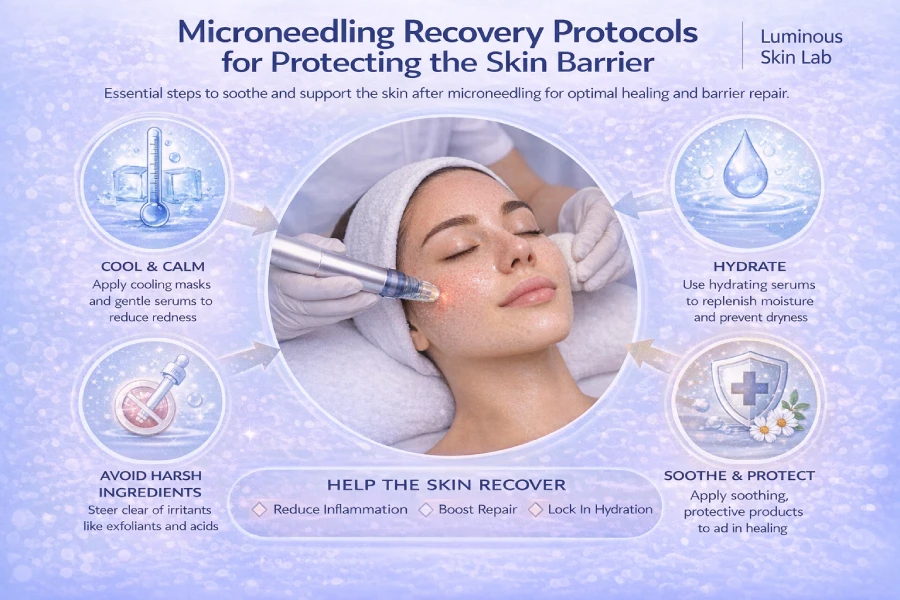
- Hydration, occlusion, and calming ingredients support skin repair.
Microneedling Recovery: The post-treatment phase in which the skin needs supportive care to restore comfort, hydration, and barrier stability.
Healing Stages: The phases the skin moves through after treatment as it calms, rebalances, and recovers.
Recovery Mask: A professional mask used to support hydration, calmness, and protective post-treatment care.
Why Microneedling Recovery Protocols Matter
The skin barrier regulates hydration and protects against irritation, which means recovery after microneedling must be handled with care. Microneedling can be a valuable professional treatment, but the quality of the outcome depends heavily on what happens after the procedure. Recovery protocols matter because they help the skin move through healing stages with more comfort and less stress.
For estheticians, this means barrier protection is not a secondary issue after microneedling. It is a central part of responsible treatment design.
Understanding Healing Stages After Microneedling
Healing stages are important because the skin does not return to balance instantly after microneedling. In the immediate post-treatment period, the skin may be more vulnerable to dehydration, irritation, and environmental stress. This makes it especially important to use protocols that support recovery rather than introducing additional intensity.
Barrier-focused care during these stages helps the skin feel more supported and reduces the chance of unnecessary post-treatment discomfort.
Why Hydration Protocols Are So Important
Hydration protocols matter because microneedling recovery depends heavily on moisture balance. When the skin is in a recovery state, maintaining hydration helps support comfort and overall barrier stability. This is why hydration often becomes one of the main priorities in the immediate post-treatment phase.
For estheticians, a hydration-focused recovery plan is often one of the clearest ways to help the skin recover more smoothly and maintain a better treatment experience.
How Recovery Masks Fit Into Barrier Protection
Recovery masks are commonly used because they create a more supportive finishing phase after treatment. In barrier-focused microneedling recovery, a mask can help calm the skin and support moisture retention while the skin is still in a more delicate state. This makes recovery masks especially relevant when the goal is to protect the skin barrier rather than challenge it further.
Barrier repair facials and post-procedure recovery steps often depend on this kind of thoughtful finishing care.
Estheticians often support barrier repair treatments by pairing targeted products such as ILUMIPEN with deeply hydrating recovery masks like HydroGlo Jelly Mask.
Why Barrier Protection Improves Post-Treatment Results
Barrier-focused treatments improve recovery after professional procedures because they reduce unnecessary stress on the skin while supporting hydration and calmness. After microneedling, that kind of care can improve both comfort and how well the skin transitions through recovery. The protocol is not only about what treatment was performed, but also about how well the recovery stage is managed.
That is why post-treatment support should be treated as part of the microneedling protocol itself, not as an optional add-on.
How Estheticians Can Use Recovery Protocols More Effectively
Estheticians who understand microneedling recovery protocols are better equipped to protect the skin barrier, set realistic expectations, and build trust through professional aftercare guidance. Clients benefit when the provider can explain what the skin needs during recovery and why hydration, calming support, and careful treatment sequencing matter.
In modern professional skincare, good recovery planning is one of the clearest signs of good treatment planning.
Frequently Asked Questions
Why is barrier repair important?
What treatments support barrier recovery?
What damages the skin barrier?
How can estheticians repair the barrier?
Suggested Internal Links
About This Professional Guide
This article is part of the Luminous Skin Lab Esthetician Education Series created to provide professional skincare knowledge for licensed estheticians and advanced practitioners.